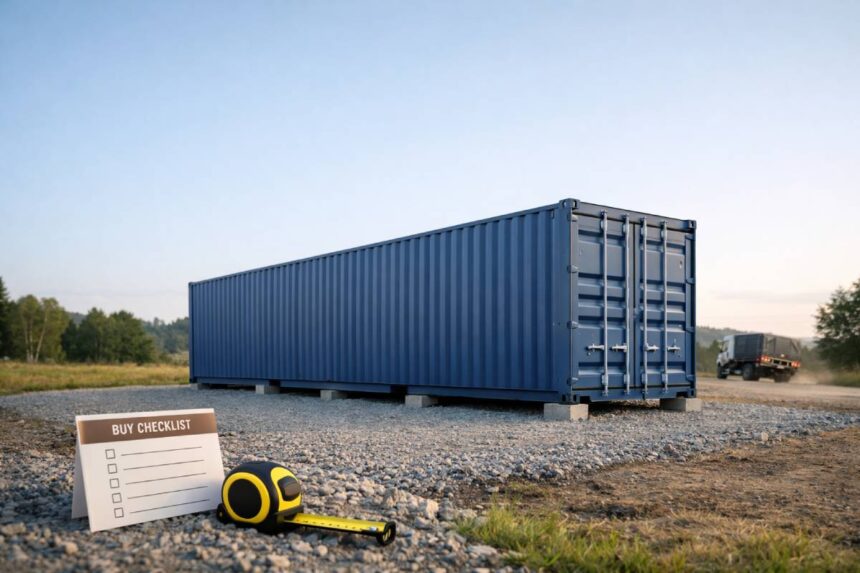
In the mid-20th century, a humble innovation changed the world: the intermodal shipping container. Originally designed to streamline the movement of goods across the globe, these corrugated steel boxes became the literal building blocks of international trade.
Today, however, they are being repurposed as the structural foundation of a new architectural movement. From sleek, minimalist mountain retreats to bustling urban marketplaces and emergency medical clinics, the shipping container has transcended its maritime roots to become a symbol of sustainability and industrial chic.
For the aspiring homeowner, the creative entrepreneur, or the DIY enthusiast, the primary hurdle isn’t just the design, it is procurement. Knowing exactly where to buy shipping containers that are structurally sound, fairly priced, and legally compliant is the essential first step of any successful architectural project.
The Modern Metamorphosis: Why Containers are the Future of Building
The surge in container popularity is driven by more than just aesthetic trends; it is a response to the pressing need for affordable, resilient, and eco-friendly structures. A standard 20-foot container offers 160 square feet of potential, while a 40-foot “High Cube” provides significantly more volume for residential use.
Architects are drawn to their inherent strength. These units are designed to be stacked up to nine high while carrying thousands of pounds of cargo, making them earthquake and wind-resistant by nature. Furthermore, the act of “upcycling” a retired container prevents the energy-intensive process of melting down the steel, significantly reducing the carbon footprint of a new building. As urban landscapes become more crowded, the modularity of containers allows for “pop-up” boutiques and cafes that can be deployed in a matter of days rather than months.

Strategic Sourcing: Navigating Your Purchase Options
The market for these steel giants is vast, generally divided into two primary avenues: local container yards and specialized online distributors. When individuals begin researching where to buy shipping containers, they often find that their geographic location dictates their strategy.
The Local Advantage: Hands-On Inspection
If you prefer to see the bones of your project before you pay, local suppliers are the most reliable route. Most major port cities or inland rail hubs have container depots where various vendors operate.
- Direct Inspection: Buying locally allows you to check for “daylighting” (small holes), floor integrity, and door seal quality.
- Relationship Building: Establishing a rapport with a local yard manager can often lead to better deals on delivery or even minor on-site modifications.
- Reduced Logistics: Proximity typically means lower delivery costs, as the specialized tilt-bed trucks used for transport charge by the mile.
The Online Marketplace: Global Selection
For those who do not live near a major shipping hub, online distributors provide a vital link to inventory. These platforms act as aggregators, connecting buyers with massive stocks of steel from across the country.
More Read

- Extensive Inventory: Online sellers often have access to “One-Trip” containers—units that have only been used once and are in near-mint condition—which can be harder to find at smaller local yards.
- Price Transparency: These platforms allow you to compare rates across different regions quickly, ensuring you are not overpaying based on a local monopoly.
- Nationwide Logistics: Major online vendors have established networks of haulers, taking the guesswork out of how that 8,000-pound box will actually reach your property.
Decoding the Price Tag: What Determines Your Cost?
When researching where to buy shipping containers, you will notice a wide spectrum of pricing. Understanding the “why” behind the numbers is essential for accurate budgeting and avoiding low-quality units.
1. Condition and Classification
Containers are generally graded by their condition. A “One-Trip” container is the most expensive because it is essentially new. “Cargo Worthy” (CW) containers are used, but structurally sound and capable of being certified for overseas shipping. “Wind and Watertight” (WWT) units are the most budget-friendly. While they may have dents and surface rust, they are guaranteed to keep the elements out, making them ideal for basic storage or shells that will eventually be clad in new siding.
2. Size and Type
The standard 20-foot and 40-foot units are the most common. However, the “High Cube” (HC) variant is highly coveted for residential projects. These units are a foot taller than standard containers, providing the necessary overhead space for insulation, flooring, and ceiling fixtures without making the interior feel cramped. This extra foot of vertical space usually adds a premium to the base price.
3. Regional Demand
Prices fluctuate based on the proximity to a major port. In a port city, containers are often cheaper because of the high supply. Conversely, in landlocked regions, the price of the container itself might be low, but the cost to truck it from the coast can double your total expenditure. This is a vital consideration when deciding where to buy shipping containers for projects in the Midwest or mountain regions.
Beware the “Steel Trap”: Avoiding Hidden Fees
A common mistake among first-time buyers is focusing solely on the sticker price. To ensure a transparent purchase, you must account for the logistical “tail” that follows the container.
- The Delivery Charge: This is rarely included in the initial quote. Delivering a container requires a specialized truck with a hydraulic bed that can “drop” the container exactly where you want it. This can cost hundreds or even thousands of dollars depending on the distance.
- Site Preparation: You cannot simply drop an 8,000-pound steel box on soft grass. You will need a level surface, often involving a gravel pad or concrete piers, to prevent the container from sinking or warping over time.
- Modification Costs: While the shell is inexpensive, cutting into the steel for doors and windows requires professional welding and reinforcement. Every hole you cut compromises the structural integrity, necessitating a “box tube” frame to restore its strength.
From Cargo to Cozy: Navigating the Transformation
Once you have secured your container, the real work begins. Transforming a cold, industrial box into a livable space is an exercise in clever engineering and space management.

Insulation: The Non-Negotiable
Steel is an excellent conductor of heat. Without proper insulation, a shipping container will be a sauna in the summer and a freezer in the winter. Most builders recommend closed-cell spray foam insulation. It provides a high R-value, acts as a vapor barrier to prevent condensation against the steel walls, and adds additional structural rigidity to the unit.
Light and Air
The biggest challenge of container living is the potential for a “claustrophobic” feel. Overcoming this requires a strategic use of glass. Large sliding doors or floor-to-ceiling windows can transform the aesthetic from a “storage unit” to a “designer suite.” Furthermore, incorporating specialized vents or rooftop turbines is essential for maintaining air quality and preventing the “stale air” smell common in small, airtight spaces.
The Legal Blueprint: Zoning and Permits
Perhaps the most daunting aspect of container building is the regulatory landscape. Before you finalize the details on where to buy shipping containers, you must determine where you can legally place them.
Zoning laws vary wildly between jurisdictions. Some rural areas have “open zoning” with few restrictions, while urban centers may classify containers as “temporary structures” and prohibit them from being used as permanent dwellings. Building codes also play a major role. Many traditional codes require a certain minimum square footage or specific roof pitches that a flat-top container does not naturally meet.
Working with an architect or a local consultant who understands “alternative dwellings” is highly recommended. You will likely need to submit engineering plans that prove the container is anchored correctly and that its plumbing and electrical systems meet local safety standards. Securing these permits before the container arrives on your property is the only way to avoid the heartbreak of a “cease and desist” order from the city.
The Economics of Upcycling
There is a profound economic argument for container architecture that goes beyond the initial purchase price. By choosing a repurposed container, you are participating in a circular economy. Millions of these units sit idle in ports around the world because it is often cheaper for shipping companies to manufacture new ones than to ship empty ones back to their origin.
When you investigate where to buy shipping containers, you are essentially scouting for raw materials that have already stood the test of ocean storms and massive physical pressure. This pre-existing durability allows for a faster build time. While a traditional stick-built home might take a year to complete, a container-based home can often be dried-in and habitable within a few months, provided the modifications are handled by skilled professionals.
Strategic Planning for First-Time Buyers
For those ready to take the plunge, the process should be methodical. Start by defining your “use case.” A container intended for a backyard tool shed has very different requirements than one intended for a primary residence.
Once your use case is clear, begin your search for where to buy shipping containers by looking at both local rail hubs and nationwide digital brokers. Request high-resolution photos of the specific unit you are purchasing, focusing on the corner castings and the undercarriage. If a seller refuses to provide photos of the actual unit—offering only “representative” images instead—it is often a sign to look elsewhere.
Conclusion: Investing in the Future of Housing
The world of shipping containers offers a unique path to ownership for those willing to think outside the traditional “lumber and brick” box. It is a market that rewards the prepared and the persistent. By sourcing from reputable suppliers, budgeting for the hidden costs of logistics and site prep, and respecting the local legal frameworks, you can turn a discarded piece of global trade into a bespoke masterpiece of modern living.
The steel revolution is here. Whether you are building a backyard office or a multi-unit apartment complex, your journey starts with a single, corrugated box. It is time to stop seeing these containers as mere cargo carriers and start seeing them as the most versatile architectural canvas in the world. Knowing where to buy shipping containers is just the beginning of a larger story of innovation and resourcefulness.