A hotel stay should feel like a break from your routine, not a source of stress. With a few simple hotel safety tips for travelers, you can protect your belongings, feel more secure in your room, and focus on enjoying your trip instead of worrying about worst case scenarios.
This guide walks you through each stage of your stay, from booking to checkout, so you always know what to do next.
Choose a safer hotel before you book
Your safety planning starts long before you pick up a key card. A few minutes of research can dramatically reduce your risk.
Check the neighborhood, not just the photos
Glossy lobby photos do not reveal what the surrounding streets feel like after dark. Before you book, take a quick look at:
- Local crime data or heat maps
- Recent traveler reviews about safety and noise
- Street views to see lighting, nearby alleys, and businesses
Resources such as local crime rate tools and map satellite view can help you spot red flags like isolated parking lots or nightlife that gets rowdy at night. If you are traveling abroad, combine this with broader travel safety guidelines so you understand the city context too.

Prioritize hotels that invest in security
Larger, well established hotels and international chains often have more robust safety measures in place. You are looking for signs that the hotel takes security seriously, such as:
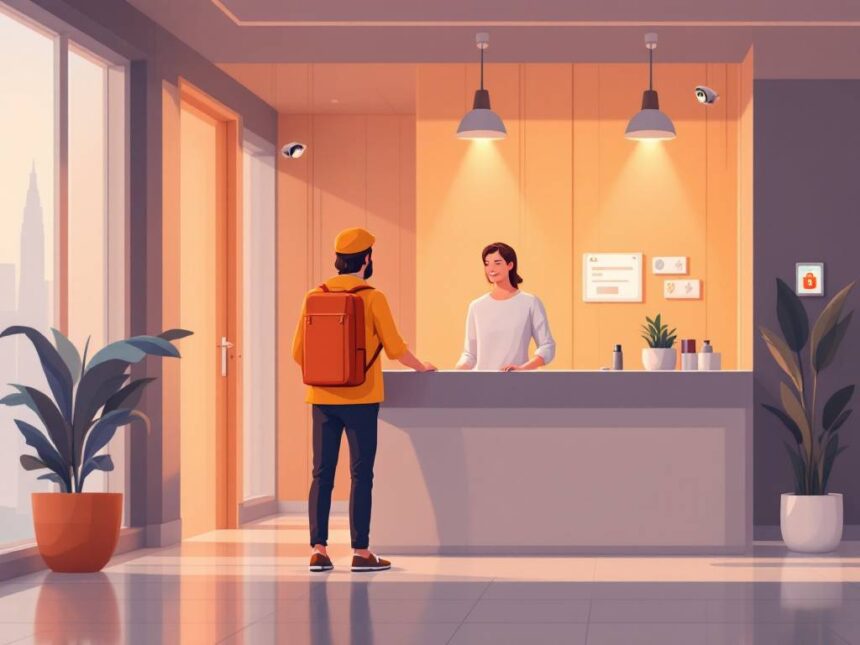
- Keycard or code access to guest areas and elevators
- Visible cameras in common spaces
- Staff at the front desk 24/7
- Trained security personnel or references to security procedures in reviews
Many safer hotels perform regular risk assessments and follow formal standards like ISO 31030 or work with accreditation bodies such as Global Secure Accreditation. You may not see these names in every listing, but phrases like “security patrols” and “emergency procedures” in descriptions and reviews are good clues.
Pick the right room location
If you can choose your room, ask for something that balances security and evacuation safety.
- Floors 3 to 6 are often considered a sweet spot. Lower floors can be easier for intruders to access from the street. Very high floors are harder to reach quickly during emergencies and may be beyond typical fire truck ladder height.
- Rooms away from elevators, stairwells, ice machines, and busy walkways tend to be quieter and less exposed to passersby.
- If you prefer extra privacy, request a room without a connecting door.
If you are a solo traveler, consider combining these hotel specific choices with broader personal safety for travelers habits such as sharing your itinerary and setting check in times with someone you trust.
Prepare smartly before you arrive
A bit of prep at home makes hotel safety much easier once you are on the road.
Carry fewer valuables and back up what matters
You do not need to bring your entire jewelry box or every card in your wallet. Aim to:
- Travel with minimal valuables, and wear costume jewelry instead of expensive pieces
- Bring only the credit and debit cards you will actually use
- Store digital or printed backups of your passport, driver’s license, and tickets in a secure cloud folder or with a trusted contact
If your wallet or passport is lost or stolen, these backups make replacement and reporting much smoother. They should be part of any solid travel safety checklist.
Pack simple hotel safety gear
You do not have to turn your suitcase into a security warehouse. Just a few lightweight items can make a big difference:
- A small rubber door stop to reinforce the main door from the inside
- A portable travel safe or lockable pouch for passports and electronics
- TSA style padlocks for your luggage
- A compact LED flashlight in case of power cuts or nighttime evacuations
Travel experts like The Survival Mom recommend small, bright flashlights because they are easier to aim than a phone’s flashlight and provide comfort for children who fear the dark.
If you enjoy gadgets, you can also explore travel security technology, such as GPS luggage trackers or smart padlocks that open via fingerprints or phone apps.
Sort your coverage and emergency plan
Before you leave, make sure you are covered and know who to call if something goes wrong at the hotel.
- Review or purchase travel safety insurance that covers theft, trip interruptions, and medical needs.
- Save local emergency numbers and your hotel’s direct phone line in your contacts.
- Share your hotel name, address, and stay dates with a friend or family member.
If you are traveling internationally, combine these steps with traveling abroad safety tips so you are not trying to figure everything out from the lobby.
Check in without oversharing
Once you arrive at the hotel, a few quiet habits at check in can improve your safety without making a scene.
Protect your room details
You never know who is standing nearby in the lobby. To stay discreet:
- Keep your voice low when confirming your name and room number.
- If the front desk says your room number out loud, you can simply note it and avoid repeating it yourself.
- Carry your key card separate from the card holder that displays your room number. If you lose one, you have not given away both your room and access.
If something feels off while you are checking in, such as someone hovering too close or asking personal questions, you can politely end the interaction and step away. This is part of staying alert and maintaining travel security awareness.
Notice the hotel’s layout and security
As you head to your room, pay attention to a few basics:
- Where are the exits, stairwells, and elevators in relation to the lobby?
- Are guest floors accessed only by keycard in the elevator or hallway doors?
- Do staff seem present and attentive in common areas?
You do not have to memorize everything, but a general sense of where you are and how to leave quickly is useful if you ever need it.
Make a quick room safety sweep
Once you open the door to your room, you have a short window to check that everything feels right before you fully settle in.
Do a 2 minute safety checklist
You do not need special skills, just a simple routine:
- Prop the main door open with your suitcase until you have checked the room.
- Look behind the curtains, inside the bathroom, and in obvious hiding spots such as around the bed or behind large furniture.
- Confirm that the phone works and has clear instructions for calling the front desk or emergencies.
- Check that the door lock, deadbolt, and any swing bar or chain locks function correctly.
- Test window and balcony locks, especially on lower floors.
- Note the presence of smoke alarms, sprinklers, and any carbon monoxide detectors, and that fire extinguishers are visible in the hallway.
If anything feels wrong, such as a window that will not close or a missing lock, call the front desk immediately. You can ask for maintenance or request another room.
Learn your escape route right away
Hotel fires and emergencies are rare, but knowing how to get out quickly can save precious seconds.
- Locate the emergency exit map on the back of your room door.
- Identify the two nearest stairwells and count the number of doors or steps between your room and each exit.
- Imagine doing this route in the dark or smoke so it becomes muscle memory.
Fire truck ladders typically reach only a few floors up, so the stairwells are your primary escape path. Opening a window is not always a safe option, especially in high rises.
If you are traveling with children, a brief room evacuation “drill” can reduce panic later. Practice moving calmly from the bed to the door, to the hallway, and to the stairwell entrance, and pick a meeting spot outside the hotel.
Secure your hotel room like a pro
Once you have confirmed that your room is safe, add small steps to make it even more secure during your stay.
Lock and reinforce entrances
Make locking up a habit every time you enter the room.
- Engage the deadbolt or secondary lock as soon as you are inside.
- Use any interior chain or swing bar when you are in the room, especially at night.
- Place a rubber door stop under the door from the inside as an extra barrier. It makes forced entry more difficult and noisier.
If someone knocks and claims to be staff, call the front desk to verify before opening the door. You can speak through the door or use the peephole instead of unlocking immediately.
Treat hotel room locks as one layer of security
Hotel room locks can provide a false sense of security. Some may be old, poorly maintained, or compromised, which can make it easier for someone with the right tools or access to enter.
To stay ahead of this risk:
- Never assume the lock alone protects high value items.
- Do not leave passports, large amounts of cash, or premium electronics sitting out.
- If you cannot bear to lose it, do not leave it unprotected in the room.
This is where your portable security tools and smart habits come in.
Protect your valuables without stress
You do not need to be anxious every time you leave the room. Instead, have a simple, repeatable routine for your belongings.
Use safes wisely and know their limits
Most hotel rooms have an in room safe, and many hotels also offer safety deposit boxes or secure storage at the front desk. These are usually safer than leaving items in plain sight.
However, hotel safes are not perfect. Front desk staff often have override codes or master keys in case guests forget their combinations. In some cases, more than one employee may have access.
You can still use them, just keep these tactics in mind:
- Reserve the safe for items that are important, but replaceable, like a backup credit card or a small amount of cash.
- Avoid storing your full jewelry collection or all identification documents in one place.
- Ask about front desk safety deposit options if you need a more controlled environment.
For a detailed plan that covers hotels plus transport, it can help to review broader travel security best practices as well.
Consider a portable travel safe
If you travel often or are carrying high value electronics, a portable travel safe can be more secure than the in room option.
Look for models that:
- Use cut resistant stainless steel mesh inside the fabric
- Lock closed with a steel cable that you can secure around fixed furniture, such as a bed frame or plumbing
- Are large enough for your passport, cards, cash, and maybe a tablet or camera
Security experts note that breaching these safes usually requires tools such as steel cutters, which makes casual theft or quick opportunistic grabs much less likely.
Lock and hide your luggage
When you leave the room, even for a short time:
- Zip and lock your suitcases and backpacks.
- Push them out of obvious sightlines, for example inside a closet or under a desk.
- If you want an extra layer, loop a small cable or chain through the bag handle and around solid furniture.
Locks will not stop a determined insider with tools, but they do deter opportunistic theft and send the message that you are paying attention. Distribute your valuables in a few secure spots, instead of keeping everything in a single bag.
If your hotel offers secure luggage lockers near reception for early arrival or late checkout, that can be safer than leaving bags unattended in a public lobby corner.
Stay personally safe in and around the hotel
Protecting your stuff is important, but your personal safety always comes first. Here is how to feel more confident on and off property.
Move like you belong there
Predators often look for people who seem lost or unsure. Even if you are getting your bearings:
- Walk with purpose as if you know exactly where you are going.
- Avoid standing in the middle of the lobby or sidewalk with your wallet and phone out. Step to the side to check maps or messages.
- Do not wear your room key on a visible lanyard that advertises you are a guest.
This does not mean you cannot ask for help. It simply keeps you from broadcasting that you are unfamiliar with your surroundings.
Be mindful with socializing and nightlife
Meeting people is one of the best parts of travel, but some simple boundaries help you stay safe.
- If someone you just met wants to come to your room, suggest meeting in the lobby or a public restaurant instead.
- Do not share your room number with strangers, even if they seem friendly.
- Avoid drinking heavily alone, and never leave your drink unattended.
- Share your live location with at least one trusted person if you are heading out in the evening.
If you are a woman or traveling alone, combine these with specialized travel safety for women or travel safety tips for solo female travelers so your plan fits your comfort level.
Keep a low profile with valuables
Thieves often look for easy targets around hotels, lobbies, and parking lots.
- Do not count cash or flash expensive electronics at the front desk or outside the entrance.
- Use headphones discreetly and stay aware of your surroundings.
- In parking areas, lock your car, hide bags from view, and avoid lingering in dimly lit corners.
Choosing hotels with visible security patrols and surveillance cameras in common areas can reduce these risks further.
Use technology to your advantage
The right tech can simplify hotel safety instead of adding stress.
Secure your devices and Wi Fi
Your digital life can be just as valuable as your physical belongings.
- Only join hotel Wi Fi networks that are clearly identified and verified by the front desk.
- Use a VPN when accessing email, banking, or work systems.
- Enable screen locks and device encryption on your phone, tablet, and laptop.
- Turn on “find my device” features and test them before you travel.
These steps belong in any modern plan for travel security risks, since data theft and account takeover are increasingly common.
Try helpful travel safety apps and gear
You do not need to download every app, but a few can make your stay smoother:
- Location sharing apps or built in phone features for check ins with friends
- Translation apps to quickly explain an emergency to staff if there is a language barrier
- Specialized travel safety apps that include SOS buttons, trip monitoring, and local alert updates
Combine these with compact travel safety gear, such as small alarms, discreet self defense tools where legal, and the flashlight you packed earlier.
Know what to do if something goes wrong
Even with excellent planning, problems can still happen. Having a “what if” script ready keeps you from freezing in the moment.
If you suspect theft in your room
If you return to your room and notice something missing or signs of tampering:
- Leave the room as you found it.
- Go straight to the front desk and report the issue.
- Request hotel security and ask them to document the incident.
- If theft is confirmed or valuables are missing, involve local police and get a report for insurance.
- Contact your bank to freeze or replace cards, and your embassy or consulate if your passport is gone.
This is where the backups you made earlier and your travel safety insurance policy become extremely helpful.
If you feel unsafe or harassed
Your comfort level matters, even if you cannot point to a clear legal issue.
- If someone on your floor or in the lobby is making you uncomfortable, tell the front desk and ask to switch rooms or floors.
- If an employee behaves inappropriately, request to speak with a manager and put your concerns in writing.
- In serious situations where you feel threatened, contact local emergency services first, then hotel staff.
Having reviewed general travel security advice ahead of time can make these decisions feel more automatic.
If there is an emergency at the hotel
Whether it is a fire, power outage, or another serious event:
- Follow hotel staff instructions, but rely on the exit routes you already learned on day one.
- Use the stairs, not elevators, during fires or fire alarms.
- Grab essentials near the door such as your key, phone, passport pouch, and a light jacket, rather than trying to pack a bag.
- Use your flashlight if hallways are dark.
Once you are safe outside, contact loved ones to let them know you are okay and follow any instructions from authorities.
Tailor hotel safety to your travel style
Different travelers have different risk levels and needs. You can start with the core hotel safety tips for travelers, then customize.
- Solo backpackers might prioritize budget friendly hotels with strong reviews, plus travel safety for backpackers advice.
- Seniors may want elevators, good lighting, and nearby medical facilities, paired with travel safety for seniors.
- Students might focus on sharing rooms safely and managing belongings in groups, and can benefit from travel safety for students.
- Families can practice kid friendly room checks and simple evacuation plans that do not scare younger travelers.
If driving is part of your journey, connect these hotel routines with travel safety driving tips so the whole trip feels consistent.
Put your hotel safety plan into action
You do not need to implement every strategy at once. Start with a simple baseline, then layer on extras as you become more comfortable:
- Research the hotel and neighborhood before you book.
- Choose a mid level floor and check the room carefully when you arrive.
- Lock and reinforce doors, and treat hotel locks as just one layer of security.
- Use safes and portable solutions for valuables, and pack light on anything you cannot easily replace.
- Stay aware in public areas and keep your room details private.
- Have a clear plan for what to do if you notice theft, feel unsafe, or face an emergency.
For a broader picture that covers flights, ground transport, and sightseeing, explore how to stay safe while traveling and general travel safety tips. With a bit of preparation, your hotel can feel like a calm, secure base for whatever adventures you have planned.
FAQs
What is the safest hotel room floor to choose?
A practical target is mid-level floors (often around floors 3–6): harder to access from the street than ground/low floors, but still easier to evacuate than very high floors.
What should I check the moment I enter my hotel room?
Do a quick sweep: door lock/deadbolt, window/balcony locks, emergency exit map, and identify the two nearest exits (then count doors to the stairwell if you want a memory cue).
Should I use the elevator during a hotel fire alarm?
No—use the stairs during a fire or alarm.
Are hotel room safes truly safe?
They’re helpful, but not perfect. Use them for important-but-replaceable items, and avoid storing everything in one place. For higher-value electronics, a portable travel safe adds friction for thieves.
How can I stay safe when connecting to hotel Wi-Fi?
Verify the network name with the front desk, use encrypted websites (https), and consider a VPN for banking/work logins or sensitive activity.
What should I do if I suspect theft from my hotel room?
Document and report fast: notify the front desk/security, request written documentation, and involve local police if needed for insurance. If documents are stolen, consular help may assist with replacements.
How do I reduce risk when checking in?
Avoid saying your room number out loud, keep your key card separate from anything showing your room, and stay alert to anyone hovering too close at the desk.