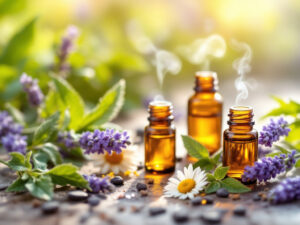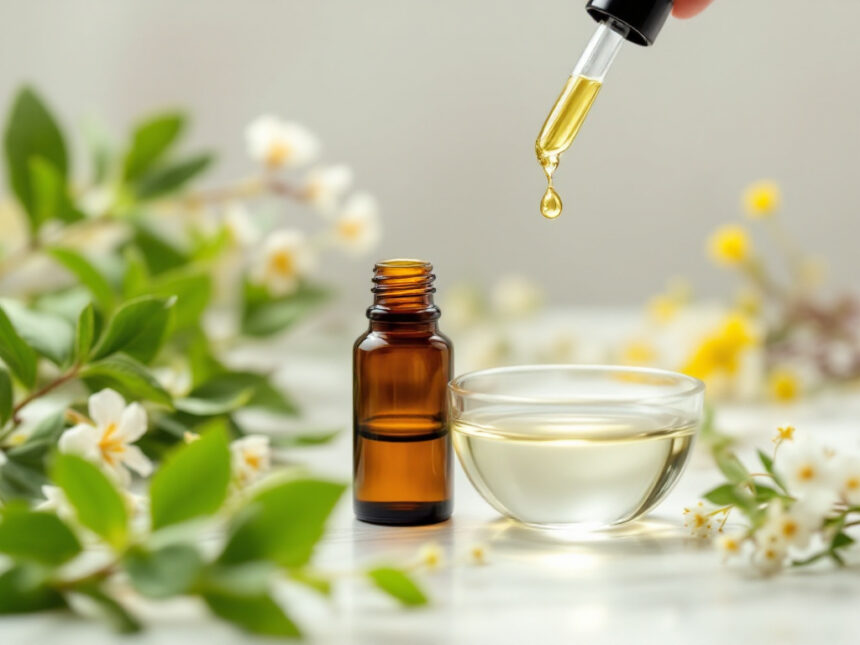
A few drops of essential oil can be powerful. If you know how to dilute essential oils correctly, you get all the aroma and benefits with far less risk to your skin, your kids, and even your pets. If you skip dilution, you are much more likely to end up with irritation, rashes, or long term sensitivity.
This guide walks you step by step through how to dilute essential oils for safe topical use, how much to use for different ages and situations, and how to mix simple blends you can actually use every day.
Understand why you must dilute
Before you reach for a bottle of lavender or peppermint, it helps to understand what is in that tiny bottle.
Essential oils are highly concentrated plant extracts. A single drop can contain dozens of active chemical compounds. On your skin, that intensity is both what makes them effective and what can make them risky.
Certified aromatherapists and safety experts strongly advise against applying essential oils undiluted, also called using them “neat”. Direct application is one of the most common causes of adverse reactions to oils, affecting hundreds or even thousands of people every year according to guidelines from the Tisserand Institute.
When you apply oils neat, you increase your risk of:
- Immediate irritation or burning
- Red, itchy, or blistered skin
- Long term sensitization that can trigger a reaction even to very small amounts later
Once you become sensitized to an essential oil, you might react every time you encounter it, even at low dilutions, and you may cross react to related oils too. Diluting does not make essential oils weak. It makes them usable.
Know when you need dilution and when you do not
You do not dilute essential oils the same way for every use. The first step is understanding when dilution is required and when it is not.
When dilution is required
You must dilute essential oils with a carrier oil or other base for:
- Any leave on skin product, such as body oils, face oils, roll ons, or balms
- Massage blends, including essential oils for massage
- Skin care blends, such as essential oils for acne, essential oils for eczema, or essential oils for skin care
- Spot treatments, such as essential oils for insect bites, essential oils for cold sores, or essential oils for muscle pain
- Aromatherapy roll ons for essential oils for stress relief or essential oils for anxiety
Any time the oil will sit on your skin for more than a quick wash off, it needs to be diluted.
When dilution is not usually needed
You typically do not dilute essential oils in:
- Diffusers, where you add pure oil directly to water according to the diffuser instructions
- Simple inhalation, such as smelling from the bottle or a tissue
- Some bath applications, as long as you use a dispersing base safely
Smelling oils directly is usually safe for most adults. You are not applying to the skin, so you avoid dermal irritation. For bath use, you still do not add essential oils straight to the water because they float in neat droplets and can irritate sensitive skin areas when warmed in the tub. You mix them into a carrier first, then add to the bath, as the Tisserand Institute explains. You can explore gentle bath ideas in more detail with essential oils for bathing.
If you are not sure, treat it as a topical use and dilute.
Learn what carrier oils do
Carrier oils are the unscented or lightly scented plant oils you mix with essential oils before they touch your skin. They are usually pressed from nuts, seeds, or fruits.
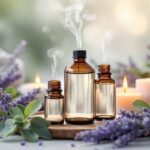
Carrier oils do three important jobs:
- They dilute the essential oil to a safer concentration
- They help spread the essential oil evenly over your skin
- They add their own moisturizing and nourishing benefits
Brands like Nikura highlight that carrier oils support safer application and reduce the chances of irritation or sensitization when you use essential oils on your skin. Volant Aroma explains that carriers also help slow down evaporation so the oil can stay on your skin long enough to have an effect.
You can also use lotion or body butter instead of liquid carrier oil. A few drops of essential oil stirred into a simple, unscented moisturizer is often the easiest way to start.
Common carrier oil choices
Different carrier oils feel and behave differently. According to Nikura, they vary in thickness, scent, nutrients, and shelf life.
Some popular options include:
- Jojoba oil, which is actually a liquid wax that mimics your natural skin oils and is a favorite for massage
- Grapeseed oil, a lightweight option that feels dry and is often recommended for oily or “greasy” skin
- Fractionated coconut oil, which stays liquid and spreads easily
- Sweet almond, apricot kernel, and argan oils, which are often rich and moisturizing
If you have a tree nut allergy, avoid carriers made from nuts such as sweet almond, argan, and apricot kernel oil, as safety experts advise.
Whichever carrier you pick, buy from a trusted brand, look for cold pressed and ideally organic, and store in a cool, dark place. Dark glass bottles or even the refrigerator can help extend their shelf life.
Follow safe dilution percentages by age and use
Now you are ready for the core of how to dilute essential oils. Safety experts focus on percentages rather than random drop counts. A dilution percentage tells you how much of your final mixture is essential oil compared to carrier.
General adult guidelines
Several reputable sources suggest:
- A 2 percent dilution as a good general target for most adult topical blends.
- Around 1 percent for more sensitive users or for blends you apply over a large area or daily.
Volant Aroma recommends 2 percent, which equals about 10 drops of essential oil per ounce of carrier oil, and 1 percent, around 5 drops per ounce, for sensitive skin, children, or the elderly. Another guideline from Nikura suggests that adults and teenagers over 15 can go up to 10 percent for small localized areas when needed, but lower dilutions are still preferred for most routines.
The Tisserand Institute adds that many body care products you leave on the skin should stay at or below 2 percent, while wash off products like scrubs often use less than 1 percent.
Children, older adults, and sensitive users
For children, elderly people, and anyone with asthma, eczema, or very reactive skin, stick to lower dilutions:
- Around 1 percent or less for most topical blends, and often lower for very young children
- Extra caution around the face and in skin folds or delicate areas
Nikura and Volant Aroma both stress that kids and older adults have more sensitive skin and need more diluted blends to avoid reactions.
If you are creating blends for kids or have chronic conditions, it is wise to check detailed age specific guidelines from professional resources such as the Tisserand Institute or consult a qualified practitioner before you start.
When oils have lower maximum limits
Some essential oils are more likely to cause skin reactions, even when they are natural and high quality. Hot or spicy oils such as cinnamon bark, clove, and lemongrass have lower maximum recommended dermal limits. The risk of reactions rises as the concentration goes up, regardless of oil purity.
For example, nikura notes that for an oil like lemongrass, which has a dermal maximum of 0.7 percent, you should limit yourself to about 4 drops per ounce of carrier oil if you are measuring by drops.
Whenever you work with an oil that has a low dermal max, treat that percentage as an absolute ceiling. You must count all the drops of that oil in your blend to stay under it.
Convert percentages into drops and ounces
You rarely mix oils by weight in your kitchen. Instead, you are more likely to work in teaspoons, tablespoons, or ounces and count drops from the bottle.
There is no perfect way to convert, because drop sizes vary by oil and dropper. The research notes that 600 drops per ounce is a common starting assumption, but that is more precise than most people need. To keep things simple and user friendly, several sources recommend treating one ounce of carrier oil as equivalent to about 10 to 18 drops of essential oil for a 2 percent dilution.
The Tisserand Institute suggests about 18 drops per ounce for a 2 percent blend, counting all essential oils together. Volant Aroma offers a slightly easier rule of thumb: about 10 drops per ounce gives you roughly 2 percent.
To keep your home blending consistent and safe, pick one simple guideline and use it every time. The exact number is less important than staying in a safe range.
Here is a basic reference to use at home, using Volant’s more conservative 10 drops per ounce for 2 percent:
Approximate dilution guide (using 1 ounce carrier oil)
1 percent dilution: 5 drops total essential oil
2 percent dilution: 10 drops total essential oil
0.7 percent limit example: 3 to 4 drops of that specific oil
Always remember that “drops total” means you count all the essential oils in the blend together to reach your target percentage.
Step by step: How to dilute essential oils
Once you know your target percentage, you can mix a safe diluted blend in just a few minutes. Here is a straightforward method that matches advice from Volant Aroma and other safety sources.
Step 1: Choose your use and target strength
Decide what you want the blend to do and where you will apply it. That guides your dilution:
- Everyday body oil: around 1 to 2 percent
- Targeted roll on for headaches or tension: up to 5 percent for adults, used on small areas, as Tisserand notes
- Facial skin care: 0.5 to 1 percent, because the face is more sensitive
- Kids or older adults: stick closer to 1 percent or less
If you are brand new, start at 1 percent. You can always make a slightly stronger batch later if your skin tolerates it well.
Step 2: Pick your carrier and container
Use a clean glass or high quality plastic bottle:
- 1 ounce (30 ml) glass dropper bottles work well for face and body oils
- 10 ml roller bottles are handy for pulse point blends
- Small glass jars suit balms and salves
Pour the carrier oil into the bottle first so you are not pouring essential oils into an empty container.
Step 3: Calculate your drops
Use your chosen guideline. For example:
- For a 1 ounce body oil at 2 percent, add about 10 drops total of essential oil
- For a 1 ounce body oil at 1 percent, add about 5 drops total
If you are blending two or three essential oils, divide those drops between them. If a dermal maximum applies to one oil in the blend, use that limit for that oil and then fill the remaining drops with gentler oils.
Step 4: Add essential oils and mix
Add your measured drops to the carrier oil. Secure the cap and shake gently or roll the bottle between your hands. This helps the oils disperse evenly. Volant Aroma specifically recommends giving your blend a good shake after combining to ensure even distribution.
Label the bottle with:
- The essential oils used
- The approximate dilution percentage
- The date you made it
Most carrier oil based blends stay fresh for several months if stored away from heat and light, but always check for changes in smell or appearance before each use.
Step 5: Patch test every new blend
Before you use a new diluted oil over a large area, perform a simple patch test:
- Apply a small amount to a discreet area, such as the inside of your forearm.
- Wait at least 24 hours.
- If you notice redness, itching, or discomfort, wash off, do not use that blend again, and consider a lower dilution or different oils next time.
Nikura, Volant Aroma, and other safety sources all emphasize patch testing as a key step to catch potential reactions early.
Adjust dilution for different recipes and routines
Once you are comfortable with the basic process, you can adjust strength based on what you are making. Here is how dilution changes across common uses.
Everyday body and massage oils
For a full body blend, err on the gentle side. A 1 to 2 percent dilution is usually enough for adults and lets you enjoy essential oils for relaxation, essential oils for pain relief or essential oils for inflammation without overwhelming your skin.
If the goal is a soothing, nightly routine, such as easing into sleep with lavender and chamomile, lower dilutions are perfectly effective. You might also explore the best essential oils for sleep for more ideas.
Spot treatments and roll ons
For a tiny area, such as a roll on for essential oils for headaches or a blend for essential oils for nausea, slightly higher dilutions can be appropriate for adults.
Many aromatherapy roll ons designed for spot use reach up to about 5 percent, especially when used a few times per day instead of constantly. You still need to respect dermal maximums for specific oils, such as cinnamon or clove.
Face and delicate areas
For the face, chest, neck, or damaged skin, less is more. Plan for:
- 0.5 to 1 percent for most facial oils or creams
- Extra caution if you are targeting issues like essential oils for psoriasis or other chronic skin conditions
Avoid getting essential oils, even diluted, too close to your eyes or directly into ears or other sensitive openings. The Tisserand Institute notes that diluted oils can sometimes be used near sensitive areas, such as on a cotton wad near the ear, while undiluted oils must never be put directly into those areas.
Baths and shower blends
Essential oils do not mix with water. If you add them directly to bath water, they float in undiluted droplets and can behave like neat oils on your skin, especially in warm water around sensitive areas. Always pre mix essential oils into a carrier before you pour them into the tub.
You can create simple bath blends by combining your chosen oils with:
- Carrier oil, such as jojoba or fractionated coconut
- An unscented liquid soap
- A bath safe dispersing base
Then add that mixture to the water and swirl before you step in. You will find more ideas in essential oils for bathing.
DIY cleaning and laundry products
For surface cleaners and essential oils for cleaning, skin contact is usually limited, but you should still keep dilutions in a gentle range and avoid spraying undiluted essential oils into the air or onto fabrics that touch bare skin.
For essential oils for laundry, mix oils into a vinegar rinse, wool dryer balls, or an unscented detergent base rather than dropping neat oils directly on clothes that will sit against your skin all day.
Use tools and pre blended products when you need help
If you find the math fiddly, you do not have to calculate everything by hand. Some companies provide simple tools to help you work out your numbers.
For example, NOW Foods offers an online dilution calculator that lets you choose your bottle size and desired percentage and then shows the correct number of drops. They also publish a downloadable PDF guide and a chart of suitable skin care oils, and they stress the importance of correct dilution and avoiding ingestion of essential oils.
If you would rather skip measuring altogether, pre blended roll ons, massage oils, and skin care products are widely available. They already contain carrier oils at safe dilutions, so you can apply them directly. Many are designed around popular goals such as essential oils for aromatherapy, essential oils benefits for mood or energy, or targeted blends like essential oils for mosquito repellent or essential oils for arthritis.
Always read the label so you know whether a product is ready to use or still meant to be diluted further.
Common dilution mistakes and how to avoid them
When you first learn how to dilute essential oils, it is easy to repeat things you see online that are not actually safe. Here are a few habits to avoid.
Using oils “neat” because they seem gentle
Lavender and tea tree are often promoted as safe to use straight on the skin. Safety experts strongly disagree. Applying undiluted oils is not recommended except under professional supervision.
The Tisserand Institute and other aromatherapy authorities warn that neat application is a leading cause of sensitization, which can create permanent allergic type reactions. Once sensitized, you may react even to small, well diluted amounts.
Ignoring total percentage when you blend
If you add 5 drops of lavender, 5 drops of peppermint, and 5 drops of eucalyptus to 1 ounce of carrier oil, that is not three separate dilutions. It is 15 drops total, which is about a 3 percent blend under Volant’s guideline.
The Tisserand Institute specifically reminds users that all essential oils in a recipe must be counted together to stay within the desired dilution limit.
Using carrier oils in diffusers
Essential oils diluted with carrier oils are not meant for ultrasonic diffusers. Diffuser discs are designed to disperse pure essential oils in water. Carriers can coat and damage the mechanism.
As one safety guide explains, only pure essential oils should go into diffusers, and carrier based blends are for topical use only.
If you are looking for ideas for your diffuser instead, explore essential oils diffuser blends for ready made inspiration.
Adding drops straight to bath water
It is tempting to add a few drops right into the tub, but as noted earlier, oils and water do not mix. Those floating droplets can act like undiluted oils on warm, damp skin.
Always blend your essential oils into a carrier oil or dispersing agent before they go into the bath.
Put safe dilution into everyday practice
Once you understand how to dilute essential oils, you can build simple, safe routines that suit your home and family.
You might:
- Create a 1 percent body oil using calming oils that support essential oils for relaxation to use after evening showers
- Mix a small 2 percent scalp oil blend if you are curious about essential oils for hair growth, always patch testing first
- Keep a gently diluted roll on in your bag for tension or essential oils for headaches
- Experiment with beginner friendly essential oils recipes tailored to your goals
If you are still choosing your first bottles, it can also help to learn what makes therapeutic grade essential oils different from fragrance oils, and how to get the most from them with an overview like how to use essential oils.
Start with low dilutions, listen to your skin, and lean on trusted safety resources such as Nikura, Volant Aroma, the Tisserand Institute, and NOW Foods for more detailed charts and calculators.
With a few simple rules and a bit of practice, you can enjoy the scent and benefits of essential oils confidently, without guessing or worrying that you are getting the dilution wrong.
FAQs
What is the safest dilution for daily essential oil use?
For most adults, 1–2% works well for leave-on body products, while 0.5–1% is better for face and sensitive areas.
How many drops are in a 2% dilution?
A common, easy home rule is ~10 drops total essential oils per 30 ml (1 oz) carrier for ~2%.
Can I apply lavender or tea tree oil neat?
Safety guidance generally recommends not using oils neat due to increased risk of irritation and sensitization over time.
Do I need to dilute essential oils for a diffuser?
Usually no—diffusers typically use undiluted oils added to water per device instructions (carrier oils don’t belong in ultrasonic diffusers).
Can I add essential oils directly to bath water?
No. Oils float and can hit skin as concentrated droplets. Use a dispersant (e.g., Solubol) or pre-mix properly.
What carrier oil is best for sensitive skin?
Many people do well with jojoba or fractionated coconut oil because they’re stable and skin-friendly; always patch test.
Why do “hot oils” need extra caution?
Some oils have lower dermal limits and can irritate more easily, so their maximum percentage is an absolute ceiling.