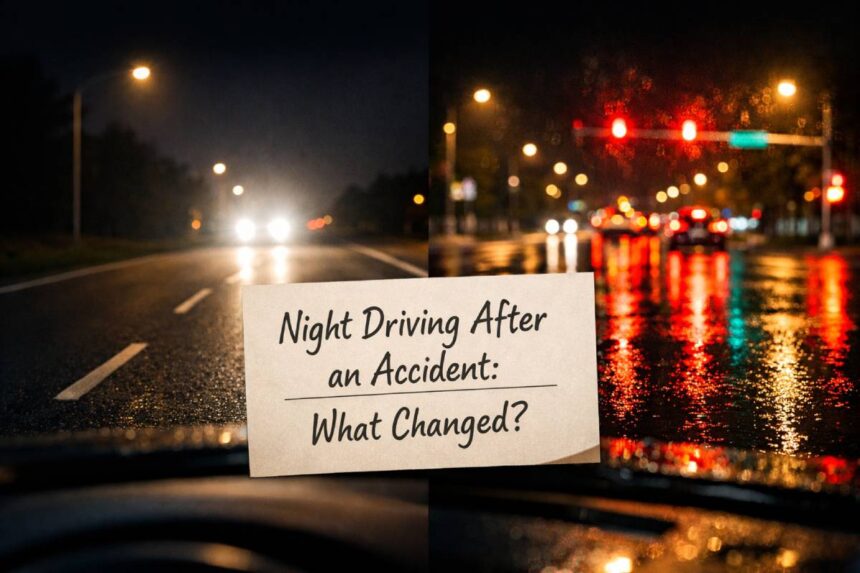
Night driving has its own atmosphere. Headlights stretch across dark roads, traffic thins, and familiar routes feel quieter. After a car accident, nighttime driving can feel noticeably different. Darkness, glare, and reduced visibility often bring heightened awareness, even on roads driven many times before.
This shift is something some people reflect on when speaking with a Car Accident Attorney while describing changes in comfort that appeared long after the collision itself.
Headlights Feel Brighter Than Before
After an accident, headlights can seem harsher and more distracting.
Drivers may notice:
- Difficulty adjusting to oncoming lights
- Increased sensitivity to high beams
- Temporary vision discomfort
- Slower reaction to changing light conditions
Visual input demands more attention in the dark.

Glare From Wet Roads Adds Stress
Rainy nights often amplify visual strain.
This can involve:

- Reflections blurring lane markings
- Difficulty judging distance
- Extra caution at intersections
- Feeling mentally tired sooner
Wet surfaces change how light behaves, increasing focus demands.
Peripheral Awareness Increases
At night, reduced visibility narrows focus.
After a crash, drivers may:
- Scan the road more frequently
- Watch mirrors closely
- Anticipate sudden movement
- Stay alert longer than before
Awareness replaces ease.
Quiet Roads Don’t Always Feel Relaxing

Fewer cars don’t necessarily mean less stress.
Some drivers feel:
- Uneasy in empty stretches
- More alert without visual cues from traffic
- Focused on every sound or movement
- Less distracted but more tense
Silence can heighten perception.
Fatigue Sets In Faster
Night driving already requires concentration. After an accident, mental fatigue can arrive sooner.
Drivers may experience:
- Shorter tolerance for long drives
- Needing breaks more often
- Reduced patience
- Strong relief when the drive ends
Energy drains quietly.
Others May Assume Night Driving Is Easier
Because traffic is lighter, others may assume nighttime travel is simpler.
In reality:
- Visibility challenges increase
- Reaction windows shrink
- Cognitive load rises
- Comfort varies widely
The difference is internal, not obvious.
Why Night Driving Changes Matter After a Crash
When someone speaks with a Car Accident Attorney, altered comfort during night driving helps show how a collision affects daily mobility and confidence.
These experiences reflect:
- Lingering stress responses
- Heightened sensory awareness
- Reduced tolerance for visual strain
- Impact on routine travel choices
Driving isn’t the same at all hours.
Gradual Comfort Often Returns
For many people, night driving becomes easier again with time.
This may involve:
- Shorter evening trips
- Familiar routes
- Reduced pressure to drive late
- Allowing comfort to rebuild naturally
Confidence returns through experience.
Conclusion
A car accident can quietly change the way night driving feels. Headlights, glare, and darkness may demand more attention and energy than before. These changes often go unnoticed by others but influence everyday choices.