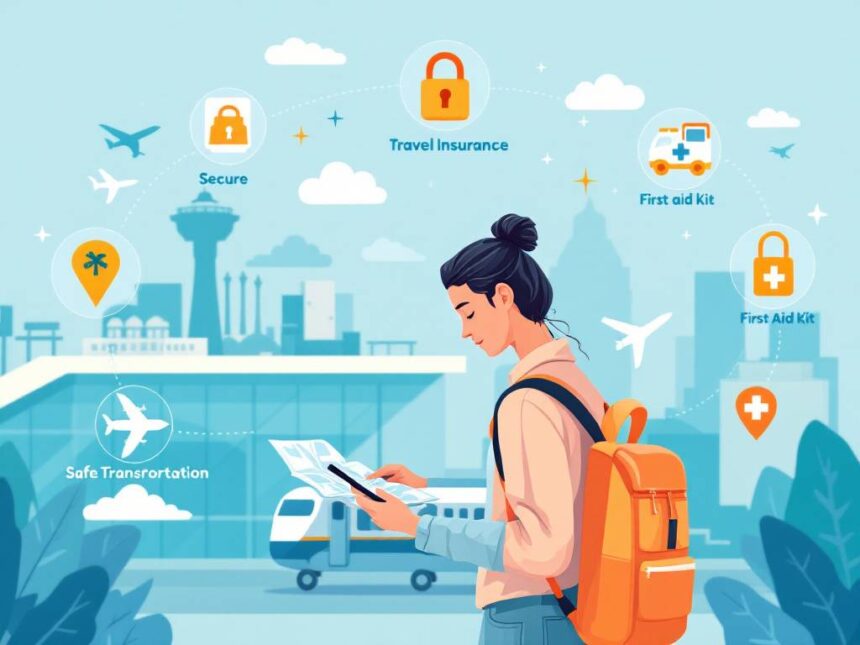
Travel is meant to feel exciting, not nerve‑racking. The right travel safety tips give you a simple plan so you can relax, explore, and still have solid backup if something goes wrong.
This guide organizes everything into clear steps you can actually follow, whether you are a first‑time traveler, a frequent flyer, or heading out solo or with family. Use it as your personal blueprint for safer travel and real peace of mind.
Start with a simple safety mindset
Before you dive into packing lists and apps, it helps to reset how you think about travel safety.
Travel safety tips are not about expecting disaster. They are about reducing the most common risks and knowing what to do if plans change. A few habits can dramatically lower stress, especially when you are far from home.
Think of your approach in three layers:

- Prevention: You avoid obvious risks and set yourself up for smoother travel.
- Protection: You safeguard your information, money, devices, and documents.
- Backup: You know who to call, where to go, and what to do if things go sideways.
The following sections walk you through each layer so nothing is left to guesswork.
Research your destination before you go
A bit of focused research gives you context, which is one of the most underrated travel safety tips. You do not need to become an expert on local politics or memorize every law. You just need the highlights that affect you as a visitor.
Check official safety information
For international trips, start with credible, up‑to‑date information.
- Review the current Travel Advisory, entry requirements, local laws, and safety tips for your destination from the U.S. Department of State site. This helps you understand health risks, crime patterns, and any areas to avoid.
- U.S. citizens should enroll in the Smart Traveler Enrollment Program (STEP) to receive important safety information and assistance, and so the embassy can contact you in an emergency.
You can use broader guides like travel safety guidelines and travelers safety and security resources as your big picture, then layer on destination‑specific details from official sources.
Understand local laws and norms
Foreign laws apply to you even if you do not know them. That includes rules around:
- Medications and drugs
- Alcohol consumption
- Dress codes at religious or government sites
- Photography near military or sensitive locations
Use of illicit drugs overseas can lead to severe legal penalties including jail or death. Even prescription or medical marijuana that is legal at home may result in arrest or deportation abroad. Verify that any medications you bring are legal at your destination, keep them in original containers, and carry your prescriptions.
A bit of travel security awareness around local customs also keeps you from standing out unnecessarily. Notice how locals dress and behave in public spaces, and aim to blend in rather than attract attention.
Learn basic emergency details
Before you leave, note the following somewhere easy to access:
- Local equivalent of 911
- Address and phone of your nearest U.S. embassy or consulate
- Closest major hospital or clinic to your lodging
- Local taxi or rideshare options that are considered trustworthy
You can store this in a note on your phone, inside your main wallet, and in a small backup card you keep elsewhere.
Build a practical safety plan
You do not need a complicated system to stay safe. A simple, written plan covers most situations and gives you something to fall back on when you are tired, jet‑lagged, or stressed.
Map out your “who to call” tree
Choose two or three trusted contacts at home. Share:
- A copy of your itinerary
- Flight details and lodging addresses
- A photo of your passport ID page
- Your local phone number or messaging apps
Agree on how often you will check in, especially if you travel solo. Your plan might be a quick message when you land, another when you reach your hotel, then daily or every few days.
If you want a more structured approach, you can follow a travel safety checklist and adapt it to your needs.
Decide how you will handle money
Safe money habits are a core part of personal safety for travelers. Instead of one big solution, layer a few small ones:
- Carry two cards on separate days or in separate places, so if one is lost or skimmed, you have a backup.
- Keep a modest amount of local cash for small purchases or emergencies.
- Store a “backup stash” of cash and one card in a different spot from your everyday wallet, for example in a money belt or hidden pocket.
In Europe and similar regions, be mindful of how you pay. When withdrawing money from ATMs or paying for goods and services, keep your cards in sight and consider using mobile payment apps to avoid handling cash or cards. Be alert for tactics like the “slow count” or “switcheroo,” where scammers delay or fake currency exchange to shortchange you.
Choose the right travel insurance
If something major goes wrong, the right policy can save you both money and headaches. Look beyond basic trip cancellation and consider:
- Emergency medical and evacuation coverage
- Coverage for lost or delayed baggage
- Support services or hotlines in English
If you are not sure what level of coverage you need, a resource like travel safety insurance can help you compare options and understand the details.
Use technology to your advantage
Your phone can be one of your most powerful security tools if you set it up before you leave.
Install and test safety apps
There are many solo travel safety apps, most free, that you can download before your trip. They can:
- Store secure copies of important documents
- Offer GPS navigation and location sharing
- Provide quick access to emergency numbers
- Allow you to trigger alerts to trusted contacts
Solo Traveler recommends choosing safety apps that are available on both Android and iOS so you can rely on them across devices and trips. It is also advised to download and familiarize yourself with solo travel safety apps before your trip. That way you are not wasting time learning a new interface during a stressful moment.
To get started, explore curated tools in guides like travel safety apps and travel security technology.
Using any app involves sharing at least some personal data, so weigh the privacy tradeoffs against the safety benefits. Adjust app permissions so you only share what is necessary for the features you actually use.
Turn your phone into a safety hub
A little preparation turns your phone from a distraction into a powerful safety device:
- Enable emergency alerts on your device. The American Red Cross recommends this, and also suggests downloading their free Emergency app for weather alerts and shelter locations with content available in English or Spanish.
- Add important numbers to your contacts with clear labels, like “Local emergency” or “Hotel front desk.”
- Set up offline maps for your destination so you can navigate without data.
- Use a strong screen lock and enable “Find my device” features in case your phone is lost or stolen.
For solo female travelers, especially over 50, reliable, easy‑to‑use safety apps that function even offline can be a major source of peace of mind. You will find tailored advice in resources like travel safety for women and travel safety tips for solo female travelers.
Protect your documents and identity
Documents are your lifeline when you are far from home. Losing them is stressful, but it does not have to be a disaster if you prepare.
Back up vital documents
Before you travel, make clear copies or photos of:
- Passport ID page
- Driver’s license
- Travel and health insurance cards
- Vaccination or health certificates
- Important tickets or reservations
Store these in three ways:
- One printed set in your luggage, separate from the originals.
- Secure digital copies in an encrypted note or password manager.
- A copy shared with a trusted contact at home.
It is important to keep copies both physically and electronically so you can access them even if your phone battery dies or your bag is delayed.
Guard against theft and loss
Petty theft targeting foreigners is common in many destinations. Prevention is usually about small, consistent habits:
- Keep your bag closed and in front of you in crowds and on transit.
- Use cross‑body bags with zippers rather than open totes.
- Avoid putting your wallet or phone in back pockets.
Scammers often use distraction. In many European cities, you may be jostled in a crowd, have something spilled on you, or be approached by street vendors offering “free” bracelets or rings. These distractions frequently accompany pickpocketing attempts. Stay polite but firm, and step away if someone gets too close or insistent.
Never hand over your wallet or valuables to people who say they are police officers or hotel staff if they are not clearly identified. Rick Steves warns that scammers sometimes pose as officials or inspectors to carry out thefts under false pretenses.
For a deeper overview of common cons and how to recognize them, you can refer to guides like how to avoid travel scams.
Travel safety at the airport and in transit
Airports and transit hubs can feel hectic, which makes them a common place for mistakes and theft. The good news is that a few habits will cover most of your risk.
Move through airports with a plan
Build simple airport security tips into your routine:
- Keep your passport and boarding pass in the same secure pocket, and always return them there after use.
- Place small valuables like your phone, wallet, and passport in a single zippered pouch before security so nothing is loose in bins.
- After screening, step to the side to calmly check you have everything before walking away.
Arrive early so you are not rushing. Rushing is when people forget bags, leave phones behind, or miss suspicious charges because they are distracted.
Stay alert on public transportation
Road and vehicular safety is one of the highest risks for international travelers. The U.S. Department of State estimates that more than 200 U.S. citizens die each year due to road accidents abroad. That makes transport choices one of the most important travel safety tips you can follow.
When you land:
- Use official airport taxis, licensed rideshares, or prearranged hotel shuttles.
- Confirm the fare or meter use before you get in.
- In Europe, be cautious of cab drivers who may overcharge. Always verify the amount you are paying and count your change.
If you plan to drive:
- Review driving safety guidance and rules of the road for your destination.
- Learn whether you need an International Driving Permit. In the U.S., only AAA and AATA are authorized to issue valid IDPs. Buying a fake permit from an unauthorized seller can leave you with worthless documents and possible legal trouble.
- Avoid driving after long flights or when heavily jet‑lagged.
For more driving‑specific advice, especially if you will be road tripping, look at travel safety driving tips.
Choose safer lodging without overthinking it
You do not have to obsess over worst‑case scenarios, but a quick safety check when you book and when you arrive adds an important layer of protection.
What to check in hotels and rentals
When staying in hotels or motels, the American Red Cross recommends:
- Ensuring the presence of hard‑wired smoke alarms and automatic fire sprinklers in each room if possible.
- Reading the evacuation plan on the back of the door.
- Identifying at least two nearest exits.
- Knowing how to activate the building’s fire alarm.
For vacation rentals, confirm before you arrive that:
- There are working smoke and carbon monoxide alarms on every level and in sleeping areas.
- You know two escape routes from every room.
- All doors and windows can be opened.
- You know where the fire extinguisher is and generally how to use it.
Once on site, do a quick five‑minute walkthrough. That pause can make a big difference in an emergency.
You can deepen your routine with internal resources like hotel safety tips for travelers and traveling safety measures.
Protect yourself inside your room
A few low‑effort habits help you relax:
- Use the deadbolt and secondary locks on doors.
- Place a small item in front of a connecting door so you will hear if it moves.
- Keep your valuables in a safe or locked in your luggage when you are out.
If you enjoy extra security gear, such as doorstop alarms or RFID‑blocking wallets, make a short, destination‑specific list using a guide like travel safety gear.
Stay safe in public places and around water
Many serious incidents abroad involve everyday activities that feel harmless, like crossing streets or going for a swim.
Walking, crowds, and everyday errands
Petty theft and scams often target visitors in crowded or touristy areas. Simple environmental awareness is one of the best travel security best practices:
- Walk with purpose, as if you know where you are going, even if you are using navigation.
- Avoid counting cash or checking your wallet in public.
- Be cautious about unsolicited “help” at ATMs, ticket machines, and train stations. Someone offering to show you how to use a machine may be trying to see your PIN or grab your cash.
Websites claiming to help with visas or documents can also be fraudulent, in particular if they charge high fees for free government services or promise special access or better lottery chances. Approach any site that asks for large upfront payments or unusual personal data with skepticism.
Scammers may advertise “free” vacations or deep discounts via calls or texts, but then require upfront payment of fees and taxes. Legitimate companies do not ask for money to claim a free prize, and many unsolicited robocalls that offer travel deals are illegal without your written consent.
Resources like how to avoid travel scams give you more examples, so you recognize the patterns quickly.
Water safety and outdoor activities
Accidental drownings and water accidents are among the leading causes of death for Americans abroad. The risk is often higher because people relax their usual caution on vacation.
Keep these habits:
- Only swim in designated areas with lifeguards if possible.
- Check local conditions, tides, and weather before going into the water.
- Wear life jackets on boats, even if locals are not.
- Avoid alcohol before swimming or water sports.
If you are visiting an area prone to storms, hurricanes, or other natural hazards, the American Red Cross advises researching potential disasters and how local officials issue alerts. Again, their Emergency app can help you monitor conditions wherever you are.
For a broader overview that includes health, look into travel safety and health resources.
Special safety tips for solo travelers
Solo travel can be deeply rewarding, and it does not have to be risky if you plan with intention.
Build your own support network
Traveling solo confidently requires preparation, especially knowing how to secure your safety in unlikely dangerous situations. Some practical steps:
- Share your real‑time location with a trusted friend or family member for certain outings.
- Choose social accommodations like guesthouses or small hotels if you want staff or fellow travelers nearby.
- Join vetted local tours or group activities for higher‑risk adventures like hiking or night outings.
Traveling with a women’s‑only group such as Sisterhood Travels can provide a built‑in community and safety net, which many solo female travelers over 50 find especially reassuring.
You will find tailored strategies in resources like safe solo travel tips and how to stay safe while traveling.
Extra tips for solo female travelers
Solo female travelers often prioritize comfort, safety, and reducing stress. A few focused habits help:
- Book first‑night lodging near the airport or train station so your late‑night arrival is shorter and simpler.
- Sit near the driver on buses or close to families or other women if you feel uneasy.
- Trust your instincts. If a situation feels off, leave, even if it might seem rude.
Embracing technology is key here. Safety apps that work offline, easy communication with home, and preparation turn your phone into an ally. Guides like travel safety for women and travel safety tips for solo female travelers can help you build a routine that feels empowering rather than restrictive.
Safety for specific groups of travelers
Some travelers face distinct challenges. A few adjustments to general travel safety tips will keep you better protected.
Students and younger travelers
If you are a student or in your early travel years, you might be more likely to stay in hostels, travel on tighter budgets, or join big nights out.
Consider:
- Setting a clear “leave together, return together” rule with friends.
- Agreeing on a check‑in time if someone goes off with a new group.
- Keeping a small emergency fund separate from your everyday money.
For more tailored advice, see travel safety for students.
Seniors and travelers with health concerns
Older travelers often prioritize comfort, health, and reduced stress. Some steps to consider:
- Carry a concise medical summary and medication list.
- Build more rest into your itinerary to avoid rushing in unfamiliar places.
- Confirm that your travel insurance covers pre‑existing conditions.
For extensive guidance, explore travel safety for seniors.
Backpackers and budget travelers
Backpackers often move frequently, stay in shared rooms, and rely on public transit. To stay safer:
- Use sturdy locks on your main pack and a small lock for hostel lockers.
- Keep a thin “day wallet” with only what you need, and hide your main backup elsewhere.
- Download offline maps and keep key reservations and tickets accessible without Wi‑Fi.
You will find more targeted strategies in travel safety for backpackers.
Prepare for crises and “what if” moments
Most trips are uneventful in the best way. Still, having a clear plan for emergencies is one of the most valuable travel safety tips you can put in place.
Plan for major disruptions
The U.S. Department of State advises travelers abroad not to risk their safety by staying in dangerous areas. If conditions deteriorate, you should leave on your own if it is safe to do so. U.S. government evacuations are a last resort and are not guaranteed.
A few realities to keep in mind:
- The U.S. government cannot provide in‑country transportation during a crisis.
- Coordinated evacuations usually move citizens to a safer location in the region, not directly back to the United States. You are responsible for your onward travel and lodging.
- You may request emergency financial assistance in the form of loans from consular officers to cover essential costs, but any evacuation costs must be repaid under federal law.
Travelers are encouraged to sign up for STEP to receive email alerts and allow embassies or consulates to contact them or their emergency contacts in case of emergencies. You should also regularly check Travel Advisories and embassy updates for safety recommendations.
The American Red Cross recommends that you:
- Share your itinerary details with family and friends and update them if plans change.
- Keep copies of key travel documents in more than one place.
- Understand how natural disasters are handled where you are going.
For a focused set of actions, see emergency travel safety tips.
Know what to do after a crime or accident
If something serious does happen:
- Get yourself to a safe location first, then call local emergency services.
- Contact your embassy or consulate, especially if you are arrested, hospitalized, or lose your passport.
- Notify your travel insurer as soon as reasonably possible, since many require prompt reporting.
Your mental script can be simple: “Get safe. Call local help. Call embassy. Call insurer.” Writing this down in your phone or wallet can stop your mind from going blank in the moment.
Put your personal safety system together
At this point, you have many travel safety tips, but you do not need all of them at once. The key is to create a routine that feels manageable and repeatable.
Here is a simple way to build your own system:
Pick 3 prevention habits, 3 protection steps, and 3 backup plans you will use on every trip.
For example:
- Prevention: Check official advisories, research neighborhoods around your lodging, and set a check‑in schedule with a contact at home.
- Protection: Use a cross‑body bag, set up safety apps, and split your money and cards between two places.
- Backup: Enroll in STEP, save emergency contacts and embassy details in your phone, and print copies of key documents.
If you want more structure, tie everything together with a personalized travel safety checklist. You can also add specialty resources, such as travel security advice, travel security risks, and travel security precautions, as your trips become more complex.
The goal is not a fear‑based approach to travel. It is to create enough safety and backup that you can relax into the trip itself, fully present, miles away from home yet confident you know what to do.
Pick one or two tips from this guide to implement before your next journey. As you repeat them, they will become automatic, and your peace of mind will grow with every mile.
FAQs
What are the most important travel safety tips for beginners?
Start with official advisories, a simple check-in plan, and document backups. Then add phone security (lock + find-my-device) and a money split (daily wallet + backup).
Is enrolling in STEP worth it for international trips?
Yes for U.S. citizens—STEP is designed to send embassy updates and make it easier to reach you in emergencies.
What’s the safest way to handle money while traveling?
Layer it: carry one card + small cash daily, keep a backup card/cash elsewhere, and use mobile payments when practical. Avoid sharing PINs or accepting “help” at ATMs.
Which travel safety apps should I download?
Choose tools for offline maps, location sharing (optional), secure document storage, and emergency alerts. Test them before you leave (not during a stressful moment).
How do I protect my passport and important documents?
Use “3 copies”: printed copy separate from originals, encrypted digital copy, and one copy with a trusted contact. Keep originals secure and accessible.
What’s the #1 safety risk travelers overlook?
Transportation. Motor vehicle crashes are a leading cause of traveler deaths—seat belts, trusted rides, and local driving rules matter a lot.
How can I avoid common tourist scams fast?
Assume distractions are tactics: keep bags zipped, don’t hand over your wallet, and step away from pushy “helpers.”
What should I do if something serious happens abroad?
Get to safety first, call local emergency services, then contact your embassy/consulate and your travel insurer as soon as possible.