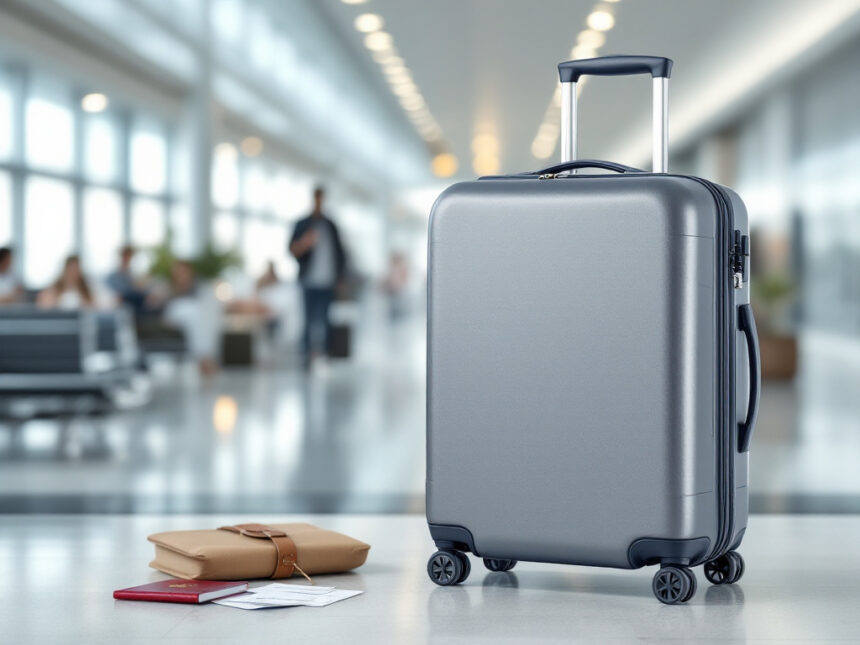
Travel days feel very different when your suitcase quietly does its job instead of getting flagged at the gate. Carry-on luggage expandable features promise more space for your stuff, but they also raise questions about size limits, surprise fees, and real-world usability.
Below, you will see how expandable carry-ons work, when they actually help, and how to choose one that keeps you out of the dreaded gate-check line.
Understand how expandable carry-ons work
Expandable carry-ons use an extra zipper or panel that adds depth and volume when you need it.
When the expansion is zipped shut, the bag should fit standard carry-on luggage dimensions for major airlines. When you unzip the expansion, a fabric gusset or lifting panel gives you a bit more room for clothes, souvenirs, or bulky items.
Typical expansion systems
Most expandable carry-on luggage relies on one of two systems:

- Perimeter expansion zipper
This is the most common. A secondary zipper runs around the bag. When you unzip it, a fabric panel appears and the shell or soft sides push outward, adding 1 to 2 inches of depth. Many hard-shell suitcases, including options like the Expandable Carry-On Pro from Monos, use this style and gain roughly 1.6 inches of extra depth. - Mechanical lift and compression system
Premium softside bags, such as the Briggs & Riley Baseline line, sometimes skip the expansion zipper altogether. Instead, you lift the case walls up to expand, pack, then press them down to compress everything back into a clean rectangular shape. This design adds a couple of inches of usable depth while keeping the exterior profile tidy and less “bulgy.”
Both approaches aim to turn a standard carry-on luggage into a more adaptable travel companion without sacrificing structure or durability.
Weigh the pros and cons of expansion
Before you commit to carry-on luggage expandable features, it helps to understand the trade-offs. Expansion can make travel smoother, but if you rely on it the wrong way, you increase your chances of paying fees or checking your bag.
Why expandable carry-ons are useful
Expandable cabin luggage is designed to solve everyday packing problems. Used well, it can:
- Give you 15 to 25 percent more packing capacity, which is especially handy for return trips with extra clothes or souvenirs. Some models, such as the 4MYTU Tank Carry-On, claim up to 35 percent more volume when fully expanded.
- Help you avoid overweight baggage fees by letting you redistribute weight across more space rather than cramming items into one tight compartment, a benefit that 4MYTU highlights in its 2026 overview of expandable designs.
- Reduce stress for frequent flyers. In one survey of expandable trolley cabin bags, nearly 78 percent of regular travelers reported higher satisfaction compared with rigid bags thanks to better organization and fewer excess baggage fees.
- Adapt to different trip lengths, so you can fly with the expansion zipped closed for quick 2 or 3 day work trips, then open it for a week-long vacation.
Many high quality bags that expand are still sized to meet standard cabin limits, about 55 x 40 x 20 cm when zipped, and only expand when you intentionally unlock the extra space. That keeps you in control of compliance instead of at the mercy of a “maybe it fits” guess.
The downsides you should know
The main issue is that extra space can tempt you to overpack.
Several 2024 and 2026 luggage tests and guides note the same pattern. When travelers unzip the expansion section, they often push their bag beyond airline carry-on size limits without realizing it. For example:
- Carry-on bags with expansion zippers that add just 1 to 2 inches of depth routinely turn a compliant suitcase into an oversized one that fails to fit airline sizers, which leads to unexpected gate-check fees.
- Automated scanners in some 2026 boarding areas measure bags including wheels and handles. If your expanded carry-on is even a millimeter over the size limit, it gets flagged and you pay.
- Gate agents have become very good at spotting overstuffed expandable bags simply by looking at the bulging sides against the frame.
For hard-shell cases, expansion can sometimes make the sides misalign slightly, especially if you really fill them, which can affect how smoothly the zipper closes, as a 2024 Pack Hacker guide noted. On smaller regional jets, even some popular expandable carry-on models have failed to fit overhead when expanded, including luxury options tested by Travel + Leisure in 2026.
The takeaway: expansion is helpful when you manage it, not when you depend on it for every flight.
Navigate airline rules and size limits
If you want carry-on luggage expandable features without constant anxiety at the gate, you need to think about airline rules before you buy and before you pack.
How airlines measure carry-ons in 2026
Airlines in 2026 are stricter and more precise than ever. Most now:
- Measure your bag including wheels, handles, corner bumpers, and any protruding pockets.
- Use sizers or automated scanners that instantly flag bags above the listed carry-on luggage size.
- Treat overstuffed expandable bags like full-size checked luggage, which can trigger fees at the gate.
That means you should treat the expanded size of your suitcase as “check-in only” unless your airline gives you very generous cabin dimensions.
If you are flying on specific carriers, it is worth combining an expandable bag with knowledge of their rules, for example:
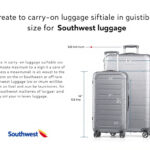
- Check the exact carry-on luggage size for Southwest if you often fly domestic routes in the US.
- Review carry-on luggage size for United Airlines and carry-on luggage size for American Airlines so your go-to suitcase stays within their limits when zipped.
You also need to keep an eye on carry-on luggage restrictions beyond size, such as weight caps and what you store in front pockets.
Expansion and weight limits
Even if your bag physically fits the sizer, weight rules still apply.
Many airlines cap cabin bag weight between 7 and 10 kg, and some are even stricter on smaller routes. Since expandable carry-ons are designed to hold more, it is surprisingly easy to go over the carry-on luggage weight limit when you open the expansion panel and “just add one more thing.”
Expandable capacity helps most when you use it to distribute weight more evenly, not to pack more heavy items than allowed. That strategy can reduce overweight carry-on fees that sometimes climb to around 100 dollars, which the 4MYTU blog points out in its 2026 analysis.
Use expansion strategically to avoid fees
You do not need to skip expandable carry-ons altogether. You just need a plan for how and when to use the extra space.
Pack outbound with the expansion zipped
The simplest rule is this: always pack your bag for your outbound flight with the expansion zipped closed.
Travel research in 2026 consistently advises this approach because:
- It keeps your suitcase within standard carry-on luggage airlines dimensions.
- You pass through check-in and the gate looking like every other compliant traveler, not someone trying to bend the rules.
- You keep a built-in buffer of extra space for the return journey.
If you are worried about space on the way out, consider decluttering your packing list or using carry-on luggage packing cubes before you turn to expansion.
Use expansion for return trips or checked bags
Expandable panels shine in two scenarios:
- Return flights
You leave home with your bag zipped down, then open the expansion to accommodate souvenirs, bulkier clothing, or gifts. Since you now know exactly how much space you have, you can decide whether to check the bag or still aim for overhead storage. - Intentional check-in
On trips where you already plan to check your suitcase, expansion gives you flexibility without carry-on constraints. Many travelers pack compactly on the way to their destination, then expand and check the same bag for the trip home.
Many travelers who use expandable cabin luggage in this way report roughly 40 percent fewer excess baggage fees compared with those relying on rigid, non-expandable cases, because you have more options when you need them.
Compare popular expandable carry-on options
If you are ready to upgrade, it helps to know what real-world tests say about specific expandable bags. Below is an overview that can guide your short list.
| Model | Type | Expansion | Best for |
|---|---|---|---|
| Travelpro Platinum Elite 21″ Expandable Spinner | Softside spinner | Classic expansion zipper, strong compression system | Frequent flyers who want durability and organization without a flashy look |
| Briggs & Riley Baseline Essential Spinner | Premium softside spinner | Mechanical 2 inch expansion and compression system | Business travelers who want a lifetime piece and neat rectangular packing |
| SwissGear Sion Softside 21″ | Budget softside spinner | Standard zip expansion, about 40 liter capacity | Occasional travelers who want affordable reliability |
| Travelpro Maxlite 5 21″ Expandable Spinner | Lightweight softside | Expansion zipper, large main compartment | Professionals who want one dependable workhorse bag |
| Monos Expandable Carry-On Pro | Hard-shell spinner | Wraparound zipper adds 1.6 inches | Style-conscious travelers and digital nomads with tech gear |
Travelpro Platinum Elite 21″ Expandable Spinner
Travelpro’s Platinum Elite line is often singled out as a top choice in 2026 for serious travelers. The 21 inch expandable spinner version stands out because it combines expansion with real-world practicality.
You get a durable ballistic nylon exterior that resists scuffs, magnetic self-aligning spinner wheels for smoother rolling, and thoughtful extras like:
- A removable TSA compliant wet case for toiletries.
- A discreet pocket for a power bank so you can charge devices while waiting at the gate.
- A folding garment bag that keeps suits or dresses relatively wrinkle free on short trips.
The interior expansion and compression system helps you pack for a full week while maintaining a streamlined exterior profile that is less likely to catch a gate agent’s eye. It is a solid fit for both frequent leisure travelers and business trips.
Briggs & Riley Baseline Essential Spinner
Briggs & Riley is known for premium luggage, and the Baseline Essential Spinner is frequently mentioned as a favorite expandable softshell carry-on.
Instead of a typical expansion zipper, it uses a proprietary one-touch expansion and compression system that lifts the bag walls. You unlock the expansion, pack into the extra depth, then press the system down to compress your belongings into a clean rectangular shape. This helps the bag stay boxy instead of rounded and bulging.
Other standout details include:
- A ballistic nylon exterior with reinforced edges.
- Multiple padded carry handles for quick grab and go moves.
- A hidden ID tag and an exterior pocket for a power pack.
If you are a business traveler who wants a lifetime bag that looks professional in any airport lounge, this one is worth a close look even at a higher price point.
SwissGear Sion Softside Expandable 21-Inch
If you want something functional without a premium price, the SwissGear Sion 21 inch softside expandable spinner is a strong budget pick.
You get about 40 liters of capacity when expanded, with useful details like:
- Interior and exterior pockets for small items.
- A removable toiletry bag.
- Smooth rolling wheels that feel comfortable for occasional travel.
It will not feel as refined as a top-tier brand, but for a few annual trips and the occasional short business flight, it covers the basics without stretching your budget.
Travelpro Maxlite 5 21″ Carry-On Expandable Spinner
The Travelpro Maxlite 5 line is frequently highlighted in luggage reviews as one of the best expandable carry-on options for people who fly often for work.
This 21 inch spinner is praised for:
- A large main compartment with enough structure to keep clothes in place.
- A zippered organizer lid and internal compression straps.
- Two external pockets for quick access items like boarding passes and chargers.
Reviewers in 2024 noted that it hits a nice balance of light weight and durability, so if you care about lightweight carry-on luggage that can expand when needed, this model is a strong candidate.
Monos Expandable Carry-On Pro
Monos has built a reputation around clean aesthetics and smart details, and the Expandable Carry-On Pro is a good example of that approach.
This suitcase uses a wraparound zipper to add 1.6 inches of depth for last-minute items and travel mementos. Monos notes that it fits within the baggage sizers and overhead bins of major airlines across North America, Europe, Asia, and Oceania when packed correctly.
Key features include:
- A polycarbonate shell that is dent resistant and impact friendly.
- A built in front compartment with organized pockets for a 16 inch laptop and travel essentials.
- A TSA accepted lock and whisper quiet wheels.
- An aluminum telescopic handle with a hidden release button.
Monos also offers a 100 day trial period and a limited lifetime warranty, with optional extended coverage. If you want a refined look plus laptop access in one case, this design checks a lot of boxes for work trips.
Choose the right size and style for your flights
Once you commit to carry-on luggage expandable features, you still need the right shape, shell, and layout for how you travel.
Pick a universal, airline friendly size
To keep things simple, look for carry-on luggage that, when zipped closed, stays within a “safe” universal size. Many experts recommend around 55 x 35 x 20 cm for international travel, or the US equivalent that fits the strictest of your usual airlines.
Then, confirm:
- Zipped dimensions line up with the tightest carry-on luggage dimensions you will encounter.
- Expanded dimensions are something you use intentionally, not by default.
If you often fly US carriers like Southwest, United, or American, it is worth bookmarking guides for each, such as carry-on luggage size for Southwest, carry-on luggage size for United Airlines, and carry-on luggage size for American Airlines.
Hard shell vs soft shell for expansion
Both shells work with expansion, but they behave differently.
- Hard shell expandable carry-ons
Often use a perimeter zipper. They protect fragile items better and look sleek, especially in carry-on luggage hard shell designs. The downside is that when you expand and overfill them, the halves can misalign slightly and look bulgy. Some models also become non compliant on certain airlines once expanded, as Pack Hacker pointed out in its 2024 guide. - Soft shell expandable carry-ons
Typically manage expansion more flexibly and can “give” a little inside overhead bins. Many professional travelers prefer softside fabrics like ballistic nylon because they handle frequent expansion and compression well. Bags like the Travelpro Platinum Elite and Briggs & Riley Baseline are good examples of this approach.
If you prioritize structure and protection, hard shell might win. If you want more forgiving expansion and external pockets, soft shell usually feels better.
Match features to your travel style
Beyond expansion itself, your best carry-on is the one that fits how you actually move through airports, hotels, and city streets.
For business and work trips
If you are traveling for work, you probably care about:
- A clean, professional look.
- Organized interior and exterior pockets.
- Safe storage for your laptop and documents.
Expandable carry-on luggage with a front tech compartment lets you slide your laptop out at security and during meetings without opening the main packing compartment. Bags that fall into the carry-on luggage with laptop compartment category are especially helpful, and models like the Monos Expandable Carry-On Pro or Briggs & Riley options are designed with this in mind.
For frequent flyers and power travelers
Endurance matters when you are on planes every month. Focus on:
- Rugged fabrics or shells, such as ballistic nylon or aircraft-grade polycarbonate.
- High quality zippers, often YKK, that tolerate frequent expansion.
- Smooth carry-on luggage with wheels, ideally 360 degree spinners that roll quietly.
- Proven brands with strong warranties, which you can explore further in roundups of carry-on luggage brands and durable carry-on luggage.
You might lean toward premium expandable options like Travelpro or Briggs & Riley, then treat expansion as an occasional bonus instead of an always on feature.
For occasional vacation travelers
If you travel a few times a year and want “simple, reliable, not too expensive,” it often makes sense to:
- Choose a mid-range or budget-friendly expandable case, such as the SwissGear Sion or Amazon Basics expandable 21 inch hardside spinner.
- Make sure it rolls smoothly and feels comfortable to lift into overhead bins.
- Confirm that it stays within limits when zipped closed, and practice packing at home before a big trip.
You can watch carry-on luggage reviews and look for real-world photos of bags in airline sizers to get a better idea of what compliance looks like.
Pack smarter inside an expandable carry-on
Even the best expandable bag cannot help if the inside is a mess. A few smart habits make expansion feel like a helpful extra instead of a crutch.
Use cubes and compression mindfully
Packing cubes and compression systems are some of the easiest ways to maximize space without over-relying on expansion. They:
- Keep like items together so you can find them quickly.
- Let you compress softer clothing so the rest of the bag feels less crowded.
- Make it easier to decide what to move into the expanded section if you open it later.
A dedicated set of carry-on luggage packing cubes sized for your suitcase helps you stay organized, even if you never open the expansion zipper.
Separate “must access” from “nice to have”
When you overload external pockets, especially on expandable bags, you increase the risk of protruding bulges that make your suitcase fail a sizer test.
Instead, try this:
- Store essentials like your passport, wallet, phone, and boarding pass in a small personal item or front pocket, but keep those areas streamlined.
- Reserve the thickest part of your main compartment for bulkier items like shoes or hoodies.
- Use the expanded section for lower-priority items that you will not need mid-flight, especially on return legs when you might accept checking the bag.
That way, your carry-on looks neat and compact during boarding, even if it hides a highly organized interior.
Decide if expansion is right for you
Not every traveler needs carry-on luggage expandable features. For some, the temptation to overpack outweighs the benefits. For others, expansion is a lifesaver on longer or more complex trips.
You are a strong candidate for an expandable carry-on if:
- You routinely return home with more than you left with.
- You fly both short business trips and longer vacations and want one suitcase that can handle both.
- You want to minimize the chance of paying overweight or extra bag fees by redistributing items.
If you prefer to travel extremely light and never check a bag, a fixed size lightweight carry-on luggage option might suit you better. That simplicity can make packing easier if you know you will not be tempted to unzip an expansion panel right before heading to the airport.
Key takeaways and next steps
Carry-on luggage expandable features give you flexibility, but they work best when you use them intentionally, not automatically.
Keep these points in mind:
- Choose a bag that is compliant when zipped closed and only expand when you can afford the size or weight trade-off.
- Learn your airline’s specific cabin rules and double check your go-to carrier’s carry-on luggage size.
- Treat expansion as a bonus for return trips or planned check-in, not as everyday capacity.
- Invest in smart interior organization so your bag feels roomy even without unzipping the expansion.
If you are ready to upgrade, start by browsing guides to the best carry-on luggage and compare a few expandable models that fit your most common routes. With the right suitcase and a thoughtful packing plan, you can enjoy extra space when you want it without sacrificing the convenience of keeping your bag with you from takeoff to touchdown.
FAQs
What does “expandable carry-on luggage” actually mean?
It means the suitcase has a built-in expansion section (usually a zipper gusset) that increases depth when opened, giving you extra volume for packing.
Will an expandable carry-on fit airline sizers?
It usually fits when zipped closed. When expanded, many brands explicitly warn it may not meet airline restrictions.
Do airlines count wheels and handles in carry-on size?
Yes—at least some airlines state sizing includes handles and wheels, so measure the whole bag.
Is expandable luggage better for short trips or long trips?
Best for variable trips: 2–3 day trips zipped closed, longer returns or souvenir-heavy trips with optional expansion.
Hard shell or soft shell: which expands better?
Softside tends to expand more “naturally” and offers exterior pockets; hardside protects fragile items better but can bulge when overfilled.
How do I avoid gate-check fees with an expandable carry-on?
Pack outbound with expansion closed, keep exterior pockets slim, and only expand when you’re okay checking the bag or you’re confident your airline’s limits allow it.
Do packing cubes help even if my bag expands?
Yes—cubes help keep the bag from bulging and make it easier to control what goes into the expanded section.
What about TSA rules for toiletries in carry-ons?
Liquids in carry-on must follow TSA’s 3-1-1 rule (quart bag; containers up to 3.4 oz/100 ml).