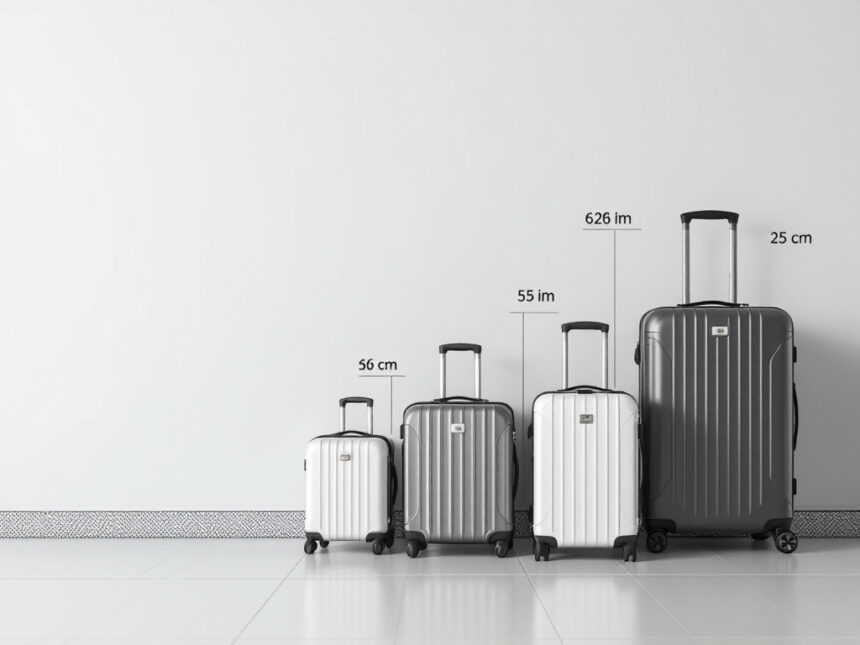
Carry-on luggage size sounds boring—until a gate agent points you to the sizer and your “carry-on approved” suitcase suddenly isn’t. The right dimensions save you money, time, and stress: no surprise fees, no forced gate-check, no baggage-claim detours.
Because airlines set their own limits, the smartest move is choosing a bag that fits the most common standards, then packing in a way that stays within both size and weight rules.
In this guide, you’ll learn the real-world carry-on measurements to target, how to measure correctly, and how to pick the best bag style for your travel routine every single time.
Why carry-on luggage size matters
If you fly often, you already know that your carry-on luggage size can make or break your trip. A bag that is just an inch too big can mean surprise fees, gate checking, and waiting at baggage claim when you would rather walk straight out of the airport.
There is no single global standard for carry-on luggage size. Every airline sets its own rules, and they change them more often than most travelers realize. That is why it helps to understand the typical dimensions, how to read size charts, and how to choose a bag that works for most of your trips.

Once you understand the basics of carry-on luggage dimensions, you can pick a suitcase that glides into overhead bins without drama and fits the way you like to travel.
Learn the standard carry-on size
Most major airlines, especially in the United States, cluster around one common size. If you are shopping for carry-on luggage, this is the number to keep in mind.
The most common standard
For many airlines, the maximum carry-on luggage size is:
22 x 14 x 9 inches (56 x 36 x 23 cm), including wheels and handles
Research across dozens of airlines shows that this 22 x 14 x 9 inch size is accepted by the majority of carriers as of 2024 and 2026. Multiple airline policy summaries point to the same dimensions as the typical upper limit for domestic U.S. flights and many international routes.
Some carriers, like Southwest and Frontier, are a bit more generous and allow bags up to about 24 inches tall, but if you want a carry-on that works across most airlines, 22 x 14 x 9 inches is a safe target.
Domestic vs international expectations
You will see two slightly different patterns when you compare U.S. and non U.S. airlines:
- In the U.S., the standard cabin bag size is usually 22 x 14 x 9 inches. Several airlines allow up to 24 inches in height, but the 22 inch size is more universal.
- Outside the U.S., typical carry-on height is closer to 21 or 22 inches, and airlines tend to pay much more attention to weight than U.S. carriers do.
For international flights, many airlines list carry-on size limits around 22 inches tall, 15 inches wide, and 10 inches deep. That means some larger carry-ons that are fine on U.S. domestic routes may get gate checked when you connect to or from foreign carriers.
If you often fly both domestic and international, choosing a bag that is close to the 22 x 14 x 9 inch standard keeps your life simpler.
Understand airline rules and fine print
Airline baggage pages can feel confusing at first glance, yet they follow a few consistent patterns. Once you know what to look for, you can check your preferred route in minutes and avoid surprises.
Size vs weight vs piece count
Carry-on rules usually have three parts:
- The maximum bag dimensions
- The carry-on luggage weight limit
- How many pieces you can bring
There is no universal rule for any of these. For example:
- Many U.S. airlines limit size to 22 x 14 x 9 inches and do not list a strict carry-on weight limit for most routes. Instead, they expect you to be able to lift your bag into the overhead bin yourself.
- Several international airlines set carry-on weight limits between about 16 and 18 pounds, or roughly 7 to 8 kilograms, and enforce them at check in or the gate.
- A few carriers are stricter than average. One large Middle Eastern airline, for example, does not allow carry-on bags longer than about 20 inches in economy and counts your laptop toward that allowance.
Because each airline can update its policies at any time, your safest approach is to check your airline’s current carry-on rules before you pack. Airlines publish this information on their websites, and travel resources regularly summarize them using official charts and policy documents.
The role of your personal item
On many airlines, you can bring one carry-on bag plus one personal item, such as a laptop bag, slim backpack, or handbag. Personal items must fit under the seat in front of you.
Typical personal item limits are around:
- 18 x 14 x 8 inches, or about 40 to 45 total linear inches
Some airlines actively list size and weight rules for personal items. Others simply require that the item fit under the seat. A few exceptions exist, such as smaller regional airlines that may only allow one cabin bag without any extra personal item.
If you like to travel with a laptop, a small crossbody bag, and a rolling suitcase, it is worth checking how your favorite airlines define personal items and how strict they are.
Compare popular airline carry-on sizes
If you tend to fly with the same carriers, it helps to learn their specific numbers so that your bag works trip after trip.
Major U.S. airlines
Most large U.S. airlines align with the 22 x 14 x 9 inch standard. For example, American Airlines lists 22 x 14 x 9 inches, including handles and wheels, and specifies that your bag must fit into their airport sizer. They also limit personal items, such as purses or small handbags, to 18 x 14 x 8 inches and require them to fit under the seat in front of you.
Regional flights can be trickier. On some American Eagle regional jets, overhead bin space is limited and you may need to valet your bag at the gate if it is larger than a personal item. In those cases, your bag is checked plane side for free and returned on the jetbridge when you land.
United, another major U.S. carrier, uses similar 22 x 14 x 9 inch limits for standard economy passengers. If you fly in basic economy on certain domestic routes, however, you may be limited to a personal item only, with no full-size carry-on allowed. Knowing that in advance helps you decide whether to upgrade or pack differently. For more details on specific airlines, you can check guides like carry-on luggage size for united airlines and carry-on luggage size for american airlines.
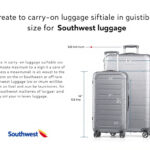
Southwest is a bit more generous. They allow carry-on bags up to 24 x 16 x 10 inches, which gives you roughly 30 percent more packing volume compared with a strict 22 x 14 x 9 inch bag. If you are buying luggage mainly for Southwest flights, you can use a slightly taller suitcase. If you fly a mix of airlines, a smaller 22 inch bag gives you more flexibility. You can learn more in focused guides like carry-on luggage size for southwest.
International and regional differences
Once you step outside the U.S., carry-on rules can feel tighter. International airlines often:
- Limit carry-on height to around 21 to 22 inches
- Set strict weight limits, often in the 7 to 12 kilogram range
- Enforce total linear size for checked luggage, usually up to 62 inches
For example, some European airlines cap carry-on weight at about 17 pounds, while others allow up to roughly 26 pounds or more. British Airways is one of the more generous carriers on weight, permitting cabin bags up to about 23 kilograms on many routes, which is over 50 pounds.
Other airlines, such as certain South American carriers, may only allow one cabin bag and no separate personal item. Premium cabins sometimes receive better allowances, such as two carry-on pieces with a combined weight of about 40 pounds plus a personal item.
Because these details change, travel sources strongly recommend checking your airline’s baggage page or up to date comparison charts, especially when you connect between U.S. and non U.S. flights or when you fly with budget carriers that monetize baggage fees.
Measure your carry-on the right way
You might be surprised how often a “standard carry-on” bag is actually too big once you measure it properly. Measuring correctly protects you from awkward moments at the gate.
Include every part of the bag
When you check your own carry-on luggage size, measure:
- Height from the ground to the top of the bag, including wheels and top handle if it is fixed
- Width across the bag from side to side at its widest point
- Depth from front to back, including front pockets
Manufacturers sometimes list the size of the main shell without handles and wheels, which can understate the true dimensions. Airlines and third party guides stress that you must include wheels and handles because those extra inches are what stop a bag from fitting in the overhead bin.
It is smart to measure your bag when it is fully packed. Front pockets can bulge, expansion zippers can add depth, and even a stuffed laptop compartment can push your bag past the limit.
If you want to double check that you meet airline limits, travel resources recommend adding height, width, and depth together to get the total linear inches, then rounding up. This is especially useful for checked luggage, where the international standard is usually around 62 linear inches.
Weigh your bag fully packed
Just as important as physical size is the packed weight of your bag. Since international carriers often enforce weight limits of roughly 16 to 18 pounds for carry-ons, it is worth using a small luggage scale once you finish packing.
Weigh:
- The bag by itself, when empty. This helps you compare lightweight carry-on luggage options.
- The bag once it is fully packed with clothes, shoes, and your typical items.
- The bag again after you add heavy extras, such as a laptop, power bank, or toiletries.
A few extra items can easily push you over a strict weight limit, especially if your carry-on is already on the heavier side.
Pick the best size for how you travel
Once you understand airline rules and how to measure your bag, you can choose a carry-on luggage size that fits your travel style, not just the sizer at the gate.
If you are a frequent flyer
If you fly often and hate checking bags, prioritize a carry-on that:
- Fits within 22 x 14 x 9 inches so it works on most airlines
- Is relatively light, so you stay under tough weight limits more easily
- Has smooth, durable wheels, especially if you often rush through large airports
Frequent travelers tend to appreciate durable carry-on luggage with strong zippers, reinforced corners, and quality telescoping handles. Paying attention to real world carry-on luggage reviews can help you spot models that roll smoothly and survive repeated trips without cracked shells or bent handles.
If you are an occasional vacation traveler
If you travel once or twice a year and just want something simple and reliable, you can keep things straightforward:
- Choose a standard size carry-on around 22 x 14 x 9 inches.
- Skip complicated features you do not need.
- Look for a good balance of price and quality, then watch for a carry-on luggage sale or carry-on luggage deals to get better value.
An expandable carry-on can be useful for vacationers who shop more on the return leg. Just remember that when you expand a carry-on luggage expandable bag, it may no longer meet strict size rules, especially on smaller aircraft.
If you are a business traveler
If you travel for work, you probably care as much about organization as you do about size. In addition to standard dimensions, look for:
- A quick access pocket for your laptop or tablet
- A layout that keeps your work clothes neat
- A clean, professional exterior
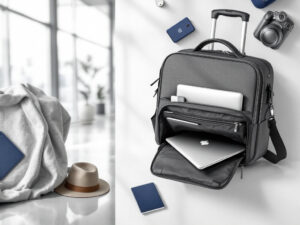
You might prefer a suitcase with a built in laptop sleeve, or pair a standard carry-on with a dedicated carry-on luggage with laptop compartment. If you are constantly in and out of security lines, it can also help to choose carry-on luggage tsa approved that is designed with checkpoint friendly features in mind.
Choose between hard shell and soft-sided bags
Bag material does not change your carry-on luggage size, but it does affect how you use your space and how durable your suitcase feels.
Hard shell carry-ons
A carry-on luggage hard shell suitcase:
- Protects fragile items better
- Has a more fixed shape, which can help you stay within airline size limits
- Is easier to wipe down and keep looking clean
On the other hand, hard shell bags do not flex much. If you tend to overpack or stuff your front pockets, you might bump up against size restrictions more quickly.
Soft-sided carry-ons
Soft-sided bags:
- Offer more exterior pockets for quick access
- Flex a little when you squeeze them into tight overhead bins
- Are often slightly lighter than comparable hard shell cases
If you choose a soft bag that can expand, be careful about when you use the expansion. Expanded bags can easily exceed limits that airlines set for carry-on luggage size. When in doubt, zip the expansion closed before boarding, then open it after you land.
Do weight limits change your ideal size
Your carry-on luggage weight limit can be just as important as your carry-on luggage size, especially when you fly internationally.
How U.S. and international weight rules differ
Most large U.S. airlines either do not list carry-on weight limits at all or only apply them on specific routes. Instead, they expect you to be able to lift your bag into the overhead bin without assistance. Travel guides note that for many domestic U.S. carriers, you will rarely see your bag weighed unless it clearly looks oversized or unusually heavy.
Internationally, it is a different story. Many airlines:
- Set carry-on weight limits between 7 and 12 kilograms, roughly 16 to 26 pounds
- Enforce these limits at the check-in counter or gate
- May ask you to check your bag if it exceeds the listed weight, even if it meets the size rules
Some carriers are more generous. One major European airline allows carry-ons up to about 23 kilograms in some cabins, another allows 12 kilograms, and others use lower caps around 8 kilograms. These numbers come directly from airline policy summaries and comparison charts that track baggage allowances.
What that means for your bag
If you mostly fly domestically in the U.S., a slightly heavier yet tougher suitcase might be fine. If you often connect on international airlines, a lighter bag gives you more room in your weight budget for clothes, shoes, and electronics.
In that case, shopping for carry-on luggage lightest weight models can be worth it. Every pound saved in the shell is a pound you can use for your own gear.
Balance capacity, comfort, and compliance
Finding your ideal carry-on luggage size is really about balancing three things: how much you pack, how you like to move through airports, and the rules your airlines use.
Think in terms of volume, not just inches
A 22 x 14 x 9 inch rolling suitcase will typically hold enough for about 3 to 7 days for many travelers, especially if you use smart packing methods. You can stretch that further by:
- Rolling clothes instead of folding
- Packing shoes efficiently
- Using carry-on luggage packing cubes to compress items
If you are a minimalist packer, you might prefer a carry-on luggage backpack that meets personal item size limits. Some backpacks are designed to fit under the seat in front of you while still carrying several days of clothing, which can be helpful if you want to skip overhead bins entirely.
Comfort and mobility in the airport
Wheels and handles make just as much difference as size. A carry-on luggage with wheels setup that glides smoothly through tile, carpet, and sidewalks can turn long walks between gates into a non issue.
When you compare options, pay attention to:
- Handle height, especially if you are tall
- Wheel quality and stability
- How easily the bag maneuvers around corners and through tight aisles
If you frequently travel with kids, you might also look for special options like carry-on luggage for toddlers, which are sized and designed specifically for little travelers.
Match carry-on features to your needs
Once you know your target size, you can focus on features that make your trips smoother without getting distracted by extras you will never use.
Tech friendly extras
Modern carry-ons often come with built in tech features, such as:
- USB ports or removable battery packs
- TSA compatible locks
- Laptop compartments
If you like to keep your phone charged, carry-on luggage with charger can be handy. Just keep airline and security rules in mind. Many carriers require lithium batteries to be removable, and you must usually take power banks out of the bag at security.
If you prefer integrated locks, look for carry-on luggage with tsa lock so that screeners can open and re lock your bag if needed without damaging it.
For devices, you can choose between a suitcase with its own tech section or a separate bag, such as carry-on luggage for laptop, that you use as your personal item.
Style and personalization
Your carry-on can be both functional and expressive. You might want:
- A classic, understated look from well known carry-on luggage brands
- A unique color or monogram to spot quickly on the jetbridge
- A design tailored to you, such as carry-on luggage personalized options
If you often share a bag with a partner, roommate, or family member, personalization can also help you avoid mix-ups.
Gender and style specific options
Some brands market specific collections, such as carry-on luggage for men, that emphasize darker colors, certain pocket layouts, or particular styling. Whether those are right for you comes down to preference. The most important part is still that the bag meets your size needs and feels comfortable to use.
Avoid common carry-on size mistakes
Once you choose your ideal carry-on luggage size, a few simple habits will help you avoid headaches on travel day.
Relying on marketing labels alone
Bag tags that say “carry-on approved” or “meets airline standards” are not enough by themselves. Because there is no universal industry standard for carry-on, those labels can mean different things for different brands.
Instead, compare the listed dimensions to the actual airline rules you care about most. When in doubt, use the stricter numbers as your guide.
Ignoring expansion and packed bulk
If your suitcase has an expansion zipper, it is easy to forget how much extra depth you gain when it is open. Fully stuffed front pockets or overloaded outer compartments can also push your bag past its allowed size.
Before you leave for the airport, close any expansion panels and check the bag’s overall height, width, and depth. If everything is within your airline’s rules when the bag is zipped up, you are far less likely to run into problems at the gate.
Forgetting about your personal item
If your airline allows one carry-on plus one personal item, it can be tempting to treat your personal item like a second small suitcase. A large backpack that is technically within the dimensions of a standard carry-on might not fit under the seat, and gate agents may ask you to check it.
Stick to a true under seat bag, such as a slim backpack, briefcase, or tote that fits the typical 18 x 14 x 8 inch personal item guidelines. Purpose built under seat suitcases, like the kind designed to meet personal item dimensions, can be helpful if you want more structure and rolling wheels underneath the seat area.
Put it all together and pick with confidence
Choosing your ideal carry-on luggage size is not about memorizing every airline’s rules. It is about understanding the common standards, knowing how to measure your bag the right way, and matching your suitcase to the way you actually travel.
If you want a one bag solution that works almost everywhere, aim for a 22 x 14 x 9 inch carry-on, measured with wheels and handles included. Combine that with a reasonable weight, a comfortable handle and wheel setup, and the right interior layout, and you will have a bag that moves with you instead of slowing you down.
When you are ready to shop, you can explore the best carry-on luggage options, compare different carry-on luggage airlines requirements, and keep an eye out for TSA friendly and lightweight designs that match your budget and style.
A few minutes spent checking sizes and rules now can save you from gate check surprises later, so you can roll straight off the plane and get on with your trip.
FAQs
What is the most common carry-on luggage size?
A widely accepted target is 22 x 14 x 9 inches, measured including wheels and handles. It’s explicitly listed by major carriers like American Airlines.
Do airlines measure carry-on bags including wheels?
Yes—many airline rules specify the total size includes wheels and handles, which is exactly why “shell-only” dimensions can mislead you.
What’s a typical personal item size?
It varies, but airlines often publish a smaller limit meant to fit under the seat (for example, American Airlines lists a separate personal-item allowance).
Why do international airlines care more about carry-on weight?
Many international carriers publish strict cabin weight caps (e.g., 7 kg for some economy allowances), and enforcement can happen at check-in or the gate.
Can I bring a power bank in my carry-on?
Yes—power banks must be in carry-on, not checked luggage. If your carry-on gets gate-checked, you should remove spare lithium batteries/power banks and keep them with you.
What’s the rule for liquids in carry-on bags?
TSA’s 3-1-1 liquids rule allows a quart-sized bag of liquids in 3.4 oz (100 ml) containers.