You can measure your suitcase to the inch, pick the perfect spinner, and still get stopped at the gate for one simple reason: weight. Carry-on luggage weight limits are the quiet rule that catches travelers off guard, especially once international flights, basic fares, and regional aircraft enter the mix. What works on a domestic U.S. route may fail fast on a Europe, Asia, or Australia itinerary.
This guide breaks down how carry-on weight limits really work, why airlines enforce them differently, and how to pack smarter with the right bag, better strategy, and fewer last-minute surprises standing beside the boarding line in public.
Why carry-on luggage weight limits matter more than you think
If you have ever stood at the gate silently praying your bag does not get tagged for checking, the carry-on luggage weight limit is already part of your life. Airlines are tightening rules, overhead bins are shrinking, and travelers are finding out the hard way that size is only half the story. Weight matters just as much.
You care about dimensions, especially if you are comparing carry-on luggage size across airlines. Yet if your bag is technically the right size but too heavy, it can still be weighed, tagged, and checked, sometimes with fees you did not budget for. This guide walks you through how carry-on luggage weight limits work, where they vary, and how you can pack smarter so you roll onto the plane instead of waiting at baggage claim.
The basics of carry-on luggage weight limits
Carry-on luggage weight limits exist for two main reasons, safety and operations. Every airline has to plan the weight onboard an aircraft so it can take off safely. That includes passengers, fuel, and all bags. Aviation regulators in countries like Australia even assume a standard carry-on baggage weight of about 7 kg per passenger for planes such as the Boeing 737 that seat 150 to 299 passengers. Individual airlines can set different limits, but those still have to be approved by regulators like the Civil Aviation Safety Authority.

Operationally, heavy bags slow down boarding and overwhelm overhead bins. That is why you see gate agents checking bags aggressively and why airlines enforce carry-on baggage limits and charge extra when you exceed them. Many travelers try to avoid checked bag fees by pushing more into carry-ons. Airlines respond by weighing more bags at the gate, especially on full flights or in smaller cabins.
In practice, you have two sets of limits to think about, the size of your carry-on luggage and its weight. Size issues are usually caught at security or check in when bags do not fit in the sizer. Weight issues often show up at the gate, which is the worst possible time to discover you need to pay to check a bag.
How carry-on weight rules differ by region
You might assume that once you know your favorite airline’s rules you are set. The catch is that carry-on luggage weight limits change as soon as you cross borders or switch to a partner airline. The same bag that flies free in the United States might be overweight in Europe or Asia.
Domestic United States flights
On most major domestic U.S. airlines, there is usually no explicit weight limit for standard carry-on bags. As of 2024, many carriers focus on size, not weight, provided you can lift your bag into the overhead bin without help. The typical upper size limit for domestic airlines, such as the 22 x 14 x 9 inch style you see in many best carry-on luggage lists, is still the key factor.
However, this does not mean you can pack unlimited weight. Gate agents can still intervene if your bag is obviously overloaded, if overhead bins are full, or if you are on a smaller regional jet with restricted space. American Eagle regional flights, for example, impose additional restrictions on overhead bin space and often require larger bags to be valeted and checked at the gate, except on certain aircraft like the Embraer ERJ 175, which can accommodate standard carry-ons.
International routes and stricter weight limits
Once you leave domestic U.S. routes, carry-on luggage weight limits become much more precise. According to the latest Travelpro guide, the allowable weight for carry-on luggage on international flights generally cannot exceed around 16 to 18 pounds. This is significantly lower than the typical 35 pound assumed limit for many domestic U.S. flights.
Most international airlines set the maximum carry-on bag weight at around 22 pounds, or 10 kg, and carry-ons may be weighed at the gate to enforce this limit. If you are over, you can be charged fees or required to check the bag. This is where using lightweight carry-on luggage really starts to matter, because every pound your suitcase adds is one less pound of clothing or gear you can bring.
A few airlines stand out. British Airways is an exception among international carriers, with a notably high carry-on weight limit of about 51 pounds for international travel. While this is generous, it is not a reason to relax. If your itinerary involves partner airlines or connecting flights on carriers with stricter rules, their lower limit can still apply for parts of your journey.
Example international weight rules
Below is a quick snapshot of how some airlines structure their hand baggage weight:
- Aeroméxico allows a carry-on bag and a personal item with a combined weight limit of about 22 pounds for international flights and basic fare domestic flights within Mexico.
- Aer Lingus Regional generally caps carry-on at around 18.5 x 13 x 8 inches with a 15 pound weight limit on many flights around Ireland and the U.K.
- Air France groups your personal item and carry-on bag as “hand baggage”. For economy travelers, the combined weight must be no more than about 26 pounds, while premium economy and higher cabins can carry closer to 40 pounds.
- Delta Air Lines imposes a 22 pound carry-on weight limit for flights to or from Beijing or Shanghai, and a 15 pound limit for flights to or from Singapore, even though domestic flights do not normally have a published carry-on weight cap.
These variations are why it helps to think in terms of a flexible system, not a single rule. If your usual packing style is to max out your bag on a domestic schedule, you will want to scale back for international routes or build a packing list around a much lighter base bag.
Airline-by-airline examples you should know
You do not need to memorize the chart for every airline in the world, but a few major examples will give you a good feel for how carry-on luggage weight limits show up in real life.
American Airlines and American Eagle
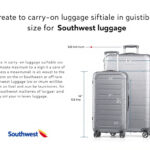
American Airlines allows you to bring one personal item and one standard carry-on bag. The carry-on cannot exceed 22 x 14 x 9 inches, including handles and wheels, and it must fit in the sizer at the airport. There is no universal pound limit on most domestic routes, but the key phrase is that you must be able to store it in the overhead without assistance.
Personal items, such as purses or small handbags, must fit completely under the seat in front of you and cannot exceed 18 x 14 x 8 inches. Soft-sided garment bags are allowed as carry-ons if the total dimension sum, length plus width plus height, does not exceed 51 inches or 130 cm.
If you are flying an American Eagle regional flight, overhead bin space is much tighter. These flights often require carry-on bags larger than personal items to be valeted and checked at the gate free of charge, except on Embraer ERJ 175 aircraft, which allow larger carry-ons and do not use the valet service. That means even if your bag meets the main American Airlines rules, the smaller plane on your connecting leg may still force a gate check.
Musical instruments can count as carry-ons if they fit either in the overhead bin or under the seat. If they are larger, you may need to buy an extra seat or check the instrument. If you travel regularly with a guitar, violin, or similar item, it is worth having a dedicated, light but protective case so you stay within size and weight rules as comfortably as possible.
Australian airlines and new weight caps
Australian travelers are facing a shift in carry-on expectations. From February 2, 2026, Virgin Australia will limit economy passengers on domestic flights to one standard sized cabin bag weighing up to 8 kg for the overhead locker, plus a small personal item that must fit under the seat. This change is a response to growing overhead bin pressure and is intended to improve boarding efficiency.
Within Australia, Qantas and Jetstar show how two airlines flying the same aircraft type can enforce different rules. Jetstar permits up to 7 kg of carry-on luggage distributed across two items, for example a suitcase and a small bag, while Qantas allows its own specific carry-on allowances based on cabin class and route. The key point is that while regulators may assume a baseline 7 kg per passenger on aircraft like the Boeing 737, each airline can tighten or relax that within approved limits.
For you, that means every Australian domestic flight deserves a fresh look at the fine print. It is especially important if you are traveling on basic or sale fares where free checked baggage is limited or does not exist.
Basic fares and personal item only rules
Several airlines, including Air Canada, have moved to restrict the most budget friendly fares to just a personal article. Air Canada, for instance, limited basic fare passengers to only one personal article on flights across North and Central America. This means that what you might think of as your regular rollaboard no longer qualifies as free, even if it meets size and weight limits for higher fare classes.
If you often chase the lowest price at booking, get into the habit of checking both the carry-on luggage weight limit and whether a standard carry-on is even included. Sometimes upgrading one fare level can save you money if it avoids gate check fees on both your outbound and return flights.
How weight limits interact with size and design
Weight is only half the equation. Your bag’s overall design, materials, and layout also affect how easily you can stay within the carry-on luggage weight limit. Two suitcases that look the same size can put you in very different positions at the scale.
A heavy, older suitcase with a thick frame and bulky hardware might use up 9 or 10 pounds of your allowance before you even start packing. In contrast, a modern lightweight carry-on luggage option can give you several extra pounds of “packing room” without changing your airline’s limit at all.
Hard shell vs soft side
Hard shell designs often protect your belongings well and slide easily into overhead bins. If you gravitate toward that style, look for carry-on luggage hard shell models that use lighter polycarbonate or similar materials rather than heavier plastics. Well designed hard shells also have flush handles and low profile wheels that keep external dimensions in check.
Soft sided bags are more forgiving in tight sizers and can be slightly lighter, particularly in carry-on luggage with wheels made of high denier fabric. If you tend to pack oddly shaped items or need expandable capacity, a carry-on luggage expandable model can flex to your needs but be sure not to overfill it before a strict international flight. Expansion is helpful on the way home when you are prepared to check a bag, not when you are trying to keep it onboard.
Backpacks and personal items
A well structured carry-on luggage backpack can pull double duty as both a carry-on and a personal item, depending on the size. For stricter airlines that weigh personal items too, remember that your laptop, cords, and work essentials can easily add 5 to 8 pounds. If you travel for business, a carry-on luggage with laptop compartment or dedicated carry-on luggage for laptop with easy access can keep your electronics organized without tempting you to overload a secondary bag.
When you are on a fare that allows only one personal article, consider a compact bag that maximizes under seat dimensions. Some travelers even use carry-on luggage packing cubes inside a backpack to structure outfits the same way they would in a suitcase.
Domestic vs international weight mindsets
The most common packing mistake is assuming your “home” rules travel with you. If you fly mainly within the United States, you probably build your habits around generous size allowances and rarely having your bag weighed. On a European or Asian itinerary, that same mindset can lead to surprise check-in fees and repacking drama at the gate.
For domestic U.S. trips, think in terms of balance. There may be no strict carry-on luggage weight limit, but a bag that is comfortably under 30 to 35 pounds and fits standard carry-on luggage dimensions such as 22 x 14 x 9 inches will be manageable on almost every major carrier. Remember that even without a stated limit, you still have to lift the bag yourself. Choosing durable carry-on luggage that rolls smoothly and has a strong handle will save your shoulders over time.
For international routes, flip your mindset. Start with the strictest part of your itinerary. If the tightest airline caps you at 10 kg, plan your entire packing list around that. It can help to:
- Weigh your suitcase empty so you know how much “room” you have left for clothing and gear.
- Build a rough packing list by category, clothing, shoes, tech, toiletries.
- Weigh the packed bag a day before departure so you can remove or shift items without stress.
By planning this way, you are not trying to squeeze your usual domestic habits into a smaller box. You are designing from the start for the carry-on luggage weight limit that actually applies.
Tips to keep your carry-on under the limit
You do not need to become a minimalist to stay within airline rules. A few strategic habits can shave pounds off your bag without making your trip feel like a compromise.
Choose the right bag first
Start with the bag itself. You might be shopping for a carry-on luggage sale, comparing carry-on luggage brands, or reading carry-on luggage reviews. As you compare, focus on:
- Empty weight. Lighter options give you more usable allowance. Check our picks for carry-on luggage lightest weight if weight is your top concern.
- Wheel quality. High quality carry-on luggage with wheels rolls more smoothly, so you do not feel every pound on your wrist and shoulder.
- Layout. A smart internal organization can reduce the number of separate pouches or cases you need.
- Extras like built-in chargers. These add weight. If you love tech-friendly bags, look for a balanced carry-on luggage with charger that does not overdo it on hardware.
Frequent business travelers often appreciate a clean, functional exterior with protected tech storage. Carry-on luggage for men often emphasizes this aesthetic, but the principle holds for anyone who values a streamlined bag that glides through airports.
Pack with a scale in mind
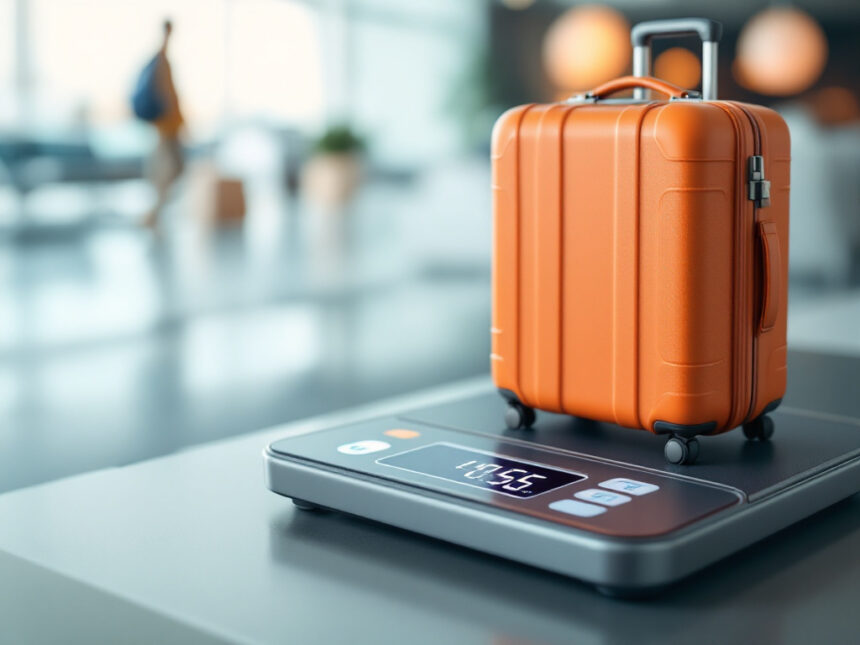
A simple digital luggage scale is one of the cheapest travel tools you can buy, and it pays for itself the first time it helps you avoid a baggage fee. Use it twice, once at home when you finish packing, and again before your return flight if you have shopped or picked up souvenirs.
Instead of stuffing items in until the bag looks full, pack in layers and check the weight in stages. For example, pack clothing and shoes first, weigh, then add tech and toiletries, weigh again. If you find yourself creeping over your target, you know exactly which category tipped you over.
Carry-on luggage restrictions on liquids also help keep your toiletry kit lighter. Travel-sized products and solid alternatives like bar shampoo or solid deodorant eliminate bulky bottles that add weight and invite extra screening.
Wear the heavy items
If you are close to the limit, shift the heavier pieces to your body instead of your suitcase. Wear your jacket, heaviest shoes, and a sweater on the plane. You can always take layers off once you are seated. Airline weight checks typically apply to your bags, not what you are wearing.
For longer trips, this can mean choosing a heavier but versatile outer layer and one pair of sturdy shoes that work both in transit and on the ground. It is less glamorous than changing outfits daily, but it keeps your limited carry-on space focused on pieces that truly need to be in your bag.
Use personal item space strategically
If your ticket includes both a carry-on and a personal item, do not waste that second bag on a half-empty purse or loosely packed tote. Treat your personal item like another piece of structured carry-on luggage. A compact backpack with internal pockets or a small under-seat roller gives you more organized room for dense, heavier items like electronics, chargers, and books.
Just remember that on many international carriers, your personal item and carry-on may share a combined weight limit, like the 26-pound hand baggage rule on Air France economy. Check whether the airline views these as separate or combined and plan accordingly.
Special cases: kids, instruments, and extras
Not every carry-on is a simple suitcase. You might be traveling with a child, a suit you would rather not fold, or a musical instrument. Each of these has its own wrinkles when it comes to weight limits.
Traveling with children
If you are packing for a toddler, a dedicated carry-on luggage for toddlers can make travel smoother. That said, the airline will still weigh and count your child’s bag against whatever allowance applies to their ticket. A cute mini suitcase that is made of heavy plastic can easily use up their allowance before you add a single toy. Look for lightweight, durable materials and skip unnecessary built in gadgets that add weight.
Garment bags and suits
As mentioned earlier, American Airlines allows soft sided garment bags as carry-ons if the total dimensions stay under a 51 inch sum. Other airlines have similar rules. The more rigid and structured the garment bag, the more it will weigh before you even add a suit. A slim, foldable garment bag with a simple hanging system is easier to keep within both size and weight limits.
If you need to travel often with formal wear, pairing a light garment bag with a carry-on luggage tsa approved suitcase gives you flexibility. You can place shoes, belts, and accessories in the suitcase while letting the garment bag handle only fabric, which is lighter.
Musical instruments and special items
For instruments, the main rule across airlines is that the instrument must fit in the overhead bin or under the seat. Weight limits are less frequently specified for these, but oversized or especially heavy cases can still be flagged, particularly on smaller aircraft. Lightweight but protective cases and minimal accessories keep you on the right side of both comfort and policy.
Some airlines allow you to buy an extra seat for particularly valuable or fragile items. In those cases, the weight allowance for the “seat” is usually set by the airline, and your instrument case is strapped in like a passenger. This is more common with cellos or similar large items.
Avoiding last minute surprises at the airport
Even with the best planning, there are a few checkpoints where travelers commonly get caught off guard by carry-on luggage weight limits. Knowing where those are helps you avoid unpleasant surprises and rushed repacking on the terminal floor.
Booking and fare class
Always read the baggage section before you finalize a booking, especially if you are choosing basic or saver fares. Look for language about “personal item only”, combined weight limits, and exceptions on partner flights. If you see that your preferred bag will not qualify as a free carry-on, compare the cost of upgrading your fare to the potential cost of checking your bag both ways.
If you are loyal to a particular carrier, understanding their nuances can also help. For example, if you usually fly Southwest or United domestically and are used to their more generous policies, check specific guides like carry-on luggage size for southwest and carry-on luggage size for united airlines so you know where size ends and weight might start to matter.
Check in and gate checks
Some airlines weigh carry-ons at check in, others at the gate, and some mostly on international departures. If your bag looks obviously heavy, you are more likely to be pulled out of line. Neat, compact packing that does not bulge at the seams is less likely to attract attention, even if you are close to the limit.
Gate checks can feel random, but they usually happen when a flight is full or when a smaller aircraft is substituted at the last minute. Having a bag that fits easily into overhead bins and that you can lift without struggle makes it less likely a gate agent will push you to check it. If you know you are very close to the published limit, keep a small folding tote in your personal item. In a pinch, you can move the heaviest items, like shoes or chargers, into the tote and lighten the main bag if the airline weighs it.
Choosing luggage that works with real world limits
Ultimately, staying within the carry-on luggage weight limit is much easier when you start with gear that is designed with actual airline rules in mind rather than just showroom looks. Whether you are a frequent flyer or an occasional vacation traveler, the right bag simplifies almost everything else.
If you prioritize clean looks and tech friendly organization for work trips, explore options categorized as carry-on luggage with laptop compartment or sleek carry-on luggage for men. If you want something personalized and easy to spot on a crowded jet bridge, consider carry-on luggage personalized. For maximum resilience, look into durable carry-on luggage with quality zippers, reinforced corners, and steady telescoping handles.
Travelers who are especially weight conscious can start with carry-on luggage lightest weight, then layer in accessories like carry-on luggage packing cubes to stay organized without adding much bulk. If you prefer extra peace of mind at security, carry-on luggage with tsa lock keeps your belongings secure while still complying with screening requirements.
If you are still deciding, browsing a curated selection of best carry-on luggage, current carry-on luggage deals, or category specific picks like carry-on luggage with wheels can help you find a bag that fits your travel style, your budget, and the rules you actually face at the airport.
Key takeaways you can use on your next trip
- Carry-on luggage weight limits vary widely by country, airline, and even specific route.
- International flights typically cap carry-ons around 16 to 22 pounds, which is much stricter than many domestic U.S. routes.
- Some airlines, such as British Airways, offer high limits like 51 pounds, but connecting flights may not.
- Basic fares may limit you to a personal item only, so always check your fare’s baggage rules before booking.
- Using lighter, thoughtfully designed luggage, like lightweight carry-on luggage or a smart carry-on luggage backpack, gives you more room within the limit.
- A simple luggage scale, strategic packing, and smart use of your personal item help you avoid last minute gate checks and surprise fees.
The next time you pack, start by checking the strictest carry-on luggage weight limit on your itinerary, then work backward from there. With the right bag and a few small adjustments, you can keep your favorite essentials close, glide through the airport, and avoid that anxious moment at the gate.
FAQs
What is the typical carry-on luggage weight limit for international flights?
Many international airlines cap cabin baggage at around 7 kg to 12 kg, depending on fare and route. Air France Economy, for example, allows a small bag plus hand baggage with a maximum total weight of 12 kg / 26.4 lb.
Do U.S. domestic airlines usually weigh carry-on bags?
Often, no. Major U.S. airlines like American and Delta primarily publish size-based rules for standard carry-ons, though enforcement can still happen at the gate if the bag appears too large, too heavy, or if the aircraft is smaller.
Can my personal item count toward the carry-on weight limit?
Yes. Some airlines treat your cabin bag and personal item as one combined hand-baggage allowance, not two separate weight allowances. Air France is a clear example.
What size carry-on does American Airlines allow?
American Airlines allows one carry-on up to 22 x 14 x 9 inches, including wheels and handles, plus one personal item up to 18 x 14 x 8 inches.
Why do I still get gate-checked if my bag is the right size?
Because size is only part of the rule. Aircraft type, overhead-bin space, boarding order, fare class, and route-specific limits can still trigger gate checks, especially on regional flights or full departures.
What is the best way to stay under the carry-on weight limit?
Start with a lighter suitcase, weigh your packed bag at home, move dense tech items strategically into your allowed personal item if permitted, and cut down liquid weight by following TSA’s small-container rules.
Are power banks allowed in carry-on bags?
Yes, and for many situations, they must be in carry-on baggage. The FAA says spare lithium batteries and portable chargers are prohibited in checked baggage and should stay with the passenger in the cabin.