A few inches on your suitcase can be the difference between breezing onto the plane and standing at the gate while your bag gets tagged and checked. When you understand carry-on luggage dimensions, you pack smarter, avoid surprise fees, and choose the right bag the first time.
This guide walks you through why carry-on dimensions matter, how airlines actually measure your bag, and what you should look for before you buy your next piece of carry-on luggage.
Understand what “carry-on luggage dimensions” really mean
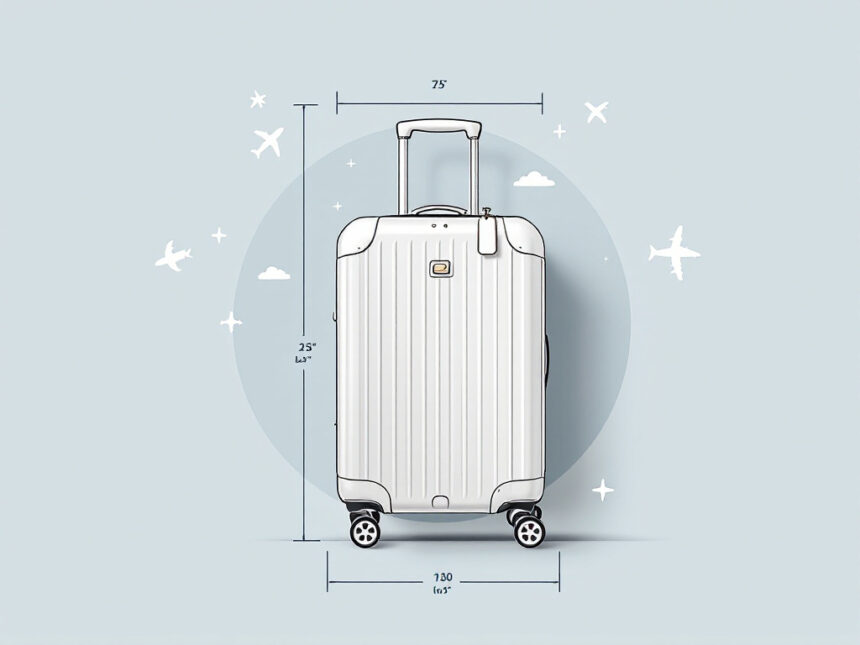
When airlines publish carry-on luggage dimensions, they are not talking about just the main box of your suitcase. The measurements include every external part of the bag at its widest points, such as wheels, top and side handles, corner protectors, and even bulging outer pockets.
Most U.S. carriers treat 22 x 14 x 9 inches as the standard carry-on luggage size for domestic flights. This size usually fits into overhead bins and keeps you within typical carry-on luggage restrictions. According to Travelpro® testing, this 22 inch height, including wheels, is about the maximum that fits upright in most bins without having to turn the bag sideways, which many airlines do not allow due to limited space.
Outside the U.S., the standard carry-on baggage size is often slightly smaller, around 21 inches tall for international flights that both start and end outside the United States. That seemingly tiny one inch difference can decide whether a gate agent waves you on or redirects you to the check-in counter.

Learn the standard sizes by flight type
Carry-on rules are not identical across airlines or regions. Even within one airline, you might face different limits on domestic and international routes.
Domestic U.S. flights
For most domestic U.S. airlines, the maximum carry-on luggage dimensions are:
- 22 inches tall
- 14 inches wide
- 9 inches deep
This 22 x 14 x 9 guideline is widely accepted as of 2024 and is often described as the universally accepted size for domestic U.S. carry-on luggage. It includes wheels and handles.
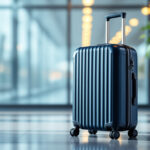
However, there are important exceptions and variations:
- Some airlines, such as Frontier and Sun Country, allow carry-on bags up to 24 inches in height, though you are still safest if you stay at or under 22 x 14 x 9 inches to meet most airline requirements as of 2024.
- Short-haul commuter planes may have smaller overhead bins where even a standard 22-inch carry-on does not fit upright. In these cases, your bag may end up gate checked even if it technically meets the airline’s size rules.
International flights
International flights tend to have stricter and more varied size and weight restrictions for carry-ons:
- Typical international carry-on size: up to 22 inches tall, 15 inches wide, and 10 inches deep
- Many international airlines set maximum carry-on weight between about 16 and 18 pounds
- Personal items usually must fit within dimensions around 18 x 14 x 8 inches or roughly 40 linear inches so they slide under the seat in front of you
The standard carry-on baggage size outside the U.S. is generally smaller than inside, so a bag that works perfectly for your domestic trips might be too large for some international flights. If you regularly fly overseas, it is worth verifying that your suitcase does not just meet U.S. standards but also typical international ones.
See how major airlines compare
When you shop for the best carry-on luggage, you want to know whether one suitcase can cover most of your flights. The answer depends on which airlines you use most often and whether you usually travel within the U.S. or internationally.
Below is a quick comparison of several popular airlines and their published carry-on luggage dimensions and limits as of 2024. All measurements include wheels and handles.
| Airline | Max carry-on size (inches) | Weight limit | Notes |
|---|---|---|---|
| American Airlines | 22 x 14 x 9 | No specified limit | Standard domestic size, see more at carry-on luggage size for american airlines |
| Southwest Airlines | 24 x 16 x 10 | No limit | More generous size, about 30% more volume, details at carry-on luggage size for southwest |
| United Airlines | Typically 22 x 14 x 9 | Varies by route | Basic economy on U.S. and U.S.–Canada flights often allows only a personal item, see carry-on luggage size for united airlines |
| British Airways | 22 x 18 x 10 | Up to 51 lbs | Very generous weight limit for international travel |
| Ryanair | 21.6 x 15.7 x 8 | Up to 22 lbs | Slightly smaller size than standard U.S. bags |
| Aer Lingus | 18.5 x 13 x 8 | Up to 15 lbs | Noticeably smaller, plus a firm weight cap |
This table highlights why carry-on luggage dimensions matter so much. A bag that takes full advantage of Southwest’s larger allowance may be oversize for Aer Lingus or Ryanair.

If you want one carry-on that works for almost everything, aim for a compact 22 x 14 x 9 inch bag that is not overstuffed, and always confirm the rules of specific carry-on luggage airlines before you fly, since policies can change and vary by route.
Understand TSA vs airline rules
It is easy to assume the Transportation Security Administration (TSA) sets the rules for carry-ons, but that is not how it works.
- TSA focuses on security screening, liquids, and what items are allowed or not allowed in your bag.
- TSA does not set or enforce carry-on luggage size limits.
The size and weight rules come from your airline. That means a suitcase that is perfectly acceptable at the security checkpoint might still be too large when you reach the boarding gate. If you are looking for bags that make airport security smoother, look for carry-on luggage TSA approved features, such as clear, removable toiletry pouches and laptop sections that open flat.
When you understand this split, you avoid confusion: TSA determines what you can pack, and your airline determines how big and heavy your bag can be.
Factor in personal item dimensions too
Most airlines allow you one carry-on bag plus one personal item, such as a backpack, tote, or small briefcase. The typical personal item dimensions are around 18 x 14 x 8 inches, and it must fit under the seat in front of you.
For some fare types, your personal item is all you can bring:
- United Airlines restricts basic economy passengers on domestic and U.S.–Canada flights to one personal item only, with no full-size carry-on allowed, although it permits a regular carry-on on select international and transcontinental flights.
- Some niche international airlines, such as Bolivia’s Amaszonas, only allow a single piece of carry-on luggage with no additional personal item.
If you often fly on restrictive fares or budget carriers, it can be worth investing in a versatile carry-on luggage backpack that meets personal item size limits but still packs efficiently.
Pay attention to weight limits, not just size
Although carry-on luggage dimensions get most of the attention, weight limits can surprise you, especially outside the U.S.
- Many domestic U.S. airlines do not impose specific weight limits on carry-on bags, as long as you can lift your bag into the overhead bin unassisted.
- International airlines often set strict weight caps, typically between about 15 to 26 pounds.
- Delta Airlines, for example, sets a 22 pound carry-on weight limit for flights to or from Beijing or Shanghai and a 15 pound limit for flights to or from Singapore.
British Airways stands out with a more generous allowance, permitting carry-on luggage up to 51 pounds for international travel, as long as it fits within the dimensional limit of 22 x 18 x 10 inches.
If you tend to overpack, these weight rules matter as much as the physical size of your suitcase. A piece of lightweight carry-on luggage or even the carry-on luggage lightest weight options can give you more room for actual belongings before you reach the limit set by your airline.
Understand overhead bin realities
Even when your suitcase technically fits the posted size limit, the plane itself can change how your trip plays out.
- The maximum size that fits upright in most overhead bins is typically 22 inches in height including wheels.
- Larger bags sometimes only fit if turned sideways, but many airlines do not allow that, partly to ensure everyone has space.
- On smaller commuter planes, even a standard 22 inch carry-on may not fit in overhead bins at all, and bins may not exist above aisle seats.
As a result, even if your carry-on luggage with wheels meets the official dimensions, you could still be forced to gate check on a crowded or small aircraft. Choosing a bag that is slightly under the maximum, and avoiding overstuffing or heavy expansion, gives you a better chance of sliding your suitcase into the overhead bin quickly and keeping everything with you.
Choose dimensions based on how you travel
There is no one-size-fits-all perfect carry-on. The right dimensions for you depend on your routes and habits.
If you mostly fly domestic U.S.
You generally want to target:
- A maximum of 22 x 14 x 9 inches
- A design that fits comfortably upright in overhead bins
- Enough capacity for 3 to 5 days of clothes and a laptop or work essentials
For this use case, you have more freedom to prioritize interior organization and features like carry-on luggage with laptop compartment, carry-on luggage with charger, or easy-access front pockets, since weight limits are usually minimal.
If you frequently fly international
You might want to size down a bit:
- Aim for something closer to 21 inches tall, 14 to 15 inches wide, and around 8 to 9 inches deep
- Watch your packed weight so you stay under 16 to 18 pounds for most airlines
A compact, thoughtfully designed durable carry-on luggage piece helps you comply with more restrictive international rules without sacrificing day-to-day usability.
If you mix domestic and international travel
Play it safe by choosing a bag that:
- Meets the strictest size requirements of the airlines you use most
- Offers structured packing space so you can adjust volume for lighter or heavier trips
A non-expandable or minimally expandable carry-on luggage hard shell often works well here, since hard shells do not “grow” beyond their dimensions. According to Travelpro, hard shell carry-ons are less likely to over-expand and become too big for overhead bins, which is helpful if you worry about overpacking. Expandable carry-on luggage expandable adds flexibility, but it can push your bag past airline limits when fully unzipped.
Consider hard shell vs soft-sided for size control
Your choice of materials affects how faithfully your bag sticks to its published size.
Hard shell carry-ons
Hard shell carry-on luggage hard shell tends to:
- Keep its shape, so if it is designed at or under 22 x 14 x 9 inches, it is unlikely to bulge beyond that when packed
- Be less forgiving on the inside, which can discourage you from overpacking
- Offer better protection for laptops and fragile items, especially when paired with a carry-on luggage with laptop compartment
Travelpro notes that hard shell carry-ons do not expand like soft-sided bags, making them a safer choice if you are concerned about going over the size limit.
Soft-sided carry-ons
Soft-sided luggage is often:
- Easier to squeeze into tight spaces, such as smaller overhead bins
- More likely to have external pockets that can bulge when full
- Available with expansion zippers that add depth and capacity
Expandable carry-on luggage expandable can be a lifesaver for the return leg of a trip when you have more souvenirs, but it increases the risk that your bag exceeds allowable carry-on luggage dimensions. If you choose a soft-sided design, treat expansion as an occasional bonus rather than your everyday mode, especially on airlines with strict enforcement.
Know how checked luggage sizes compare
Understanding carry-on dimensions also helps you decide when a checked bag makes more sense.
- Standard checked luggage size for international flights typically allows up to 62 linear inches, which is the sum of length, width, and height.
- Common checked bag dimensions are around 27 x 21 x 14 inches with a usual weight limit of about 50 pounds for economy passengers, although some airlines allow up to 70 pounds for business or first class.
If you regularly travel with bulky items, or if your trips routinely exceed one week, it might be more comfortable to use a smaller, strictly compliant carry-on plus a checked suitcase instead of pushing the limits of your overhead bin space.
Use dimensions wisely when you shop
When you start comparing carry-on luggage brands and styles, it is easy to get pulled in by color or clever features. Staying focused on carry-on luggage dimensions helps you make a smarter, longer lasting choice.
Here are some practical ways to apply what you know:
- Look for external dimensions listed clearly, and make sure they include wheels and handles.
- Prioritize 22 x 14 x 9 inches or smaller if you want a bag that works broadly across U.S. carriers and many international routes.
- If you mostly fly Southwest, you can comfortably choose a slightly larger suitcase, up to 24 x 16 x 10 inches, which offers roughly 30 percent more packing space as of 2024, and still stay within Southwest rules.
- If you mainly fly with stricter airlines, such as Ryanair or Aer Lingus, or you usually buy basic economy fares, a smaller footprint will save you headaches at the gate.
Travelpro emphasizes that buying carry-on luggage that meets airline size restrictions is essential to avoid having bags rejected at the airport for being too large. Their carry-on spinners and bags are tested with real-world airline sizer bins worldwide to ensure compliance, which is a useful benchmark when you evaluate any brand that claims to be “carry-on friendly”.
Pack smarter inside your size limits
Once you have the right dimensions, how you pack affects whether your bag still fits in the sizer at the airport.
Thoughtful packing can make a compliant bag feel like it has twice the usable space:
- Use carry-on luggage packing cubes to compress clothes and keep categories separate.
- Place heavier items near the wheels so your carry-on luggage with wheels rolls smoothly and is easier to lift overhead.
- Keep liquids in one easy-access pouch to speed up security and prevent stretching outer pockets.
- Avoid stuffing front pockets so full that they add extra inches to your bag’s depth.
If you rely on specific gear, such as a work laptop, you might prefer carry-on luggage for laptop or carry-on luggage with tsa lock so you can protect sensitive devices and speed through security checkpoints without fighting your zippers.
Match style, durability, and dimensions
For many travelers, the challenge is mixing form and function. You want a bag that looks sharp, rolls smoothly, and holds up to years of trips without sacrificing size compliance.
Depending on how you fly, you might lean toward:
- Carry-on luggage for men with streamlined silhouettes and neutral colors that blend into business settings.
- Durable carry-on luggage with reinforced corners and quality zippers if you fly weekly or often use overhead bins on crowded routes.
- Carry-on luggage personalized so your suitcase stands out at the gate area and you spot it quickly in a packed bin.
- Carry-on luggage for toddlers sized appropriately for young travelers, which also must follow the same dimensional rules as adult bags.
No matter which aesthetic you choose, resist the temptation to trade compliance for an inch or two of extra height or depth. Long term, staying within carry-on luggage dimensions will save you time and money.
Shop strategically and watch for deals
Once you have a clear idea of the size that works for you, you can be more intentional about when and how you buy.
- If budget is a concern, look at a carry-on luggage sale or carry-on luggage deals so you can upgrade without overspending.
- Use carry-on luggage reviews to see real-world feedback about whether a bag truly fits airline sizers and survives frequent flights.
- If you want something minimalist yet efficient, browse lightweight carry-on luggage that maximizes the weight allowance for your actual belongings rather than the bag itself.
You can also narrow your options by focusing on durable carry-on luggage that has already been tested against airline sizer bins or has clear confirmation from other frequent travelers who fly the same routes you do.
Keep an eye on changing rules
Carry-on luggage dimensions are not completely fixed. Airlines can adjust their policies over time or roll out specific rules on individual routes. Research from Travelpro notes that flights originating in the U.S. with foreign destinations and flights originating outside the U.S. with U.S. destinations generally follow the U.S. standard of 22 x 14 x 9 inches, but this is still subject to change by individual carriers.
Because of that, you should:
- Double check your airline’s current carry-on rules before each trip, especially if you have not flown them recently.
- Pay attention to fare type. Basic economy or similar low-cost tiers often have stricter carry-on rules.
- Be prepared for occasional gate checks, particularly on full flights or smaller aircraft, even if your bag is technically compliant.
Most importantly, treat published sizes as real limits. Carry-on luggage size measurements typically include all parts of the bag and are strictly enforced for economy passengers as of 2024. That mindset will help you avoid arguments at the gate and last-minute repacking.
Key takeaways on carry-on luggage dimensions
A small change in carry-on luggage dimensions can have a big impact on your trip. The right size:
- Fits smoothly into most overhead bins without turning sideways.
- Complies with rules for both your airline and route, including any carry-on luggage weight limit.
- Helps you avoid gate checks, delays at boarding, and surprise luggage fees.
If you choose a well-sized, thoughtfully designed bag, such as a compact, durable carry-on luggage with smart organization, you will feel the difference every time you travel.
Before your next trip, take two minutes to measure your current suitcase, including wheels and handles. If it is outside the typical 22 x 14 x 9 inch range, or you routinely have to gate check, it might be time to upgrade. When you match the right dimensions to the way you travel, you spend less time worrying about your luggage and more time enjoying where you are going.
FAQs
Do carry-on luggage dimensions include wheels and handles?
Yes. Major airlines like American and United indicate that carry-on measurements must fit their allowance, including outside parts, and American specifically notes the total carry-on size is 22 x 14 x 9 inches, including handles and wheels.
What is the safest carry-on size for most U.S. airlines?
The safest all-around target is 22 x 14 x 9 inches. That aligns with American and United’s standard allowance and also matches Travelpro’s general domestic guidance.
Does TSA decide carry-on bag size?
No. TSA handles security screening and the 3-1-1 liquids rule, but airlines set bag size and weight limits.
What is the TSA liquid rule for carry-ons?
TSA says liquids, gels, and aerosols in carry-ons must be in containers of 3.4 ounces (100 ml) or less, all fitting in one quart-size bag per passenger.
Are international carry-on rules stricter than U.S. rules?
Often, yes. Ryanair’s included bag allowance is much smaller than a standard U.S. carry-on, and many international airlines also enforce cabin-bag weight limits more strictly.
Can a compliant carry-on still be gate checked?
Yes. Even if your bag meets the published rules, small aircraft, full flights, and limited bin space can still force a gate check. Airlines such as American note that some airports and planes have additional carry-on restrictions.
Is a hard-shell or soft-sided carry-on better for size compliance?
Hard-shell luggage is usually better for staying true to its stated dimensions, while soft-sided bags are easier to squeeze but more likely to bulge or expand beyond the limit. Travelpro also warns that fully expanded carry-ons may not meet airline restrictions.