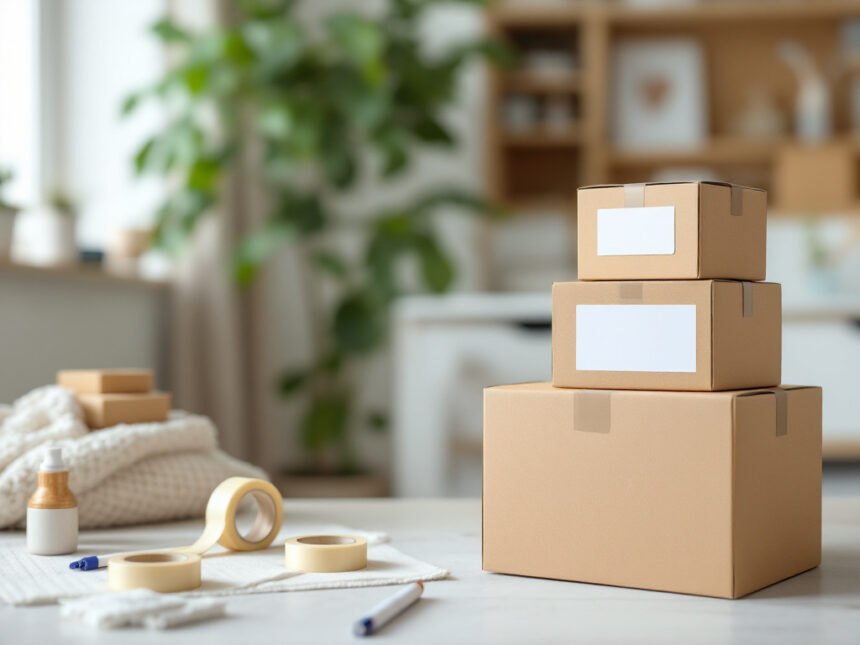
Natural light can make an apartment feel bigger. The right small moving boxes can do the same thing for your move.
When you choose smart, sturdy small moving boxes, you save time, protect your stuff, and avoid injuring your back on moving day. You also avoid the classic mistake of stuffing everything into a few giant boxes that are impossible to lift. According to Extra Space Storage, heavier belongings should go in small boxes, not large ones, so they stay manageable to carry and less likely to break in transit.
In this guide, you will see how to match the right small boxes to your belongings, where to find them, and how to pack them so you can move faster and with less stress.
Why small moving boxes matter
Small moving boxes look simple, but they do a lot of heavy lifting for you, literally and figuratively.
When you use the right size box for heavy or fragile items, you:

- Prevent boxes from becoming too heavy to carry safely
- Reduce the risk of items shifting and breaking
- Make stairwells and tight hallways easier to manage
- Keep your move more organized, since small boxes are easier to label and stack
Experts recommend keeping each moving box, including small ones, under about 30 pounds to prevent back strain and make them easier to handle. That guideline is especially important if you live in a walk-up or you are moving a lot of books, dishes, or tools.
If you have been tempted to grab a few extra large boxes and toss everything in, you will feel the difference the first time you pick up a well-packed small box instead.
What to pack in small moving boxes
Small boxes are your go-to choice for anything dense, heavy, or breakable. When you are sorting your home, think in terms of weight per cubic inch rather than just physical size.

Here are common items that belong in small moving boxes:
- Books and magazines
- Dishes, glasses, and mugs
- Pantry items like cans and jars
- Tools and hardware
- Small kitchen appliances
- Vinyl records
- Office supplies, files, and paperwork
- Bathroom items in glass containers
Small boxes are ideal for these because they concentrate weight in a compact, stable shape. According to Extra Space Storage, small boxes are best suited to heavy belongings, while larger boxes should be reserved for lighter items like bedding, towels, and clothing.
If an item feels heavy in your hand, it probably belongs in a small box rather than a medium or large moving box.
Top types of small moving boxes
Not all small moving boxes are the same. Some are standard cardboard, while others are heavy duty or custom-designed for specific items. Knowing which type to use helps you avoid overpaying for specialty boxes you do not need and underprotecting the things you care about most.
Standard small moving boxes
Standard small boxes are the everyday heroes of moving. They work well for:
- Paperback and hardcover books
- Kitchen gadgets
- Pantry items
- Toiletries and cleaning supplies
A common example is the U Haul small moving box, which measures 16 3/8″ x 12 5/8″ x 12 5/8″, holds up to 65 pounds, and has a volume of 1.5 cubic feet. That capacity gives you flexibility, but you still want to stay close to the 30 pound carry guideline for your own comfort.

These boxes are made from recyclable and reusable cardboard and often include perforated handles and closing features that keep flaps in place, which makes them easier to carry and stack neatly in your truck or storage unit.
Heavy duty small boxes
For extra fragile or especially heavy items, heavy duty small moving boxes can be worth the upgrade.
You might use heavy duty versions for:
- Dishes and glassware
- Fine china and stemware
- Small electronics and cameras
- Hand tools, nails, and screws
These boxes usually have stronger walls and better resistance to compression, so they are safer to stack on the bottom of a pile. If you are packing dishes, you can also pair heavy duty boxes with dish inserts or plenty of cushioning. For more ideas specific to fragile items, you can explore options like moving boxes for glasses, moving boxes for dishes, and moving boxes for artwork.
Specialty and custom small boxes
Some box suppliers offer custom or specialty small boxes designed for unusual shapes, electronics, or particularly delicate items. For example, The UPS Store Sioux Falls provides custom boxes specifically for electronics and odd shaped belongings to keep them safe in transit.
These kinds of boxes are ideal when:
- You have an expensive or oddly shaped device that will not sit flat in a standard box
- You want extra padding and structure without building your own solution from loose materials
- You are shipping or moving long distance and need extra peace of mind
If you are mostly moving typical household items, you can stick to standard and heavy duty small boxes. Save custom boxes for particularly valuable pieces.
Where to get small moving boxes
You have several options for sourcing small moving boxes, depending on your budget and timeline.
Buy new small boxes
Buying new, purpose made small moving boxes gives you uniform sizes that stack easily and hold up well to transport. You can check local moving box suppliers or look for moving boxes for sale online.
It can help to compare your options:
| Option | Pros | Considerations |
|---|---|---|
| Moving truck companies | Durable, sized for moving, buy back guarantees on unused boxes in some cases | Slightly higher cost than recycled options |
| Shipping stores | Range of sizes, specialty and custom boxes, expert packing services | Box prices can add up quickly |
| Big box or hardware stores | Convenient, often sold in bundles, easy pickup | Quality may vary, limited specialty choices |
U Haul, for example, offers bundles of 25 small boxes with bundle pricing that drops the cost per box when you buy multiple. They also provide a 100 percent buy back guarantee on unused boxes with your receipt, regardless of purchase date, which helps if you overestimate how many you need.
If you want everything in one shot, a moving boxes kit can be an easy way to get an assortment of small, medium, and extra large moving boxes tailored to the size of your home.
Find free or used small boxes
If you are on a tight budget, you can often find used moving boxes or even free moving boxes through local groups, stores, or recycling programs. Uniformity might not be perfect, but this route can significantly lower your moving boxes cost.
You can start by exploring guides on where to find free moving boxes or check your local grocery, liquor, and bookstore for sturdy small boxes they are discarding. Just be sure to inspect them carefully for:
- Weak or crushed corners
- Moisture damage
- Any lingering odors or spills
Used boxes are fine for lighter, non fragile items. For your heaviest or most delicate belongings, it is safer to invest in a few new, heavy duty small boxes.
Order online or shop locally
If you prefer not to drive around searching, it is usually easy to order cardboard moving boxes online and have them delivered. Searching for moving boxes near me or reviewing options for where to buy moving boxes will help you compare local pickup versus delivery costs.
Local shipping stores can also be helpful. The UPS Store Sioux Falls, for example, carries a variety of box sizes, including standard, large, wardrobe, TV, picture, and heavy duty moving boxes, plus custom options for challenging items. While they do not offer moving services, their packing experts can prepare fragile pieces like china and artwork so they travel safely.
How many small moving boxes do you need
The number of small moving boxes you need depends on your lifestyle more than the square footage of your home. A book lover or home cook will need more small boxes than someone who mostly streams and orders in.
As a rough starting point:
- Studio or one-bedroom apartment: 10 to 20 small boxes
- Two to three bedroom home: 20 to 40 small boxes
- Larger homes or families: 40 or more small boxes
Think about your:
- Bookcases and record collections
- Kitchen cabinets and pantry shelves
- Toolboxes and craft supplies
- Bathroom shelves and under sink storage
If you are unsure, it is better to buy a few extra small boxes, especially if your supplier offers a buy-back guarantee on unused ones. U Haul notes that approximately 164 small moving boxes can fit in a cargo van and about 265 in a 10 foot truck, so even if you over order, you can still load them efficiently.
You can always fill the small spare boxes with lighter items to keep your stacks consistent.
How to pack small boxes to prevent damage
The way you pack your small moving boxes matters as much as the box you choose. A well packed small box feels solid and balanced, not lumpy or rattling.
Prepare the box properly
Before you place anything inside, take a minute to reinforce and line your box. Extra Space Storage recommends securely taping the bottom and lining the inside with packing foam, bubble wrap, towels, or blankets to stabilize the box and protect items from damage and moisture.
Pay attention to:
- Using high quality packing tape, not masking or painter’s tape
- Taping along the center seam and at least one strip along each side seam
- Pressing the tape firmly so it bonds with the cardboard
That quick prep step keeps the bottom from bowing out when you lift a full box of books or dishes.
Layer heavy and light items
If you mix weights in the same box, always put the heavier items on the bottom and lighter pieces on top. Extra Space Storage specifically notes that when you are mixing, heavy items should go at the bottom of small boxes with lighter items layered above, which reduces the risk of damage.
For example:
- Bottom: hardcover books laid flat
- Middle: smaller paperbacks stacked tightly
- Top: light office supplies, cords, or soft items like fabric
The goal is to create a dense, stable base with no large gaps. Gaps allow items to move and collide, which is where chips, cracks, and broken edges come from.
Stay under safe weight limits
Even if your box manufacturer lists a high maximum weight, you should think about what you are comfortable carrying up and down stairs. Extra Space Storage advises keeping each moving box to around 30 pounds or less to prevent back injuries and make them easier to move.
A few simple habits help:
- Stop and lift the box partway through packing. If it already feels heavy, switch to lighter items on top.
- Use multiple small boxes for books instead of one very dense box.
- Write “HEAVY” on any small boxes that approach your limit so you and your helpers know what to expect.
If you are hiring movers, they will appreciate this, and your belongings are more likely to make it in one piece.
Small boxes for apartments, families, and fragile items
Your ideal mix of small moving boxes depends on how you live and what you own. The needs of a solo apartment dweller are different from those of a family of five or someone with lots of fragile collections.
Apartment movers: Stairs, elevators, and tight turns
If you are moving in or out of an apartment, you are often dealing with elevators, narrow hallways, or multiple flights of stairs. Small moving boxes are your best friend here.
They help you:
- Keep each load manageable without straining your back
- Make sharper turns without bumping into walls
- Stack more efficiently in tight storage units or small trucks
Focus on a mix of standard small boxes for books, kitchen items, and bathroom supplies, plus a few heavy duty ones for dishes and electronics. To round out your setup, you may also want a small number of medium moving boxes for clothing and decor.
Families: Volume, labeling, and kits
Families tend to have a high volume of small, category based items like toys, school supplies, pantry food, and bathroom products. Small boxes help you keep each category together without boxes becoming too heavy.
You might:
- Assign one color of moving box labels per room or family member
- Pack school supplies, art materials, and small toys in separate small boxes
- Keep bathroom boxes clearly labeled and easy to access on day one
A pre-selected moving boxes kit can also be helpful, since it usually includes an assortment of small boxes tailored to the home size, plus some larger and specialty options like moving boxes for clothes or wardrobe boxes.
Fragile and heavy item movers
If your main concern is protecting heavy or delicate belongings, such as books, dishes, glassware, or artwork, small and heavy duty small boxes are essential.
For these items, you should:
- Use heavy duty or double walled small boxes for dishes, glasses, and collectibles
- Reserve standard small boxes for books and pantry items
- Consider specialty boxes for dishes, glasses, and artwork so you have built in compartments and extra protection
You can match your box choices with specialty guides, such as moving boxes for books, moving boxes for dishes, moving boxes for glasses, and moving boxes for artwork.
Small boxes keep these items from shifting as much in transit, and their compact size makes it easier to set them aside in a safe corner of the truck.
Combining small boxes with other sizes
Small moving boxes do a lot, but they are most effective when you combine them with a full range of moving box sizes.
In a typical move, you might use:
- Small boxes for heavy and dense items
- Medium boxes for decor, folded clothes, and mixed household goods
- Large and extra-large boxes for light, bulky items like pillows, bedding, and coats
If you stack only small boxes, you can end up with too many layers and a taller, less stable pile. Mixing sizes helps you build balanced stacks in your truck or storage unit.
To understand how everything fits together, it helps to review moving box dimensions so you can map out your space and avoid surprises on moving day.
Labeling and organizing your small boxes
A clearly labeled small box is worth far more than a mystery box you have to dig through later. Because small boxes tend to hold heavy, important items, you will often want quick access to them in your new home.
You can keep things simple by:
- Writing the room name and main contents on the top and at least one side
- Adding a “HEAVY” or “FRAGILE” note where appropriate
- Numbering boxes within a category, such as “Kitchen 1 of 4”
Color-coded moving box labels can be a huge help here, especially for families and larger moves. A quick glance tells you where each box should go, and your helpers do not have to stop to ask.
If you are the planning type, you can even keep a short list on your phone, noting what is in each numbered box, so you are not hunting for your coffee mugs on your first morning.
When to invest in the best small moving boxes
You do not have to buy the most expensive box on the shelf for every single item. It makes sense to invest more in certain categories and save in others.
Spend a bit extra on:
- Heavy duty or specialty small boxes for dishes, glassware, electronics, and artwork
- New, sturdy boxes for long distance moves or storage longer than a few months
- Boxes with handles and reinforced corners, if you are tackling multiple flights of stairs
You can comfortably save money by:
- Using gently used moving boxes for lighter or non-fragile items
- Mixing in some free or recycled small boxes from local stores
- Choosing standard strength boxes for books and pantry items that are not at high risk of breaking
If you are ever unsure, lean toward protecting your heaviest and most valuable items first. That is where quality small moving boxes make the biggest difference.
Key takeaways
Small moving boxes may not look as impressive as giant wardrobe cartons, but they carry the real weight of your move. When you choose them thoughtfully and pack them well, you save time, protect your belongings, and reduce the physical strain of moving day.
To recap:
- Use small moving boxes for heavy, dense, and fragile items like books, dishes, pantry cans, and small appliances
- Follow expert advice to keep each box around 30 pounds and place heavy items at the bottom with lighter ones on top to prevent damage and injury
- Prepare each box with strong tape and cushioning before you start filling it
- Mix new and free boxes for moving to match your budget, and lean on heavy duty or specialty boxes for your most delicate pieces
- Combine small boxes with other sizes and use clear moving box labels so everything stacks safely and lands in the right room
If you are ready to plan your move, you can start by estimating how many small boxes you will need, then explore options for moving boxes, from moving boxes bulk bundles to curated kits and local pickup. A little planning now will make unpacking in your new place feel smoother and a lot less stressful.
FAQs With Answers
What are small moving boxes best used for?
Small moving boxes are best suited for heavy, dense, or fragile items that need extra support and stability during transit. This includes books, hardcover novels, canned pantry goods, dishes, glassware, tools, small kitchen appliances, vinyl records, office supplies, and bathroom glass containers.
Because small boxes limit how much weight you can pack in one container, they naturally keep individual loads manageable and reduce the risk of box breakage or back injuries on moving day.
How heavy should a small moving box be?
Most moving experts, including Extra Space Storage, recommend keeping any moving box — including small ones — at or under 30 pounds. Even if the box manufacturer lists a higher weight capacity (U-Haul small boxes, for instance, hold up to 65 lbs), staying near 30 pounds makes boxes safer to carry, especially on stairs, through hallways, and in and out of trucks. Always do a mid-pack lift check: if it already feels heavy before it’s full, switch to lighter items on top.
Where can I get small moving boxes for free?
You can often find free or low-cost small moving boxes at local grocery stores, liquor stores, bookstores, and community Facebook groups or apps like Nextdoor and Buy Nothing. Many retailers discard sturdy small boxes daily.
Just inspect used boxes carefully for moisture damage, crushed corners, or lingering odors before using them. Reserve free boxes for lighter, non-fragile items, and invest in new, heavy-duty small boxes for your most valuable or delicate belongings.
How many small moving boxes do I need?
Your box count depends more on your lifestyle and possessions than your home’s square footage. As a general estimate:
- Studio or 1-bedroom: 10–20 small boxes
- 2–3 bedroom home: 20–40 small boxes
- Larger homes or families: 40+ small boxes
Book lovers, home cooks, and collectors will typically need more. If your supplier offers a buy-back guarantee on unused boxes (like U-Haul does), it’s always safer to order a few extra.
What is the difference between standard and heavy-duty small moving boxes?
Standard small moving boxes work well for everyday heavy items like books, pantry goods, and kitchen gadgets. Heavy-duty small boxes have thicker, double-walled construction that resists compression better, making them safer for fragile or extra-heavy items like glassware, fine china, small electronics, and hand tools.
They’re more expensive but provide superior protection for items you can’t afford to damage. For most moves, a combination of both types is the most cost-effective approach.
Can I order small moving boxes online?
Yes. Most major moving suppliers, including U-Haul, Home Depot, Lowe’s, and Amazon, offer small moving boxes for online purchase with home delivery or local pickup. Buying in bundles online often reduces the cost per box. Some suppliers offer moving kit packages that include an assortment of small, medium, and large boxes tailored to your home size — a convenient option if you want to avoid multiple shopping trips.
How do I pack a small moving box to prevent breakage?
Start by reinforcing the bottom with high-quality packing tape along the center seam and side seams. Line the interior with bubble wrap, packing foam, towels, or blankets. Place heavier items flat on the bottom, lighter items on top, and fill all gaps with padding to prevent shifting.
Label the box with contents, room destination, and a “FRAGILE” or “HEAVY” warning where appropriate. A well-packed small box should feel solid and balanced — not rattling or lopsided — when you pick it up.