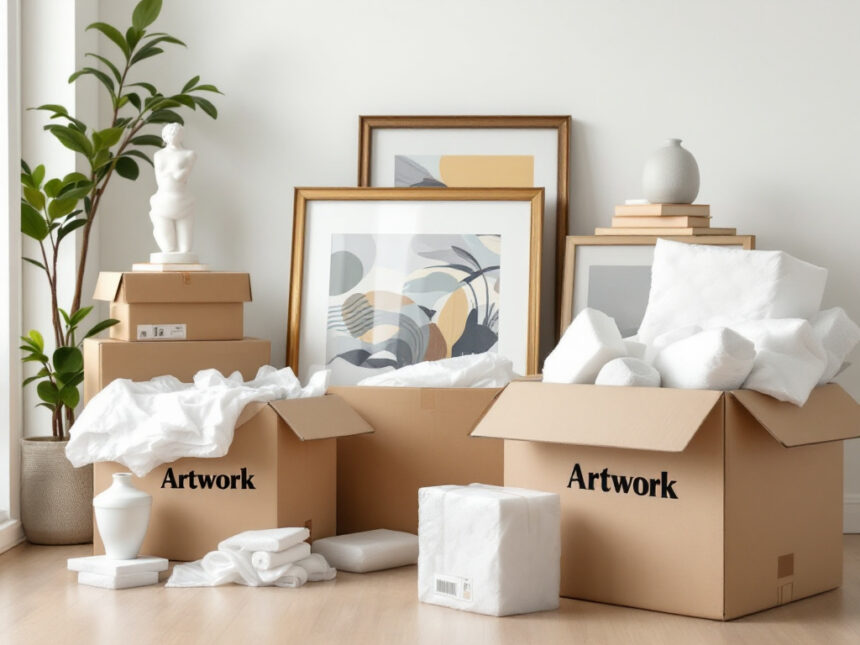
A single scratched frame can sour an entire move. Choosing the right moving boxes for artwork is one of the smartest ways to protect your paintings, prints, and photos so they arrive in the same condition they left.
Whether you are hauling a couple of framed posters up a walk-up or relocating a whole gallery wall for a family home, the tips below will help you pick moving boxes for artwork that actually last, instead of collapsing at the first sharp corner.
Know which artwork you are really moving
Before you shop for moving boxes for artwork, you need a clear picture of what you are protecting. A quick audit saves you from buying the wrong sizes and scrambling on moving day.
Walk room by room and jot down:
- How many framed pieces you have
- Rough dimensions for each (height, width, depth)
- Whether they are glazed with glass or plexiglass
- Whether they are canvas, paper, photos, or mixed media
- Which pieces are sentimental or high value
Measure the outside of each frame or canvas, not just the artwork itself. This matters because picture and mirror boxes work best when they are just slightly larger than the piece inside. Uboxes notes that their artwork boxes come in multiple sizes, so measuring ahead of time helps you order boxes that fit correctly and avoid last-minute improvising.

Once you have a list, group artwork by similar size. This will guide whether you should buy individual picture boxes, adjustable sets, or a more general moving boxes kit and a few specialty pieces for your most fragile art.
Understand your main artwork box options
Not all moving boxes are designed to shield glass and canvas from bumps, pressure, and moisture. When you are comparing moving boxes for artwork, focus on how each style will actually protect your pieces through loading, driving, and unloading.
Standard moving boxes vs picture boxes
You can technically slide a framed print into a regular cardboard moving box, pad it with towels, and hope for the best. For low value or temporary decor this might be fine. For irreplaceable pieces, it is usually not enough.

Picture and mirror moving boxes are built specifically for art and home decor. Uboxes offers picture and mirror moving boxes that are sized and shaped to fit frames, canvases, and mirrors. They are described as durable and reliable for fragile, sentimental artwork and home decor, including thin, aged canvases and framed photos that might otherwise be easy to damage.
Picture boxes are usually:
- Taller and narrower to match typical frame dimensions
- Made from sturdier cardboard
- Designed to be telescoping or adjustable, so you can customize the depth
If you are moving through tight stairs or elevators, the slim profile of picture boxes also makes them easier to carry than bulky, overfilled large moving boxes.
Heavy duty vs lightweight cardboard
Look for artwork boxes that use heavy duty cardboard instead of thin single-wall. Your artwork might be the last thing packed into a truck, so it needs to handle pressure from boxes shifting around it.
Heavy duty boxes are especially smart if you plan to reuse them for future moves or storage. If you are buying moving boxes for sale rather than hunting for used moving boxes, the small price difference is usually worth the added protection.
Specialty artwork boxes for high-value pieces
For expensive or very fragile works, you may want:

- Double-wall picture boxes
- Adjustable picture box sets you can customize for each piece
- Extra padding materials, like foam corners and edge protectors
Uboxes recommends securing void areas inside artwork boxes with packing material to prevent movement and damage, which becomes even more critical with thin, aged canvases or antique paintings.
Measure your artwork like a pro
Good moving boxes for artwork start with careful measuring. Guessing a frame size, then forcing it into the wrong box, is one of the easiest ways to crack glass or crush corners.
Step by step measuring
- Place the artwork flat on a table or against a wall.
- Measure width, then height, from outer frame edge to outer frame edge.
- Measure depth, including any protruding hardware or molding.
- Note whether you plan to add corner protection or extra foam.
Most picture boxes are designed to be slightly larger than the piece inside. Uboxes specifically recommends measuring artwork before ordering picture boxes so you can choose the correct size for both the frame and the protective materials you plan to add.
Aim for a snug, but not tight, fit. The box should allow enough room for bubble wrap and corner guards while still letting you immobilize the piece with extra padding.
Matching sizes to box types
Use your measurements to decide:
- Which artwork can share the same size box
- Where adjustable picture boxes might save you money
- Which pieces are too large for standard options and may need custom solutions
If you already have a stash of standard moving box sizes on hand, double check your measurements against those moving box dimensions. Some small prints or frames can ride safely inside small moving boxes when well padded, which can save you from buying more specialty boxes than you actually need.
Compare materials and construction details
Once you know what sizes you need, look more closely at how different moving boxes for artwork are built. Durability is not just about “feeling thick.” It is also about how the box will behave when bumped, tilted, or stacked.
Wall strength and durability
For artwork, prioritize:
- Heavy duty or double wall corrugate for large frames and mirrors
- Single but sturdy wall for lightweight prints and posters
- Rigid sides that do not buckle when lightly pressed
Uboxes describes their picture moving boxes as durable and reliable for transporting antique paintings and fragile wall art to a new home, which suggests they are reinforced to handle weight and repeated handling.
If you are already buying heavy duty moving boxes for books, dishes, or small appliances, think of artwork boxes as the same level of toughness, just in a different shape.
Telescoping and adjustability
Some picture boxes come in two pieces that slide into each other. This telescoping design lets you:
- Adjust the depth to fit thicker frames or layered protection
- Reinforce the middle area, which is a common impact point in transit
Adjustable artwork boxes shine when you are moving a mix of sizes or if you want to reuse the same boxes for future moves or storage.
Handles, seams, and closures
Well designed moving boxes for artwork usually include:
- Clean seams and strong glue joints that do not split under weight
- Folded flaps that fully close the top and bottom
- Enough flat surface to tape securely and label clearly
If you plan to carry artwork through tight staircases or elevators, consider whether you want to add strap handles or hand holes yourself. Standard picture boxes may not include handles so you can customize where you want to grip.
Pick the right padding and protection
Even the best moving boxes for artwork need help from packing materials. The box absorbs the big bumps. The padding absorbs the tiny vibrations and keeps your art from shifting.
Wrap the art before it goes in the box
The Conservation Center recommends first wrapping paintings in a protective layer of plastic or nylon sheeting such as polyethylene, Tyvek, or Dartek to prevent condensation and moisture exposure. After that, you should bubble wrap the artwork with the bubbles facing away from the surface so they do not imprint texture onto the paint or finish.
Uboxes suggests covering all frames in bubble cushion wrap and securing the wrap with stretch wrap to hold it in place. This creates a tight protective layer so the art cannot rub against the inside of the box during the move.
For unframed works on paper, photographs, or textiles, The Conservation Center recommends:
- Wrapping each piece in glassine or tissue
- Placing it between two stiff cardboard sheets that are 3 to 4 inches larger than the artwork
- Taping the cardboard closed without adhesive touching the art itself
- Bubble wrapping and then boxing the portfolio with Styrofoam peanuts to keep it from moving
Fill voids and immobilize the artwork
Inside the picture box, there should be no “rattle.” Uboxes emphasizes that securing void areas with packing material is crucial, especially when the box and artwork dimensions are not an exact match. If there is empty space, the piece can shift, gain momentum, and crack or puncture the box from the inside.
You can use:
- Crumpled packing paper
- Foam sheets or corner protectors
- Styrofoam peanuts, especially for framed works with glass
The goal is to create snug, even support on all sides, not just one thick cushion at the bottom.
Match box choices to your move type
Your ideal moving boxes for artwork will be different if you are a cost conscious apartment mover versus a family relocating a full house. Think about volume, distance, and who is doing the heavy lifting.
Apartment movers with tight stairs or elevators
If you are moving a small number of pieces through narrow halls and elevators, look for:
- Slim picture boxes that hug the frame size
- Only as many boxes as you truly need
- Sturdy but light options, so you can carry them yourself
You might combine one or two picture boxes with your existing packing boxes for moving, placing small, well wrapped frames upright with other light decor inside medium moving boxes.
If cost is your top concern, you can stretch your budget by mixing in free moving boxes or hunting where to find free moving boxes, then using paid picture boxes only for your most fragile or sentimental pieces.
Families with a lot of wall art
Families often face:
- High volume of frames, kids’ artwork, mirrors, and decor
- Time pressure to pack fast
- A mix of high and low value pieces
Here, a more systematic approach helps. Consider:
- Buying artwork specific boxes in moving boxes bulk if most frames are similar sizes
- Adding a general moving boxes kit for everything else
- Labeling each box clearly with moving box labels that say ROOM plus “ART – FRAGILE – THIS SIDE UP”
You can still be cost conscious by using one picture box for two or three lightweight frames, separated by cardboard and padding, as long as nothing is heavy or glass heavy enough to crush another piece.
Movers dealing with fragile or heavy items
If your art collection includes heavy mirrors, thick glass, or antique frames, treat these like you would heavy kitchenware. They deserve the same thought you put into moving boxes for dishes or moving boxes for glasses.
Opt for:
- Heavy duty picture boxes
- Double boxing for extremely valuable pieces
- Extra padding around corners and edges
For large or unusually shaped pieces, you may need a combination of extra large moving boxes, custom foam, and professional advice. At minimum, ensure the box you choose can handle the weight without flexing and that there is enough interior room to protect the glass with padding on all sides.
Use smart packing techniques for longevity
Choosing the right moving boxes for artwork is half the equation. How you pack and handle them determines whether they last for one move or several.
Pack orientation and stacking
Whenever possible:
- Pack artwork so it stands upright in the box, not flat on its face
- Load boxes into the vehicle with the artwork edges on the floor, like books on a shelf
- Avoid stacking heavy items on top of artwork boxes
The FAE Design Blog suggests transporting large artworks flat in the back of an SUV only when you can create a fully padded, clear area. Place the artwork face up on a flat blanket, then roll the blanket edges up to the frame to protect the edges from sliding. Use folded blankets behind the frame to keep it from moving backward when you accelerate and clear all loose objects so nothing can fall onto it.
For glazed artwork with glass or plexiglass, the blog recommends placing a plastic bag over the artwork before wrapping it with a blanket. This helps prevent scratching. Marking the face and top of the wrapped piece also makes correct handling easier for whoever is loading the vehicle.
DIY vehicle setups for short moves
If you are transporting artwork yourself in a car or SUV, you can borrow a few tricks from professionals while still using household materials:
- Use large blankets to create a flat, padded area and roll the edges to form a barrier so unglazed artworks do not slide around, especially in a trunk.
- In the back seat, secure artwork using rolled towels, floor mats, blankets, corrugated cardboard, or foam insulation cut to size so it does not bump against doors or seat backs.
The same blog cautions against wrapping unglazed stretched canvases directly with heavy blankets. The weight and friction can distort the canvas, cause flaking, or damage the frame. For these pieces, a combination of plastic sheeting, bubble wrap, and a rigid picture box is almost always a safer choice.
Balance cost, convenience, and quality
You do not have to choose between your budget and your artwork. A little planning lets you spend where it really matters and save where it does not.
When to invest in new picture boxes
It usually makes sense to buy new, purpose made artwork boxes when you are:
- Moving high value, antique, or sentimental pieces
- Downsizing and storing art for a longer period
- Shipping art through a carrier where you cannot control handling
Uboxes points out that their picture moving boxes are designed to protect fragile pieces during moves such as downsizing to assisted living, where thin aged canvases and family photos need extra care. Orders over 35 dollars qualify for free shipping, and orders placed before 3 p.m. EST are eligible for free same day carrier pickup, which is helpful when you are working on a tight moving timeline.
Where you can safely save
You can often economize by:
- Using free or used moving boxes for non fragile items and reserving new picture boxes for art
- Wrapping frames in blankets or towels for very short trips within the same building, as long as there is no glass, and you can keep them upright and secure
- Buying a mix of medium moving boxes and large moving boxes for low-value decor, with careful packing inside
If you decide to source general boxes, our guides on where to buy moving boxes and moving boxes near me can help you compare price and convenience. For strict budgets, it is also worth checking free boxes for moving and moving boxes cost so you know where to spend and where to save.
Think beyond this move
If you move often or rotate art in and out of storage, treat a few high quality picture boxes as part of your long term toolkit, right alongside moving boxes for books, moving boxes for clothes, and best moving boxes for general use.
Well made artwork boxes can:
- Protect seasonal decor or family portraits between moves
- Double as storage for pieces you are not currently displaying
- Be reused if you keep them dry, clean, and flattened between moves
That way, the upfront cost pays off over multiple relocations, which is especially helpful for families and frequent movers.
Quick rule of thumb: If replacing a piece would hurt your wallet or your heart, it deserves a dedicated artwork box and careful packing.
Put it all together
To choose moving boxes for artwork that really last, you want to:
- Take inventory and measure each piece
- Decide which items need specialty picture boxes and which can ride safely in regular packing boxes for moving
- Prioritize heavy duty materials, snug fits, and good padding
- Consider your type of move, from apartment stairs to cross town family relocations
- Balance new purchases with smart use of existing or free boxes
Start with your most fragile or treasured piece. Measure it, choose one solid picture box, and pack it properly using the protective methods above. Once you see how secure that first box feels, it becomes much easier to make smart, confident choices for the rest of your artwork.
FAQs
What is the best type of moving box for artwork?
Picture and mirror moving boxes are the top choice. They are purpose-built to be taller, narrower, and sturdier than standard boxes, with a telescoping design that allows you to adjust depth for thicker frames, canvases, and protective padding layers.
How do I measure my artwork for the right box size?
Measure from the outer edge of the frame — not the artwork itself — capturing width, height, and depth (including any protruding hardware). Add at least 2–3 inches on each side to accommodate bubble wrap, corner guards, and padding materials comfortably.
Can I use regular moving boxes for framed artwork?
For low-value or lightweight décor, a well-padded standard box can work in a pinch. However, for glazed, sentimental, or antique pieces, regular boxes don’t offer the structural rigidity or snug fit that purpose-built picture boxes provide, making damage far more likely.
Should I wrap my artwork before placing it in the box?
Absolutely — and in layers. Start with polyethylene or Tyvek sheeting to block moisture, then bubble wrap (bubbles facing outward), and finish with foam corner guards. Never let tape, plastic wrap, or bubble wrap directly touch a painted or delicate surface.
How do I stop artwork from shifting inside the box?
Fill every void with crumpled packing paper, foam sheets, or Styrofoam peanuts. Before sealing, gently shake the box — if you hear or feel any movement, add more padding until the artwork is completely immobilized.
Is it safe to stack other boxes on top of artwork boxes?
No. Artwork boxes should always be loaded upright — standing on their edges like books on a shelf — and should never have heavy items stacked on top. Mark boxes clearly with “FRAGILE — THIS SIDE UP” to protect them during loading and transport.
What padding materials should I avoid when moving artwork?
Avoid newspaper (ink transfer damages surfaces), styrofoam peanuts directly against unframed canvas, heavy blankets on unglazed stretched canvases (weight and friction can warp the canvas), and plastic wrap directly on oil paintings (they need ventilation).
When should I hire a professional art mover instead of DIYing it?
Consider professional movers for pieces exceeding $500 in value, large-format or oversized artwork, antique or irreplaceable family heirlooms, cross-country or international relocations, or any piece where the emotional or financial cost of damage is simply too high to risk.
Can I reuse picture moving boxes for future moves or storage?
Yes, if you keep them dry, clean, and stored flat. High-quality double-wall picture boxes can protect seasonal décor, artwork in rotation, or family portraits between moves — making the upfront investment well worth it over time.
How do I pack an oversized mirror or a large canvas for moving?
Telescope two mirror boxes together for pieces up to 58″+ wide. Apply painter’s tape in an X across the glass surface, wrap with bubble wrap and brown packing paper, add cardboard flat sheets to both faces of the mirror, and secure everything with heavy-duty packing tape before boxing.