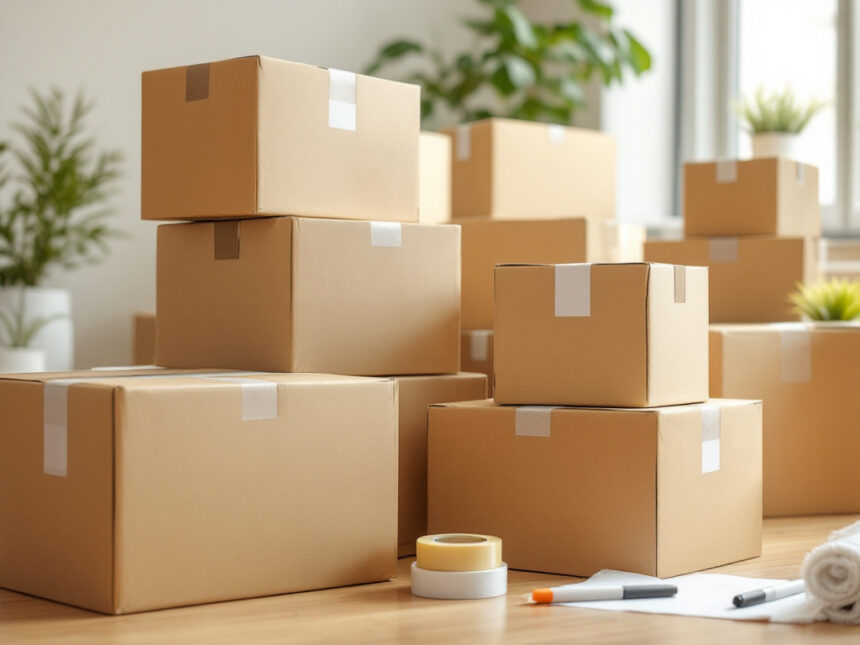
Medium moving boxes are the quiet workhorses of a smooth family move. They are big enough to hold a lot, small enough to carry safely, and flexible enough to work in almost every room. When you plan around medium moving boxes, you pack faster, stack easier, and cut down on stress on moving day.
Below, you will see why medium moving boxes deserve a starring role in your move, what to put in them, and how to use them to keep your home organized from the first box you tape to the last one you unpack.
Understand what “medium moving box” really means
Before you load up your cart, it helps to know what you are actually buying. Different brands use slightly different dimensions for medium moving boxes, but they fall in a similar range.
A few common sizes and capacities from recent guidance:
- A standard medium box is often around 8 inches by 14 inches by 12 inches and can safely hold up to about 60 pounds when packed correctly.
- U‑Haul’s medium moving box measures 18 1/8 inches by 18 inches by 16 inches, with a volume of 3 cubic feet and a weight capacity of up to 65 pounds.
- Many eco‑friendly kits include medium boxes between roughly 1.5 and 2.5 cubic feet, which fits the same practical “medium” category.
You will see medium moving boxes described as 2 to 3 cubic feet in many size charts. If you are comparing different brands or checking moving box dimensions, look for that volume range and a weight rating of roughly 60 to 65 pounds.

Most medium boxes are made from single wall corrugated cardboard with an edge crush test rating around 32 ECT, which is sturdy enough for typical household items when you respect the weight limits.
See why medium moving boxes work so well for families
Medium moving boxes hit a sweet spot that is especially helpful for busy households. If you are choosing between small moving boxes, medium, large moving boxes, and extra large moving boxes, you will probably rely on medium the most.
They are safer and easier to carry
When a box is big, you naturally try to fill every inch. That is where problems start. Large boxes packed with books, dishes, or pantry staples quickly get too heavy, which is hard on your back and risks the box failing in the middle of a stairwell.

Medium moving boxes are different. With a capacity of about 60 to 65 pounds, they remain manageable for one adult to lift and carry through tight hallways, elevators, and stairs, as long as you follow basic packing rules. The built‑in handles on many brands, like U‑Haul’s medium box with their “flat lock” design, also make them easier to grip and maneuver.
For families, that translates into fewer strained backs and less risk of a dropped box that destroys your dishes or upsets a tired toddler.
They stack neatly in trucks and storage
Uniform box sizes make loading the truck feel like a simple puzzle instead of a guessing game. Medium boxes are especially good for this because they are large enough to build solid walls of boxes, but not so large that they crush under their own weight.
When you keep box weights under the recommended limit and distribute heavy and light contents wisely, medium boxes stack securely in a moving truck or storage unit. U‑Haul notes that their medium box is stackable, although the safe stacking height still depends on how heavy each box is.
For you, that means:
- Less wasted space in the truck
- Fewer awkward gaps that need to be filled with random loose items
- A smaller chance of boxes shifting and falling during transit
If you pair medium boxes with a few heavy duty moving boxes for especially dense items, you can create a very stable load.

They fit most household items
Medium moving boxes are incredibly versatile. They are deep enough for small appliances, tall enough for stacked toys or pantry goods, and wide enough for folded clothing and linens. You will probably use them in every room.
U‑Haul recommends medium boxes specifically for small to medium appliances, kitchenware, home décor, toys, and office supplies. UNITS notes that medium boxes are also ideal for folded clothes, bed linens, towels, curtains, and children’s toys.
Compared with very small or very large cartons, medium moving boxes give you the most options without forcing you into bad packing decisions.
They simplify planning and purchasing
If you overcomplicate your mix of moving box sizes, it gets harder to guess how many you need. Focusing your plan around medium moving boxes, with small and large boxes in supporting roles, keeps your supply list simple.
MovingHelp suggests that a typical three bedroom home uses around 34 medium moving boxes for everyday household items. Another real world move for a 1,850 square foot three bedroom home in Phoenix used roughly 120 total boxes, split about one third each among small, medium, and large sizes.
Those two data points give you a useful ballpark and show how central medium boxes are in a typical family move.
Know what to pack in medium moving boxes, room by room
You can technically put anything that fits inside a box, but medium moving boxes shine when you follow some simple guidelines. Think “bulky but not too heavy” or “dense but still liftable.”
Kitchen: Everyday items and small appliances
Your kitchen tends to produce a lot of boxes and a lot of breakables. Medium boxes help you strike a balance between protection and weight.
Good candidates for medium kitchen boxes include:
- Pots, pans, and baking sheets are wrapped in packing paper or bubble wrap so they do not scratch or dent each other
- Small appliances such as blenders, toasters, and coffee makers packed with extra cushioning around blades and glass parts
- Mixing bowls, colanders, cutting boards, and food storage containers
- Pantry goods in cans, jars, and boxes, as long as you watch the weight
For fragile dish sets or glassware, you might still want specialty moving boxes for dishes or moving boxes for glasses. Medium-sized dish packs or cell kits are designed to fit inside a regular medium box footprint, which keeps everything compatible with your stacking plan.
Bedrooms and closets: Clothes, linens, and shoes
Medium moving boxes are a natural fit for bedrooms because they hold clothing and soft goods without feeling overstuffed.
You can use them for:
- Folded shirts, pants, pajamas, and kids’ clothes
- Bulky but lightweight items such as sweaters, hoodies, and seasonal wear
- Bed linens, towels, and curtains, which UNITS specifically recommends for medium boxes
- Shoes packed in their original boxes or wrapped in paper
If you want to keep clothes on hangers, you can mix in a few dedicated moving boxes for clothes. For everything else, medium cartons keep stacks tidy and easy to lift.
Living room and playroom: Toys, books, and decor
Family living spaces often produce a mix of heavy and delicate items. Medium moving boxes help you separate and protect both.
They work well for:
- Children’s toys and board games, which UNITS notes fit nicely and are easier to label clearly for fast unpacking
- Photo frames, small decorative objects, and candles wrapped in paper or bubble wrap
- Throw pillows, blankets, and lightweight decor
For heavier items like books, consider using smaller cartons or boxes built specifically as moving boxes for books so you do not end up with a 70 pound medium box that is impossible to lift. You can still mix a layer of books at the bottom of a medium box with lighter items on top, as long as you respect the 60 to 65-pound limit.
Home office and mixed storage: Supplies and electronics
If you have a home office, craft space, or storage closet, you will likely fill several medium moving boxes from those areas.
They are a good match for:
- Office supplies, notebooks, and binders
- Cables coiled and labeled in zip bags
- Small electronics like routers and speakers are packed in extra padding
- Craft supplies, photo albums, and keepsake boxes
If you are packing expensive or delicate tech, you might want heavy duty moving boxes plus the original device packaging, if you still have it. Medium boxes can then hold all the associated accessories, so nothing gets separated in the move.
Pack medium moving boxes the right way
How you pack matters just as much as what you pack. If you handle your medium moving boxes well, they will stay sturdy and easy to move from start to finish.
Follow basic weight and layering rules
Both Stack Moves and U‑Haul remind you to keep medium box weight under about 60 to 65 pounds and to layer items smartly.
Use this simple formula:
- Place the heaviest items at the bottom. This might be a layer of canned goods, a couple of heavy pots, or a few dense decor items.
- Add lighter, more delicate items on top. Examples include plastic containers, towels, bedding, or toys.
- Fill any gaps with crumpled packing paper or bubble wrap to prevent shifting during transit.
If you have a bathroom scale, you can spot check occasionally, so you get a feel for how heavy 50 to 60 pounds actually is in a medium box.
Build strong, reliable boxes
A well packed box starts with good assembly. Most medium cardboard moving boxes arrive flat and need to be folded and taped.
To keep them from failing on moving day:
- Use quality packing tape and apply at least one long strip along the center seam and shorter strips across the edges.
- For very heavy contents, use an “H” pattern on both the top and bottom.
- Make sure flaps are fully closed and flattened so the weight is distributed evenly on the box walls.
U‑Haul recommends taping their medium moving boxes even though they use a flat lock design so that you get maximum strength when carrying up to 65 pounds.
Label for family friendly unpacking
Medium moving boxes are often the first ones you want to open after a move because they contain everyday essentials. Clear labeling helps you and your movers get the right box into the right room on the first try.
You can keep it simple:
- Label at least two sides plus the top with the room and a short description, such as “Kitchen, Pots and Pans” or “Kids Room, Toys and Books.”
- Use a consistent color or symbol system for each room so family members can help unpack.
- Add “Open First” to boxes that hold first night basics like bedding, pajamas, or a basic kitchen kit.
If you want to go further, dedicated moving box labels can standardize your system so it stays readable even if you are writing quickly.
Estimate how many medium moving boxes you will need
Families often underestimate how many boxes it takes to pack a home. Getting close to your first purchase saves extra trips and avoids packing into random leftover containers at the last minute.
You can use these reference points:
- MovingHelp recommends 34 medium moving boxes for a typical three-bedroom home with an average amount of belongings.
- One three bedroom, 1,850 square foot house in Phoenix used about 120 boxes total, with roughly one-third of them medium size, so about 40 medium boxes.
Those ranges line up well and suggest that medium moving boxes make up a major chunk of your total supply. If you are in a smaller apartment or have a minimalist lifestyle, you can scale that number down. If you have gear-heavy hobbies, lots of kids’ toys, or a well stocked kitchen, you might need more.
Many retailers offer calculators that estimate moving boxes bulk needs based on the number of rooms and square footage, such as the U‑Haul supply calculator noted by MovingHelp. Using one can give you a customized starting point.
Balance cost and quality for your box mix
You have options when it comes to buying medium moving boxes. You can buy new, pick up used, or combine both so you keep costs under control without sacrificing safety.
When new medium moving boxes make sense
New boxes from major retailers give you predictable quality and sizing. U‑Haul’s medium moving box, for example, is rated to hold up to 65 pounds, uses 32 ECT corrugated cardboard, and weighs about 1.6 pounds per box. As of 2026, you can buy them for around 2.04 dollars each when you purchase in bulk, and U‑Haul offers a 100 percent buyback guarantee for unused boxes if you keep your receipt.
New medium boxes are a good choice if:
- You are packing fragile or valuable items and want maximum reliability.
- You need consistent sizes to build stable stacks in a truck or storage unit.
- You want the convenience of ordering everything at once as a moving boxes kit.
You can compare pricing through moving boxes for sale roundups or by checking multiple moving box suppliers before you buy.
How to save with used or free boxes
If you want to reduce costs or waste, you have a few good alternatives.
UsedCardboardBoxes.com sells eco‑friendly kits that include 20 medium used moving boxes between 1.50 and 2.49 cubic feet, plus tape rolls and a reusable shipping box, shipped free within 2 to 3 business days in the continental United States. They specialize in once used or factory overrun boxes that are manually inspected for structural soundness and cost less than new ones, which helps save trees and reduce waste.
Customers consistently praise the sturdiness of these boxes, and the company reports thousands of five-star reviews and a strong Net Promoter Score over more than 15 years of operation.
You can also look for used moving boxes locally. One family move mentioned paying about 85 dollars for roughly 100 used boxes from Facebook Marketplace, which included plenty of medium sizes and dramatically reduced box costs for a three bedroom home.
If you prefer not to pay at all, local big box, grocery, and liquor stores often give away boxes. MovingHelp notes that you can find free medium moving boxes this way, but you should carefully check each one for sturdiness so it can protect your belongings in transit. Our guides to free moving boxes and where to find free moving boxes walk through the best places and how to ask.
When you are searching locally online, you can also use tools like moving boxes near me or where to buy moving boxes to compare options nearby.
Consider renting reusable medium bins
For families who want a lower waste move without collecting and breaking down cardboard, renting reusable plastic medium bins can be a smart move. Stack Moves notes that renting medium moving boxes as durable bins gives you ready-to-use containers delivered to your home and picked up after your move, which cuts clutter and cardboard waste.
You still get the same benefits that make medium boxes appealing, such as liftable weight, easy stacking, and consistent sizes, just in a reusable shell.
Use medium moving boxes to stay organized from day one
Medium moving boxes are not only practical for lifting and stacking, but they also help you stay organized in the middle of family chaos. Because they tend to hold “everyday stuff,” they are perfect for building an unpacking plan that works with real life.
You can use them to:
- Create one “first night” box for each family member with pajamas, a favorite toy, basic toiletries, and a change of clothes.
- Pack a “family kitchen starter” box with a few plates, cups, utensils, a small pot, and your coffee setup.
- Set up “activity boxes” for kids with a mix of toys, books, and art supplies to keep them busy while you unpack.
If you have labeled medium boxes clearly, movers or friends can quickly drop them in the right rooms, and you can prioritize opening the boxes that will make your first days in the new home feel normal.
Compare medium moving boxes to other sizes at a glance
To decide just how heavily you want to lean on medium boxes, it helps to see how they compare with other common sizes.
| Box type | Typical volume | Best for | Watch out for |
|---|---|---|---|
| Small | Around 1.5 cu ft | Books, tools, canned food, small heavy items | Easy to overpack with dense items, which adds up in quantity |
| Medium | About 2 to 3 cu ft | Kitchenware, small appliances, clothes, linens, toys, decor | Still has a weight limit, do not treat it like a catch all |
| Large | Around 4.5 cu ft | Pillows, bedding, bulky light items | Too heavy if you add books or heavy kitchenware, awkward to carry |
| Extra large | 6 cu ft or more | Very light, bulky items like comforters, stuffed animals | Hard to maneuver in tight spaces, easy to overload with weight |
Medium moving boxes sit in the center of this chart and handle the widest range of everyday items. If you plan a move around mostly medium boxes plus a few small and large ones, you will usually end up with a safer and more manageable load.
If you need help building out the full mix, our guides to packing boxes for moving, standard moving box sizes, and best moving boxes walk through popular options and when to use each type.
Keep your move family friendly with the right medium box strategy
Medium moving boxes might not be the most exciting part of your move, but they quietly solve a lot of the problems families face when they are packing up a home. They are:
- Easy to lift through stairs and tight hallways
- Versatile enough for almost every room
- Simple to stack neatly in trucks and storage
- Affordable and widely available, whether you buy new or used
If you start by estimating how many medium moving boxes you need, then fill in the gaps with specialty options like moving boxes for artwork, moving boxes for books, or heavy duty moving boxes, you will have a system that supports you from the first packed closet to the last kitchen drawer.
Next time you are comparing moving boxes cost or browsing moving boxes online, give medium moving boxes top billing on your list. Your back, your budget, and your family’s first night in the new place will all benefit.
FAQs
What should go in medium moving boxes?
Medium moving boxes are best for kitchenware, folded clothes, towels, linens, toys, small appliances, office supplies, and home décor. They work best for items that are bulky enough to need space but not so dense that the box becomes too heavy.
Are medium moving boxes good for books?
They can hold a small layer of books, but they should not be packed full of dense books. Books are better in small boxes unless you mix a few at the bottom with lighter items on top.
How many medium moving boxes does a family usually need?
The number depends on home size and how much you own, but medium boxes typically make up a large part of the total moving supply for family homes. They are often the most-used size in a well-balanced packing plan.
What is the average size of a medium moving box?
Most medium moving boxes fall into the 2 to 3 cubic foot range, though exact dimensions vary by brand. U-Haul’s medium box is listed at 18 1/8” x 18” x 16” and 3 cu/ft.
How much weight can a medium moving box hold?
Many medium moving boxes are rated for around 60 to 65 pounds, depending on the box design and material. U-Haul’s medium moving box is rated to 65 pounds.
Are used medium moving boxes worth buying?
Yes—if they are structurally sound. Using box suppliers and local marketplaces can lower moving costs, but every used box should be checked carefully for wear, crushing, moisture damage, or weak seams.
Should families buy all medium boxes?
No, but medium boxes should be the core of the box mix. Small boxes are better for heavy items like books and canned goods, while large or extra-large boxes are better for lightweight, bulky items such as pillows and comforters.
How do I make unpacking easier with medium boxes?
Label at least two sides and the top, include the destination room, and add a short content summary. You can also create “Open First” boxes for pajamas, bedding, kids’ comfort items, and basic kitchen supplies.