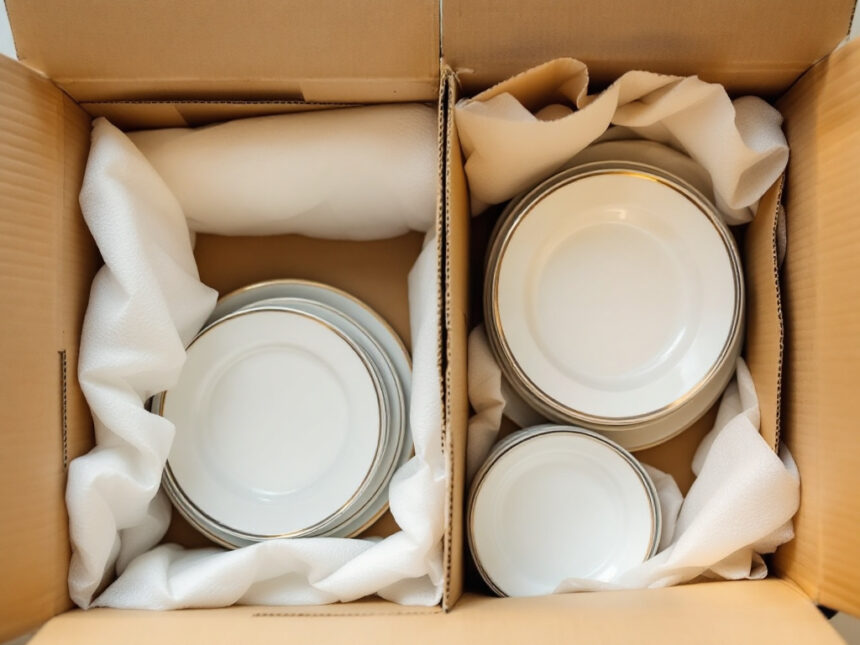
A single cracked plate can sour moving day fast. The right moving boxes for dishes protect your plates, bowls, and glassware so everything arrives in one piece, even if the ride is bumpy or the stairs are tight.
In this guide, you will see how to choose strong moving boxes for dishes, which box styles actually work, and how to pack them so you avoid last minute disasters. You will also find options that match different budgets, home sizes, and moving styles, from studio apartments to busy family kitchens.
Why do you need specialty moving boxes for dishes
Dishware is heavy, breakable, and awkward to stack. When you place all that weight in the wrong box, the bottom can sag or split, plates can knock together, and corners may crush in transit.
Many moving supply stores sell boxes specially designed for dishes. These are often called dish packs or kitchen boxes, and they are built to be stronger than standard cartons, which makes them ideal for packing plates and bowls, although they cost more than basic boxes. For larger kitchens, movers may need 25 or more of these sturdy boxes to pack everything safely.
You do not always need the fanciest box, but you do need boxes that are strong enough to handle the weight of your dishes without bowing or tearing. That usually means thicker cardboard, smaller dimensions, and good packing technique.
What to look for in moving boxes for dishes
Before you start collecting any old carton, pause for a minute and look for a few key features that matter for dishes specifically.
Sturdy cardboard and construction
The best boxes for dishes should be durable enough to hold the weight of your plates and bowls so they do not break during transport. uBoxes, for example, offers a Single Wall Kitchen moving box that is designed with twice the strength of typical moving boxes. It is recommended for packing breakable items like dishes, bowls, and glasses.
You do not have to buy that exact brand, but you should look for:
- Thick, rigid cardboard that does not flex easily
- Tight seams and strong flaps
- A weight rating that matches heavy items
If you are comparing different cardboard moving boxes, lean toward kitchen or heavy duty options over generic light duty cartons.
Smaller size to control weight
When you are packing dishes, smaller boxes are usually safer. When you use especially sturdy and appropriately sized cardboard moving boxes, it protects your dishware and makes the boxes easier to carry. Smaller boxes also help you avoid overloading and potential breakage.
If you are choosing from moving box sizes, focus on:
- Small and medium moving boxes for plates, bowls, and mugs
- Very small or narrow boxes for stemware and delicate items
- Avoiding extra large moving boxes for dishes, since they get too heavy and items shift around
You can still use large moving boxes for light kitchen items like plastic containers or baking sheets, just not for heavy stacks of ceramic or glass.
Enough boxes for your kitchen size
Underestimating how many moving boxes for dishes you need is an easy mistake. For larger kitchens with lots of dishware, movers may need 25 or more cardboard boxes to safely pack all dishes and fragile kitchen items.
As a rough guide:

- Studio or one bedroom: 5 to 10 dish-safe boxes
- Two to three bedroom home: 10 to 20 dish-safe boxes
- Large family kitchen or people who love entertaining: 20+ dish-safe boxes
If you are buying moving boxes in bulk, add at least a couple of extra dish boxes so you are not forced to mix heavy kitchenware with lighter items.
Types of moving boxes for dishes
There are several styles of moving boxes for dishes. You can mix and match based on your budget and how fragile your items are.
1. Dedicated dish boxes or dish packs
Dish boxes are purpose built for plates, bowls, and glassware. Many moving supply stores sell boxes specially designed for dishes, which are ideal for packing plates and bowls, although they cost more than basic boxes.
You might choose dish boxes if you:
- Have fine china, heirlooms, or sentimental pieces
- Are you moving long distance or expect rough handling
- Want built-in peace of mind for your most fragile items
These often have thicker cardboard, double walls, and sometimes built in dividers for glasses. They are a smart choice for a few high risk boxes, even if you use standard packing boxes for moving the rest.
2. Reinforced kitchen boxes
Kitchen specific boxes, like the uBoxes Single Wall Kitchen moving box, are designed with extra strength so they can handle breakables without tearing. That box is recommended for dishes, bowls, and glasses because it is roughly twice as strong as a typical moving box
These boxes are ideal if you:
- Want heavy duty protection without full dish pack pricing
- Have a mix of dishes, small appliances, and pantry jars
- Are packing for a family kitchen with lots of daily use items
If you are choosing among heavy duty moving boxes, look for ones labeled for kitchens or dishes since they are sized and reinforced for that purpose.
3. Standard moving boxes padded correctly
You do not have to use specialty moving boxes for dishes if you are on a tight budget. A basic, durable box padded generously with packing paper can protect dishes just as well as a specialized dish box, as long as you handle it carefully.
This option works when you:
- Are you moving on a budget and want to stretch your budget spend
- Already have a bundle or moving boxes kit and do not want to buy extras
- Are you packing everyday dishes that can handle a little more risk
In this case, your packing technique matters even more. You will want thick layers of packing paper, careful stacking, and clear labels, which we will cover later.
4. Glassware and stemware boxes
Glasses are often the trickiest kitchen items to pack. You can:
- Use special moving boxes for glasses with cardboard dividers that keep each glass separated
- Repurpose wine shipping boxes with built-in compartments
- Combine small, tight-fitting boxes with bubble wrap for a DIY version
Stemware and tall glasses do best in narrow boxes where they stand upright and do not wobble.
If you also have framed prints or canvases, consider separate moving boxes for artwork so those pieces do not compete with dishes for space.
5. Kits that bundle boxes and packing materials
If you would rather buy one solution and be done, look for kitchen focused moving kits. These are often similar to a general moving boxes kit, but targeted at dishes and glassware. They typically include:
- A set number of dish boxes and glassware boxes
- Plenty of packing paper and sometimes bubble wrap
- Labels or moving box labels marked “Kitchen” and “Fragile”
Kits can be especially helpful for families under time pressure, since you do not have to guess quantities or make multiple store runs.
Must have packing materials for dishes
Strong moving boxes for dishes are your starting point. The way you cushion and wrap items matters just as much.
To protect dishes, you will want:
- Packing paper for wrapping and for padding box bottoms and gaps
- Bubble wrap or foam for extra fragile pieces
- Stretch wrap to bundle lids together or keep stacks tight
- “Fragile” stickers so movers know to take extra care
When you pack dishes correctly, you should hear very little clinking or shifting when you gently shake the box.
Quick rule of thumb: if you can easily hear plates or bowls knocking together, add more padding before you seal the box.
How to pack dishes so they survive the move
Even the strongest moving boxes for dishes cannot fix poor packing. A few simple techniques, backed by professional movers, dramatically cut down on breakage.
Prep your boxes the right way
Start by reinforcing the bottom of every dish box with extra tape. Then crinkle 6 to 8 pieces of packing paper and place them at the bottom of the box. This creates a shock absorbing cushion for your dishes.
This step is especially important if you are using standard small moving boxes instead of dedicated dish packs. The more padding you add, the more forgiving the box becomes.
Pack plates vertically, not flat
For packing dishes securely during a move, it is recommended to pack plates vertically, like records in a crate, rather than laying them flat. Plates are stronger when pressure is applied to their edges, and vertical packing significantly reduces breakage because it lets them absorb shocks better.
You can also:
- Wrap three dishes together with packing paper.
- Stack them on their edge in the box, not flat.
- Repeat in small groups until the box is full, without forcing them in.
Fill gaps with more crumpled paper so nothing can slide forward or backward.
Layer bowls with care
Bowls benefit from a layered approach. For bowls, you can:
- Wrap and roll three bowls together in packing paper
- Stack them on their edge, not flat, inside the box
- Separate each layer of bowls with crinkled paper to prevent breakage
Heavier, wider bowls should go toward the bottom of the box, with lighter or more delicate bowls closer to the top.
Wrap handles and delicate parts
Large kitchen objects, such as pitchers, teapots, and handled serving dishes, need extra attention. Wrapping the handles of these pieces with packing paper before packing improves their protection during a move.
You can wrap the whole item, then add a second or third layer around handles, spouts, and rims. Once wrapped, nest those pieces among lighter items instead of directly against heavier stacks of plates.
Use the wrap and roll method for utensils and knives
Silverware and knives can damage other items if they are loose in the box. To prevent problems, wrap them using the wrap and roll method. Knives should be clearly labeled on the outside of the paper for safety and placed at the top layer of the box so they do not crush other things.
You can bundle forks and spoons in groups so you do not scatter them across several boxes. This makes unpacking much simpler.
Protect small appliances and casserole dishes
Small appliances like blenders and food processors usually share a box with dishes. To keep them safe:
- Disassemble each appliance before packing
- Wrap each part individually in paper
- Fill glass parts with paper to prevent cracking
- Pack casserole dishes on their side with lids nested inside
- Use the same wrap and roll technique as you would for other kitchen items
These heavier items belong near the bottom of the box, with a thick paper cushion under them.
How many hours to plan for packing dishes
Packing the kitchen often takes longer than any other room. Packing the kitchen when moving usually takes most people at least eight hours, and delicate items like dishes require a big chunk of that time and care.
To stay sane, you can:
- Split kitchen packing over two or three days
- Start with rarely used dishes and serving pieces
- Leave just enough daily dishes out, then pack them the day before the move
Trying to rush through dishes the night before your move is a quick path to cracked plates and stressful last-minute improvising.
Labeling and organizing dish boxes
Once your boxes are packed and taped, what you write on the outside is just as important as what you placed inside.
Organizing and labeling kitchen boxes by grouping dishware and related items by use or zone simplifies unpacking and keeps fragile boxes identifiable, which lowers the risk of damage during the move.
You can use moving box labels or thick markers to note:
- “Kitchen” plus the specific contents, such as “Plates and bowls” or “Everyday glasses”
- “Fragile” on multiple sides of the box
- “This side up” where it really matters, for example, for glassware or appliances
If you are sending certain boxes to storage, you can also note “Unpack first” on two or three essential boxes so you are not hunting for mugs or plates on your first night.
How these boxes fit with the rest of your move
Strong moving boxes for dishes are just one piece of your overall packing plan. You will probably combine them with:
- Moving boxes for books and heavy reading material
- Moving boxes for clothes or wardrobe boxes for closets
- A mix of small, medium, and large moving boxes for general items
- Specialty options like moving boxes for artwork, frames, and canvases
If you need to keep costs down, you might balance premium dish boxes with some used moving boxes for lighter, non fragile items. Just avoid secondhand boxes that are already soft or dented, since those can give way under the weight of dishes.
When you are ready to buy, you can compare prices and moving boxes cost across local moving box suppliers or search moving boxes near me. If your budget is tight, you can also look into free moving boxes and where to find free moving boxes, then reserve your paid boxes for dishes and other fragile items.
Where to get moving boxes for dishes
You have several options when you are ready to source strong moving boxes for dishes.
You can:
- Buy kitchen or dish specific boxes through local moving box suppliers or big box stores
- Order a curated moving boxes kit that includes dish and glassware boxes
- Pick up moving boxes for sale online and select heavy duty styles
- Mix in secondhand boxes from friends or used moving boxes from marketplaces for non breakables
If you are not sure which sizes to choose, resources on standard moving box sizes, moving box dimensions, and general moving boxes can help you plan the right mix. You can also read up on the best moving boxes for overall quality or check guides on how to pack moving boxes for extra tips.
Quick comparison of dish box options
Here is a simple comparison to help you decide which moving boxes for dishes fit your situation best.
| Option | Best for | Pros | Cons |
|---|---|---|---|
| Dedicated dish boxes | Fragile or sentimental dishes, long distance moves | Extra strong, often with dividers, designed for plates and bowls | Higher cost per box |
| Reinforced kitchen boxes | Affordable, easy to find, and can reuse general packing boxes for moving | Stronger than standard boxes, versatile for dishes and small appliances | Slightly pricier than basic cartons |
| Standard small boxes with padding | Budget moves, everyday dishes | Affordable, easy to find, can reuse general packing boxes for moving | Relies heavily on good packing, may not suit very fragile pieces |
| Glassware boxes with dividers | Wine glasses, tall glasses, stemware | Individual compartments reduce chips and cracks | Less flexible for bulky items |
| Kitchen moving kits | Busy movers who want one purchase | Bundled boxes and materials, easy planning | May include more or fewer boxes than you actually need |
Final tips to avoid dish disasters
A little extra planning now means you do not unwrap a box of broken shards in your new kitchen. As you choose and use moving boxes for dishes, remember to:
- Prioritize sturdy, smaller boxes over large, flimsy cartons
- Pad each box with plenty of packing paper on the bottom and between items
- Pack plates and bowls on their edges, not flat
- Take time to wrap handles, rims, and glass parts thoroughly
- Label every kitchen box clearly as “Fragile” and “Kitchen”
Try starting with just one dish box today. Gather your packing paper, set up a strong box, and pack a single shelf of plates or bowls. Once you see how secure everything feels, you can repeat the process calmly, one box at a time, instead of racing against moving day.
FAQs
What are the best moving boxes for dishes?
The best moving boxes for dishes are dedicated dish packs or reinforced kitchen boxes. These feature double-wall construction, thicker cardboard, and sometimes built-in dividers. Brands like uBoxes offer kitchen-specific boxes that are roughly twice as strong as standard cartons, making them ideal for heavy, fragile items like ceramic plates and glassware.
How many moving boxes do I need for dishes?
The number depends on your kitchen size. As a general guide: studios and one-bedroom homes need 5–10 dish-safe boxes, two-to-three-bedroom homes need 10–20, and large family kitchens may require 25 or more. Always add 2–3 extra boxes to avoid mixing heavy kitchenware with lighter items.
Should I pack plates flat or standing up in moving boxes?
Always pack plates vertically — standing on their edges, like records in a crate. Plates are structurally stronger when pressure is applied to their edges rather than their flat surfaces. Vertical packing significantly reduces the risk of breakage during bumpy transit.
Can I use regular moving boxes for dishes?
Yes, you can use standard small moving boxes for dishes on a budget, provided you pad them generously with crinkled packing paper on the bottom, between layers, and around all gaps. The key is ensuring nothing shifts or clinks when you gently shake the closed box. However, for fine china or long-distance moves, specialty dish boxes are strongly recommended.
What packing materials do I need for moving dishes?
You’ll need: packing paper (for wrapping and cushioning), bubble wrap or foam padding (for extra-fragile items), stretch wrap (for bundling lids), “Fragile” stickers or labels, and strong packing tape to reinforce box bottoms and seams. Avoid using newspaper directly on dishes as the ink can stain.
How long does it take to pack kitchen dishes for a move?
Packing the kitchen is one of the most time-intensive rooms in any home — typically taking at least 8 hours total. Delicate dishes require particularly careful handling. Spreading kitchen packing across two to three days, starting with rarely used items, significantly reduces stress and the risk of rushed mistakes.
Where can I buy moving boxes for dishes?
You can purchase dish-specific moving boxes from local moving supply stores, big-box retailers, or online platforms like Amazon, U-Haul, or uBoxes. Kitchen moving kits that bundle dish boxes, packing paper, and labels are also widely available and convenient for busy movers.