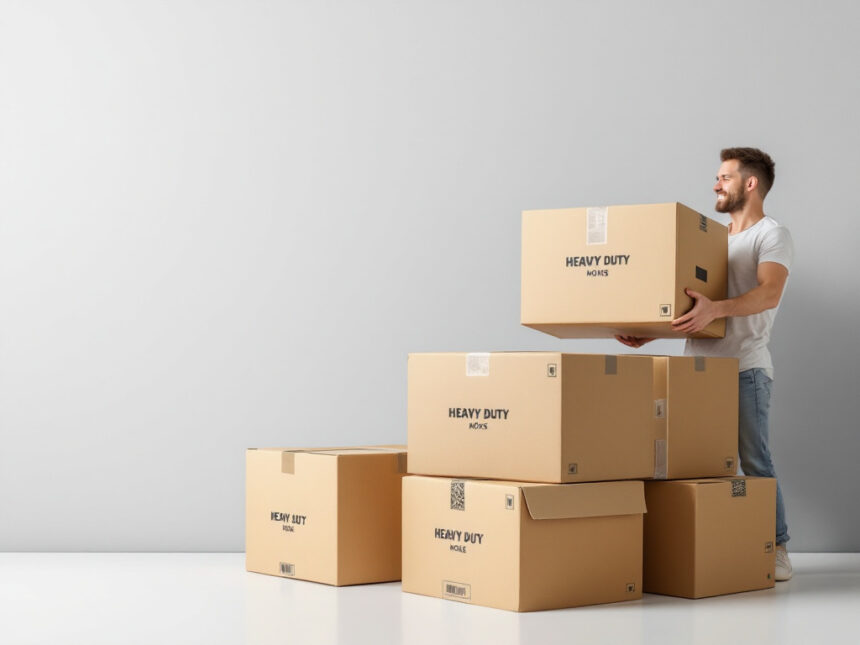
A pile of flimsy boxes can turn moving day into a stressful game of “what broke this time.” Strong, heavy duty moving boxes do the opposite. They protect your stuff, stack safely, and make carrying heavy loads less nerve‑racking in tight hallways and elevators.
In this guide, you will see how to pick the right heavy duty moving boxes for your situation, where to get them, and how to pack them so they actually stay strong from loading to unpacking.
Why heavy duty moving boxes are worth it
Regular single wall boxes are fine for pillows or towels. Once you start loading books, dishes, or small appliances, that same box can buckle fast.
Nearly 40% of breakages during moves come from using the wrong kind of box for the item’s weight or shape, which is a big chunk of avoidable damage. Heavy duty moving boxes help you avoid that.
What “heavy duty” actually means
Most heavy duty moving boxes are made from double wall corrugated cardboard. That means:

- Two layers of fluting and three linerboards instead of one of each
- Sidewalls that resist crushing and bulging
- Much higher weight capacity compared to regular single wall boxes
Double walled heavy duty boxes are often twice as strong as standard boxes and can safely support loads of 20 to 30 kilograms, which makes them ideal for TVs, books, dishes, and other dense items.
In contrast, regular moving boxes are usually single wall and work best for lighter items under about 5 kilograms, such as clothes, bedding, and cushions.
Why strength ratings matter
When you compare heavy duty moving boxes, look for an Edge Crush Test, or ECT, rating. This measures how much force the box walls can handle before they crush.

For heavy loads, experts recommend an ECT rating of at least 32 so the sidewalls stay rigid during stacking and transport. Higher ECT ratings become especially important if you plan to stack boxes several layers high in a truck or storage unit.
How heavy duty moving boxes are built
Understanding what is inside a heavy duty box helps you choose the right one for your move and gives you confidence that it will hold up.
The structure inside the cardboard
Heavy duty moving boxes are usually made from corrugated paperboard. This material combines strong paper linerboards with a wavy inner layer called fluting. Corrugated board has been used for about 150 years, and manufacturers keep improving it for better strength, durability, and water resistance.
The linerboard itself is often produced with a kraft chemical process that preserves long, resilient fibers. These fibers increase tear resistance and help your box keep its shape even when loaded with weight.
Why fluting size matters
Not all corrugated flutes are the same. Larger flutes create more cushioning, insulation, and puncture resistance. They also increase vertical compression strength, which is crucial when you stack heavy duty boxes on top of each other.
Smaller flutes are stiffer and can add structural strength for certain specialty boxes. For most home moves, larger or mixed flute types in double wall construction provide the best balance of cushioning and strength.

Single wall vs double wall vs triple wall
You will sometimes see boxes labeled by the number of “walls.” That describes how many layers of fluting and linerboard they contain.
| Box type | Structure description | Typical use case |
|---|---|---|
| Single wall | One fluting layer between two linerboards | Everyday household items, clothes, light decor, low weight loads |
| Double wall | Two fluting layers between three linerboards | Heavy duty moving boxes for books, dishes, small appliances, electronics |
| Triple wall | Three fluting layers enclosed by four linerboards | Very heavy or industrial items, rarely needed for standard residential move |
The more walls, the more protection you get, with increased resistance to crushing and puncturing.
Best heavy duty moving boxes for different movers
You might be moving out of a studio, packing up a full house, or just shipping a few very fragile items. The best heavy duty moving boxes for you depend on how much you are moving, how far you are going, and what you are most worried about.
If you are in an apartment with stairs or elevators
As an apartment mover, you care about two things: not breaking your stuff and not breaking your back. You are also likely to be cost conscious and not buy more boxes than you really need.
Focus on:
- Smaller heavy duty boxes for dense items
- Medium double wall boxes for the rest
- A few specialty boxes, only if you have them (TV, artwork)
Small heavy duty boxes keep the overall weight reasonable so you can carry them through hallways, up stairs, or into elevators without straining. You can explore different small moving boxes to match the weight you plan to pack.
Medium double wall boxes are a sweet spot for most apartment moves because they fit through doorways easily, stack nicely, and rarely become too heavy when packed sensibly. If you want a starting point for planning your mix, it helps to look at common moving box sizes and moving box dimensions before you buy.
If you are moving a family home
For a family move, volume and organization matter just as much as strength. You might be packing multiple bedrooms, a kitchen, a garage, and kids’ rooms, all on a timeline.
A practical approach is to combine:
- Heavy duty double wall boxes for books, dishes, electronics, and decor
- Regular single wall boxes for lighter textiles and toys
- A labeling system and, if possible, a complete moving boxes kit
Experts suggest this combination for efficient house moves, because the price difference between heavy duty and regular boxes is small compared to the extra safety you get when you protect heavier items properly.
You can also save time by buying moving boxes in bulk and using consistent sizes. That makes it easier to stack in a truck or storage unit and speeds up loading.
If you are focused on fragile or heavy items
If your main concern is a library of books, a kitchen full of glassware, or several small appliances, heavy duty moving boxes really earn their keep.
For books, go for compact, reinforced options. Overloading a large box with books is a classic moving mistake, so sturdy small and medium moving boxes are safer. You can also look into purpose made moving boxes for books.
For dishes and glassware, prioritize double wall protection plus internal padding. Many people like specialty moving boxes for dishes and moving boxes for glasses, or you can mimic them by using heavy duty boxes with plenty of dividers and cushioning.
If you have framed art or mirrors, consider reinforced moving boxes for artwork. They use thicker cardboard and sometimes extra fluting to guard against puncture and bending.
Where to buy strong, heavy duty moving boxes
You have several options when you are ready to pick up heavy duty moving boxes. Each one suits a slightly different priority, such as cost, speed, or specialty sizes.
Hardware and home improvement stores
Brick and mortar home centers carry a wide range of cardboard moving boxes, including heavy duty styles. Corrugated brown boxes are the most widely used option for moving because they are efficient for packing most household items.
At these stores, you will usually find:
- Small, medium, large, and extra large heavy-duty double-wall boxes
- Wardrobe boxes and specialty dish or glass boxes
- Plastic bins you can reuse for cleaning supplies or seasonal items
Plastic bins are waterproof and stackable, which makes them especially useful for items that might leak, such as cleaning products or pantry liquids. They are also great for utensils, spices, and seasonal decor since you can see inside when you use clear bins.
If you want an overview of nearby options, starting with moving boxes near me can help you compare locations and stock.
U-Haul heavy duty box range
If you prefer to pick up boxes at the same time you rent a truck, U Haul offers a dedicated heavy duty lineup. As of 2026, their double wall moving and shipping boxes come in sizes from small to extra large, with prices starting around $2.95 for small and going up to $7.95 for extra large.
U Haul also stocks:
- Heavy Duty Double Wall Small, Medium, Large, and Extra Large boxes
- Expandable heavy duty TV boxes for screens up to 86 inches
- Same day delivery in many areas and free in store pickup
For example, their Extra Large Heavy Duty Double Wall box measures 24 inches by 18 inches by 24 inches and is priced at $7.95 in the United States as of 2026. You can get Medium, Large, and Extra Large TV boxes that expand to fit different screen sizes, with prices between about $20.25 and $39.95.
If you want to avoid shipping fees altogether, the free in store pickup option helps you save on costs while still getting crush tested, double wall boxes designed for moving.
Online box specialists and wholesalers
If you prefer delivery to your door or you need a lot of boxes, online packaging specialists are worth a look. Retailers such as The Boxery focus on heavy duty shipping and moving cartons.
They offer several box types that can double as moving boxes:
- Standard single wall boxes for general use
- Double-wall heavy-duty boxes for dense or fragile items
- Large Gaylord style bulk boxes for pallet shipments or oversized items
These boxes are crush tested for strength and designed to prevent breakage during shipping and moving, which reduces the cost and frustration of replacing damaged items.
Many wholesalers sell heavy duty shipping boxes at bulk prices, often with discounts on larger quantities and fast delivery from multiple warehouses. If you have a big move or a side business that ships items, this can be a budget friendly way to stock up.
To compare your options online, it helps to look at different moving box suppliers before you place an order.
Free and used box options
If you are working with a tight budget, you can still prioritize strength while hunting for deals or freebies.
Heavy duty boxes that have only been used once often have plenty of life left. You can search for used moving boxes in your area or check community boards.
You can also explore guides on free moving boxes, free boxes for moving, and where to find free moving boxes to track down sturdy options at grocery stores, liquor shops, and offices. When you pick up secondhand boxes, check that the corners are crisp, the fluting is not crushed, and the boxes are dry and free of stains.
How many heavy duty moving boxes do you need
You do not want to run out of boxes the night before your move. At the same time, overbuying too many heavy-duty boxes can raise your costs unnecessarily.
Home Depot notes that it is better to slightly overestimate your box count so you do not have to make repeated trips to the store. They even offer an online calculator to estimate how many boxes of each size you will need for your home size and room count.
For heavy duty moving boxes specifically:
- Plan more small and medium double wall boxes if you have a lot of books, kitchenware, or decor
- Use heavy duty large or extra large moving boxes sparingly, mainly for bulky but not overly heavy items
- Fill the rest of your needs with standard boxes for very light items
If you want to compare unit costs, it can help to review the typical moving boxes cost so you can decide where heavy duty boxes make the most sense in your budget.
Smart ways to mix heavy-duty and regular boxes
You rarely need every box in your move to be heavy-duty. The trick is to match the box strength to what is going inside.
A common, efficient setup is:
- Heavy duty double wall boxes in small and medium sizes for heavy contents
- A mix of standard large moving boxes and extra large boxes for light, bulky items
- A few specialty boxes for clothes, dishes, or artwork
Experts recommend using heavy duty double wall boxes for medium to extra large and heavy items, and regular single-wall boxes for small to medium-sized light items. The price difference is minimal, and the safety upgrade is significant.
If you prefer an all in one solution, consider a curated moving boxes kit. Kits usually include a mix of heavy-duty and standard boxes plus tape and sometimes bubble wrap, which saves you from planning quantities piece by piece.
Eco-friendly heavy-duty moving box choices
You might assume stronger boxes always mean more environmental impact, but that is not necessarily the case.
Many heavy duty moving boxes now use recycled fibers in their construction, while still meeting industry strength ratings. Manufacturers can blend recovered paper into linerboard and fluting without losing the crush resistance that heavy duty boxes need for moving and storage.
To keep your move eco friendly:
- Reuse heavy duty boxes from friends or local groups
- Choose boxes labeled with recycled content
- Flatten and recycle boxes after your move, or pass them on to someone else
Used boxes that are still in good condition can be incredibly effective, especially heavier double wall designs, as long as you inspect them carefully.
How to safely pack heavy duty moving boxes
A strong box is only part of the equation. How you pack it can make the difference between a safe arrival and a collapsed mess.
Match box size to item weight
Heavy items belong in smaller boxes. Lighter items belong with the larger ones. Home Depot recommends using smaller moving boxes for heavier contents to keep them manageable, while reserving larger sizes for lightweight items such as pillows, blankets, and clothes.
Following that guideline, you can load:
- Books, canned goods, and dense tools into small or medium double wall boxes
- Pots and pans into medium heavy duty boxes, with extra padding
- Bedding, stuffed animals, and coats into large or extra large single wall cartons
You can check different standard moving box sizes to see how this lines up with typical dimensions.
Layer and cushion correctly
Even heavy duty moving boxes need internal support. To pack heavy items safely:
- Line the bottom of the box with rigid foam, folded cardboard, or several layers of paper.
- Place the heaviest objects on the bottom in a snug arrangement.
- Fill any gaps with padding to prevent shifting.
- Add lighter or more delicate items higher up with extra cushioning between them.
- Keep the total box weight under the recommended limit on the box so you avoid structural failure.
If you need a step by step refresher, a dedicated guide on how to pack moving boxes can walk you through the process with more examples.
Seal boxes in an “H” pattern
Heavy boxes put stress on their seams. To keep them from popping open at the worst moment, you want a strong taping method.
Pros recommend sealing heavy duty moving boxes with strong tape in an “H” pattern. That means:
- Tape along the main center seam on the bottom and top flaps
- Tape across both side seams where the flaps meet
- Extra reinforcement on corners or hand holes if the box will be very heavy
This pattern locks all the flaps together and distributes the load so the tape can withstand handling and stacking pressure.
Stack and handle heavy boxes safely
Once your heavy duty boxes are packed, treat them like the dense objects they are.
- Stack heaviest boxes on the bottom layer in the truck or storage unit
- Keep stacks aligned so the weight sits on the box corners, not in the middle of the panels
- Use a dolly for the heaviest loads to prevent injury
- Avoid grabbing damaged hand holes, since weakened cardboard can rip under load
When you plan your layout in the truck, aim to keep fragile, heavy duty boxes like dish packs against solid surfaces with softer items cushioning them.
Heavy duty boxes for specific items
Different items need different levels of protection. Here is how to match your heavy duty moving boxes to common household categories.
Books and documents
Books are deceptively heavy. A single cubic foot of hardcovers can weigh 20 to 30 pounds, which is enough to blow out the bottom of a weak box.
Use:
- Small heavy duty double wall boxes or specialty moving boxes for books
- Flat stacking so book spines do not crush
- Paper or bubble wrap at the bottom and top
Keep boxes clearly labeled, and if they feel like they are approaching your personal lifting limit, start a second box instead of adding more.
Dishes and glassware
Your kitchen is one of the highest risk areas for breakage. Heavy duty boxes really shine here.
Consider:
- Double wall dish packs or similar heavy duty boxes
- Dividers for plates and glasses
- Plenty of cushioning between and on top of items
Many people simplify this with purpose made moving boxes for dishes and moving boxes for glasses. If you go the DIY route, just make sure your base padding and internal dividers are strong enough to handle vertical pressure and bumps.
Electronics and TVs
Modern TVs and electronics are light but fragile. For TVs in particular, a purpose-built heavy-duty carton is worth it.
U Haul offers Heavy Duty Expandable TV Moving Boxes in several sizes, covering screens under 40 inches up to 86 inches. These boxes are designed to clamp snugly around the TV and protect it during moves, with same-day delivery or free store pickup available in many areas.
For smaller electronics:
- Use heavy duty cartons that are only slightly larger than the device
- Add rigid padding at the bottom and corners
- Keep boxes upright and marked as fragile
Clothes and linens
Clothing and bedding are perfect candidates for regular single wall boxes, wardrobe cartons, or bags. You generally do not need heavy duty cardboard here.
That said, if you want your closet items to arrive unwrinkled, consider wardrobe style moving boxes for clothes. You can hang garments directly in them and unload straight into your new closet.
Labeling and organizing your heavy duty boxes
Strength protects the contents. Labeling protects your sanity when you unload.
A simple labeling system can include:
- Room name on at least two sides
- “HEAVY” or “FRAGILE” in large letters where needed
- A rough list of key contents
You can streamline this with dedicated moving box labels, color coding by room, or a numbered list that matches a packing inventory. This matters even more for heavy duty boxes, since you do not want to waste energy hauling a 50-pound box around the house trying to figure out where it belongs.
Planning your purchase and timing
Finally, a few timing tips can save you stress.
Packing specialists advise buying heavy duty moving boxes in advance so you can spread out your packing and avoid last-minute scrambles. Online suppliers sometimes sell smaller bundle sizes, such as 5 or 10 boxes, which lets you start early without overcommitting.
You can compare options with:
- Where to buy moving boxes if you want new boxes
- Moving boxes for sale to browse current offers
- Moving boxes for an overall look at different types and uses
Once you know your box mix and quantities, you can pick up a few extras beyond your estimate. Anything you do not use can usually be returned, repurposed for storage, or passed along.
If you start with the heaviest, most fragile rooms first and give yourself sturdy, heavy-duty moving boxes to work with, your move will feel less like a balancing act and more like a series of manageable steps.
FAQs
What makes a moving box “heavy duty”?
Heavy duty moving boxes are constructed from double-wall corrugated cardboard — two layers of fluting between three linerboards. This design makes them significantly more crush-resistant and capable of supporting 20–30 kg loads, compared to standard single-wall boxes, which are best for lightweight items under 5 kg.
What ECT rating should I look for in heavy duty moving boxes?
For heavy loads, look for an Edge Crush Test (ECT) rating of at least 32. This ensures the box walls stay rigid under stacking pressure and transport stress, especially important when layering boxes in a moving truck or storage unit.
Where is the best place to buy heavy duty moving boxes?
You have several great options: hardware stores like Home Depot for in-person browsing, U-Haul for combined truck rental and box pickup, online wholesalers like The Boxery for bulk pricing, or free via community boards and local Facebook groups for budget-conscious movers.
How many heavy duty moving boxes do I need?
It depends on your home size and the types of items you’re moving. Focus more on small and medium double-wall boxes for books, kitchenware, and electronics. Use standard boxes for light, bulky items. Always slightly overestimate — extra boxes can be returned, reused, or passed on.
Can I use heavy duty boxes for electronics and TVs?
Absolutely. For TVs specifically, purpose-built expandable heavy duty TV boxes — like those offered by U-Haul — are sized for screens up to 86 inches and designed to clamp snugly around the screen. For smaller electronics, use a heavy duty carton slightly larger than the device with rigid corner padding.
How should I seal a heavy duty moving box?
Use strong packing tape in an “H” pattern: tape the main center seam on the bottom and top flaps, then tape across both side seams where the flaps meet. Add extra reinforcement on corners or hand holes for very heavy boxes.
Are heavy duty moving boxes eco-friendly?
Many are! A growing number of heavy duty boxes are made with recycled fibers in the linerboard and fluting without sacrificing ECT-rated strength. You can also reduce waste by reusing boxes from friends, choosing recycled-content products, and passing boxes on after your move.
What items should always go in heavy duty boxes?
Books, dishes, glassware, small appliances, electronics, framed artwork, canned goods, tools, and dense kitchen items. These are the categories most likely to damage a standard single-wall box — and the ones most worth protecting.