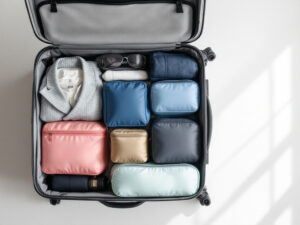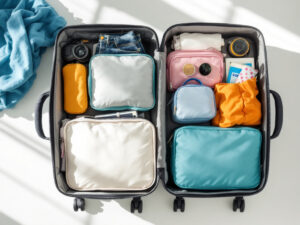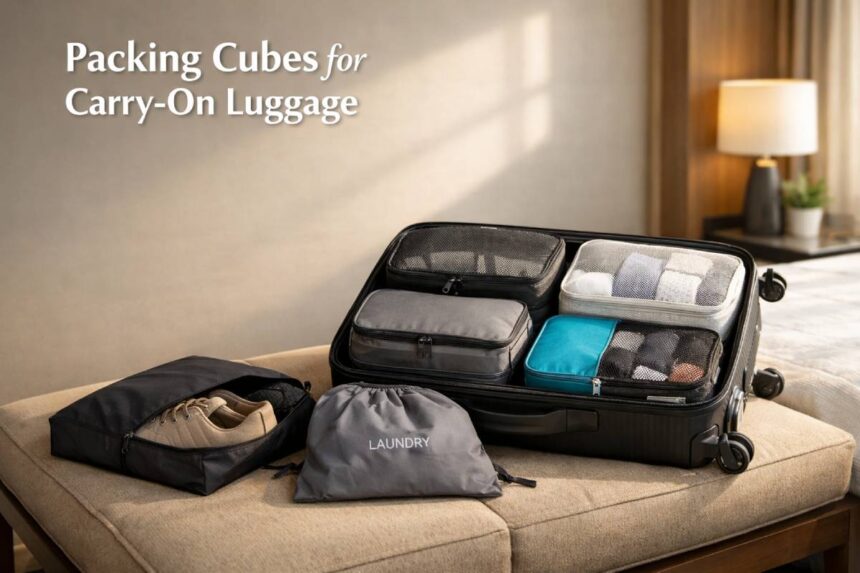
Packing cubes for carry-on luggage can be the difference between breezing through the airport with everything in its place and sitting on your suitcase to get it closed. With the right set, you pack more into a smaller bag, keep outfits easy to find, and avoid the dreaded “exploding suitcase” at security.
This guide walks you through the best types of packing cubes for carry-on travel, how many you really need, and which features are worth paying for, whether you are a first-time international traveler or a frequent flyer who wants a more streamlined system.
Why packing cubes for carry-on luggage are worth it
You might wonder if packing cubes are just another travel trend. For carry-on only travel, they are surprisingly practical.
Packing cubes for carry-on luggage help you:
- Group similar items, like shirts, pants, and underwear, into separate soft containers that fit neatly in your suitcase or backpack. This makes packing and unpacking much easier.
- Save space by squeezing extra air out of clothing. Compression packing cubes include an extra zipper that tightens everything down for a snug fit, especially helpful for bulky layers.
- Cut down on wrinkles by keeping clothes secured instead of sliding around loosely.
- Stay organized throughout your trip, which is especially useful if you are sharing a suitcase or juggling multiple destinations.
If you are curious about using them across different bag types, you can also explore how they work as packing cubes for travel and more traditional packing cubes for suitcase setups.

How to choose the right cubes for your trip
Not all packing cubes work equally well in a carry-on. Since every inch matters, you want cubes that are lightweight, sized thoughtfully, and suited to your travel style.
Match cube size to your bag and trip length
For carry-ons and travel backpacks, smaller cubes tend to perform better than oversized ones. Zoomlite notes that small and extra small packing cubes are ideal for carry-on bags, especially when you use small compression cubes to keep weight in check while maximizing space. Larger cubes can work in checked luggage, but they often become overstuffed and awkward in a compact bag.
Travel + Leisure suggests:
- 1 to 2 cubes for short weekend trips that easily fit in a standard carry-on.
- 5 to 6 cubes for trips of five days or longer to keep categories separate without checking extra luggage.
In practice, four to six packing cubes per person is usually enough for most itineraries, as also highlighted by Zoomlite. You can always add a separate cube for shoes or laundry if needed.
Look for durable, lightweight fabrics
You want materials that hold up to frequent zipping and unzipping but do not eat into your carry-on weight limit. Several sources highlight nylon and polyester as ideal fabrics for packing cubes in carry-on luggage. Travel + Leisure recommends these because they are durable, flexible for bulkier items, and often water resistant, which adds a layer of protection against spills or moisture.
Premium brands like Eagle Creek offer durable, water resistant, and lightweight cubes that protect both clothing and electronics, often with mesh ventilation panels for freshness.
If sustainability matters to you, Zoomlite’s cubes made from recycled single-use plastic bottles give you an eco conscious option that still feels sturdy and practical. These are good choices if you are comparing different eco friendly packing cubes.
Decide if you need compression
Compression packing cubes have an extra zipper that tightens down the cube after you have packed it. This squeezes air out and can help you fit more clothing into a carry-on. They are especially useful for:
- Puffer jackets
- Lightweight synthetic sweaters
- Joggers and sweatshirts
As of 2024, compression cubes are considered worthwhile space savers for most travelers, with synthetic fabrics compressing better than heavier items like denim. However, if you overstuff them, you might:
- Create deeper wrinkles
- Put extra strain on zippers
- Make cubes harder to fit neatly into your bag
For day-to-day travel, it often works best to mix traditional cubes and packing cubes with compression zippers, rather than only using compression for everything.
Best overall packing cubes for carry-on organization
Several brands stand out for reliability, thoughtful design, and carry-on friendly sizing. Below are some of the best options, with notes on who they suit and how they can upgrade your packing routine.
Patagonia Black Hole Cube: Rugged and roomy
The Patagonia Black Hole Cube is a 14 liter packing cube built from recycled polyester ripstop with a weather resistant laminate. In 2026, it was recommended as a highly durable option for carry-on use, especially when you need to organize bulkier pieces.
You get:
- A clamshell design that opens flat like a small suitcase.
- Two separate compartments that make it easy to separate clean and dirty clothes, or tops and bottoms.
- Space for heavier items such as jeans, sweaters, or even a compact toiletry kit.
This cube works especially well in a rolling carry-on or a larger travel backpack. You can treat it like a mini drawer inside your bag. Since it is tough and water resistant, it is also a strong choice for backpackers or digital nomads who need gear that can handle being tossed into buses and hostel lockers. If this style appeals to you, you might like reading more about packing cubes for backpackers.
BAGSMART Blast Compression Travel Packing Cubes: Everyday compression set
BAGSMART’s Blast Compression Travel Packing Cubes give you a 6 piece set that covers most packing scenarios for carry-on luggage. The set typically includes:
- A variety of sizes from small to large.
- A dedicated shoe bag to keep soles away from clothes.
- Compression zippers that reduce bulk after packing.
These cubes are designed to significantly reduce volume so they slot into carry-on suitcases or backpacks without feeling overstuffed. That makes them a strong fit if you tend to pack a little more than you planned, or you want one set that works for both business travel and family vacations.
Because you get multiple sizes, it is easier to dedicate one to formal outfits, one to sleepwear and loungewear, and another to casual pieces.
Shacke Pak 5 Set Packing Cubes: Colorful and family friendly
The Shacke Pak 5 Set is a long running favorite for organized carry-on travel. It includes:
- Extra large, large, medium, and small cubes.
- A laundry bag for dirty clothes.
- A wide range of colors so you can assign a color to each person in your family.
The cubes are made from water resistant nylon with mesh panels, and are designed to keep a carry-on organized for trips up to 14 days without exceeding typical carry-on size limits. The variety of sizes is especially useful if you are packing for kids and adults in the same suitcase.
You can also repurpose the smallest cube as a designated spot for cables and chargers, similar to using dedicated packing cubes for electronics.
Compression packing cubes for serious space saving
If you are determined to travel carry-on only, or you are heading somewhere with changing climates, compression cubes can be a big help.
How compression cubes actually save space
Compression packing cubes work by squishing out air after clothing is neatly packed. There is usually an outer zipper that compresses the cube into a flatter, denser package. As of 2024, travel testers have found that:
- Synthetic fabrics and lighter knits compress especially well.
- Stretchy athletic gear is ideal for compression cubes.
- Heavier items like denim compress less and can make cubes uncomfortably stiff.
Some products and their compression performance include:
- Osprey StraightJacket Compression Sack with an approximate compression rating of 7 out of 10, offered in 8 and 12 liter sizes, ideal for fitting most clothing in carry-on travel backpacks on city trips in places like New York City and Boston.
- Gonex Compression Packing Cubes with a budget friendly set of four cubes at around 30 dollars, rated about 5 out of 10 for compression, but with some reported zipper durability concerns.
- Thule Compression Cubes made of durable ripstop nylon with YKK zippers, also at about a 7 out of 10 compression rating, available in small and medium sizes and well suited to organizing clothes in a carry-on.
If you like to analyze performance before buying, you can also check broader packing cube reviews to see how these compare.
When not to use compression
Compression is not always the right choice. Lightweight sweaters, structured blazers, or delicate fabrics can develop deep creases if you compress them too tightly. Overstuffed cubes can also stress zippers, which is the weak point on most inexpensive sets.
A simple rule:
- Use compression on bulkier, casual items.
- Use standard cubes or pack flat for dressier pieces or things that must look sharp on arrival.
Sustainable and eco friendly options
If you travel frequently, investing in durable, sustainable cubes can reduce waste over time.
Zoomlite’s sustainable packing cubes are made from recycled single use plastic bottles and are designed for travelers who want convenient packing solutions without constantly replacing gear. They balance durability with environmental responsibility and are tailored for carry-on use.
You can compare these with other eco friendly packing cubes if you want to build a more sustainable travel kit. Pairing a few long lasting cubes with a sturdy carry-on often costs less in the long run than replacing cheaper sets every few trips.
Budget friendly cube sets for carry-on
You do not have to spend a lot to get a functional set of packing cubes for carry-on luggage. Many budget options sit in the 20 to 40 dollar range and provide basic organization and space savings.
In general:
- Budget sets often use thinner nylon or polyester and simple mesh panels.
- Zippers may not be as robust as premium brands, so avoid overstuffing them.
- They are a good way to test whether packing cubes fit your style before upgrading.
The Gonex Compression Packing Cubes, for example, offer a starter set of four uniquely sized cubes with moderate compression performance. They are not perfect, but they are often recommended as an entry point if you want compression on a budget.
If price is a key concern, you can also explore curated picks for affordable packing cubes that balance cost and durability for carry-on use.
How many packing cubes do you really need?
The “right” number depends on how you travel, how big your carry-on is, and how long you are gone.
Here is a simple starting point for one person using only carry-on luggage:
- One medium cube for shirts and tops.
- One small cube for underwear and socks.
- One small or medium cube for pants, shorts, or skirts.
- One compression cube for bulkier items like a light sweater or jacket.
- One optional cube for workout clothes or sleepwear.
- One shoe bag or dedicated shoe cube if you are bringing more than one pair.
Both Zoomlite and Travel + Leisure suggest that four to six cubes per traveler typically covers most situations, including week-long trips, as long as you adjust cube sizes for your luggage and packing style.
If your trips vary widely, consider following Pack Hacker’s recommendation to buy at least three cubes of different sizes that you can mix and match for different bag setups. This makes it easier to configure your system whether you are using a rolling carry-on or a compact backpack.
Smart ways to pack cubes inside your carry-on
How you arrange cubes in your bag can affect how much you fit and how easy it is to reach what you need in transit.
Build a “cube layout” that fits your bag
Open your carry-on and think about the interior as a grid. Place larger cubes at the bottom, near the wheels, and smaller cubes in the remaining gaps. For example:
- Lay a medium or large cube flat along the base for pants and heavier items.
- Stack two smaller cubes side by side on top for tops and underwear.
- Slide a thin compression cube along the top or side to use otherwise wasted space.
Packing cubes with mesh panels make it easy to identify what is inside without unzipping, and they also allow air to escape so the cubes mold to the shape of your bag.
If you favor carry-ons with clamshell openings, the Patagonia Black Hole Cube works particularly well when placed on one side, with smaller cubes on the other.
Combine rolling and folding inside cubes
You do not have to pick between rolling and folding. Many travelers roll softer items like t-shirts and leggings, then fold stiffer clothes like jeans or dress shirts.
A practical approach:
- Roll casual pieces tightly and stand them upright inside the cube.
- Lay folded items flat on top or at the base of the cube so they stay smoother.
- Use straps inside cubes, when available, to hold everything in place and further reduce shifting and wrinkles.
Some travelers also swear by keeping pajamas and workout clothes together in one cube, then layering dressier items flat on top of the cubes inside the suitcase. This approach was mentioned by travel expert Terilyn Adams, and it helps minimize wrinkles and maximize space.
Best use cases by traveler type
The best packing cubes for carry-on luggage look slightly different depending on how you travel. Here is how to think about them for different scenarios.
First-time international travelers
If you are heading abroad with a carry-on for the first time, simplicity matters. You want:
- 3 to 4 cubes in two sizes, so you can keep categories separate.
- At least one cube with a mesh panel so you can quickly see what is inside.
- A small compression cube if you expect temperature changes and need layers.
Stick to sets in durable nylon or polyester, as recommended by both Travel + Leisure and brands like Eagle Creek. This keeps your system light, water resistant, and easy to maintain.
Frequent business travelers
For work trips, you want cubes that protect your clothes and help you move quickly through hotels and airports.
A useful setup might include:
- A slim cube for dress shirts, packed with minimal compression to reduce wrinkles.
- A medium cube for slacks or office appropriate pants.
- A smaller cube for undergarments and accessories.
- A dedicated electronics cube or pouch, similar to specialized packing cubes for electronics, so cords and adapters stay separate.
Packing cubes with handles make it easier to pull a single cube out and take it to the bathroom or closet. If you like that style, take a look at sets specifically described as packing cubes with handles.
Backpackers and digital nomads
If you are living out of a carry-on backpack, weight and flexibility are crucial.
You will likely appreciate:
- Smaller compression cubes that Zoomlite recommends for backpacks, which avoid turning your bag into one large, rigid block.
- Weather resistant cubes, like the Patagonia Black Hole Cube, for bulkier pieces and gear that must stay dry.
- Durable ripstop materials like those in Thule Compression Cubes to withstand frequent use.
Backpackers often prefer 3 to 5 cubes and a separate laundry bag so they can rearrange the pack as clothes get used. For more ideas, you can explore collections of packing cubes for backpackers to match your specific pack size and style.
Family travelers
When you are sharing a suitcase or managing multiple carry-ons, color coding and labeled cubes help everyone find their own stuff without tearing the bag apart.
You might find it helpful to:
- Assign each family member a cube color, as in the Shacke Pak sets.
- Use one cube as a shared “in flight essentials” kit with pajamas, socks, and a change of clothes.
- Add packing cubes for shoes so dirty soles do not touch clean clothes.
Since families often carry snacks, wipes, and extra outfits, consider a mix of standard and compression cubes. Compress extra clothes you may not need daily, and keep the essentials in easy access cubes at the top of your bag.
Special features worth considering
Packing cubes do not need many extras, but a few thoughtful details can make carry-on travel smoother.
- Mesh panels help you see contents quickly and let air escape, which reduces wasted space.
- Internal straps or cross bands inside some cubes keep stacks of clothing from slumping.
- Water resistant designs are particularly helpful for toiletries, swimsuits, or anything that might leak. For more options, you can look into specialized waterproof packing cubes.
- Handles or grab loops make it easier to pull cubes out of deep backpacks or overhead bins.
- Dedicated shoe or laundry cubes keep dirty and clean items clearly separated.
If you often carry a lot of bulkier clothing in a compact carry-on, a combination of regular and compression cubes for specific categories will usually give you the best balance of access and space saving.
Quick guideline: For most carry-on only trips, you will be well covered with four to six cubes, a mix of sizes, and at least one compression option for bulkier items.
Final tips to boost your packing game
Once you have chosen the right packing cubes for carry-on luggage, a few small habits help you get the most value from them:
- Do a test pack at home before a big international trip so you can refine your cube layout.
- Keep categories consistent from trip to trip, such as always using the same cube for underwear or tech gear.
- Avoid overfilling large cubes in carry-ons. It is often better to split items across two smaller cubes for easier stacking.
- Roll or fold clothes neatly before putting them in cubes, instead of stuffing them in, to improve both space use and wrinkle control.
Over time, your packing cubes become a custom system that fits the way you travel, whether you are flying out for a weekend conference or packing your carry-on for a month abroad. With a little planning, your bag will close easily, and you will always know exactly where everything is.
FAQs
Are packing cubes allowed in carry-on luggage?
Yes—packing cubes are just fabric organizers. They’re generally fine for carry-on and security screening; restrictions usually apply to specific items inside your bag, not organizers.
Do packing cubes actually save space or just organize?
Both. Standard cubes mainly organize and reduce shifting; compression cubes can reduce volume by squeezing out excess air—but don’t reduce weight.
How many packing cubes do I need for a carry-on trip?
A simple rule: 1–2 cubes for a weekend, and 5–6 for 5+ days if you want clean separation by category.
What’s the best packing cube material for carry-ons?
Look for nylon or polyester: they’re flexible, durable, and commonly water-resistant—good for overhead-bin life.
Are compression packing cubes worth it for carry-on only travel?
Usually yes—especially for bulky casual layers. Just avoid overstuffing, which can cause wrinkles and stress zippers.
How do I reduce wrinkles when using packing cubes?
Use standard cubes for dressier pieces, avoid hard compression, and roll softer items while folding stiffer garments. Rolling + cubes is a proven combo for space and organization.
How do I keep dirty laundry from mixing with clean clothes?
Use a dedicated laundry cube/bag or a dual-compartment cube that separates clean/dirty items.
How often should I clean packing cubes?
A good guideline is every 3–5 uses, and immediately after spills or dirty-laundry trips.