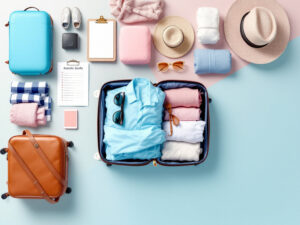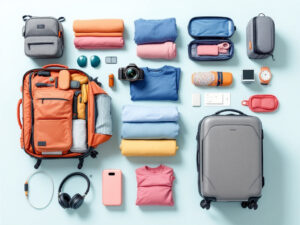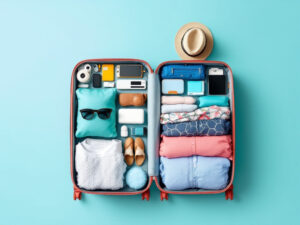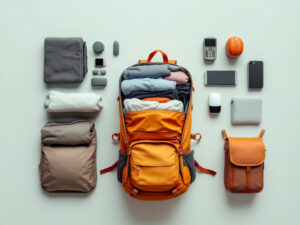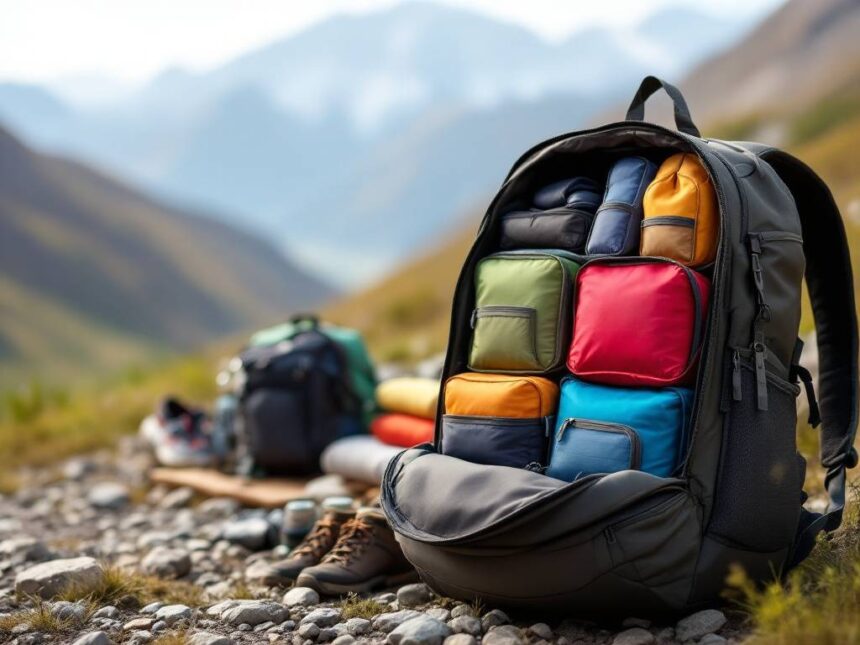
Packing cubes for backpacking can turn a chaotic, overstuffed bag into a tidy, grab-and-go system. Instead of digging for a clean shirt at the bottom of your pack, you can unzip one cube and find exactly what you need in seconds.
Below, you will learn how to choose the right packing cubes for backpacking, how to use them step by step, and how to adapt your system, whether you are backpacking in Southeast Asia, traveling for work with only a carry-on, or managing a family’s worth of clothes.
Understand what packing cubes actually do
Packing cubes are rectangular fabric organizers that unzip on three sides and fit together inside your backpack like Tetris pieces. They do not magically shrink your belongings, but they do:
- Group similar items so you always know where things are
- Keep clothes mostly wrinkle free and protected from dirt
- Make packing and unpacking faster in hostels, hotels, or guesthouses
- Help you avoid last minute, “stuff everything in” chaos at checkout
Travel writer Lydia Mansel notes that packing cubes are especially helpful for separating clean from dirty clothes and avoiding rushed stuffing before flights, which is exactly when most backpacks turn into a jumble of laundry.
You can think of cubes as drawers inside your backpack. Once you set up your system, you can live out of your pack without fully unpacking every time.
Decide whether standard or compression cubes fit your trip
Before you buy anything, decide what kind of packing cubes for backpacking suit your travel style. There are two main categories.
Standard packing cubes
Standard cubes are simple zip pouches that prioritize organization over compression. According to long term testing summarized by Pack Hacker, basic polyester cubes with simple zippers have survived years of travel in more than twenty countries, which makes them dependable for new backpackers who want a low risk option.
Standard cubes are a good fit if you:
- Prefer to keep clothes as wrinkle free as possible
- Will do laundry frequently and does not need to carry a huge wardrobe
- Value easy access over maximum compression
Budget friendly options like Amazon Basics sets are often enough if you just want to see whether packing cubes work for you.
Compression packing cubes
Compression packing cubes, such as those from Thule, Béis, Peak Design, and Gonex, include an extra zipper or straps that squeeze the cube flatter once it is packed. This can noticeably reduce bulk for puffy items.
Backpackers often prefer compression designs when:
- Space is very tight, such as on a long trip with one carry-on
- You are dealing with bulky items like hoodies and jeans
- You want to keep everything tightly consolidated inside the pack
Pack Hacker notes that compression cubes work very well for minimizing bulk, but are more likely to crease clothes and can sometimes shift around inside your bag once compressed.
If you are torn between the two, a mix works well. Use one compression cube for the bulkiest clothing and simple cubes for the rest.
Quick rule of thumb: standard cubes if you want fewer wrinkles and easy access, compression cubes if your top priority is squeezing every inch of space out of a small backpack.
Choose the right materials and features
All packing cubes look similar at first glance, but the details matter when you are living out of a backpack for weeks or months.
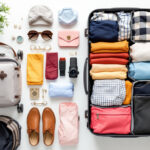
Materials and durability
For backpacking, prioritize durability and low weight. You want cubes that can handle repeated stuffing and unstuffing.
- Lightweight nylon or polyester: Eagle Creek’s ultra lightweight Specter line and Pack It Isolate cubes use thin, ripstop fabrics that save weight while still holding up over repeated trips.
- Ultralight specialty fabrics: Some cubes use Dyneema or 30D / 40D nylon. Pack Hacker’s testing suggests these are incredibly light but may flex and collapse more, which can lead to creasing.
- Rugged, weather resistant options: Patagonia’s Black Hole Cube (14L) uses recycled polyester ripstop with a TPU film laminate. It is more structured and weather resistant, which is useful if your backpack sees rough travel conditions.
If your priority is longevity and you know you will travel often, consider durable packing cubes that use higher end ripstop materials and strong zippers, such as YKK.
Weight and structure
For backpackers and digital nomads, extra weight adds up. Ultralight cubes made from thin nylon can save you a few ounces compared with heavier, structured organizers.
On the other hand, a little structure helps cubes stand upright inside your pack, which is the logic behind designs like Tortuga’s cubes that stay upright and use mesh lids for visibility. A balanced approach, such as lightweight packing cubes with some structure, often feels best in real use.
Useful design features
Beyond fabric, look for small details that make life easier on the road:
- Top handles so you can grab one cube and carry it to the bathroom or laundry room. You can find many packing cubes with handles that work well for this.
- Mesh panels or windows so you can see what is inside without unzipping.
- Different colors for different family members or categories.
- Simple labels or dedicated packing cubes with labels to mark items like tops, bottoms, or underwear.
- Compression zippers if you want to experiment with squeezing clothes flatter. For that, look at packing cubes with compression zippers.
If you care about sustainability, you can also explore eco friendly packing cubes that use recycled or responsibly sourced materials.
Match your cube sizes to your backpack
Cubes work best when they match the dimensions of your bag. A common frustration is buying a set packed with very large cubes that do not fit your backpack’s shape.
Understand cube sizes
Most brands offer:
- Large cubes that suit checked luggage or big travel backpacks
- Medium cubes that fit typical 30 to 40 liter travel packs
- Small cubes for underwear, socks, and accessories
If you are using a more compact backpack or traveling long term, prioritize flexible sets instead of only large packing cubes. A UK based traveler planning six months in Southeast Asia noted that many sets forced them to buy oversized cubes they did not need, which adds cost and bulk.
Look for:
- At least one medium cube for pants and tops
- Two to three small packing cubes for underwear, socks, and accessories
- Optional shoe pouch or laundry pouch
A curated travel packing cubes set can simplify this choice since it usually includes a mix of sizes that nest well inside typical travel backpacks.
Consider how cubes fit your specific bag
Backpacks vary in proportions. Some are taller and narrow, others are short and wide. Before you buy:
- Measure your bag’s main compartment height, width, and depth.
- Compare this to the dimensions of the cubes you are considering.
- Aim for 2 or 3 cubes that fill the footprint of your pack when placed side by side or stacked.
You can even sketch the outline of your backpack on paper and draw rectangles to represent cubes until you find a configuration that seems efficient.
Plan your packing system before your trip
randomly filling cubes defeats the purpose. A clear system lets you reach for the right cube on the first try.
Organization expert Marie Kondo recommends categorizing packing cubes by item type, such as undergarments, tops, bottoms, shoes, toiletries, and accessories. This keeps your backpack easy to navigate, even when you are tired or in a hurry.
Choose a cube layout that fits your style
Here are a few practical ways to organize:
- By clothing category: one cube for tops, one for bottoms, one for underwear and socks, one for sleepwear and loungewear.
- By outfit or use case: one cube for city clothes, one for hiking gear, one for beach or swim items.
- By person: ideal for families, where each traveler has their own color or style of cube.
If you like extra structure, a dedicated packing cube organizer with internal dividers can keep categories clearly separated, similar to drawers at home.
Decide what will not go into cubes
Not everything belongs in a packing cube. Keep these items separate:
- Electronics and chargers
- Toiletries and liquids
- Travel documents and valuables
- Daily essentials you need on the plane or bus
Use a smaller pouch or the backpack’s built in pockets for these, so you are not digging through clothing cubes whenever you need your passport.
Pack your cubes step by step
Once you have a plan and the right cubes, it is time to pack. This process is simple but benefits from a little technique.
Step 1: Lay everything out
Before anything goes into a cube, lay all your clothing on your bed or floor. Group by type:
- Tops: T shirts, long sleeves, light sweaters
- Bottoms: pants, shorts, skirts
- Underwear and socks
- Sleepwear and loungewear
- Activewear or swimwear
Seeing everything at once gives you a clear opportunity to cut items. Remove duplicates, heavy “just in case” pieces, and anything you do not truly love to wear.
Step 2: Roll, do not fold
Travel gear testers consistently recommend rolling clothing for packing cubes, especially for backpacking. Rolled clothes:
- Take up less visual space
- Stay more compact inside soft sided cubes
- Are easier to grab individually without disturbing the whole stack
Roll each item tightly and place it side by side inside the cube. Try to fill corners and avoid big gaps so the cube holds its shape.
Step 3: Assign each item to a cube
Using your pre planned system:
- Put all underwear and socks into a small cube
- Place rolled tops into a medium cube
- Put pants, shorts, and skirts into another medium cube
- Add activewear and swimwear to a separate small or medium cube
If you are a first time backpacker, start with a simple setup. You can always refine it on your next trip after you see what you actually wore.
Step 4: Use compression, if you have it
If your cubes include compression zippers or straps, pack them to about 80 percent full, then use the compression feature.
- Gently compress, do not force the zipper.
- Pay attention to corners, which often balloon out when overstuffed.
- Remember that compression can increase wrinkling, especially for shirts.
Travelers who prefer straps over compression zippers like the way straps allow more control and reduce strain on zippers, but both systems work if you do not overload the cubes.
Step 5: Load the cubes into your backpack
Place heavier cubes, usually bottoms and outer layers, closer to your back and near the middle of the pack. Lighter cubes can sit toward the front and top.
Aim to create a tight, stable “block” of cubes. This keeps the pack comfortable and prevents sagging or bulging.
Set up a daily use routine on the road
The true test of packing cubes for backpacking is what happens after a few days of actual travel. A simple daily routine will keep your system intact.
Unpack strategically, not completely
When you reach a hostel or hotel:
- Remove your cubes and place them on a shelf, in a locker, or at the foot of the bed.
- Open cubes only as needed.
- Keep one cube designated for sleepwear and next day clothes that you can access easily.
packing cubes with handles are handy here since you can carry a single cube to the shower room or bathroom instead of juggling armfuls of clothing.
Separate clean and dirty clothes
Lydia Mansel highlights one of the biggest advantages of packing cubes: separating clean from dirty clothing so you are not guessing what has already been worn. You can:
- Dedicate one cube exclusively to dirty laundry
- Flip a cube inside out for laundry and keep clean clothes right side out
- Use the laundry bag included in some sets, such as Shacke Pak’s 5 piece set, which testers found helpful for trips up to 14 days
Since extra packing cubes can be flattened when not in use, carrying a spare laundry cube adds flexibility without much bulk. When it is time to wash clothes, you can grab that one cube and head to the laundromat.
Keep your system consistent
Try not to change your cube assignments mid trip. If tops live in the blue cube, they should stay in the blue cube. This reduces small frictions like repeatedly unzipping the wrong organizer.
If you are sharing a backpack with someone else, assign each traveler a color or style of cube. This mirrors how families often organize kids’ clothes at home and avoids mixed laundry inside the same pouch.
Adapt cubes to different travel styles
Packing cubes for backpacking work across multiple travel scenarios, from ultralight solo trips to family vacations. Adjust your approach based on how you travel most.
First time international backpacker
If you are planning a long itinerary through regions like Southeast Asia with one backpack:
- Focus on affordable packing cubes to test what you actually like before upgrading.
- Choose smaller cubes under roughly 20 by 30 centimeters so they fit compact packs.
- Use at least one compression cube for bulkier items like a light jacket or jeans.
Travelers who tried “built in wardrobes” such as those in some modular backpacks often found them heavy and less flexible than expected. Swapping to separate cubes usually gives you more control over how you pack and carry your gear.
Frequent business traveler
If you travel regularly for work and prefer carry on only:
- Choose more structured, durable packing cubes to keep shirts crisp.
- Combine one compression cube for workout clothes with standard cubes for workwear.
- Add packing cubes with labels or different colors so you can grab your office clothes without rummaging.
You may also want waterproof packing cubes or highly water resistant cubes for toiletries or to protect work outfits from accidental leaks.
Digital nomad or long term traveler
If your backpack is also your mobile closet:
- Lean toward lightweight packing cubes that will not add noticeable weight over time.
- Consider a mix of sizes plus a dedicated tech pouch so clothing and cables stay separate.
- Use an extra cube for “seasonal” or less used items so they do not clutter your daily clothing cubes.
Ultralight cubes made from Dyneema or thin nylon are attractive here, but remember they can crease clothes more easily. Test your setup on a shorter trip before committing for several months.
Family traveler
Packing cubes can simplify family trips by giving each person their own portable “drawer.”
- Give each traveler a specific color or patterned cube set.
- Pack kids’ daily outfits together so older children can dress themselves.
- Use large cubes or family sized compression sets like Gonex for shared items like towels or outer layers.
If water play is involved, a couple of waterproof packing cubes make great wet clothes bags until you can hang items to dry.
Compare cubes with other space saving tools
You might be wondering how packing cubes stack up against compression bags or vacuum bags.
Packing cubes vs compression bags
The research shows a clear difference:
- Packing cubes: Best for organization, easy access, and modest space savings. They help keep things neat and mostly unwrinkled, especially when you roll clothes.
- Compression bags: Better for maximizing space with bulky items, but less useful for everyday organization. They can cause significant wrinkling and make it harder to access specific pieces quickly.
For most backpacking and short to medium term travel, cubes are more practical for day to day living out of a bag. If you carry truly bulky items, you can add a single compression bag for things like a puffy jacket or heavy sweater and keep everything else in cubes.
Choose sets that match your budget and values
There is no single “best” packing cube for backpacking, but there are clear tradeoffs.
Budget and value
If you are just starting out or traveling on a tight budget, affordable packing cubes made from simple polyester and standard zippers can still perform very well. Pack Hacker’s long term tests found that even inexpensive basic cubes held up during two years of heavy travel.
As you travel more, you might upgrade to:
- Eagle Creek Pack It Isolate sets for a strong balance of durability, low weight, and washability
- BAGSMART Blast compression sets if you prioritize strong compression zippers and a full matching set of sizes
- Baggu’s lightweight cubes if you want soft, machine washable organizers that handle bulkier winter clothing comfortably
Each option offers slightly different strengths, from space saving to rugged durability.
Sustainability and materials
If you prefer lower impact gear, eco friendly packing cubes made from recycled polyester or other sustainable fabrics are increasingly available. Patagonia’s Black Hole line, for example, uses recycled polyester and weather resistant coatings that performed well in three month tests on rugged trips.
Weigh your priorities. A slightly heavier but longer lasting cube can be more sustainable over time than replacing several cheaper sets.
Put it all together on your next trip
Once you have chosen your cubes and planned your system, a final dry run at home can save you headaches later.
- Pack your backpack exactly as you would for your trip.
- Walk around for 15 to 20 minutes to test weight and comfort.
- Practice “living” from your cubes for a day or two, changing outfits and repacking.
- Adjust cube sizes or categories based on what felt easy or annoying.
If something is not working, it is almost always a sign to simplify: fewer clothing items, fewer cubes, and clearer categories. Over time, your cubes will feel like an extension of your home closet, and packing for a new adventure will be as simple as dropping each familiar organizer into your backpack.
With a thoughtful setup, packing cubes for backpacking do more than tidy your bag. They give you a predictable, low stress rhythm every time you change cities, check out of a hostel, or hop on an overnight bus, so you can spend less time repacking and more time enjoying the trip itself.
FAQs
Are packing cubes worth it for backpacking?
Yes—especially if you move often. They keep categories stable, speed up hostel packing, and reduce the “everything ends up mixed” problem.
How many packing cubes should I use in a backpack?
Most travelers land on 3 to 5 cubes, depending on trip length and laundry frequency.
Do compression packing cubes actually save space?
They can—because the extra zipper cinches the contents flatter. Just expect more creasing and avoid overstuffing.
Should I roll or fold clothes inside packing cubes?
Either works, but consistency matters. Many travelers roll for easy “grab one item without wrecking the stack,” while some organizers prefer upright folding for visibility.
What material is best for packing cubes for backpacking?
Durable nylon or polyester is the go-to for flexibility and toughness; lightweight ripstop options reduce weight.
How do I separate clean and dirty clothes with packing cubes?
Use a dedicated laundry cube or bag (or flip one cube to “dirty mode”). It prevents guessing and keeps clean clothes clean.
Can packing cubes fit in a 30–40L travel backpack?
Yes—just avoid oversized sets. Choose cube dimensions that “tile” your main compartment, typically 2–3 cubes across/stacked.