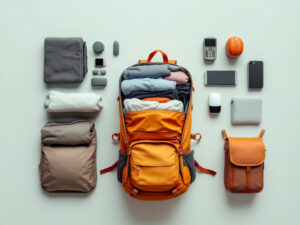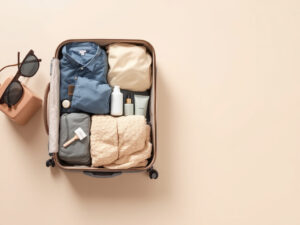
Ever land after a long flight, unzip your suitcase, and instantly regret every packing decision? That “clothes avalanche” isn’t just annoying—it wastes time, wrinkles outfits, and turns every hotel room into a scavenger hunt. Packing cubes for clothes fix that with a simple system: sort by category, zip each cube, and stack tidy blocks that stay put from airport to Airbnb.
Some cubes even add compression to shave space in carry-ons. Ahead, you’ll learn how cubes save space, reduce chaos, limit overpacking, and which sizes, materials, and add-ons are actually worth buying today for business trips, backpacks, and family travel.
What packing cubes for clothes actually are
If you have ever opened your suitcase to a jumble of clothes, tangled cables, and a missing sock, packing cubes for clothes are the fix you have been looking for.
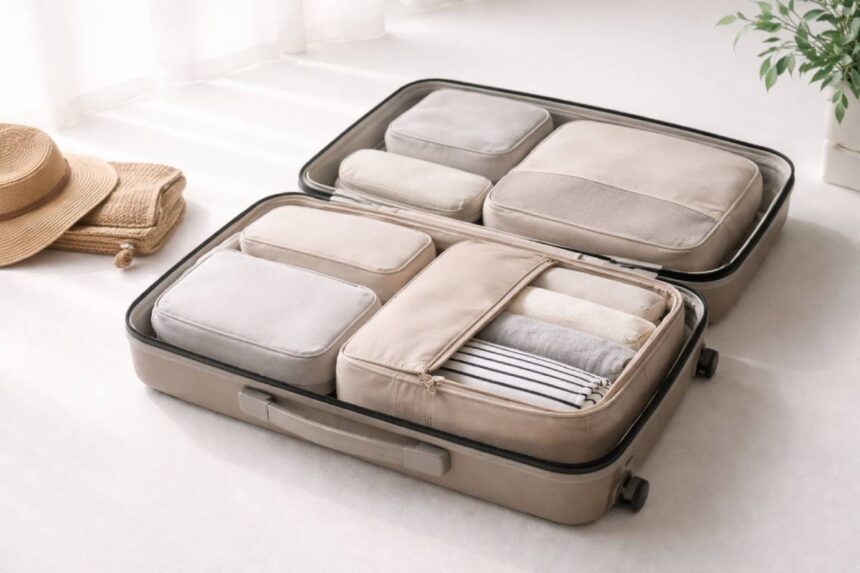
Packing cubes are lightweight fabric pouches that sit inside your suitcase or backpack. You fill each cube with a category of clothing or gear, then zip it closed. The cubes then fit together in your luggage like Tetris pieces, so your clothes are no longer a loose pile.
Most packing cubes for clothes share a few common features:
- Rectangular or square shapes that stack neatly
- Zippers that open on one, two, or three sides
- Lightweight but durable fabrics like nylon or polyester
- Mesh or translucent panels so you can see what is inside
Some sets are basic organization cubes. Others are compression cubes that use a second zipper to squeeze the contents flatter, which is especially helpful if you tend to overpack or travel with bulky items like sweaters.
Once you start using them, you will notice that your entire packing process shifts from “throwing things in” to “building a simple system.”
Why you need packing cubes for clothes on your next trip
Packing cubes for clothes solve several travel headaches at once. Instead of digging through layers of clothing to find one T-shirt, you can grab the right cube in seconds.
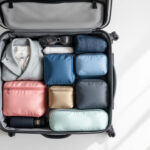
You also get more efficient use of space. While cubes do not beat tightly rolling every item by hand, they save room compared to loose folded stacks and they make it easier to use every corner of your bag. Travel + Leisure notes that compression cubes can even reduce your packed volume by about 1 to 2 inches, which can be the difference between a bag that zips and one that does not.
Beyond space, packing cubes for clothes:
- Keep outfits together so you unpack faster
- Separate clean and dirty items
- Prevent clothes from shifting and wrinkling as you move
- Help you pack only what fits inside your cubes, which naturally curbs overpacking
If you are a first-time international traveler, they make each travel day less frantic. If you are a frequent business traveler, they help you arrive with shirts that are ready to wear. If you are a backpacker or digital nomad, they keep your gear organized inside a single main compartment. If you are traveling with kids, they let you assign a cube to each person so you are not sorting through a family-sized clothing avalanche every morning.
How packing cubes save space in real life
You might look at a stack of fabric bags and wonder how they could possibly save space.
It helps to think about geometry. Loose clothes in a suitcase behave like a random pile. Small gaps form between each fold or roll, and those gaps add up. When you group clothes inside a cube and zip it closed, the cube pushes air out and forces the clothes into a uniform block that then fits tightly against other blocks.
Wirecutter tested dozens of models and found that good cubes make it realistic to organize up to a week of clothing in a single suitcase without everything melding into a single heap. Their testers also found that compression cubes and expandable sets, like REI Co-op’s expandable packing cubes, can let you fit up to about one-third more clothing compared with some non compression sets in similar size ranges.
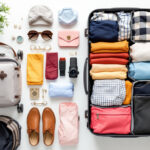
You will see the biggest space gains when you:
- Group similar items by weight and texture, like jeans together and T-shirts together
- Use compression zippers on thicker fabrics
- Fill each cube firmly without overstuffing
The point is not to vacuum seal your clothes flat. It is to shape them into tidy blocks that waste less room.
If you want to explore curated options that maximize space, you can also browse the site’s guide to the best packing cubes.
The organization benefits you will actually feel
The real magic of packing cubes for clothes shows up during your trip, not just at home while you pack.
Instead of unpacking everything onto a hotel bed, you can slide your cubes into drawers or onto a shelf. Need pajamas after a long travel day. Grab the “sleep” cube. Heading to a client meeting. Pull out the cube with your shirts and iron only what you will wear.
Parents feel this even more. When you are managing multiple people’s outfits, having a clearly labeled cube for each child, or separate cubes for “day clothes,” “sleepwear,” and “extras,” keeps mornings from spiraling into chaos.
A simple system might look like this:
- Cube 1: Tops
- Cube 2: Bottoms
- Cube 3: Underwear and socks
- Cube 4: Sleepwear and loungewear
- Cube 5: Workout clothing
You can customize that structure for each trip, but the idea is the same. You assign a purpose to every cube before you start packing, and you stick to it.
If you want more ideas on full sets that make organizing easy, check out a complete travel packing cubes set.
Fewer wrinkles and better looking outfits
If you travel for business or special events, you know how frustrating it is to arrive and find your carefully chosen outfit crumpled.
Packing cubes for clothes help by:
- Reducing how much your clothes slide around
- Letting you fold garments neatly and keep them in that shape
- Keeping heavier items, like jeans, away from delicate pieces or pressed shirts
Travel testers often mention that clothes look noticeably better after being transported inside a cube rather than loose. In Wirecutter’s long term trials, travelers repeatedly cited that cubes kept clothes neater and easier to wear straight from the suitcase after years of use.
You can improve your results further by:
- Folding business shirts along the seams, then stacking them in a cube that is just big enough
- Placing lighter, wrinkle prone items on top, not underneath heavier pieces
- Using one cube only for “dress” items so you are not constantly rummaging through that stack
Packing cubes will not replace a proper garment bag for a tuxedo, but for everyday shirts, skirts, and pants, they are often enough on their own.
Why frequent business travelers swear by them
If you fly often for work, you probably live by your carry on and your routine.
Packing cubes for clothes let you build a repeatable workflow that saves time before every trip. You can keep a set of cubes partially packed with basics and refill as needed. Since many cube sets are sized for standard carry on dimensions, they pair perfectly with guides like packing cubes for carry-on luggage.
For business travel, cubes help you:
- Separate “office wear” from “off duty” clothes so outfits do not blur together midweek
- Pack a compact gym kit that lives in its own cube
- Segment one cube for “emergency” items like a spare shirt, undergarments, and tights or socks
High quality cubes also last for years. Some nylon or polyester sets hold up for more than 15 years of regular use without failed zippers or rips, which makes them a sensible investment if you travel for work multiple times a year.
If you prefer to keep your work gear ultra light, you can look for thin, lightweight options similar to Eagle Creek’s Isolate cubes, which use 70 denier ripstop nylon to cut bulk in half compared with some thicker models.
How backpackers and digital nomads can stay sane
When your “suitcase” is a single backpack, organization matters even more.
Backpacks usually have one large main compartment. Without packing cubes for clothes, everything drops to the bottom. You end up unpacking half your life on a hostel bed just to find a clean pair of socks.
With the right setup of packing cubes for backpackers, you can:
- Dedicate one cube to base layers, one to outerwear, and one to daily outfits
- Keep a separate cube for “cold weather” items that you only pull out in certain climates
- Slide cubes vertically into the backpack so you can pull one out like a drawer
Lightweight compression cubes are especially helpful here, because they let you shrink bulkier items without adding much extra fabric weight. Models like the REI Co-op Expandable Packing Cube Set showed in testing that they can handle larger loads and compress them down while still holding up during rough use.
Backpackers often pair clothing cubes with one tech focused cube, like the ones you will find in guides to packing cubes for electronics, or with a dedicated shoe cube so dirt never touches their clothes.
Managing kids’ outfits without losing your mind
If you are packing for children, you are also packing for spills, last minute outfit changes, and missing pajamas.
Packing cubes for clothes let you pre plan and pre portion everything. With packing cubes for kids, you can:
- Assign a color of cube to each child
- Pack one cube per day with a full outfit
- Keep a “backup” cube with spare clothes for accidents or weather changes
On the trip, you can hand each child their own cube in the morning and say, “Your clothes are in here.” At night, you can designate a single cube as the “dirty laundry” cube so worn items do not blend with clean ones. Some luggage, like certain AWAY suitcases, even include built in laundry bags, and pairing those with a dedicated laundry cube keeps everything streamlined.
Parents who use this system often find that both packing and unpacking go faster, especially on multi stop vacations where you are constantly switching hotels.
Regular cubes vs compression cubes for clothes
You will see two main types of packing cubes for clothes: traditional organization cubes and compression cubes.
Organization cubes are simple rectangular pouches. They hold your clothes in a tidy block and keep everything grouped.
Compression cubes add a second zipper around the perimeter. First you zip the cube closed. Then you run the compression zipper around the outside, which pulls the fabric in and flattens the contents.
Here is how they compare:
| Type | Best for | Pros | Cons |
|---|---|---|---|
| Regular cubes | Most travelers, everyday trips | Simple, easy to pack, gentle on clothes | Less space saving than compression |
| Compression cubes | Overpackers, bulky clothing, winter trips | Shrinks volume by about 1 to 2 inches, great in carry-ons | Slightly heavier, can wrinkle clothes more if overstuffed |
If you tend to pack light, regular cubes will probably be enough. If you are always sitting on your suitcase to get it closed, look for packing cubes with compression zippers, which give you more flexibility without changing your packing style.
Choosing the right size and quantity
Most sets of packing cubes for clothes come with four to eight cubes in different sizes. How many you actually need depends on your travel style and the length of your trips.
For a typical one week trip, you might use:
- 1 large cube for pants and sweaters
- 1 medium cube for shirts and tops
- 1 small cube for underwear and socks
- 1 slim cube for sleepwear or workout clothes
If you travel with a carry on only, it helps to start with options made for that format, like the sets covered in packing cubes for carry on or packing cubes for suitcase. These usually match standard carry on footprints and heights so you can stack them edge to edge without wasting space.
Pay attention to depth as well as length and width. Deeper cubes are good for bulkier items. Slim cubes slip into narrow spaces, like along the side of a suitcase handle tunnel.
When you shop, check the liter capacity for each cube. For example:
- Around 14 liters is large enough for several pairs of jeans and sweaters, similar to Patagonia’s Black Hole Cube, which testers found ideal for bulky gear thanks to its 14 liter size and weather resistant shell
- Mid sized 8 to 10 liter cubes are ideal for tops
- Smaller 2 to 4 liter cubes work well for undergarments
Once you know which sizes you rely on most, you can add duplicates of those specific cubes rather than buying mixed sets over and over.
Materials and features that actually matter
You will see a long list of “features” on many packing cube product pages. Some genuinely help. Others are nice to have but not essential.
The fabric is a good starting point. Common options include:
- Nylon, usually strong, abrasion resistant, and long lasting
- Polyester, often lighter and more affordable, with good durability
- Recycled PET (from plastic bottles), a sustainable option that still feels sturdy
For example, Carl Friedrik’s set uses recycled PET plastic bottles for the shells, combined with nylon zippers and mesh tops so you can see the contents and keep them ventilated. Eagle Creek’s Reveal cubes use 100 percent recycled 300 denier polyester that repels water better than older models, a detail that matters if you are moving through wet conditions.
Other features to consider:
- Mesh or translucent panels, so you can identify what is inside without opening each cube
- Handles, to pull cubes out of deep suitcases or overhead bins. If that sounds useful, you can focus on options in guides to packing cubes with handles.
- Clamshell openings that unzip on three sides, which make packing and unpacking easier
- Water resistant coatings, especially if you expect spills or damp conditions
If you travel to wet climates or plan to carry toiletries inside cubes, it is worth looking at waterproof packing cubes to keep moisture away from your clothes.
Durability, sustainability, and long term value
Good packing cubes for clothes are not a one trip purchase. Many travelers report using the same cubes for over a decade without issues like broken zippers or torn mesh.
Brands that perform well in long term tests often use:
- Ripstop nylon or polyester that resists tearing
- Sturdy zippers with smooth pulls and reinforced seams
- Higher denier fabrics (like 300 denier polyester) for durability in checked bags
Wirecutter named the Eagle Creek Pack It Reveal set as the best option for most people, in part because its recycled 300 denier polyester fabric stood up to repeated packing and still organized a week’s worth of clothes easily. For more minimalist or weight conscious travelers, their tests favored the Eagle Creek Pack It Isolate set, which uses lighter 70 denier ripstop nylon and weighs about half as much.
If sustainability is a priority for you, look for eco friendly packing cubes that use recycled or repurposed materials. Cotopaxi’s Cubo Packing Travel Bundle, for instance, uses remnant fabrics, gives each cube a unique multicolored look, and comes from a Certified B Corp company focused on ethical production.
The up front cost of quality cubes can be higher, but when you spread that across years of regular trips, the cost per trip tends to be low, especially compared with replacing cheaper cubes that fail early.
Examples of popular packing cube styles
To give you a sense of what is out there, it helps to look at a few well known styles that have been tested over months or years:
- Patagonia Black Hole Cube, Large 14L PR, made from recycled polyester ripstop with a weather resistant TPU laminate. Testers found it ideal for heavier or bulky items like jeans, sweaters, and even toiletries in rugged conditions over three months of use.
- Baggu Packing Cube Set, made from lightweight ripstop polyester that is machine washable and quick drying. It performed well with bulky winter clothing, including ski trip packing, and held its shape after repeated washes.
- BAGSMART Blast Compression Travel Packing Cubes, a six piece polyester set that includes compression cubes and a shoe bag. In testing, the cubes compressed effectively and the fabric showed no fraying or damage after three months.
- Shacke Pak 5 Set Packing Cubes, water resistant nylon cubes with breathable mesh panels that come in more than a dozen colors. They are designed for trips up to about 14 days and helped testers keep longer trips organized without extra hassle.
You do not need these exact models, but seeing how they are used in real travel scenarios can help you imagine how cubes would fit into your own routine. When you are comparing options, you can also use independent packing cube reviews to check how a set holds up after more than just one or two flights.
Special cubes for shoes, tech, and toiletries
While this guide focuses on packing cubes for clothes, you will probably get the most benefit when you extend the same idea to your other essentials.
A shoe cube, like the ones discussed in packing cubes for shoes, keeps dirt and dust away from your clothing. You can use it for sneakers, sandals, or heels and still tuck it neatly into your bag alongside your clothing cubes.
For tech and chargers, look at packing cubes for electronics. These are usually smaller, with more internal pockets and cables loops. Keeping all your cables, adapters, and power banks in one place means you are not searching every pocket at airport security.
You can treat toiletry bags as specialized cubes as well. Weather resistant options, similar to Patagonia’s laminated cubes or other water resistant designs, protect your clothing if a bottle leaks.
Once you think of every category in terms of “its own cube,” your luggage becomes a set of labeled modules instead of one large mystery compartment.
How many packing cubes you actually need
You do not need a huge collection of cubes to see a difference. A simple starter setup might be:
- 2 medium cubes for tops and bottoms
- 1 small cube for underwear and socks
- 1 slim cube for sleepwear or workout clothing
From there, you can add:
- 1 shoe cube
- 1 tech cube
- 1 extra small cube as a dedicated laundry bag or “catch all”
If cost is a concern, look at affordable packing cubes, which focus on budget friendly sets without dropping the essentials like solid zippers and usable sizes.
Over time, you will learn which sizes and shapes you reach for every trip. Those are the ones worth duplicating.
Packing strategies that make cubes work harder
Getting the most out of packing cubes for clothes is less about fancy folding techniques and more about consistency.
A simple approach:
- Decide on your categories before you start.
- Lay each cube open on the bed.
- Fold or roll items to roughly the same size so they stack neatly.
- Fill each cube fully, but do not force the zipper.
- Place the cubes in your suitcase so they form a flat, stable layer.
Rolling can work well for T-shirts and casual items. Folding works better for structured pieces. The key is to use the same method within each cube so the contents fit together like blocks.
Over multiple trips, you might find tricks that suit you. For example, Terilyna Adams once packed for several trips, all with different weather conditions, using only a carry on and a small set of cubes, by assigning each cube a strict purpose and sticking to it. The result was less decision fatigue and smoother travel days.
If you want more structure around suitcase layouts, you can also reference guides specific to packing cubes for carry-on so your cubes and bag dimensions match up nicely.
When to choose waterproof or protective options
Most travelers are fine with breathable, partially mesh cubes. In some situations, you will be happier with more protective designs.
You might prefer waterproof packing cubes or highly water resistant models if you:
- Travel through rainy climates or on boats
- Pack liquid toiletries near clothing
- Expect your bag to sit on wet surfaces
Heavy duty options like Patagonia’s weather resistant Black Hole cubes or similar TPU laminated designs are good examples of cubes that resist moisture, dirt, and abrasion in rough conditions.
You might also want to separate damp items, like a swimsuit or gym clothes, in a dedicated cube so the rest of your clothing stays fresh.
Trying packing cubes on your next trip
You do not need to overhaul your entire packing system to see whether packing cubes for clothes are worth it for you.
Start small. Pick up a modest travel packing cubes set with two or three sizes. Use one cube for tops, one for bottoms, and one for underwear and socks on your next trip.
Notice how:
- Long it takes you to pack and unpack
- Easy it is to find specific items in your bag
- Your clothes look after a day of travel
If you like the experience, you can add more cubes for shoes, tech, or kids’ items, or refine your setup with packing cubes with handles or packing cubes with compression zippers as you go.
Once you get used to traveling with everything in its own place, it is very hard to go back to the “loose pile in a suitcase” approach.
FAQs
Do packing cubes actually save space?
Yes—especially compression packing cubes, which can noticeably reduce packed thickness when you don’t overstuff. They also save “usable space” by turning soft clothing into stackable blocks.
Are compression cubes better than regular cubes?
Compression cubes are best for bulky clothing (sweaters, jackets) and carry-ons, while regular cubes are gentler and simpler for everyday trips.
How many packing cubes do I need for a 1-week trip?
A practical setup: 1 large (pants/sweaters), 1 medium (tops), 1 small (underwear/socks), 1 slim (sleepwear/workout)—then add shoe/tech cubes if needed.
Do packing cubes reduce wrinkles?
They help by reducing shifting and keeping folds stable. They won’t replace a garment bag, but many travelers see better “ready-to-wear” results than loose packing.
What features matter most when buying packing cubes?
Prioritize: durable ripstop fabric, smooth zippers, clamshell opening, grab handles, and mesh panels for visibility/ventilation.
Are waterproof packing cubes worth it?
Worth it if you travel in wet climates, pack toiletries near clothes, or expect spills. Weather-resistant shells (e.g., TPU-laminate styles) add protection.