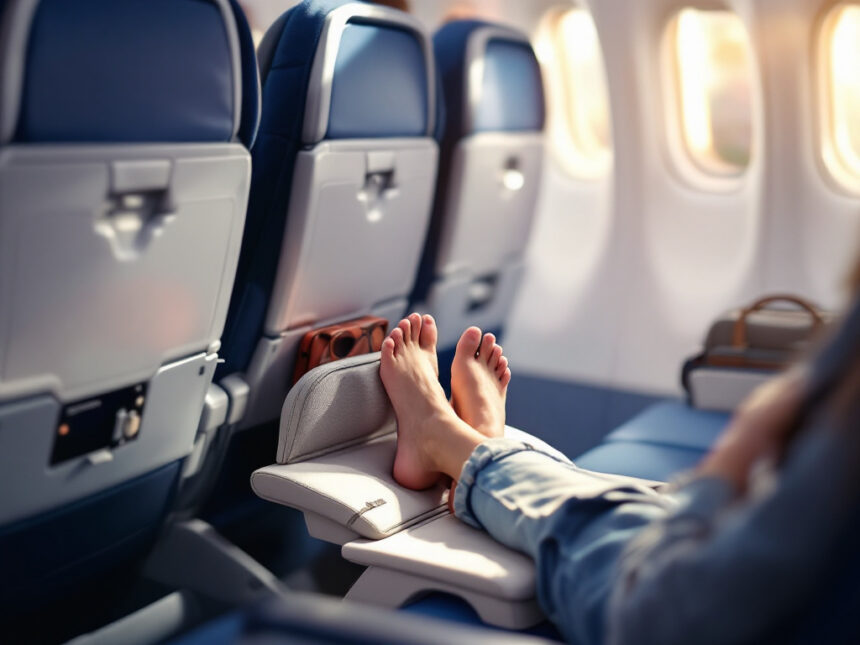
A good travel footrest can turn a cramped airplane seat into a space where you can actually relax, shift positions, and maybe even sleep. If you fly long haul, sit in economy, or just struggle with leg discomfort, the right travel footrests for airplanes can make a big difference in how you feel when you land.
Below, you will find the best options for different travel styles, from ultra compact hammocks to plush inflatable leg pillows. You will also learn how to choose the style that fits your body, your usual seat, and your airline’s rules.
Why use a travel footrest on airplanes
On a long flight, your feet and legs tend to dangle or press into the floor. Over time, that can mean numb toes, tight calves, and an aching lower back. Travel footrests for airplanes are designed to support and elevate your legs so your joints are not locked in one position for hours.
Footrests can help you:
- Change positions more often
- Reduce pressure on the back of your thighs
- Improve circulation in your lower legs
- Take stress off your lower back and hips
- Create a more “reclined” feel, especially in tight economy seats
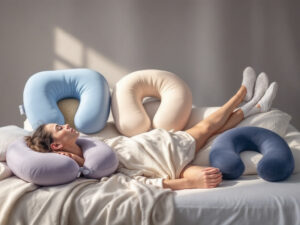
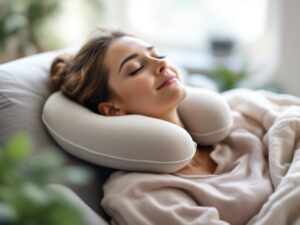
They work best as part of an overall comfort setup. Pair your footrest with a supportive neck pillow, like an adjustable travel pillow or travel neck support pillow, a soft lightweight travel blanket, and comfortable travel eye masks so your whole body has a chance to relax.
Types of airplane travel footrests
Before you pick a specific product, it helps to understand the main styles of travel footrests for airplanes. Each one solves the same problem in a slightly different way.
Hanging foot hammocks
Foot hammocks attach to the tray table or, in some cases, the seat structure in front of you. Your feet rest in a fabric cradle that hangs off the strap.
You might like a hammock style if you want something that:

- Packs down very small
- Sets up quickly
- Lets you gently rock or shift your ankles and knees
These work particularly well if you are on the shorter side, in the 5 foot to 5 foot 4 range. Foot hammocks allow you to keep your feet up and take pressure off your thighs, which can reduce cramping on long flights.
Just keep in mind that many airlines are becoming stricter about items that attach to the tray table or obstruct space between seats. Some carriers ban tray mounted foot hammocks entirely because they can be a nuisance to the person in front of you or interfere with movement in the aisle, with some reports suggesting more than 60% of airlines have prohibited them in economy cabins. Always check your airline’s policy before you pack one.
Inflatable leg pillows
Inflatable footrests work more like a mini leg ottoman. You inflate a pillow or stack of cushions and place it in front of your seat, between your knees and the seat in front.
You might prefer an inflatable style if you want:
- A more stable, “solid” leg rest
- The option to elevate your legs almost to seat height
- Something that can double as a kids’ bed area or general travel pillow
These are especially helpful for overnight flights when you want to sleep and for kids who need their legs supported. Since they sit on the floor rather than hanging from the tray, they create a different kind of comfort. You just need enough legroom to accommodate the pillow, especially once the seat in front reclines.
Hybrid and convertible designs
Some newer designs combine elements of a hammock and inflatable pillow. A hybrid gives you more flexibility, for example, a hanging cradle that can also be used on the floor, or an inflatable that clips in place for extra stability.

If you frequently switch airlines and seat types, a convertible design can be a smart way to hedge your bets.
Key features to compare
As you look at specific travel footrests for airplanes, keep these features in mind so you choose one that actually works on your typical flights.
1. Portability and pack size
If you are a frequent business traveler or fly with just a carry on, space is precious. Look for:
- Hammocks that fold into a palm sized pouch
- Inflatable units that deflate flat and slide into an outer pocket
- Lightweight materials that do not add noticeable weight to your bag
For example, several of the hammock style footrests described below come in compact storage bags designed to slip into a backpack or underseat bag.
2. Comfort and support
All padding is not created equal. High density memory foam and thoughtful base design can make the difference between a squishy sling and something that actually supports your feet.
Some products use advanced memory foam and a honeycomb style base to distribute weight and keep the structure from collapsing while still staying soft and odor free, which can significantly improve comfort on long flights.
If your main goal is sleep, you may want to combine a supportive footrest with memory foam travel cushions or a travel lumbar support pillow so your whole spine is aligned.
3. Adjustability and fit
Not all airplane seats are built the same, and neither are your legs. Adjustable straps and multiple height options are key.
Look for:
- Straps that lengthen or shorten to match your leg length
- Multiple inflatable chambers or stageable heights for pillows
- Designs that keep your feet from sliding together if you prefer separation
Several of the hammock models below use extended adjustable straps so you can customize the hang height, while inflatable pillows like the Sunany model inflate to three different heights for more precise positioning.
4. Ease of setup in a cramped seat
If you are changing planes or boarding at midnight, you do not want a setup that requires wrestling with fabric and straps under someone else’s seat.
Ask yourself:
- Can you set it up while seated and buckled?
- Do you need to stand or bother the person in front?
- Does it rely on a specific tray table design or seat shape?
Some full body hammocks are more complex to install and need a compatible headrest or certain seat spacing to work, which makes them less practical in tight or crowded cabins.
5. Airline rules and seat compatibility
This part is easy to overlook, but it will determine if you can use your footrest at all.
Things to check:
- Whether your airline allows tray mounted accessories
- If inflatable footrests are permitted in bulkhead or exit rows
- How much legroom you typically have in your usual fare class
In general, you should avoid using bulky inflatable units in exit rows or seats where they could obstruct access. Hammock style footrests may also be banned on some carriers due to potential obstruction or annoyance to other passengers.
Best hanging travel footrests for airplanes
If you value packability above all else, a hanging foot hammock is often the easiest choice. These attach to the tray table and let your feet rest in a suspended cradle.
EazyFeet Hammock Footrest
The EazyFeet Hammock Footrest has been recommended for long haul economy flights thanks to its compact size and straightforward setup. It is an adjustable hanging foot hammock with a memory foam divider between the feet, so each foot can rest in its own section rather than bumping into the other.
You might like it if you:
- Take overnight flights and want your feet slightly elevated
- Prefer a defined space for each foot
- Need something that takes up very little space in your bag
Once you clip it to the tray table and adjust the strap length, your feet stay in one primary position for the rest of the flight. That can feel wonderfully supportive if you tend to fidget, but it also means you are more or less committed to that posture until you adjust the strap or move your feet out.
GGET Hammock Footrest
The GGET Hammock Footrest is another affordable, packable option. It features two separate flat bottomed foot hammocks connected by an adjustable strap, which allows you to space your feet a little more naturally.
Compared with firmer, more padded designs, the GGET hammock feels softer and less structured. That can be comfortable if you like a bit of movement, but it may require more careful adjustment to find the sweet spot where your legs feel supported without sagging.
This style works well if you:
- Are on the shorter side and struggle to reach the floor
- Want to switch between crossing your ankles and setting feet side by side
- Are willing to spend a minute or two fine tuning strap length
Just remember that effectiveness depends heavily on the tray table design and your seat location. In seats with shorter tray arms, next to some emergency exits, or in certain business class cabins, you may not be able to attach it properly, and some airlines have banned tray mounted foot hammocks altogether.
Basic Concepts Airplane Foot Hammock
The Basic Concepts Airplane Foot Hammock is a simple, no frills hanging footrest that has gained attention because it is inexpensive, very packable, and easy to attach to the back of a standard tray table. At around $15 as of 2024, it is one of the more accessible options for occasional travelers who still want extra comfort.
Users who like this style often:
- Fly economy on long haul routes
- Are shorter travelers who benefit most from leg elevation
- Appreciate that it lets them adopt multiple leg positions across the flight
Physical therapists note that there are no conclusive clinical studies proving that foot hammocks reduce swelling or stiffness in a measurable way. However, they may relieve pressure on the back of the legs and encourage leg movement, which can help you stay more comfortable overall on long flights.
Best inflatable travel footrests for airplanes
If you want more solid support and the option to significantly elevate your legs, an inflatable design may suit you better. These are especially popular for overnight flights and for traveling families.
Sunany Inflatable Foot Rest Pillow
The Sunany Inflatable Foot Rest Pillow is a versatile inflatable footrest that inflates to three different heights. This lets you use it as a low footrest, a mid height leg rest, or a nearly full height support between your seat and the seat in front.
In testing on a 7 hour flight from New York City to Paris, this pillow substantially reduced leg pain and fatigue, which makes it an appealing option if your legs typically ache by hour three or four.
You can also use it:
- In airports as a leg rest between flights
- At home as a casual ottoman
- As part of a makeshift child bed area in front of the seat
When deflated, it folds down and tucks into a carry bag. Just plan for a bit of extra bulk in your hand luggage compared with a hammock style.
RikkiTikki Inflatable Footrest
The RikkiTikki Inflatable Footrest works more like a mini air mattress for your feet and lower legs. It offers adjustable inflation levels so you can tweak firmness and height to your liking, which gives you more flexibility in how you position your legs.
Travelers appreciate that it:
- Feels more like a stable platform than a loose cushion
- Can be arranged in different orientations depending on seat pitch
- Doubles as a travel pillow outside the plane
The main trade off is bulk. Once seats recline, it can be harder to fit the footrest comfortably in front of you, particularly in very tight rows. If you usually sit in extra legroom seats or bulkhead rows that allow it, you will have a much easier time setting it up.
FunLake 2 in 1 Airplane Footrest
The FunLake 2 in 1 Airplane Footrest is a convertible travel accessory that can function both as a hammock and as an inflatable pillow. That gives you some flexibility in how you use it, depending on the plane and where you are sitting.
It is designed to be:
- Portable and relatively light
- Stable when used as an inflatable on the floor
- Adaptable for use outside airplanes, such as on trains or in cars
However, this model requires more physical space to really shine. If you tend to fly on airlines or routes with generous legroom, or you often book premium economy, it is a solid choice. In tighter standard economy seating, you may find it more practical in airports, buses, or hotel rooms than in flight.
Best specialty and full body travel footrests
A few products go beyond basic foot elevation and attempt to support more of your legs or even your entire lower body.
Travel Bread Footrest Hammock
The Travel Bread Footrest Hammock is a full body hammock that hangs between seats and allows you to support not just your feet, but also your legs and sometimes even part of your torso. It is priced around $18.99 to $19.99 and is aimed at travelers who want more of a reclined, “curled up” feel in a standard seat.
On paper, this sounds ideal for sleepers, but there are real world trade offs:
- Setup is more complicated than a basic foot hammock
- It is less practical for middle or window seats because of space and access
- It requires compatible airplane headrests and sufficient seat spacing to work safely
If you routinely fly on the same airline and know the cabin layout well, and you usually book an aisle seat where you have a bit of extra wriggle room, this could be a creative solution. For most travelers, though, simpler hammocks or inflatable pillows are more realistic and draw less attention.
Paleclouds no collapse bamboo airplane foot hammock
The Paleclouds foot hammock incorporates a thickened bamboo base with a high density nylon composite structure and advanced memory foam padding. The idea is to create a no collapse platform that keeps your feet comfortably supported without sagging over time, while staying stable and odor free.
Key design touches include:
- A honeycomb structure base that improves stability and weight distribution
- An extended adjustable strap with clips, so you can fine tune the hang length
- A compact storage bag that makes it easy to carry without adding much bulk
This kind of structured hammock is a smart choice if you want more support than you get from a soft fabric sling, but you still want a minimal footprint in your bag. As with other hammocks, it is best to check your airline’s policy and be cautious in exit rows or seats with unusual tray setups.
How to choose the right airplane footrest for you
With so many designs available, it helps to match your choice to your body, your travel habits, and what you find most uncomfortable on flights.
Consider your height and leg length
If you are shorter, especially under about 5 foot 4, your feet may not comfortably touch the floor in standard economy. Hammocks like the Basic Concepts or EazyFeet models can make a big difference, because they support your legs without needing extra floor space.
If you are taller, your knees are likely already bent at a sharper angle, and you may benefit more from an inflatable leg pillow that lets you stretch out and elevate your legs forward, provided your airline allows it and there is space.
Think about your usual seat and cabin
Ask yourself:
- Do you often choose aisle seats for quick exits?
- Do you prefer window seats so you can lean against the wall?
- Are you often in bulkhead, extra legroom, or standard economy rows?
Inflatable footrests are easier to use in bulkhead or extra legroom seats where there is more floor space. Hammocks can work in almost any standard row with a compatible tray, but are often banned in bulkhead and exit rows.
If you regularly fly business class, be aware that some business cabins use fixed shell or pod designs where hanging anything from the “seat in front” is not an option. A small inflatable pillow that can tuck wherever you have space is usually more flexible.
Decide how much you care about speed and subtlety
Business travelers often value products that set up quickly and do not call attention to themselves. A compact hammock or a low profile inflatable that looks like a simple travel cushion is easy to deploy after takeoff without fuss.
If you are flying with kids, you might be more focused on function than subtlety, and a larger inflatable that doubles as a child sleep platform can be worth the extra setup effort.
Factor in the rest of your comfort kit
A footrest works best when you pair it with other sleep friendly gear. You might combine your chosen footrest with:
- Noise canceling sleep earbuds or comfortable travel earplugs to cut cabin noise
- An inflatable neck pillow for travel or travel pillow for side sleepers to keep your neck supported
- A compact travel blanket or travel blanket with built in pillow for warmth without bulk
- Gentle sleep aids for airplane travel or travel sleep comfort tips to help you unwind
When your feet, back, neck, and senses are all more comfortable, the whole experience of flying feels less draining.
Quick rule of thumb:
If you want maximum packability, choose a hammock.
If you want maximum leg elevation, choose an inflatable.
Practical tips for using airplane footrests
Once you have picked your footrest, a few simple habits will help you get the most from it and avoid issues with crew or other passengers.
Check policies before you fly
Because many airlines have tightened rules on in seat accessories, it is worth:
- Looking up your carrier’s policy on tray mounted devices and inflatables
- Avoiding use during taxi, takeoff, and landing unless clearly allowed
- Being prepared to stow the footrest quickly if a crew member asks
If a particular airline seems very strict, you could bring a compact inflatable that you can discreetly use as a leg prop without attaching it to the seat.
Set up after takeoff
Wait until the seat belt sign is off and the cabin service has started. This way you:
- Do not interfere with boarding and early checks
- Are less likely to get in the way of neighbors settling in
- Can adjust your setup without constant interruptions
Inflate pillows in short bursts, especially if you do not want to draw attention. Some travelers even partially inflate in the gate area and top up quietly in their seat.
Keep circulation in mind
Footrests are meant to encourage more comfortable leg positions, not to lock you into one static pose. Try to:
- Shift your feet and ankles every 20 to 30 minutes
- Alternate between legs bent and slightly straighter positions
- Take short walks up the aisle when allowed
Experts note that while there is no clear proof that foot hammocks alone prevent swelling or stiffness, they can be part of a routine that encourages more movement and better pressure distribution on long flights.
When a travel footrest is worth packing
If you only take one short direct flight a year, you can probably skip the extra gear. But if any of the following sound familiar, a dedicated footrest is likely worth the small space in your bag:
- Your legs ache or go numb on flights longer than three hours
- You are shorter and your feet never quite reach the floor
- You fly red eyes and struggle to sleep in a traditional seated position
- You arrive at your destination with a tight lower back and sore hips
In those cases, adding a footrest to your existing travel sleep accessories, like a travel pillow with hood, travel pillow with cooling gel, or travel pillow with washable cover, can make your overall setup feel more like a reclining lounger and less like a cramped office chair.
Final thoughts
The best travel footrests for airplanes are the ones you will actually use. A compact hammock is ideal if you value simplicity and have limited bag space. An inflatable leg pillow suits you better if you want real elevation and often fly overnight. Structured or hybrid models sit in between and can offer the best of both in the right seats.
Start by thinking through your usual flights and your biggest discomforts, then pick the style that solves those specific problems. Once your feet and legs are properly supported, you can layer in comfortable travel socks, a compact travel sleep kit, and the rest of your comfortable travel sleeping gear so you land feeling far more rested and ready to go.
FAQs
What is the best travel footrest for airplanes in economy?
If you want small + simple, pick a hanging foot hammock. If you want real leg elevation for sleep, choose an inflatable footrest pillow (space permitting).
Are airplane foot hammocks allowed on all airlines?
Not always. Some airlines/crews restrict tray-table or seat-attached accessories. For example, Delta has been reported to ban certain seat-attached comfort items like foot hammocks. Always follow crew instructions.
Do inflatable footrests work better than hammocks?
They can—especially for overnight flights—because they create a more stable “ottoman.” The trade-off is bulk + space in tighter rows.
Do travel footrests help circulation or swelling?
They can improve comfort by reducing pressure and helping you change positions, but they’re not a medical guarantee. The best routine is footrest + ankle movement + short walks when safe.
Can I use a footrest in an exit row or during takeoff/landing?
Usually no—exit rows and critical phases of flight prioritize clear space and quick evacuation. Keep items stowed and follow crew instructions.
What height travelers benefit most from a foot hammock?
Shorter travelers often benefit most because their feet may not rest comfortably on the floor in standard economy—making thigh pressure worse.
How do I use a footrest without annoying other passengers?
Set it up after takeoff, keep it compact, avoid pushing into the seat in front, and be ready to stow it fast if asked.