Travel can be exhausting even when you are excited about the destination. Red eye flights, thin hotel walls, hallway doors slamming, and a partner who falls asleep instantly while you are stuck listening to every noise can leave you wiped out the next day. Noise canceling sleep earbuds are designed to solve exactly that problem, so you can actually rest on the move and arrive feeling human.
In this guide, you will learn how noise canceling sleep earbuds work, when they help most, how to choose the right pair for your travel style, and how to combine them with other travel sleep accessories for genuinely better rest on planes, trains, and in hotel rooms.
Why is travel sleep so hard to protect
You probably sleep better at home because you control the environment. On the road, that control disappears quickly. Long haul cabins are full of low rumble and sudden sounds, hotel rooms share walls with strangers, and kids on different schedules can keep the whole family awake.
Your brain treats unfamiliar noises as possible threats, so it keeps you in lighter sleep. That is why even one loud hallway conversation at midnight can snap you awake. Sleep experts interviewed in a recent CNET review note that sleep headphones can help by masking unpredictable sounds, lowering stress hormones with soothing audio, and supporting calming routines for anxiety and insomnia, as long as you keep the volume under about 60 decibels to protect your hearing.
For frequent flyers and business travelers, the result of poor sleep is obvious the next day. You feel foggy, your mood is shorter, and your performance in meetings or family activities takes a hit. That is where noise canceling sleep earbuds come in.
How noise canceling sleep earbuds actually work
Noise canceling sleep earbuds reduce disruptions in two main ways. Understanding the difference will help you pick the style that fits your trips.
Passive noise isolation and masking
Every earplug or earbud offers some degree of passive noise isolation. The material and fit simply block some sound from reaching your eardrum. Many sleep earbuds go a step further and add noise masking, which plays specific sounds that make external noise less noticeable.
For example, Ozlo Sleepbuds use a built in sound library of masking audio that is engineered to make snoring and other common night noises fade into the background. The SoundOff Sleep Earbuds emit pink noise, a gentler cousin of white noise, to cover snoring and other sleep disturbances for up to seven days per charge, although they do not stream your own audio over Bluetooth.

Masking does not erase noise. Instead, it fills in the gaps so your brain is less likely to jolt awake at every variation.
Active noise cancellation (ANC)
Active Noise Cancelling, or ANC, goes further. ANC earbuds use tiny microphones and speakers to listen to the environment, then generate opposite sound waves that cancel consistent low frequency noise like engine rumble or air conditioning. This process, called destructive interference, is especially effective on bass heavy, steady sounds that are common on planes.
Hybrid ANC systems combine microphones outside and inside the ear canal. External mics catch noise before it reaches you. Internal mics listen to what slips through and refine the cancellation. High end earbuds use this hybrid approach for the broadest frequency coverage and the most effective noise reduction.
Dedicated sleep earbuds like the Soundcore Sleep A30 use ANC together with memory foam ear tips and masking sounds through an app to block constant low frequency noise, such as traffic or music from another room, which is very useful for hotel stays or apartment style rentals.
When noise canceling sleep earbuds help the most
You probably will not use noise canceling sleep earbuds every minute on a trip. There are specific situations where they can completely change how rested you feel.
Overnight and long haul flights
On long flights, you are dealing with:

- Engine rumble
- Air circulation noise
- Crying babies and conversations
- Trolley rattling and seatbelt announcements
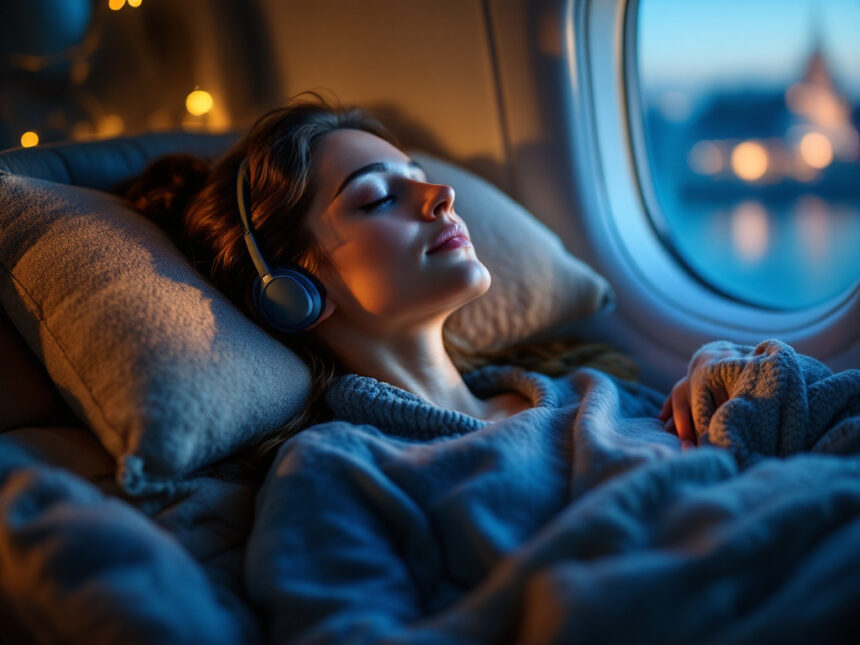
ANC earbuds shine here. Noise canceling earbuds have been found to outperform foam earplugs by around 11 decibels in the bass range up to 125 Hz, which is where you feel most cabin noise and traffic rumble. That makes them a strong option when low frequency noise is your main issue.
Over ear ANC headphones can block even more sound, but they are harder to sleep in, especially if you are a side sleeper. Dedicated sleep earbuds like the QuietOn 3.1, which specialize in canceling low frequency sounds such as snoring and traffic without playing audio, or Soundcore Sleep A30 with ANC and masking, can give you a quieter bubble without the bulk.
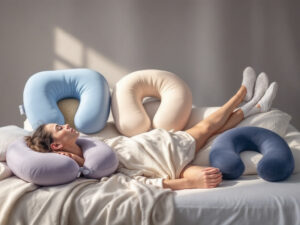
Pairing your earbuds with travel neck support pillows or a travel head support pillow can help you hold a comfortable position while the earbuds handle the noise.
Noisy or unpredictable hotel rooms
You can request a quiet room, but you cannot control:
- Thin walls and hallway noise
- Elevators, ice machines, or bar noise
- Early morning deliveries or traffic outside
Here, both ANC and masking can help. Ozlo Sleepbuds, created by former Bose engineers, combine noise masking sounds, sleep monitoring, Bluetooth streaming, and an alarm that only wakes you, not your partner, which is ideal for shared hotel rooms or work trips where you cannot risk oversleeping. They are considered among the most comfortable options for side sleepers, although they rely on masking rather than ANC and can have quirks with connectivity and frequent charging needs.
If you are sensitive to anything touching your ear canal, headband style options like AcousticSheep SleepPhones put small speakers inside a soft band that sits over your ears. They use passive isolation rather than ANC and are best for quieter hotels or when you simply want calming audio to help you drift off.
Sharing rooms with partners, colleagues, or kids
In shared rooms, the issue is often conflicting needs. One person wants to sleep, another needs to watch a show, work on a laptop, or soothe a child. Sleep earbuds let you create your own audio and noise environment without dictating what everyone else must do.
Some models, such as Ozlo Sleepbuds and certain Soundcore options, have alarms that only you can hear. That allows you to wake for an early flight or meeting without disturbing a partner or toddler who finally went back to sleep.
You can also combine sleep earbuds with comfortable travel eye masks or compact travel sleep masks so light and sound are both handled in a simple, portable setup.
Key types of noise canceling sleep earbuds
There is no single best model for everyone. The right earbuds depend on how you travel, how you sleep, and what bothers you most. Below is a table to help you compare some leading options and how they might fit into your trips.
| Product | What it excels at | Key limitations |
|---|---|---|
| Ozlo Sleepbuds | Overall travel sleep solution with noise masking library, Bluetooth streaming, sleep monitoring, and private alarm. Extremely small and comfortable for side sleepers. Best for frequent flyers and hotel nights. | No ANC, relies on masking sounds. Higher price and reportedly finicky connectivity that sometimes requires keeping the case nearby, plus frequent recharging. |
| QuietOn 3.1 Sleep Earbuds | Pure sleep focus with excellent low frequency ANC for snoring and traffic and up to 28 hours of use. Great if external noise is the only problem. | No Bluetooth and no music or podcasts. They cancel noise but do not play your own audio. |
| SoundOff Sleep Earbuds | Pink noise masking with long battery life and a secure, sleep friendly fit. Good for side sleepers who want simple masking. | No Bluetooth, only built in pink noise. Some users have reported early device failures before getting reliable replacements. |
| Soundcore Sleep A30 | Dedicated sleep earbuds with ANC, passive memory foam isolation, and noise masking sounds via app. Helpful against constant low rumble like traffic or music from the next room. | Slightly shorter streaming battery life and not as minimal as the tiniest buds, which may matter if your ears are very small. |
| Anker Sleep A20 | Long battery life, Bluetooth 5.3 streaming, sleep tracking sensors, and passive noise reduction with “Twin Seal” tips. Strong choice if you mostly want your own audio for long stretches. | No ANC so less effective against heavy external noise. Some users report connectivity and reliability issues and real world battery life much shorter than advertised. |
| AcousticSheep SleepPhones | Headband style comfort, especially for side and front sleepers who dislike in ear buds. Good for gentle audio in quieter spaces. | Only passive isolation with no ANC and limited help for loud snoring or traffic. Better for masking mild noise than major disruptions. |
Prices and availability change, so it is worth checking the latest details on each manufacturer’s site before you buy.
Pros and cons compared to earplugs and over ear headphones
If you already use foam earplugs or large ANC headphones when you travel, you may be wondering whether sleep earbuds are an upgrade or simply something different.
Noise canceling earbuds have been measured to provide excellent low frequency noise reduction, outperforming traditional foam earplugs by about 11 decibels in the bass range. They offer moderate reduction of mid and high frequencies, around 20 dB in the midrange and 25 dB in the treble, which is less than foam earplugs or over ear ANC headphones, but that can be a benefit if you still want some awareness of your surroundings while walking through airports or staying alert in unfamiliar hotels.
For pure home or hotel sleeping, foam earplugs still win for overall isolation, especially against higher pitched disturbances. However, if low frequency noise such as traffic rumble, EDM bass from a club downstairs, or stomping from the room above is your main issue, ANC earbuds tend to be more comfortable and more effective. Over ear ANC headphones can be extremely effective, but usually feel too bulky for side sleeping and can cause headband pressure during long flights or overnight use.
You can also combine tools when you are truly desperate for quiet. Tests have shown that using foam earplugs together with ANC headphones can add around 11.5 to 15 decibels of extra attenuation in mid and low treble frequencies, which is helpful for sleeping on planes with crying babies or working in very noisy environments. For most travel situations though, a single well chosen pair of sleep earbuds plus a simple eye mask and neck pillow is enough.
How to choose sleep earbuds for travel
To avoid buying something that lives in your drawer, match the features to your real travel habits.
Start with your primary noise problem
Ask yourself what actually keeps you awake on trips:
- Plane engines and cabin noise
- Partner or neighbor snoring
- Street traffic or hotel hallway noise
- Your own racing mind, anxiety, or need for a bedtime routine
If low rumble and traffic are the issue, look for ANC oriented models like QuietOn 3.1 or Soundcore Sleep A30. If snoring and unpredictable sounds wake you, masking based options such as Ozlo or SoundOff plus a bit of passive isolation can be enough.
If your main challenge is a restless mind, prioritize comfort and audio quality so you can listen to guided meditations, audiobooks, or sleep playlists. In that case, Bluetooth streaming and a large built in sound library may matter more than the absolute strongest ANC.
Match the design to how you sleep
Side sleepers usually do best with low profile earbuds or soft headbands. Ozlo Sleepbuds and Soundcore’s dedicated sleep models are designed to sit flush in your ear canal so they do not dig into your pillow. Headband headphones like AcousticSheep SleepPhones are also popular if you hate the feeling of something in your ear.
Back sleepers have more flexibility. They can even use standard ANC earbuds like Apple AirPods Pro 3 for shorter listening before drifting off. AirPods Pro offer very effective ANC for back sleeping or pre sleep listening but their larger size and stems can become uncomfortable if you roll onto your side.
If you already use a travel pillow for side sleepers or memory foam travel cushions, think about how earbuds or a headband will interact with that setup. Low profile buds tend to pair better with side sleeper pillows than bulkier designs.
Consider battery life and charging on the road
Red eye flights, long layovers, and late check ins can stretch your day. Pay attention to:
- Battery life per charge while playing audio
- Battery life using masking only
- Total additional charges in the case
- How quickly the earbuds and case recharge
For example, QuietOn 3.1 can last up to 28 hours because they only cancel noise rather than play audio. That is ideal for back to back travel days. SoundOff Sleep Earbuds promise about a week of use, although real world use may be less if you run them every night at higher volume.
Anker Sleep A20 advertise up to 14 hours per charge with passive isolation and Bluetooth streaming, but at least one Reddit user has reported only 5 to 6 hours in sleep mode at moderate volume, along with repeated hardware failures and connectivity glitches. That type of feedback is worth weighing if you want a pair you can truly rely on through long travel days.
Decide how much smart tech you actually want
Modern sleep earbuds often include:
- Sleep tracking sensors and movement detection
- Smart fade out of audio once you fall asleep
- Personalized sound libraries
- Gentle, personal alarms
- Companion apps for settings and data
Ozlo Sleepbuds, for example, combine biometric sensing with tailored noise masking and a private alarm, and some Anker and Soundcore models include sleep tracking and smart audio features. These can be useful if you enjoy data or want to refine your routine.
If you prefer simple, minimal tech, or you worry about app glitches, a more straightforward product like QuietOn 3.1 or a Bluetooth headband may be less frustrating. The Reddit report about repeated replacement of Anker A20 units due to charging and connectivity issues is a reminder that more features also mean more potential points of failure.
Safety and comfort tips for using earbuds while you travel
To get the benefits of noise canceling sleep earbuds without unwanted side effects, a few habits help.
Protect your hearing with safe volume
It is tempting to turn up calming sounds to drown out a crying baby or loud neighbors. Sleep experts caution that you should keep volume under roughly 60 decibels, similar to a normal conversation, to avoid long term hearing damage. If you need to turn the sound much higher to mask noise, you may be better off improving passive isolation, adjusting your pillow, or combining with comfortable travel earplugs or an eye mask to help your body relax.
Break in new earbuds before your trip
Never save a new pair for the first night of a big trip. Instead:
- Wear them for 30 to 60 minutes at home while you relax.
- Test different ear tip sizes or headband adjustments.
- Sleep with them for a nap before a full night.
This gives your ears and skin time to adapt and reveals any pressure points. It also lets you debug app pairing, firmware updates, or quirks like Ozlo’s need to stay relatively close to the charging case for full functionality, before you depend on them in a hotel.
Keep your ears and gear clean
On the road, it is easy to tuck earbuds into a pocket or the bottom of your bag. For long term comfort and hygiene:
- Store them in their case when not in use
- Wipe silicone or memory foam tips with a soft, slightly damp cloth
- Let everything dry fully before putting them back in your ears
Regular cleaning helps prevent irritation and keeps sound quality consistent.
Building a simple travel sleep kit around your earbuds
Noise canceling sleep earbuds work best as part of a small, thought out sleep kit that travels easily with you. You do not need a huge bag of gear. A few compact items can completely change your overnight experience.
You might combine:
- Noise canceling sleep earbuds for sound control
- A travel pillow and blanket set for cozy comfort
- Lightweight travel blankets or compact travel blankets if you run cold
- A travel pillow with hood or travel blanket with built-in pillow for privacy and darkness
- Comfortable travel socks to keep your feet warm and improve circulation
- Travel footrests for airplanes for better leg support on long flights
If you deal with neck pain or stiffness, pairing earbuds with inflatable neck pillows for travel, comfortable inflatable travel pillows, adjustable travel pillows, or the best travel pillows for neck pain will let you actually relax your shoulders and jaw while the sound fades into the background.
For business trips where you need to look presentable the next morning, small upgrades like a travel pillow with cooling gel, ergonomic travel pillows, or travel lumbar support pillows can limit aches so you wake up less puffy and stiff.
You can even bundle your essentials into compact travel sleep kits or your own version of a travel comfort kit essentials pouch so you never forget something important.
Quick comparisons: popular travel scenarios
To make all of this more concrete, it helps to think through common situations and what setup might fit each one.
If you mostly take overnight economy flights, ANC oriented sleep earbuds like QuietOn 3.1 or Soundcore Sleep A30 plus a supportive travel neck pillow memory foam or travel pillow with washable cover can keep your head stable while reducing low frequency cabin noise.
If your trips are business heavy with early meetings and shared hotel rooms, a smarter pair like Ozlo Sleepbuds that combine masking, tracking, and a personal alarm can ensure you wake quietly and on time. Add travel sleep accessories like an eye mask and a small travel lumbar support pillow and you have an office friendly recovery setup.
If you travel with children or share rooms with a snoring partner, comfort and reliability matter most. Simple but secure options like SoundOff Sleep Earbuds or AcousticSheep SleepPhones, paired with sleep aids for airplane travel such as eye masks and footrests, give you flexibility for different ages and sensitivities.
Putting it all together
Noise canceling sleep earbuds are not a magic switch, but they can dramatically change how rested you feel on the road. By cutting cabin rumble on red eye flights, softening hotel hallway noise, and giving you a private sound bubble when you share rooms, they make good sleep possible in places that used to feel impossible.
Start by identifying your main travel sleep challenges, then choose earbuds that match your noise profile, sleep position, and appetite for smart features. Combine them with a few thoughtful comforts like comfortable travel sleeping gear, travel sleep comfort tips, and the right pillow or blanket, and you will have a compact routine you can unpack anywhere.
Try using your new setup on your next overnight flight or noisy hotel stay. Notice how your body feels the following morning when sound is finally under your control.
FAQs
Are noise canceling sleep earbuds safe to wear all night while traveling?
Generally yes if they fit comfortably, stay clean, and you keep volume low. If you’re prone to ear irritation or earwax buildup, take breaks and clean tips regularly.
What’s better for travel sleep: ANC or sound masking?
Use ANC for steady rumble (planes, traffic, HVAC). Use masking for unpredictable noise (snoring, hallway slams) because your brain reacts to changes more than steady sound.
Will ANC block snoring completely?
Usually not completely. It can reduce low-frequency components, but snoring also has mid/high frequencies. Many sleepers do best with a strong passive seal + masking.
How loud should I play white noise or sleep sounds at night?
Aim for “conversation-level” quiet. For safer listening habits, the WHO recommends keeping device volume at ≤60% of max, and the Mayo Clinic popularized the 60/60 guideline.
Do I need sleep tracking features in earbuds?
Only if you’ll actually use the insights. Sleep tracking can help you spot patterns on business trips, but more features can also mean more app complexity and potential glitches.
Are over-ear ANC headphones better than sleep earbuds for flights?
They often reduce more noise, but they’re bulkier and uncomfortable for side sleeping. Sleep earbuds are the “sleepable” compromise for travel naps.
How do I stop earbuds from hurting my ears as a side sleeper?
Choose low-profile designs, use the smallest tip that seals well, and pair with a supportive travel pillow that reduces ear pressure.