A good trip starts with good sleep. Whether you are catching a red eye, sharing a hotel room with your family, or trying to land fresh for a morning meeting, a few targeted travel sleep comfort tips can make the difference between dragging and actually enjoying your time away.
This guide focuses on simple, realistic changes you can make before, during, and after your journey so your body has a fair shot at real rest, not just fitful dozing in an upright seat.
Prepare your body before you travel
You will sleep better in transit if you treat the 2 or 3 days before your trip as part of the journey, not an afterthought.
Shift your sleep schedule gradually
If you are crossing time zones, start nudging your internal clock ahead of time instead of forcing it to catch up all at once.
- For eastbound trips, go to bed and wake up 30 to 60 minutes earlier each day for 3 days.
- For westbound trips, do the opposite and shift your schedule later.
Sleep specialist Dr. Cheri D. Mah from Stanford suggests gradually adjusting your sleep in the days leading up to your flight so your body is already moving toward the new time zone when you take off. This makes jet lag less severe once you land.
Treat the last 48 hours as “rest capital”
It is tempting to stay up late packing, doing laundry, and clearing your inbox, but leaving home exhausted makes every part of the trip harder.
In the 48 hours before you travel, try to:
- Prioritize a full night of sleep both nights.
- Keep caffeine to your usual amount rather than doubling up.
- Finish packing earlier in the evening so you can wind down.
Think of this as your “sleep savings account” for the trip. The more rested you are when you leave, the less you will feel every small disruption to your routine.

Pack a compact sleep comfort kit
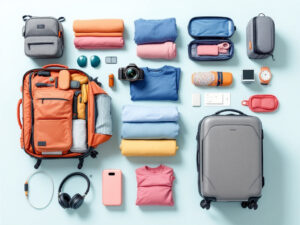
Instead of scrambling for items on the plane or in your hotel room, build a small, dedicated kit that lives in your carry-on. This is one of the simplest and most effective travel sleep comfort tips because you are removing friction from your bedtime routine.
You might include:
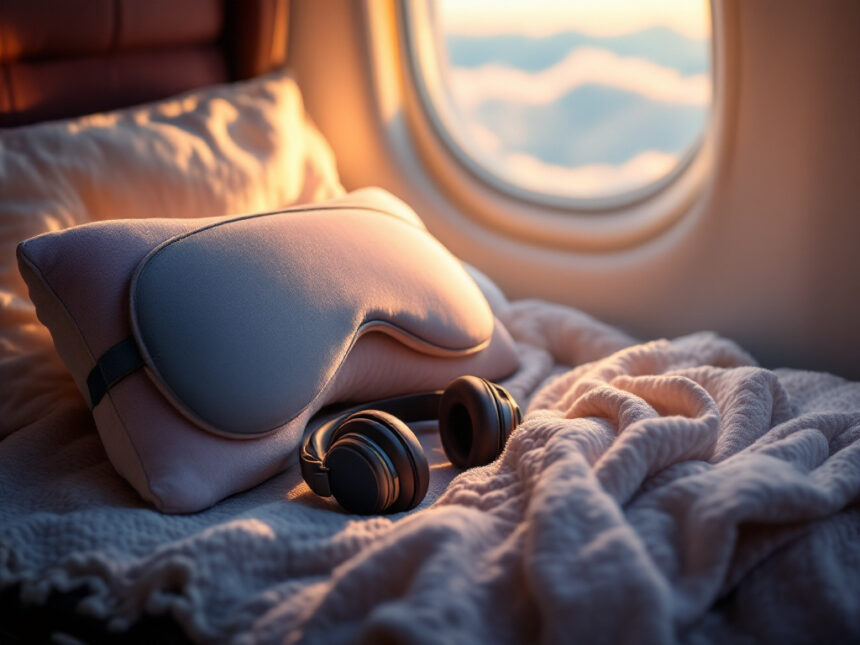
- A high quality eye mask, such as any of the compact travel sleep masks that block light without pressing on your eyelids
- Earplugs or noise canceling sleep earbuds for sound control
- A favorite travel pillow and blanket set or separate compact travel blankets
- A small bottle of lavender spray or roll on for relaxation
- Your usual over the counter sleep aids, or specific sleep aids for airplane travel if your doctor approves
Portable versions of familiar tools, such as adaptive white noise machines or temperature control mats, are becoming more common and can be part of your compact travel sleep kits so your sleep environment feels familiar even in new places.
Choose the right travel sleep gear
Your body will never love sleeping upright, but smart gear choices can dramatically improve comfort and reduce stiffness or next day fogginess.
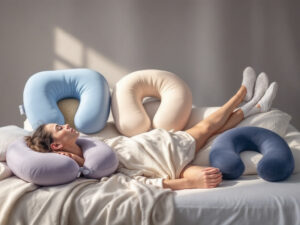
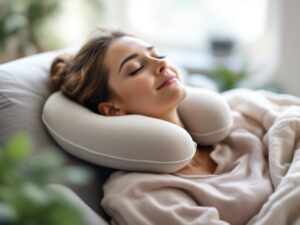
Find a supportive travel pillow
Not all neck pillows are equal. The right one depends on your size, sleep style, and how you like to lean when you doze.
Travel experts and testers often highlight models like:

- The Bcozzy travel pillow, which wraps around your neck and offers 360 degree support, helpful if your head tends to tip forward or sideways.
- The Cabeau Evolution S3, a memory foam design with high sides and a strap system that keeps your head from wobbling.
- The Trtl travel pillow, which uses a hidden internal brace and fleece wrap to hold your head in one position with firm support.
- The J Pillow or Flowzoom style pillows for chin and side support if you favor the window seat.
Tests that rated pillows on Portability, Adjustability, Comfort, Ease of use, and Support found that structured designs like the Trtl scored especially well for upright sleep on long flights.
To narrow your options, look for:
- Travel neck support pillows if your neck is your main pain point
- A travel pillow for side sleepers if you tilt sideways against a window
- Ergonomic travel pillows if you want a sculpted design that follows the curve of your neck and shoulders
- Adjustable travel pillows or comfortable inflatable travel pillows if packable size matters most
If you like a plush feel, explore travel neck pillow memory foam and other memory foam travel cushions. For heat sensitivity, a travel pillow with cooling gel can prevent that sticky, overheated feeling.
Specialized options such as a travel pillow with hood or a travel head support pillow add light blocking and extra stability if you are a very sensitive sleeper.
Whatever you choose, a travel pillow with washable cover will feel fresher over multiple trips.
Add a light but warm blanket layer
Cabins and hotel rooms can swing from chilly to stuffy. A thin but warm blanket can help you control your own microclimate.
You might prefer:
- Lightweight travel blankets that fold down small and work in planes, trains, or cars
- A travel blanket with built-in pillow if you want one item that can serve as lumbar, seat, or neck support
- Complete travel comfort kit essentials that bundle a pillow, blanket, and eye mask in one pouch
If you are tight on space, a single travel pillow and blanket set is often the easiest way to ensure you are not relying on thin airline blankets.
Protect your ears, eyes, and circulation
Small accessories can solve some of the biggest sleep disruptors.
- For noise, keep comfortable travel earplugs in your kit or use noise canceling sleep earbuds to mask engine hum and chatter with soothing soundscapes. Devices like the Soundcore Sleep A30 pair audio options with a snug, low profile fit designed for side sleeping.
- For light, invest in comfortable travel eye masks or other compact travel sleep masks that fully block light without pressing on your nose. A reliable eye mask is one of the cheapest and most impactful travel sleep accessories, since it protects your circadian rhythm from overhead lights, street lamps, and glowing electronics.
- For circulation, slip on comfortable travel socks and consider wearing compression socks for long flights, especially if you are prone to swelling.
If you are especially sensitive to temperature or pressure changes, building a small set of travel sleep accessories you trust can go a long way.
Optimize your in flight sleep setup
Once you are on board, your goal is to recreate a sleep friendly environment in a very small space. A few conscious choices early in the flight can set you up for better rest later.
Pick the best seat you reasonably can
If you get to choose, a window seat usually wins for sleep. You have a wall to lean against, control over your shade, and less likelihood of being bumped.
Try to:
- Sit slightly in front of the engine wings to reduce noise where possible.
- Avoid the back few rows near restrooms and galley areas.
- Use travel footrests for airplanes if your feet dangle or your lower back gets sore. Raising your feet a few inches can take pressure off your hips and lower back.
If you are stuck in the middle or aisle, a structured travel pillow for side sleepers or high side travel neck support pillows can help you lean slightly toward one side without collapsing forward.
Dress for layers and mobility
Clothing matters more for sleep than many travelers expect. You want soft, breathable fabrics and the ability to adapt to changing cabin temperatures.
Aim for:
- Soft, stretchy pants or leggings instead of stiff jeans.
- A breathable top with a light sweater or jacket you can remove.
- Easy on footwear, plus foldable slippers for walking around, which helps keep your feet warm and encourages you to move a bit.
Experts often recommend dressing in layers, wearing compression socks, and even using an oversized scarf as both warmth and light blocking if needed.
Keep your bedtime cues, even at 35,000 feet
Your brain relies on small rituals to know it is time to sleep. When you replicate a simple version of your home routine in transit, your body is more likely to cooperate.
Once you are ready to rest, you might:
- Slip on your comfortable travel eye masks and comfortable travel earplugs or earbuds.
- Adjust your seat position, pillow, and travel lumbar support pillows if you use them, to support your lower back.
- Do a minute or two of gentle neck rolls and shoulder shrugs to release tension.
- Use lavender essential oil on a tissue or your wrist for a familiar scent.
- Switch screens from work or social media to calming music or an audiobook.
Dr. Mah recommends creating a cool, dark, and quiet environment by combining an eye mask, earplugs, and comfortable clothing, then avoiding alcohol and caffeine during the flight so your sleep is deeper and more restorative.
Eat, drink, and move with sleep in mind
What you consume, and when, directly affects your ability to fall and stay asleep.
Try these in flight habits:
- Align your meals with your destination time zone where possible. Sleep experts note that eating on the new schedule acts as an external cue for your internal clock and helps your body shift more quickly.
- Limit caffeine and alcohol, particularly in the second half of the flight. Both can fragment sleep and leave you more dehydrated. Herbal teas, such as licorice mint blends, offer warmth without stimulation.
- Drink water steadily to avoid arriving with a dehydration headache.
- Stand up and walk the aisle every hour or so while you are awake, or at least do ankle circles and seated stretches. This keeps blood flowing and reduces that heavy leg feeling that makes resting uncomfortable.
If you are considering melatonin or prescription sleep aids such as zolpidem (Ambien), talk with your doctor first and test how you respond at home before relying on them in the air.
Sleep better in hotels and rentals
Even if the flight goes well, many travelers struggle more with their first few nights in unfamiliar rooms than with the plane itself. This is where your travel sleep comfort tips shift from gear to environment and routine.
Recreate “home signals” in a new room
The “first night effect” describes how part of your brain stays slightly alert in an unfamiliar environment. You can calm that response by adding familiarity wherever possible.
Simple tweaks include:
- Using the same comfortable travel eye masks and earplugs you used on the plane to block hotel hallway noise and ambient light.
- Spraying your own pillow, or your travel pillow and blanket set, with a familiar lavender spray.
- Placing a small personal item, such as a photograph, within your line of sight as you fall asleep.
Some travelers also prefer sticking with the same hotel chain, since similar room layouts and bedding can make rooms feel less foreign.
Upgrade the bed and pillow situation
Hotel pillows and mattresses rarely match your exact preferences. Fortunately, a few compact upgrades can make most beds more forgiving.
You might:
- Use travel lumbar support pillows behind your lower back when reading or working in bed, then move them under your knees as you sleep on your back to ease lower back strain.
- Bring a favorite travel pillow with hood or another of the best travel pillows for neck pain if your neck is prone to stiffness.
- Add extra cushioning with memory foam travel cushions beneath your shoulders or hips, particularly if the mattress feels overly firm.
FDA and sleep specialists often recommend side sleeping for spinal alignment during regular sleep, but cramped airplane seats make this difficult. In your hotel or rental, prioritize the position you find most restful, and adjust pillows so your head and hips are in a straight line.
Stick to a consistent bedtime routine
Travel schedule changes are unavoidable, but giving your body familiar steps before bed still makes a difference.
A simple routine might be:
- Dim lights 30 to 60 minutes before you intend to sleep.
- Take a warm shower to relax muscles and then let your body cool, which signals sleep.
- Do 5 minutes of gentle stretching or deep breathing in bed.
- Read a few pages of a physical book instead of scrolling on your phone.
Maintaining even a shortened version of your home routine helps synchronize your internal clock, especially when combined with morning light exposure in the new time zone.
Handle jet lag without ruining your first day
If you are hopping multiple time zones, some jet lag is almost inevitable. The goal is not perfection, it is minimizing how much it disrupts your plans.
Reset your clock on the plane
Practical timing tweaks are some of the most underrated travel sleep comfort tips.
Once you board, try:
- Setting your watch or phone to your destination time immediately.
- Eating and trying to rest according to that time, not your departure city.
Research suggests that eating and sleeping in line with your destination time helps your internal clock adjust faster, particularly on transatlantic flights.
If your flight lands in the morning, use part of the in flight time for short naps rather than one long sleep, so you can still feel tired enough to sleep at the new bedtime.
Use light and movement after arrival
After you land, how you handle the first day has a big impact on your adjustment.
For eastward travel with early arrival:
- Get outside into morning or midday light as soon as possible. Sunlight is a powerful signal that helps reset your internal clock.
- Have caffeine in the earlier part of the day only, then stop by mid afternoon.
- Take short naps of 20 to 30 minutes if needed, but avoid long afternoon sleep that pushes your bedtime later.
For westward travel:
- Use evening daylight to gently push your bedtime later without overdoing caffeinated drinks.
- Keep naps to a minimum, and focus on walking, stretching, and light activity to stay awake until a reasonable local bedtime.
Short, strategic naps and a walk in fresh air often work better than collapsing in bed at 3 p.m. and then staring at the ceiling at midnight.
Build your own travel sleep comfort system
The best travel sleep comfort tips are the ones you actually use. To make your next trip smoother, pick a few ideas that fit your style instead of trying to overhaul everything at once.
You might start by:
- Choosing one main support item, like an ergonomic travel pillow or travel pillow for side sleepers, and testing it on a shorter trip.
- Building a small pouch of travel sleep accessories, including your favorite compact travel sleep masks and comfortable travel earplugs.
- Adding one comfort upgrade at a time, such as travel footrests for airplanes for long hauls or comfortable travel sleeping gear for family road trips.
Think of your sleep setup as part of your travel essentials, just like your passport or laptop. The more intentional you are about it, the better you will feel on the other side of the journey.
Experiment, adjust, and keep what works. Over a few trips, you will have a personalized, compact sleep system that comes out automatically whenever you travel, so rest is something you can rely on, not just hope for.
📌 FAQs
What should I include in a travel sleep kit?
A travel sleep kit should have a quality eye mask to block light, earplugs or noise-canceling earbuds to reduce noise, and a supportive neck pillow. You can also include a light travel blanket, lavender spray for calm, and compression socks for circulation.
How far in advance should I adjust my sleep schedule before flying?
Start shifting your sleep clock 2–3 days before your trip — earlier for eastbound travel and later for westbound — so your body begins adapting to the destination’s time zone in advance.
What seating choice is best for in-flight sleep?
Window seats typically offer the best rest because you can lean against the wall, control your light, and reduce disturbances from aisle traffic.
Do sleep aids and melatonin help while traveling?
Melatonin can gently support rhythm adjustment when crossing time zones, but consult a doctor before trying prescription or over-the-counter sleep aids, especially in flight.
How can I minimize jet lag after arrival?
Get daylight exposure aligned to your destination’s schedule, limit naps, stay hydrated, and use short walks or light activity to reset your internal clock quickly.