Travel has a way of stealing your sleep. Bright cabin lights, dry air, hallway noise, a strange bed, or a snoring seatmate can turn even a short trip into a fatigue marathon. Compact travel sleep kits help you take back control by packing a mini sleep sanctuary into your carry-on.
In this guide, you will learn how to build compact travel sleep kits that actually fit in your bag, match the way you like to sleep, and work whether you are on a red-eye, a business trip, or sharing a hotel room with kids.
Understand what compact travel sleep kits do
Compact travel sleep kits bring together a handful of small, focused tools that tackle the biggest travel sleep disruptors: light, noise, temperature, and uncomfortable positions. Instead of tossing random items in your bag at the last minute, you build a repeatable setup that helps your body recognize, “It is time to sleep,” even in a new place.
More than 60 percent of travelers say their sleep quality drops on trips because of things like cabin air, time zones, and unfamiliar environments, according to the Sleep Foundation in 2024. That is a lot of people arriving groggy to meetings, family events, or the first day of vacation.
A compact kit solves for that by:
- Blocking what you do not control, such as light and noise
- Supporting your body so your neck, back, and feet are not fighting the seat
- Keeping your sleep routine recognizable so your brain can unwind
You are not trying to recreate your entire bedroom. You are choosing the smallest, most hard working items that deliver the biggest comfort upgrade per cubic inch.
Identify your travel sleep challenges
Before you buy anything, spend a minute on what actually ruins your sleep in transit or in hotels. This step is easy to skip, but it is how you avoid wasting money on gear you never use.
Quick self check
Run through these questions:
- Do you mostly fly red-eyes or long-haul economy, or do you struggle more in hotels and rentals
- Are you a light sleeper who wakes from tiny noises, or can you sleep through noise but not bright light
- Does your neck, lower back, or legs feel the worst after travel
- Do you usually lean forward, lean to the side, or lie flat when you fall asleep
- Do you fight jet lag, or is your problem more about the actual comfort of sitting upright
Your compact travel sleep kit should be built for your answers, not for some generic traveler. For example, if you barely notice noise but always get a stiff neck, then a well chosen travel neck support pillow matters more than top tier earplugs.
Core components of compact travel sleep kits
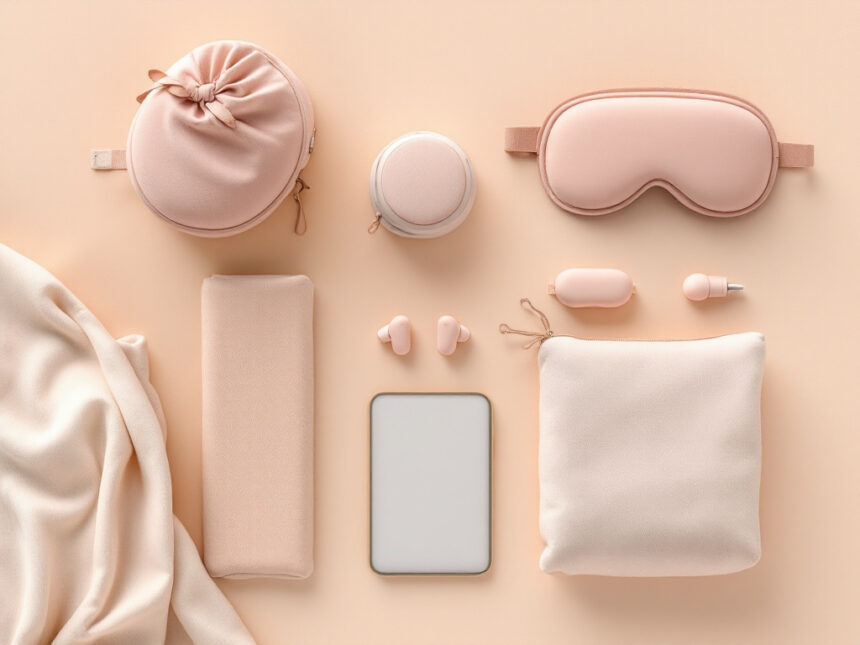
Most compact travel sleep kits use the same foundation: something for your head and neck, something for light, something for noise, and something for temperature. From there, you add a couple of personal extras.
1. Neck and head support
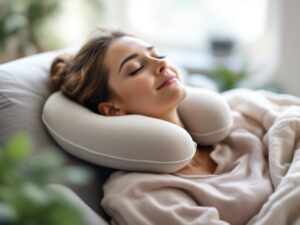
For most people, this is the centerpiece of the kit. The right pillow stops your head from slumping and keeps your neck in a neutral position so you are not waking up sore.
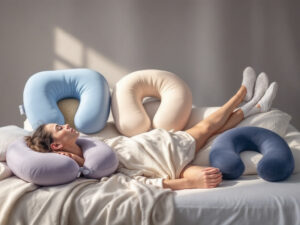
You have several styles to consider, all of which can be compact if you choose well:
- Memory foam wraparound pillows
- Inflatable U-shaped or ring pillows
- Structured scarf style supports
- Rectangular compressible pillows for beds or trains
You can dive deeper into types like ergonomic travel pillows, travel head support pillow, and adjustable travel pillows as you refine your preferences.
2. Light control
Light is one of the strongest signals to your body about when to be awake. Cabins, hotel corridors, and city streets are rarely on your schedule.
A simple eye mask can make a big difference. Look for:
- A snug, comfortable band that does not dig in
- Enough coverage so light does not leak at the nose
- A soft interior so it will not irritate your skin
If you need ideas, check out options like compact travel sleep masks and comfortable travel eye masks. A mask is so small that it is almost always worth the space.
3. Noise management
Planes, trains, elevators, and neighbors are not going quiet for you. Your kit needs a way to dial down the sound.
You can use:
- Simple, comfortable travel earplugs
- Noise canceling sleep earbuds if you prefer sound masking from a device
- A portable white noise machine or app
Portable white noise machines like Hatch Go are especially handy for hotels because they create a consistent sound blanket that helps drown out hallway traffic and loud neighbors, and they have been recommended as part of travel sleep essentials kits in 2024.
4. Temperature and comfort
Your body falls asleep more easily when your core temperature drops slightly. That is tricky in overly heated planes or over air-conditioned hotels.
You can support temperature and physical comfort with:
- Comfortable travel socks that keep your feet warm but breathable
- A lightweight travel blanket or compact travel blankets that you can layer
- A travel blanket with built-in pillow if you want two functions in one item
Some travelers also like a travel pillow with cooling gel to avoid overheating where their skin meets the pillow.
Travel pillows that fit in compact kits
Travel pillows used to be big donut rings that hogged your bag. Newer designs pack smaller and support you better. Choosing the right one is a big part of building effective compact travel sleep kits.
Below is a quick look at popular styles from recent reviews and how they fit into a compact kit.
| Pillow | Best for | Pack size / style | Key trade off |
|---|---|---|---|
| Travelrest Nest Ultimate Memory Foam | Most travelers who want strong support | Compresses to about 1/4 of size in a case | Bulkier than inflatables but more cushioned |
| Trtl Pillow | Side leaners, minimal bulk | Rolls flat to roughly sandwich size | Support is on one side only |
| Cabeau Air TNE inflatable | Ultralight packers | Deflates to soda can size | Less cushion than foam |
| Ostrichpillow Go Neck | Restless side leaners, wrap feel | Compresses to about mango size in a pouch | Fit is tricky for short or thick necks |
| Pluto POD | Privacy seekers on long flights | Rolls to roughly 12 by 6 by 4 inches | Looks intense, may be overkill for short trips |
The Travelrest Nest Ultimate Memory Foam Travel Pillow consistently comes out as the best travel pillow for most travelers because its tall memory foam walls cradle your head and neck, and it has a plush velour cover that you can remove and wash. Even with its substantial support, it compresses to about a quarter of its size when rolled into its case, which makes it a strong candidate for compact kits while still feeling like real cushioning.
The Trtl Pillow takes a different approach. It is shaped like a fleece scarf with a hidden plastic brace. You wrap it and lean to one side, which suits people who naturally drift sideways. It stays quite flat when packed, about the size of a large sandwich, so it is friendly to already full bags.
If you are all about saving space, the Cabeau Air TNE inflatable travel pillow is one of the smallest options. It deflates down to something close to a soda can and tucks easily into a backpack pocket. You sacrifice some of the plush feel of foam, but gain serious packability.
If you want more structure around your neck, wrap designs like the Ostrichpillow Go Neck use asymmetrical vertical walls and Velcro closures to flex with restless side leaners. When rolled into its pouch it is about the size of a large mango. Just keep in mind that people with shorter or thicker necks sometimes have trouble finding a comfortable fit.
For a fully cocooned experience, the Pluto POD acts like a helmet that combines pillow, hood, and eye mask. It is meant for travelers who want a sensory bubble on flights. Given the coverage, it is surprisingly compact, rolling to roughly 12 by 6 by 4 inches, but it is more elaborate than most people need for short trips or quick naps.
You can also explore traditional looking options such as travel neck pillow memory foam, memory foam travel cushions, or comfortable inflatable travel pillows if you prefer familiar shapes.
Extra sleep kit tools backed by research
You can go beyond pillow, mask, and earplugs, especially if you are a sensitive sleeper or change time zones often. Research-backed extras are still small, but they target specific problems.
Breathing aids for dry air and snoring
Cabin air is dry and recycled, which dries out your nasal passages and can worsen snoring or mouth breathing. That is one reason more than half of travelers say they sleep poorly on planes.
Compact travel sleep kits are increasingly including:
- Nasal strips that gently open your nasal passages
- Gentle mouth tape for people who want to encourage nasal breathing
- An eye mask, so you can keep your eyes closed even as you adjust your breathing
Nasal strips use hypoallergenic adhesive and a spring like band to lift nasal passages slightly, which improves airflow without medication. Research from the Sleep Foundation in 2023 and from UCI Health in 2016 found that nasal strips can reduce snoring intensity and nasal valve obstruction, which supports smoother airflow and better sleep quality.
If you snore, wake with a dry mouth, or tend to breathe through your mouth in dry cabins, including nasal strips in your kit can be a worthwhile, very compact upgrade.
Light management beyond an eye mask
An eye mask is the smallest solution, but you can also use sunglasses and blue light blocking glasses as part of your kit. Maya Li’s 2023 “Sleep Travel Kit” post for Calm recommends them to help your brain understand when to be awake and when to wind down by managing light exposure through the day and evening.
You can:
- Wear sunglasses after your destination sunset to nudge your body toward local night time
- Use blue light blockers when scrolling or working late to reduce melatonin disruption
These are daytime tools, but they support your night sleep by keeping your circadian rhythm from drifting too far.
Jet lag helpers
If you cross time zones, you might consider low dose melatonin as part of your compact kit. Maya Li’s Calm guide suggests 0.5 mg about two hours before your new bedtime. That dose is meant to gently shift your internal clock instead of knocking you out.
Always talk with your doctor or a pharmacist before starting melatonin, especially if you have other medical conditions or take medication, because it is not suitable for everyone.
White noise and sound machines
Hatch’s 2024 travel sleep guide highlights portable white noise machines such as Hatch Go as a powerful way to keep your sleep environment familiar in hotels and rentals. Instead of waking every time a door slams in the hallway, you hear a steady sound that your brain quickly tunes out.
You do not have to buy a dedicated device if you are watching weight and space. A white noise app plus your regular earbuds can do the trick, or you can pair an app with comfortable travel earplugs for a quieter base layer.
Building a kit for planes, hotels, and with kids
Your destination and sleeping situation change which items earn a spot in your compact kit. Think of each scenario as a slightly different loadout.
For red-eyes and long-haul flights
On a plane, space is tight and you are almost always upright. Your priorities are neck support, blocking light and sound, and keeping your body from feeling crumpled.
Useful picks include:
- A supportive neck pillow such as the Travelrest Nest, Trtl, or Cabeau Air TNE
- An eye mask from the compact travel sleep masks category
- Comfortable travel earplugs or noise canceling sleep earbuds
- A lightweight travel blanket or travel pillow and blanket set if you always get cold
- Nasal strips for dry air, especially on overnight or high altitude flights
If you like extra support, travel footrests for airplanes or travel lumbar support pillows can reduce lower back strain and leg discomfort without taking up much room when deflated or folded.
For business trips and early meetings
Business travel adds another layer. You want to sleep well, but you also need to look presentable and feel sharp the next morning. Jet lag, dry eyes, and puffy faces are not on your agenda.
In addition to your in flight kit, consider:
- A small portable white noise machine or app for your hotel room
- A reliable eye mask so you can sleep later even if the curtains leak light
- A compact travel pillow with washable cover for hotels or trains if you dislike unfamiliar pillows
- A familiar evening routine item, such as herbal tea bags or a tiny aromatherapy oil from your home setup
Maintaining a consistent routine, such as putting on your mask, starting white noise, and doing the same ten minute wind down, helps anchor your circadian rhythm so your body knows when to shut down, even away from home.
For families and shared rooms
If you share a room with a partner, kids, or friends, your sleep kit also has to handle other people’s schedules. Someone might be reading with the light on. A baby might be in a travel crib. A toddler might wake at 5 a.m. in a new time zone.
Consider:
- Extra comfortable travel eye masks so each person can sleep regardless of who wants the light on
- Portable white noise or an app to mask noises from different bedtimes
- Compact blackout solutions such as travel shades or a Slumber Pod alternative for the baby’s travel crib, as suggested in 2023 reviews of travel cribs
- A simple travel comfort kit essentials pouch for each child, such as a small stuffed toy, familiar sleep sack, and kid friendly ear protection
For babies and toddlers, safe sleep comes first. Since mid 2022, any product marketed for infant sleep in the US has to meet strict federal standards that cover things like a firm, snug mattress, flat surfaces, and no protruding hardware, according to the Consumer Product Safety Commission. Top travel crib picks like the Silver Cross Sleep & Go, Guava Family Lotus, and BabyBjörn Travel Crib Light all aim to give you a secure yet portable sleep space that folds small enough for travel.
You can layer your baby’s mini kit with breathable crib sheets, a familiar sleep sack, and a compact white noise machine so their environment feels as close to home as possible.
How to keep your kit truly compact
It is easy for “compact travel sleep kits” to balloon into half your carry-on. A few habits keep things under control.
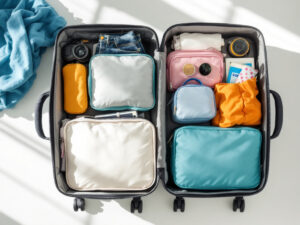
Use a single small pouch
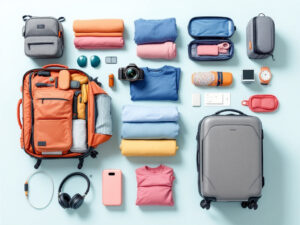
Choose one pouch roughly the size of a paperback book. This becomes your sleep kit boundary. Everything that does not fit has to earn a separate reason to come.
You might pack:
- Eye mask and earplugs in a side pocket
- Nasal strips, melatonin (if cleared by your doctor), and any small meds sealed in a flat pill organizer
- A folded pair of comfortable travel socks
- A compact pillow or an inflatable option in its own tiny sack, attached to the outside with a clip
If you regularly carry comfortable travel sleeping gear, choose items that nest, such as a travel pillow with hood that doubles as an eye shade.
Choose multifunctional pieces
Aim for gear that can do double duty so you carry fewer things.
For example:
- A travel blanket with built-in pillow gives you both warmth and head support
- A travel pillow with hood acts as both neck support and light blocker
- The Huzi Infinity Pillow can be used as a neck pillow, head wrap, or lumbar cushion, although some testers report it lacks stability during use, especially if you move a lot
In Maya Li’s Calm “Sleep Travel Kit” blueprint, most items cost under 10 dollars each and pack small, such as electrical tape for blocking hotel LEDs, tiny scissors, sleep socks, and a basic sleep mask. Even with a more premium item like a down pillow, the full kit cost stays around 175 dollars or less if you do not already own some pieces.
Match materials to your trip
On a long backpacking trip, inflatables and ultralight fabrics save weight and bulk. For short business trips or weekend getaways, you might accept a slightly bulkier memory foam pillow in exchange for comfort since you are not carrying it far.
For upright sleeping, look at travel pillow for side sleepers if you lean sideways, or best travel pillows for neck pain if you have a sensitive neck. For beds and trains, soft rectangular options like the Therm A Rest Compressible Cinch Pillow or the Cushion Lab Travel Deep Sleep Pillow mimic home pillows in a smaller package.
Simple routine to use your kit
Once you have your kit, use it the same way each time. A predictable sequence is part of what helps you drift off, especially when your surroundings are unfamiliar.
Here is a straightforward routine you can adapt:
- Set your environment
Adjust your seat, close the shade if possible, and put on comfortable travel socks if you tend to get cold. If you are in a hotel, set the thermostat close to 65°F or 18°C, which is often cited as a comfortable sleep temperature and is also highlighted in Calm’s travel kit advice. - Build your nest
Inflate or unroll your pillow. If you are using an inflatable neck pillow for travel, do not overinflate, a little softness helps avoid pressure points. Position any travel lumbar support pillows or travel footrests for airplanes now. - Block light and sound
Put in your earplugs or set up your white noise, then put your eye mask in place. If you are using a travel pillow with hood, pull the hood down partway to dim light without cutting off your peripheral vision immediately. - Support your breathing
Apply a nasal strip if you know dry air bothers you or if you tend to snore. This takes seconds but can change how rested you feel, especially on overnight flights where cabin air is harsh. - Repeat a short wind down
Take a few slow breaths, stretch gently in your seat, and run through any mental cues you use at home. The more your travel routine resembles your bedroom routine, the faster your body will follow.
If you need targeted help, you can look through sleep aids for airplane travel and travel sleep comfort tips for more ideas.
Sample compact kit setups
To make this more concrete, here are three real world examples of compact travel sleep kits and what they prioritize.
Use these as starting points, then swap pieces to match your habits.
Ultralight frequent flyer kit
- Cabeau Air TNE inflatable neck pillow in a tiny stuff sack
- Slim eye mask from the compact travel sleep masks category
- Foam earplugs in a mini case
- 2 or 3 nasal strips in a flat packet
- Thin comfortable travel socks
- White noise app on your phone with offline sounds downloaded
Everything fits inside a single small pouch and weighs very little. This kit sacrifices some plush comfort for minimal space and maximum versatility.
Business traveler carry-on kit
- Travelrest Nest Ultimate Memory Foam or a similar travel neck pillow memory foam option
- Comfortable travel eye masks with a molded shape so it does not smudge makeup
- Silicone comfortable travel earplugs or compact noise canceling sleep earbuds
- Portable white noise machine like Hatch Go for hotel rooms
- A small bottle of your usual nighttime aromatherapy oil
- Low dose melatonin, only if cleared with your doctor
You get higher end comfort in exchange for a slight bump in bulk. This makes sense if you fly for a day and then present or meet clients right away.
Family road trip and hotel kit
- One shared travel blanket and pillow set in the car
- Compact travel neck support pillows for adults, plus small kid versions
- A portable white noise machine for the hotel room
- A travel blanket with built-in pillow that kids can share for naps
- Eye masks for adults who want to sleep while kids play or read
- A favorite stuffed toy, breathable sleep sack, and familiar crib sheet for the baby’s travel crib
Here the kit is not just about individual comfort, it is also about managing multiple sleep schedules in one shared space without everyone waking each other up.
Putting it all together
Compact travel sleep kits are not about buying every gadget. They are about figuring out which 5 to 7 items reliably help you fall asleep and stay asleep in unfamiliar places, then packing those items in a way that you barely notice until you need them.
Start with your biggest pain point, whether it is neck pain, bright light, or noise. Choose one solid item for each category: a neck pillow, a light blocker, and a noise solution. Add one or two extras that address your specific issues, such as nasal strips or a small white noise machine. Keep it all in a single pouch and use the same routine every trip.
If you want to explore more ideas, browse related gear like travel sleep accessories, comfortable travel sleeping gear, and travel comfort kit essentials. Your future self stepping off a red-eye feeling surprisingly human will thank you.
📌 FAQs
What is a travel sleep kit and why do I need one?
A travel sleep kit is a compact bundle of sleep-enhancing tools — pillows, eye masks, earplugs — designed to make sleeping on the go easier and more restorative.
What are the must-have items in a compact travel sleep kit?
Key essentials include a neck support pillow, light-blocking eye mask, noise-canceling earplugs or sound solution, and temperature-balancing accessories like socks or blankets.
How do I choose the right neck pillow?
Choose based on your sleeping style: memory foam for cushioned support, wrap-style for side sleepers, or inflatable for weight-savings.
Can compact kits help with jet lag?
Yes — tools like consistent light management and possibly melatonin (if cleared by your doctor) help your circadian rhythm adjust sooner.