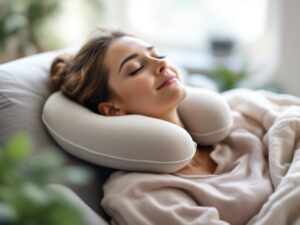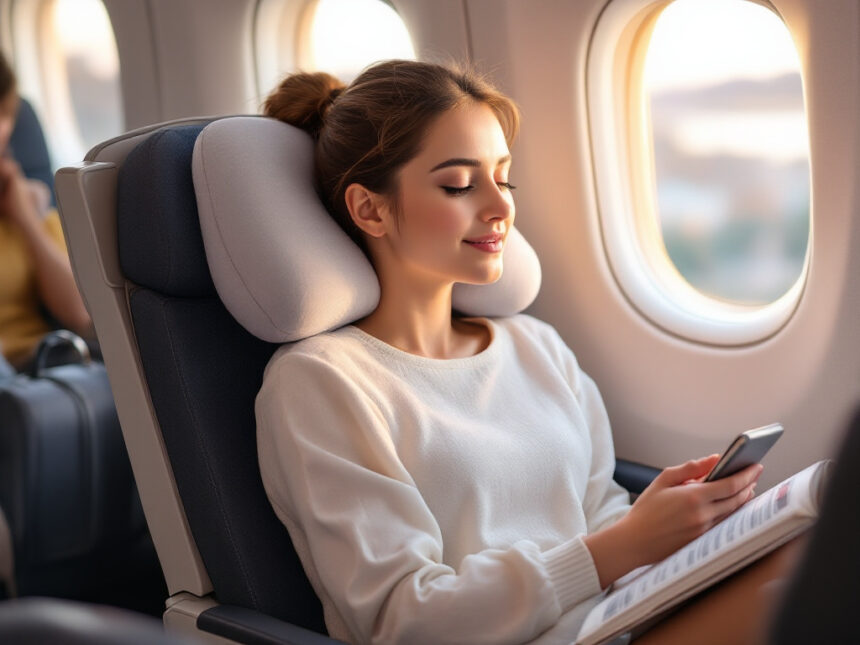
A good adjustable travel pillow can turn a cramped plane seat, bus bench, or shared hotel room into a place where you actually rest. Adjustable travel pillows give you control over height, angle, and firmness so you are not stuck with one fixed shape that only works for someone else’s neck.
This guide walks you through what to look for in adjustable travel pillows, then compares standout options so you can match a pillow to the way you actually sleep in transit.
Whether you are a red‑eye regular, a business traveler who needs to show up looking rested, or a parent trying to help kids sleep on long flights, you will find a setup that fits your body and your routine.
Why adjustable travel pillows matter
Most standard U‑shaped pillows are one size fits no one. They push your head forward, offer no chin support, or sag to one side after twenty minutes. Adjustable travel pillows solve that by letting you fine tune:
- Height along your neck
- Firmness or tightness around your chin
- Angle of support at the side or front
- Wrap style for different seats and sleeping positions
When you can dial in those variables, you keep your cervical spine more neutral, which helps reduce neck stiffness, headaches, and that sore upper back that shows up a day after you land. Adjustable support is especially helpful if:

- You have a long neck or broad shoulders that standard pillows do not fit
- You are shorter and often “fall out” of tall pillows
- You are prone to head bobbing forward mid‑sleep
- You switch between aisle, middle, and window seats from trip to trip
Paired with the right travel sleep accessories, like comfortable travel eye masks or noise canceling sleep earbuds, an adjustable pillow becomes the anchor of a comfortable in‑flight routine.
Key features to look for
Before you look at specific models, it helps to decide what really matters for you. The same pillow will feel perfect to one traveler and useless to another, simply based on neck length, seat type, and sleep style.
Adjustability and support style
With adjustable travel pillows you are usually choosing between:

- Wraparound support
These offer 360 degree neck support and often include Velcro or toggles so you can tighten the pillow at the front. Wraparound designs are ideal if your head tends to bob forward or you nap in buses and trains without headrests. - Braced support
Some pillows use an internal plastic brace that acts like a mini shelf for your jaw and cheek. The Trtl line is the best known example. This gives stronger upright support than floppy U‑shapes and is especially good for light sleepers who wake up the moment their head drops. - Hybrid foam and brace designs
Models like the Cabeau Evolution X combine memory foam walls with firmer side bracing. These are better if you want a traditional neck pillow feel with extra structure to stop your head from tipping.
If you often deal with neck pain, also look at our deeper dive on best travel pillows for neck pain and travel neck support pillows.
Fill materials and comfort
Your pillow’s fill affects how it feels in the first 5 minutes and after 5 hours.
- Memory foam molds to the shape of your head and neck and then slowly rebounds. It is durable, hypoallergenic, and common in higher end pillows. Many of the top rated adjustable travel pillows use memory foam because it balances support and cushioning over long flights.
- Down uses the soft undercoat of geese or ducks. It is incredibly soft and traps air for loft and insulation, and it is naturally hypoallergenic and asthma‑friendly. It is not vegan and can feel too warm in summer, so think about your typical destinations and cabin temperatures.
- Microbeads are tiny polystyrene beads that flow to fit your shape. They are lightweight and easy to squash into different positions, but the beads can shift over time and the rustling sound may bother you or a partner trying to sleep.
- Buckwheat hulls provide firm, breathable support that holds shape without compressing. They stay cooler than solid foam but are heavier and noisier, which can be annoying in tight airline seats.
- Wool is warm, soft, and good at regulating temperature, especially in merino form. Wool pillows tend to be bulkier and may itch if you have sensitive skin.
- Inflatable cores let you tune firmness by adjusting air through a valve. These are perfect when packability matters most. For more on this style, you can compare options in our guide to inflatable neck pillows for travel or comfortable inflatable travel pillows.
If you want the best mix of support and comfort on long‑haul flights, memory foam is usually the safest bet, which is why it shows up in so many memory foam travel cushions.
Fit, size, and body type
Two people can buy the same pillow and have totally different experiences, simply because of neck length and shoulder width. When you read specs, pay attention to:
- Pillow height along the sides
- How tight the front closure can get
- Whether the pillow comes in different sizes for adults and kids
- How well it works with your typical seat type and airline
If you are tall with a long neck, models with high side walls and nearly full 360 degree coverage, such as the Cabeau Evolution S3, tend to work better. If you are shorter or have a shorter neck, tall and rigid pillows can hit your jaw and feel suffocating. In that case a softer wrap such as the Bcozzy or a lower profile Trtl style can feel more natural.
How to use adjustable pillows for real comfort
Even the best pillow can feel “meh” if you wear it the wrong way. Adjustable travel pillows shine when you take a couple of minutes to dial in the fit.

Get the placement right
For good support, place the pillow so you are leaning into it, not away from it. Instead of stuffing a U‑shaped pillow behind your neck, position it over one shoulder and tilt your head toward that side. This cuts down on neck strain and uses the side of the pillow as a soft brace.
Experienced travelers also recommend flipping standard neck pillows so the opening is at the back and the thickest part supports your chin. This helps prevent your head from falling forward, which is crucial if you usually sleep in a forward‑nodding position.
The same logic applies to structured braces. With the Trtl pillow, for example, the internal support can go at the side or front. Side placement keeps your airway clear and still supports the jaw, while directly in front can feel more restrictive and may obstruct breathing for some people.
Adjust straps, toggles, and valves
Most adjustable pillows include some way to tweak the fit:
- Velcro patches that snug the pillow around your neck
- Drawstrings or toggles to pull tall walls closer to your jaw
- Elastic straps and buckles that anchor the pillow to the seat
- Valves on inflatable models so you can fine tune firmness
Spend two or three minutes experimenting in your seat. Slightly loose is usually more comfortable than fully cinched tight, as long as your chin is not dropping forward every time you relax.
If you also use travel footrests for airplanes or a travel blanket with built-in pillow, adjust everything together so your knees, hips, and neck line up in a comfortable, stable position.
Top adjustable travel pillows compared
Below is a quick reference for how the main adjustable options differ in support style and ideal use cases.
| Pillow | Main support style | Best for |
|---|---|---|
| Travelrest Nest Ultimate | Tall memory foam walls, seat‑friendly shape | Most travelers who want strong side and back support |
| Trtl Travel Pillow | Plastic internal brace with fleece wrap | Minimal pack size, strong upright jaw support |
| Trtl Pillow Plus | Fully adjustable brace height and tension | Mixed heights, travelers who need a “dialed in” fit |
| Bcozzy | Overlapping, flexible wraparound coils | Forward nodders, headphone users, kids and adults |
| Cabeau Evolution S3 | High memory foam sides, chin cinch | Tall travelers, head bob prevention, seat strap option |
| Cabeau Evolution X | Memory foam with rigid curved braces | Very firm upright support, those who hate head flop |
| Ostrichpillow Go Neck | Asymmetrical vertical wrap, Velcro | Side leaners who switch sides often |
| AYHome pillow | Memory foam coil with Velcro | Budget wraparound support, frequent flyers on a budget |
| Cabeau Air TNE | Inflatable with chin strap | Ultralight packers, carry‑on only trips |
| Therm‑a‑Rest Lumbar | Inflatable, multi‑use support | Neck, back, and knee support in one compact pillow |
You will find more detail on each one below so you can decide which design fits you, your seat, and your typical trip.
Travelrest Nest Ultimate Memory Foam Travel Pillow
If you just want one adjustable travel pillow that works for most situations, the Travelrest Nest Ultimate Memory Foam Travel Pillow is a strong generalist pick. In a 2025 review, Wirecutter recommended it as the best travel pillow for most travelers because of its tall memory‑foam walls, strong support, and a shape that sits flush against airline headrests while rubber grip dots keep it from slipping.
The sides rise higher than standard U‑shapes, which gives you a ledge for your cheek whether you lean left, right, or back. You can cinch the front closure to add some chin support, but it still feels like a familiar neck pillow rather than a rigid brace. If you often jump between daytime flights and red‑eyes, this mix of structure and softness works across both.
The memory foam fill molds to your neck shape, so pressure feels more evenly distributed than with ordinary polyfill pillows. Combined with a travel pillow with washable cover or a spare cotton case, it is also easy to keep clean between trips.
Trtl Travel Pillow and Trtl Pillow Plus
The Trtl lineup is very different from a traditional U‑shaped pillow. Instead, you get a plastic internal support wrapped in super soft fleece that you secure around your neck with Velcro.
Original Trtl Travel Pillow
The standard Trtl Travel Pillow is designed to hold your head and neck in an ergonomic position using that internal brace. It is compact and lightweight, about the size of a book and lighter than an iPhone, which makes it ideal if you try to keep your carry‑on as light as possible. The fleece cover is hypoallergenic, soft against the skin, and removable for machine washing on a cold cycle. You also get a water resistant carry bag with a carabiner so it clips easily to your luggage.
In practice, you place the brace under your jaw on one side, then wrap the fleece around your neck and secure it. Your head rests on the internal frame instead of sagging into soft foam, which is why so many adjustable travel pillow users on Reddit recommend the Trtl for keeping head flop under control.
Trtl Pillow Plus
If you like the Trtl concept but want more customization, the Trtl Pillow Plus might be a better fit. It uses the same patented internal support system, but adds toggles that let you extend or shorten the support. This makes it more suitable for almost any height, since you can adjust the brace to line up exactly with your jaw rather than hoping a fixed height matches your neck.
At about 9 ounces, the Trtl Pillow Plus is still lighter than many foam pillows and it packs down to roughly 8.7 by 8.7 by 3.6 inches. You get the same soft, hypoallergenic fleece fabric and removable support for machine washing. Trtl also backs the Plus with a 100‑day satisfaction guarantee and free returns in the US, which is useful if you are not sure you will like the feel of a brace compared to foam.
If you already travel with compact travel sleep masks or compact travel sleep kits, the Trtl models slide into that same category of “tiny item that dramatically improves a long flight.”
Bcozzy adjustable wraparound pillow
The Bcozzy travel pillow combines a flexible coil interior with an overlapping, wraparound design. Instead of a simple U‑shape, you get extended arms that you can cross at the front, stack for extra chin support, or wrap to one side for asymmetrical lean.
Testing in 2024 and 2025 found that its overlapping design allows you to change support height and angle, which provides 360 degree head and neck support and helps prevent your head from dropping forward or sideways. Wirecutter’s 2025 analysis also highlights Bcozzy as a standout for forward nodders and for travelers who wear over‑the‑ear headphones, because the sides are softer and more forgiving than rigid brace designs.
The pillow comes in multiple sizes for adults and kids, which makes it one of the few adjustable travel pillows that works across the whole family. It is fully machine washable, and it typically costs between 40 and 50 dollars in the US. For families or couples sharing rooms, washable fabric and adjustable sizing make it easier to keep everyone comfortable and the pillow clean between trips.
Pair it with travel pillow for side sleepers advice if you mostly sleep leaning toward a window or aisle, since the Bcozzy arms can be stacked to create extra height on your preferred side.
Cabeau Evolution S3 and Evolution X
Cabeau has been a big name in travel pillows for years, and their Evolution line focuses heavily on head stabilization for tall travelers and chronic head bobbers.
Cabeau Evolution S3
The Cabeau Evolution S3 uses tall memory foam sides with an adjustable drawstring at the front. This creates near 360 degree support and works especially well if you have a longer neck. The high sides give your jaw something to rest on, while the front drawstring adds chin support so your head stays more upright.
One key detail is the seat strap. Some travelers like the S3 because it can strap to the back of the seat, which helps keep your head stable even if you slide down a bit. The foam fill provides classic slow‑rebound comfort, and the cover is machine washable. In the US it usually costs just under 40 dollars.
The main tradeoff is bulk and complexity. Shorter flyers have reported that the high sides can interfere with headphones, and the seat strap can be a bit fiddly to secure quickly in tight economy rows.
Cabeau Evolution X
The Evolution X takes the firm support idea further. It combines memory foam with solid curved braces on each side and adjustable straps to fit different neck circumferences. In testing, this design excelled at holding the head upright, but some users found the braces a bit rigid against the cheeks.
If you are the kind of sleeper who would rather have slightly firm contact than any chance of your head dropping, the Evolution X may be worth the tradeoff. It is machine washable and priced around 49.99 dollars in the US, although it does not come with a carry bag, so you will want to plan how it attaches to your luggage.
Either Evolution model pairs well with other comfortable travel sleeping gear, like comfortable travel socks and comfortable travel earplugs, if you are building a full comfort kit for frequent long‑hauls.
Ostrichpillow Go Neck Pillow and Infinity Pillow
Ostrichpillow focuses on creative shapes that cater to how you actually sit on planes and trains, rather than standard U‑curves.
Ostrichpillow Go Neck Pillow
The Ostrichpillow Go Neck Pillow uses a vertical, asymmetrical wraparound design. It closes with Velcro so you can adjust tightness and side height independently. Wirecutter’s 2025 update reports that this appeals to restless side‑leaners who like to alternate which side they sleep on. The BASF memory foam core is soft yet supportive, and the wrap style helps you create a higher wall on one side at a time.
In a June 2025 long‑haul test, a similar Go Neck Pillow scored 42 out of 50 on the PACES scale, thanks to solid neck support combined with adjustability. If you usually claim the window seat and spend most of the flight pressed against the side of the plane, this vertical support style can feel more natural than a full donut around your neck.
Infinity Pillow
The Infinity Pillow is a long, looped cushion that you can wrap around your neck, head, or shoulders in multiple configurations. It scored top marks for adjustability in that same 2025 test, with a score of 36 out of 50, because you can twist, fold, and stack it in many ways. The tradeoff is that it is bulky and lacks firm neck support, so it suits travelers who like a nest of soft fabric more than rigid stabilization.
If you travel with lightweight travel blankets or compact travel blankets and like to cocoon yourself, the Infinity Pillow can double as both scarf and pillow. Just keep in mind that you may still want a more structured travel head support pillow if your neck tends to ache after flights
AYHome adjustable pillow
The AYHome travel pillow, sold under various brand names internationally, uses a flexible coil design with thick memory foam fill and a strong Velcro patch at the front. Like the Bcozzy, it offers 360 degree support and lets you tighten or loosen the wrap to suit your neck size and sleep style.
Because of its coil and foam construction, you can create a higher chin platform by overlapping the ends or loosen them for more of a soft hug around your neck. It is fully machine washable, comes with a travel case, and typically costs just under 30 dollars in the US, which makes it a budget friendly option if you want wraparound support without paying premium prices.
For frequent flyers who want a secondary pillow dedicated to road trips or buses, the AYHome is a practical backup. It also plays nicely with a travel pillow and blanket set so you can keep all your comfort gear together in one bag.
Cabeau Air TNE and Therm‑a‑Rest Lumbar
If pack space is your main concern, inflatable pillows give you the most adjustability for the least bulk.
Cabeau Air TNE inflatable pillow
The Cabeau Air TNE inflatable travel pillow is one of the most packable options, deflating down to about the size of a soda can and tucking into a small carrying bag. It includes an adjustable elastic strap with a buckle that adds chin support, which is uncommon in inflatable models. Wirecutter’s 2025 review found that this made the Air TNE stand out among other air‑filled options.
Inflatable travel pillows let you customize firmness through the valve, so you can fine tune the feel mid‑flight. Traveler reviews from 2023 highlight how inflatable adjustable pillows are valued for their compact size when deflated, especially for carry‑on only trips. If you already rely on compact travel blankets and compact travel sleep kits, an inflatable pillow fits right into that ultralight approach.
For more on this category, you can explore our guide to inflatable neck pillows for travel and comfortable inflatable travel pillows.
Therm‑a‑Rest Lumbar Pillow
The Therm‑a‑Rest Lumbar Pillow is not a classic neck pillow, but it works as a versatile multi‑use option. According to a 2025 review, it can be used for neck, back, or knee support during travel. It inflates easily, has a durable and easy to clean polyester cover, and is very compact.
For neck support, you place it behind the neck or shoulder and lean into it. It does not provide as much dedicated neck support as a travel pillow designed only for that purpose, but if you often switch between needing lumbar and neck help, it is a flexible piece to have. It can also act as a small knee pillow in hotel beds when you need to reduce lower back tension.
Pair it with travel lumbar support pillows content if back care is a bigger concern for you than neck strain.
Specialty materials and shapes: which are worth it?
Beyond the main models above, you will see travel pillows marketed with specific materials or features. Here is how to decide if they are worth paying extra for.
Memory foam, cooling, and hoods
Memory foam is already common, but some pillows add cooling layers or gel inserts. If you run hot in planes, a travel pillow with cooling gel can help keep the side of your face from overheating against the foam. However, if you typically travel in air conditioned cabins and wear layers, regular memory foam plus a breathable cover is usually enough.
You may also see designs that include hoods for light blocking and privacy. A travel pillow with hood can be useful if you often share rooms or fly without a separate eye mask, since it cuts down on overhead light and helps you tune out seatmates.
Down, microbeads, buckwheat, and wool
- Choose down if you care most about softness and you usually travel in cooler cabins.
- Choose microbeads if you prefer a squishy, moldable feel and do not mind a little rustle.
- Choose buckwheat if you like firm, stable support and do not need the pillow to be ultra light.
- Choose wool if you travel in colder climates and your priority is warmth and gentle support.
If you have allergies or asthma, make sure to choose hypoallergenic fills. Many memory foam and down pillows are rated as asthma friendly and dust‑mite resistant, but always confirm in product details.
How to build a full in‑transit sleep setup
An adjustable travel pillow works best as part of a small, thought‑through sleep kit. You do not need much, but a few items used together can help you fall asleep faster and wake up less stiff.
Consider combining your pillow with:
- An eye mask from our compact travel sleep masks or comfortable travel eye masks guides
- Noise control like noise canceling sleep earbuds or comfortable travel earplugs
- A soft layer from lightweight travel blankets or a travel blanket with built-in pillow
- Foot and leg support such as travel footrests for airplanes
If you are sensitive to temperature swings, a travel pillow with hood or a travel pillow and blanket set that covers both head and shoulders can make early morning arrivals feel less harsh.
For more ideas, you can browse our roundups of comfortable travel sleeping gear, travel comfort kit essentials, and compact travel sleep kits.
Practical tips for better rest with any pillow
A few small adjustments can make your adjustable travel pillow feel much more effective.
Give yourself a test run
If possible, try your pillow at home before your trip. Sit upright in a chair, put on your usual hoodie or jacket, and test a few positions:
- Window lean
- Straight up in the middle seat position
- Slight forward nod if you tend to slouch
Check if anything digs into your jaw or ear after 10 to 15 minutes. This dry run also helps you get familiar with toggles, straps, and Velcro so you are not fumbling in a dark cabin.
Combine with smart seat choices
If you have a choice of seats:
- Pair brace style pillows like the Trtl with aisle or middle seats where you cannot rely on a wall.
- Use wraparound or tall foam models like Bcozzy or Travelrest Nest in window seats, where you can lean into the side.
- Add a travel lumbar support pillow or the Therm‑a‑Rest Lumbar if your lower back usually aches.
For red‑eye flights, it is worth booking your pillow’s “ideal” seat, especially on long hauls where a few hours of real sleep changes how you feel the next day.
Listen to your body
If your neck or shoulders feel strained after 20 to 30 minutes, adjust the pillow or switch sides. You may need higher support, looser tension, or a slightly different angle. Over a few trips you will find a setup that works consistently for you.
Our guides on travel sleep comfort tips and sleep aids for airplane travel can help you layer gentle routines, like stretching and timing your meals, around your gear.
Choosing the right adjustable travel pillow for you
You do not need to own every pillow on this list. Focus on how you usually sleep in transit, then match your pillow to that pattern.
- If you want one reliable “do everything” option, the Travelrest Nest Ultimate or Bcozzy are excellent starting points.
- If you are a chronic head bobber in middle seats, look closely at the Trtl Pillow Plus or the Cabeau Evolution X.
- If pack space is critical, inflatable models like the Cabeau Air TNE or the Therm‑a‑Rest Lumbar are easier to justify.
- If you primarily lean against windows, vertical wraps like the Ostrichpillow Go Neck Pillow or flexible coils like AYHome work well.
Whichever adjustable travel pillow you choose, pair it with small upgrades like memory foam travel cushions, travel neck pillow memory foam, and comfortable inflatable travel pillows. Over time you will build a setup that lets you sleep almost anywhere, so you arrive rested, presentable, and ready to enjoy your trip.
FAQs
What’s the best adjustable travel pillow for preventing head bobbing?
Brace or hybrid designs usually work best because they resist forward collapse. If you like a wrap feel, pick a model with strong chin support or a front cinch.
Is memory foam better than inflatable for long flights?
For most people, yes—memory foam keeps consistent support over hours. Inflatable is great for packing light, but can feel bouncy if under/over-inflated.
How tight should an adjustable pillow be?
Snug enough that your chin doesn’t drop, but not so tight that it feels restrictive. A slightly looser fit is often more comfortable for longer sleep.
Should I wear a U-shaped pillow “backwards”?
Often, yes—rotating the opening behind you can put more cushion under the chin and help reduce forward head flop.
Which pillow style is best for window seats?
Tall memory-foam walls or vertical wrap styles work well because you can lean into the side support and stay stable.
Are adjustable travel pillows good for neck pain?
They can help by keeping your neck closer to neutral alignment and reducing awkward angles. If pain is persistent, follow clinical guidance and consider professional advice.
What’s the easiest option to pack in a personal item?
Inflatable pillows and brace-style wraps pack down much smaller than thick foam pillows.