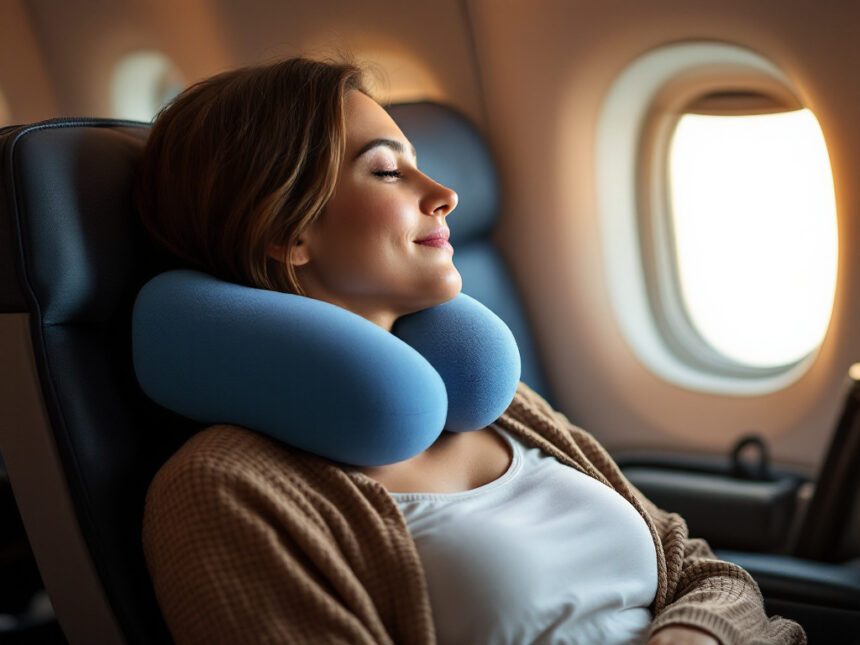
A good travel neck pillow memory foam can be the difference between stepping off a plane ready to go or spending the first day of your trip nursing a sore neck. The challenge is that not every memory foam pillow actually supports your head the way you need on a plane, train, or car ride.
This guide walks you through what to look for, how different designs feel in real life, and which features matter for frequent flyers, business travelers, and families.
Why choose a memory foam travel neck pillow
Memory foam travel pillows are popular for a reason. The dense foam molds to your neck and head, then slowly rebounds to its original shape. That contouring does more than feel soft, it helps keep your spine aligned when you sleep upright.
Compared with microbead or basic polyester-filled pillows, a travel neck pillow memory foam model usually offers:
- More even support under your jaw and along the side of your neck
- Less “head bobbing,” so you do not jerk awake every few minutes
- A more customized feel as the foam responds to your body heat
Tests of memory foam options like the Cabeau Evolution S3, Travelrest Nest, and Ostrichpillow Go found that all three offered strong comfort and support across 23 hour flights due to their supportive cores. This is what makes memory foam especially helpful on red-eyes, overnight buses, or long-haul economy seats where you cannot recline much.

The tradeoff is size. Memory foam does not flatten completely like an inflatable. You get more support but a bulkier item to carry.
If you mostly take short flights or travel ultralight, an inflatable may still make more sense. You can learn how they compare in detail in our guide to inflatable neck pillows for travel. For now, the rest of this guide focuses on memory foam options and how to choose one that fits your body and your trips.
Understand the main pillow types
Not all travel neck pillows are shaped like a classic U. When you shop for a travel neck pillow memory foam, you will see a few common designs, each with a different feel.

Classic U-shaped pillows
This is the standard style you see in airports. It wraps around the back and sides of your neck.
Pros:
It is easy to understand and put on, which makes it popular for kids or anyone who does not want to fuss with adjustments. Many U shaped pillows also work well in cars, trains, and buses.
Cons:
Standard U shapes often leave the front of your neck unsupported. Your head can still tip forward, especially if you tend to nap with your chin down. Some models also push your head away from the seat, which can strain your neck.
The better U shaped memory foam pillows fix these issues with:
- A flattened or recessed back that sits flush to the headrest
- Tall, firm side walls that actually cradle your jaw
- Adjustable front closures so you can tighten or loosen the fit
The Cabeau Evolution S3 is a good example. It uses premium memory foam and a flat back to keep your head aligned rather than tipping forward, and it includes a Velcro strap so you can attach it to the seat to keep it from sliding down.
Contoured and ergonomic designs
Some memory foam pillows are cut with deeper curves or added height in specific spots. These are often marketed as ergonomic travel pillows or orthopedic neck pillows.

Examples include:
- Tall side walls to support your jaw and cheek
- Dips for your ears or headphones
- Raised front sections that prevent chin drop
The NapFun Memory Foam Travel Pillow falls into this category. It has tall side walls and a contoured design for supportive comfort, though testers noted it was quite bulky in a bag.
If you often wake up with neck pain after flights, you may want to explore more specialized ergonomic travel pillows or travel neck support pillows that use these kinds of shapes.
360 degree support and wraparound pillows
360 degree support pillows wrap fully around your neck and sometimes under your chin for complete support. Some have overlapping ends so you can tighten or loosen them, and others include internal braces.
Memory foam versions, such as some Dr. Ortho orthopedic pillows, use high density foam to maintain your neck’s natural curve while you sit upright. These designs help reduce muscle strain on long flights by limiting how far your head can tilt to any side.
A wraparound style can feel more secure if you are a heavy sleeper who tends to slump in all directions. They also work well for kids, who may fall asleep at odd angles in airplane or car seats.
Hybrid and structured support pillows
Not every high performing pillow is pure memory foam. The Trtl Travel Pillow, for example, uses a plastic internal support wrapped in fleece instead of foam and scored 46 out of 50 in long haul testing, beating several memory foam designs for both support and portability.
Hybrid pillows like the Cabeau Evolution X combine memory foam fill with curved braces at the sides. This creates very strong neck support, especially for longer necks, although some testers found the rigid braces a little firm on sensitive cheeks.
If you have struggled with traditional U shapes in the past, a hybrid or structured design may finally give you the secure feel you are looking for.
Compare memory foam vs inflatable for your trips
Before you commit to memory foam, it helps to understand how it compares to inflatable pillows in real travel conditions.
| Feature | Memory foam travel pillow | Inflatable travel pillow |
|---|---|---|
| Comfort & support | Superior contouring, cradles neck and chin, best for long-haul flights | Support varies widely, some can feel bouncy or uneven |
| Packability | Bulkier, compresses but never flat | Excellent, deflates to almost nothing, ideal for ultralight packing |
| Cost | Usually more expensive upfront | Often cheaper, budget friendly |
| Durability | Holds shape for years, good long term value | Prone to leaks or punctures over time |
| Best for | Red eyes, 10+ hour flights, sensitive sleepers, neck pain | Short trips, backup pillows, emergency use, minimalists |
Travel experts often recommend choosing memory foam for long journeys and inflatable pillows for shorter trips so you get maximum comfort on overnights and maximum portability on quick hops.
You can also mix and match, especially if you already use other comfortable travel sleeping gear like footrests or lumbar cushions. A supportive memory foam pillow paired with a travel lumbar support pillow can make an economy seat feel much closer to premium.
Key features that matter for comfort
Once you decide to focus on memory foam, the details start to matter. Two pillows may look similar at a glance, but feel completely different at 3 a.m. over the Atlantic.
Foam density and responsiveness
Higher density memory foam usually provides firmer, more reliable support. It compresses under your weight but springs back slowly. This is what prevents that “bottoming out” feeling where your head sinks until your neck bends awkwardly.
Examples from testing:
- The Travelrest Nest uses thick, high quality memory foam and scored a 7 out of 10 for comfort and 6 out of 10 for stability, with testers noting strong support even on 23 hour flights.
- The Ostrichpillow Go uses a BASF viscoelastic core and scored 7 out of 10 in both comfort and stability while remaining surprisingly lightweight.
If you like a plush feel, you can still choose dense foam and then look for a softer outer cover. Low density foam might feel cushy in your hand, but it often collapses in use and does not keep your spine aligned.
Shape, height, and side support
Your neck length and shoulder width affect how a pillow will feel. If you are tall or have a long neck, you generally need a pillow with higher side walls or more vertical structure.
In testing, for example:
- The Cabeau Evolution S3 and Evolution X both worked better for taller travelers or those with longer necks because of their tall sides and adjustable fasteners. Shorter users sometimes found them bulky.
- The Cirorld memory foam pillow, which is smaller and less padded, suited people with shorter necks but did not provide enough support for taller adults.
If you are a side leaner, look at options labeled as a travel pillow for side sleepers or pillows that mention 360 degree support. These designs are more likely to keep your head from rolling forward as you relax.
Back profile: flat vs rounded
The back of the pillow is easy to overlook, but it affects how your head sits against the seat.
A flat or slightly scooped back is usually more comfortable on planes. The Cabeau Evolution S3 and Travelrest Nest both use flattened backs to prevent your head from being pushed forward by the bulk of the pillow. This keeps your neck closer to its natural alignment throughout the flight.
Rounded, puffy backs can still work well in cars with deeper headrests, but they often feel less comfortable in tight airplane seats.
Adjustability and closure style
Look for front closures or adjustable features that let you customize the fit. These might include:
- Drawstring or toggle front closures
- Velcro tabs you can tighten across your neck
- Overlapping coils or wraparound ends, like on some Bcozzy styles
These details help you:
- Tighten the pillow enough to support your chin
- Loosen it if you start to feel constricted
- Shift the bulk of the support to the side you prefer to lean toward
If you want more flexibility, consider adjustable travel pillows that change shape or firmness for different trips.
Cover material and temperature control
If you are prone to getting hot, pay attention to fabric and airflow.
Some premium pillows like the Travelrest Nest use velvety microfiber covers designed to resist heat build up while still feeling cozy. Others use modal or breathable knit fabrics, such as the Ostrichpillow Go, which testers found both soft and supportive.
A few models incorporate venting or cooling features. If you run warm, you might prefer a travel pillow with cooling gel so your neck does not overheat while you sleep.
Finally, check that the pillow has a removable, machine washable cover. A travel pillow with washable cover makes it much easier to keep things fresh after a long flight or dusty bus ride.
Size, portability, and packing style
Even the best pillow is useless if you leave it at home because it is too big to carry.
Memory foam will never be as tiny as inflatable pillows, but some designs manage the balance better than others.
Compression and storage
Many memory foam travel pillows compress into included carry bags. The Travelrest Nest, for instance, compresses to about a quarter of its size and weighs under a pound, so you can clip it to your backpack or slip it into a larger tote without too much trouble.
Others, like the Ostrichpillow Go or NapFun, offer excellent support but are bulkier in practice. They may not be ideal if you travel with a small backpack and no checked luggage.
If packability is a concern, look for:
- A compression sack with straps or a drawcord
- A snap loop or carabiner so you can attach the pillow to your bag
- A more minimal shape that avoids extra padding you do not need
You might also complement a slightly bulkier pillow with more compact comfort items, such as compact travel blankets or compact travel sleep masks.
Your typical luggage and routes
Think about how you usually travel:
- Business travelers who carry a single carry-on or laptop bag may want a slimmer pillow that packs flat or hangs neatly from the handle.
- Families juggling strollers, car seats, and kids’ backpacks may prefer pillows with integrated cases and clear labels so nothing gets mixed up.
- Long haul frequent flyers might accept more bulk in exchange for the higher comfort of a dense memory foam design.
If you consistently fly overnight in economy, a substantial memory foam pillow plus a lightweight travel blanket is usually worth the space.
Matching a pillow to your travel style
The right travel neck pillow memory foam design depends heavily on how and where you actually sleep while traveling.
For frequent flyers and long hauls
If you regularly fly red-eyes or 10 to 15 hour routes, prioritize:
- High density foam and tall side support
- A flat back for airplane seats
- A secure closure to prevent your head nodding
Pillows like the Travelrest Nest and Ostrichpillow Go performed especially well for comfort and stability across extended flights, scoring 7 out of 10 or higher in testing. The Cabeau Evolution S3 and Evolution X lines are also built with frequent flyers in mind, including features like seat straps, adjustable height, and even cooling vents in newer models.
Pair your pillow with:
- Noise canceling sleep earbuds or comfortable travel earplugs
- A comfortable travel eye mask
- Comfortable travel socks to keep your feet warm
Together, these create a mini sleep pod even in a middle seat.
For business travelers
If you need to step off the plane and go straight into meetings, you probably care about two things equally: arriving rested and not lugging a huge cushion through the airport.
For you, consider:
- A supportive but relatively low profile pillow that fits inside a carry-on
- Dark, professional looking fabrics that do not show stains easily
- A clean design that is quick to put on and take off
Hybrid options like the Trtl style work well because they pack nearly flat but still keep your head supported. If you prefer true memory foam, look for a more compact option or something that compresses into a slim travel case.
You might also like integrated solutions such as a travel pillow and blanket set or a travel blanket with built-in pillow. These can save space and streamline your packing routine.
For families and shared rooms
When you travel with kids or share hotel rooms, sleep is about more than just neck support. Light, noise, and different bedtimes all play a role.
Memory foam neck pillows can help children sleep more comfortably in car seats or airplane seats because the foam holds their smaller heads more securely. If you want 360 degree support that keeps their head upright, look at styles similar to Dr. Ortho’s orthopedic designs, which surround the neck and chin.
For family trips, combine pillows with:
- Travel sleep accessories like eye masks and earplugs
- Travel sleep comfort tips to handle different bedtimes
- Travel comfort kit essentials that you keep packed and ready
If your child tends to kick off blankets or complain about drafts, a travel pillow with hood can add a bit of warmth and darkness without needing an extra layer.
Special considerations for neck pain and posture
If you already have neck or shoulder issues, the right travel neck pillow memory foam choice becomes even more important.
Look for orthopedic and posture focused designs
Orthopedic pillows, such as the 360 degree Dr. Ortho neck pillow mentioned in research, are built to maintain the natural curve of your neck while you sleep upright. The high density foam supports your head firmly so your muscles do not have to work as hard.
The Cabeau Evolution S3 is another posture focused option. Its flattened back and raised side supports keep your neck in a more neutral alignment, which in turn reduces muscle strain and stiffness by the time you land.
If you tend to wake with pain on one particular side, consider:
- A pillow with adjustable height or circumference to fine tune support
- A structured design like the Cabeau Evolution X that offers dynamic height shifts
- Pairing your neck pillow with travel head support pillow options or memory foam travel cushions for your lower back
It can also help to review best travel pillows for neck pain where options are filtered specifically for this concern.
Combine neck support with overall alignment
Your neck is part of a chain that includes your spine, hips, and legs. To keep that chain comfortable on long trips, think beyond just one pillow.
You might add:
- Travel footrests for airplanes to keep your legs supported
- Travel lumbar support pillows to maintain lower back alignment
- A light travel neck support pillow for shorter segments like trains and buses
Together, these help distribute pressure so you are less likely to wake up stiff in multiple places.
Hygiene, maintenance, and longevity
A quality memory foam travel pillow can last for years if you care for it properly.
Cleaning and covers
The key rule with memory foam is simple: do not wash the foam itself. Soak it and you risk breaking down the material.
Instead:
- Make sure your pillow comes with a removable, machine washable cover. This is standard on options like the Travelrest Nest and many Dr. Ortho pillows.
- Wash the cover regularly after long trips or anytime it feels dirty.
- Spot clean the foam if needed using a damp cloth and mild soap, then allow it to dry completely before storing.
Removable covers are especially valuable if you use your pillow on buses or trains as well as planes, or if you share it with kids.
Storage and lifespan
To keep your memory foam performing well:
- Store it in a dry, cool place, ideally in its carry bag.
- Avoid leaving it compressed for months at a time. Give it a chance to expand fully now and then.
- Replace your pillow if the foam starts to stay compressed or feels lumpy.
Memory foam travel pillows often cost more than inflatable or microbead options, but they tend to offer better long term value. The foam retains its supportive properties over many trips, which means a single good pillow can see you through years of travel.
Building your complete travel sleep kit
A travel neck pillow memory foam design is a strong start, but you will sleep better if you treat it as one part of a larger comfort system.
Consider rounding out your setup with:
- Noise canceling sleep earbuds or comfortable travel earplugs to block cabin noise
- Comfortable travel eye masks or compact travel sleep masks to deal with cabin lights and sunrise
- Lightweight travel blankets or a travel pillow and blanket set for warmth without bulk
- Travel lumbar support pillows and travel footrests for airplanes if you are on very long routes
If you want everything organized, pre packed compact travel sleep kits or curated travel comfort kit essentials can help you avoid last minute scrambling before each trip.
For occasional trips where you do not want to invest heavily, you could pair a simpler memory foam neck pillow with one of the comfortable inflatable travel pillows for a travel companion or backup.
Simple steps to choose your pillow
With so many options, it helps to break the decision into a few straightforward questions.
1. How long are your typical trips?
- Mostly under 3 hours: a compact or hybrid pillow, or even inflatable, might be fine.
- Regular red-eyes or long hauls: invest in denser memory foam with tall side walls.
2. How do you usually sleep in transit?
- Chin falls forward: look for 360 degree or wraparound designs, or pillows with raised front support.
- Lean to the side: focus on tall side walls and possibly a travel pillow for side sleepers.
3. What is your body type and neck length?
- Longer neck or broad shoulders: pick higher sided pillows like the Cabeau Evolution S3 or Evolution X.
- Shorter neck or petite frame: smaller designs like the Cirorld may fit better, as long as they still feel supportive.
4. How much space do you have in your bag?
- Minimal space: prioritize compressible designs like Travelrest Nest or structured but flat options.
- More flexibility: you can choose fully cushioned 360 degree models for maximum comfort.
5. Do you run hot or cold?
- Run hot: breathable fabrics, possible venting, or a travel pillow with cooling gel.
- Run cold: cozy velour covers and perhaps a travel pillow with hood plus a small blanket.
Answering these questions will narrow your choices quickly so you are looking at a small set of pillows that truly match your needs.
Final thoughts
A well chosen travel neck pillow memory foam model turns a cramped seat into a space where you can actually rest. You get firmer, more tailored support than inflatables can usually provide, which matters when you are sleeping upright for hours at a time.
Start by deciding how much support and packability you need, then focus on foam density, shape, height, and cover materials. Combine your pillow with a few thoughtful travel sleep accessories, and even long haul economy starts to feel manageable.
On your next trip, try one upgrade, such as swapping your old microbead pillow for a supportive memory foam option or adding a simple travel lumbar support pillow. You may be surprised by how rested you feel when you land.
FAQs
What is the best travel neck pillow memory foam shape for preventing chin drop?
Look for 360° wraparound styles or U-shaped pillows with a strong adjustable front closure. These reduce forward head tilt and help keep your jaw supported.
Is memory foam better than inflatable for long flights?
For most people, yes—memory foam typically offers more stable contouring and support, while inflatables win on packability. For red-eyes and long-haul, support usually matters more than saving a little space.
How do I choose the right pillow height for my neck?
Taller travelers or longer necks usually need higher side walls and more structure; petite travelers often do better with a lower-profile pillow that still supports the jaw.
Do I need a flat back pillow for airplane seats?
If you often feel your head being pushed forward, a flatter back profile can be noticeably more comfortable in tight headrests.
How do I clean a memory foam travel pillow?
Wash the removable cover regularly and spot clean the foam (don’t aggressively rub or wring it). Sleep Foundation also recommends a gentle approach to freshening/spot cleaning memory foam.
What if I run hot while sleeping on planes?
Choose breathable covers and consider pillows that emphasize cooling fabrics/airflow. Also bring a light layer so you can regulate temperature easily.