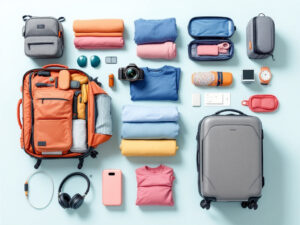
Packing does not have to be a frantic, last‑minute game of suitcase Tetris. Once you understand how to pack efficiently for travel, you can move through airports faster, find what you need in seconds, and live out of a single bag without feeling deprived.
The ideas below focus on organization, smart limits, and lightweight systems that work for frequent flyers, families, and one‑bag travelers alike.
Start with a clear packing plan
Efficient packing starts before anything touches your suitcase. A simple plan keeps you from overpacking and forgetting essentials.
Decide on checked bag versus carry‑on
Your very first decision shapes everything that follows.
- If you have tight layovers or are heading straight to a cruise or tour, avoiding checked bags is usually worth it. You will have everything with you, even if flights are delayed.
- If you are traveling with babies, bulky sports gear, or special equipment, checking one shared bag and keeping a lean carry‑on for essentials can be a good compromise.
If you tend to overpack, choosing a modest carry‑on sized bag in the 35 to 40 liter range naturally limits how much you bring. Travel expert Marek Bron notes that even long or multi‑year trips can fit into a carry‑on when you prioritize light, versatile gear, which saves money and hassle at the airport.
For help setting up a practical system, use an overall packing system for organized trips as your framework.
Check weather and activities
Look up the forecast by day, including:
- Temperature range
- Rain or snow chances
- Dress codes or cultural norms
- Specific activities like hiking, swimming, work meetings, or weddings
You are not packing “for Europe” or “for three weeks.” You are packing for a handful of real days and real scenarios. This mindset shift alone cuts your packing list almost in half.
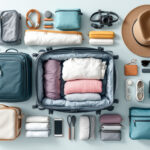
Build a smart minimalist wardrobe
You do not need a different outfit for every day. You need a small group of pieces that mix and match effortlessly.
Follow a simple outfit formula
Two popular formulas work well when you are learning how to pack efficiently for travel:
- The 333 method suggests three tops, three bottoms, and three pairs of shoes that all work together. TikTok travelers love this method because it shrinks your wardrobe without feeling repetitive, as highlighted in a 2023 guide on Apartment Therapy.
- The 5, 4, 3, 2, 1 method increases variety while staying organized: five tops, four bottoms, three pairs of shoes, two bags, and one hat or pair of sunglasses.
Pick one formula, then fill in the blanks with pieces you already own. If you want deeper guidance on limiting items while keeping options, look at minimalist packing organization.
Choose a tight color palette
Neutrals are your best friends when you want a small bag that still feels flexible.
Try this structure:
- One or two base colors like black, navy, or tan
- One light neutral like white, cream, or gray
- One or two accent colors in scarves, tops, or accessories
When almost everything works together, you can repeat bottoms and layers while swapping tops and accessories. You look different in photos without needing more clothes.
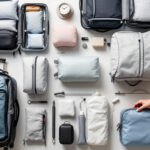
Prioritize multi‑use clothing
Every item should work in more than one situation.
Look for pieces that:
- Dress up or down with a change of shoes or jewelry
- Layer comfortably over or under other items
- Handle a range of temperatures
Travel blogger Amanda Leonick recommends clothes that genuinely shift from day to night, like pants that work with sneakers and heels, or a coat that is both functional and stylish. She also advises keeping shoes to two or three carefully chosen pairs to save space.
Performance fabrics help too. Consider:
- Merino wool, which resists odors and regulates temperature
- Quick‑dry activewear for hiking or workouts
- Wrinkle‑resistant shirts for work or dressier dinners
- Compressible jackets that pack small but stay warm
If you are a frequent one‑bag traveler, these choices are core to successful packing light and organized.
Organize your packing list by category
A scattered list leads to scattered packing. A categorical list keeps your brain and your suitcase calm.
Break your list into simple sections
Instead of one long note, create clear categories:
- Clothing and outerwear
- Shoes and accessories
- Toiletries and medications
- Electronics and chargers
- Documents and money
- Plane or car comfort items
- Kids’ essentials, if you are traveling with family
Use a digital version in Notes, Google Drive, or a task app so you can reuse and tweak it for every trip. The Well Dressed Life recommends a detailed list for both checked and carry‑on items, updated in a digital format, to reduce stress and avoid forgotten essentials.
If you want a plug‑and‑play template, start with a packing checklist for organized travel and customize from there, or follow a category framework like packing category organization.
Plan outfits instead of random pieces
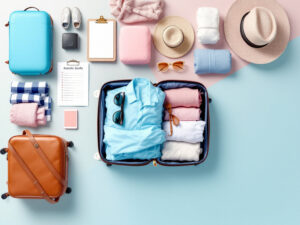
For shorter trips or ones with dress codes, plan by complete outfit:
- Write “Day 1: travel day,” “Day 2: client meetings,” “Day 3: hiking,” and so on
- Under each, assign a top, bottom, underwear, socks, and shoes
- Add any extra layers or accessories that make the outfit work
This method prevents you from tossing in four extra shirts “just in case.” It also makes your mornings at the destination easier, because you already decided what to wear.
On longer, casual trips, plan by category instead of exact outfits. For example, three casual outfits, two nicer outfits, one lounge set, and one workout set. From there, you can use organizing packing by outfit or by category depending on your style.
Use packing cubes as your mobile dresser
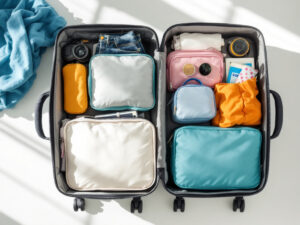
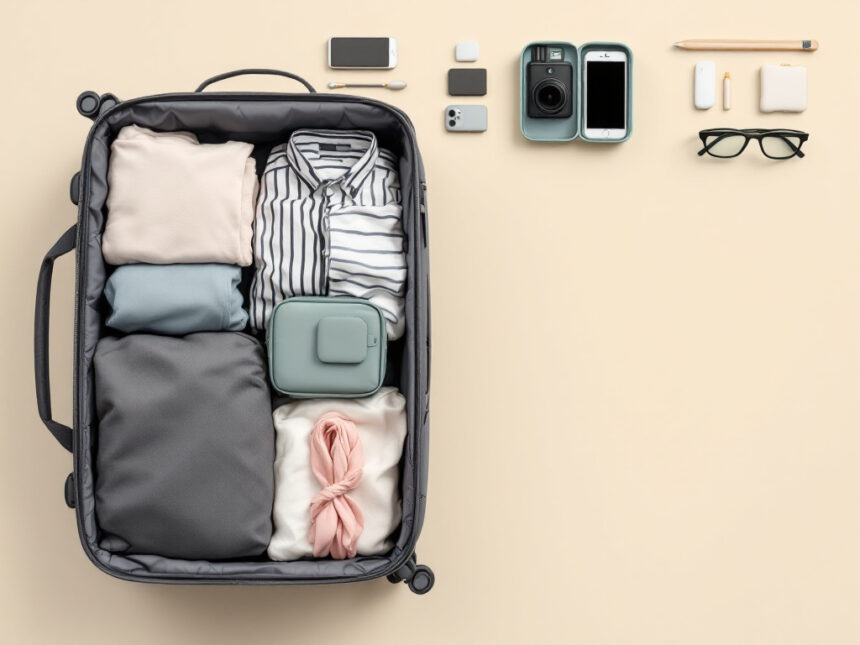
Packing cubes are the backbone of efficient travel packing. They act like drawers inside your luggage, so you are not rummaging through piles of clothes every time you change.
Why packing cubes are worth it
Organizing and travel experts consistently recommend packing cubes for several reasons:
- They group similar items together, so you always know where things are
- They visually limit how much you bring, so you curb overpacking
- They compress air and save space
- They make unpacking at hotels quick and tidy
Eagle Creek’s Pack‑It system is a common example. Its cubes and pouches help travelers fit more into their luggage without a chaotic jumble and simplify both packing and unpacking.
If you want ideas for how to divide your items, see packing cubes organization ideas and packing cubes packing strategies.
Cube setups for different travelers
You can organize cubes by category or by outfit. Both work. Choose the one that matches your brain.
For most people, category cubes feel simple:
- One cube for tops
- One cube for bottoms
- One cube for underwear and socks
- One cube for sleepwear and loungewear
Families often prefer outfit cubes. For example, each cube holds a full day’s outfit for each child, labeled with the day or activity. This works especially well with organizing kids’ travel bags.
The Well Dressed Life notes that separating tops, bottoms, underwear, and swimwear into individual cubes helps maximize space and makes unpacking easier. You can also dedicate a cube as your in‑trip laundry basket. When you get home, just open that cube straight into the washing machine.
If you are ready to upgrade your system, explore travel packing organization tools and the best packing cubes for organization.
Master a space‑saving packing technique
How you place items in your bag matters almost as much as what you bring.
Rolling, folding, and compression
Each method has strengths:
- Rolling works well for soft casual pieces like t‑shirts and leggings. It keeps them compact and reduces creasing.
- Flat folding works better for structured items like blazers, dress shirts, and trousers.
- Compression, whether with compression cubes or sacks, shrinks puffier items like jackets and sweaters.
For one‑bag travel in particular, combining rolling inside cubes with one compression sack for outerwear is a powerful efficient packing technique.
Pack heavier items close to your back
For backpacks, the heaviest items should sit high and close to the part of the bag that rests on your back. This keeps the load balanced and comfortable.
In a suitcase that opens flat, place heavier items like shoes and toiletry bags near the wheels. This prevents the suitcase from tipping over when upright.
For more detailed layout guidance, use dedicated tips on how to pack a backpack efficiently and organized carry-on packing tips.
Pack shoes like a pro
Shoes take up more space than almost anything else. A few small tweaks can free up surprising room.
Limit shoes and make them earn their spot
Aim for two or three pairs total:
- Everyday walking shoes or sneakers
- One dressier pair if you need it
- Optional sandals or flip‑flops if your trip is warm or beachy
Choose pairs that:
- Work with multiple outfits
- Are broken in and comfortable
- Fit the weather and terrain
Amanda Leonick encourages travelers to cap shoes at three and choose options that work in multiple contexts to avoid filling half the bag with footwear.
If you struggle with this category, take a look at packing shoes organization tips for specific examples.
Use the wasted space inside shoes
Expert packers recommend:
- Packing shoes along the suitcase edges, toe to heel, with soles facing outward
- Putting heels and delicate shoes in protective bags and placing them toward the top to avoid damage
- Stuffing socks, belts, or fragile small items inside shoes to protect them and save space
This simple habit turns awkward gaps into mini storage containers and fits well into broader packing organization tips.
Create a stress‑free toiletry setup
Toiletries are easy to overpack and easy to forget. A pre‑built kit solves both problems.
Keep a dedicated travel toiletry bag
Travelers like Abby from Seattle, Washington maintain a toiletry bag that stays packed with travel sized essentials and lives in a suitcase pocket. She has used this method for over 15 years.
You can do the same:
- Buy duplicates of your daily essentials in miniature or decant into travel bottles
- Keep this bag in the zippered compartment of your suitcase to prevent spills
- Refill immediately after each trip so it is always ready
For security and simplicity, keep medications, contact lenses, and essential toiletries in your personal item, not just in checked luggage, in case a bag is delayed.
For more detailed product and setup ideas, visit organizing toiletries for travel.
Pack a compact first‑aid and wellness kit
You do not need a pharmacy, but a tiny kit can save you several inconvenient pharmacy runs.
Include items like:
- Bandages and blister pads
- Pain relievers that you know work well for you
- Antihistamines if you have allergies
- Hand sanitizer
- Sunscreen and lip balm
These basics are widely recommended by travel health resources and significantly reduce minor travel stress.
Organize your bag by zones
Think of your luggage like a tiny studio apartment. Everything needs a “home” so you are not digging through piles every day.
Give each category a container
Use a mix of:
- Packing cubes for clothes
- Smaller pouches for chargers and electronics
- A clear bag for liquids and toiletries
- A flat folder or sleeve for documents
This is the logic behind many packing containers for organization and packing accessories for organization. You are not buying gear just to have more gear. You are creating consistent spots so your brain always knows where to look.
Set up your personal item for easy access
Your personal item acts as your in‑flight “desk drawer.” It should be light, comfortable to carry, and simple inside.
Keep these within arm’s reach:
- Passport, ID, and boarding passes
- Wallet and any necessary cash or cards
- Phone, headphones, and a small charger
- One change of clothes and underwear, in case your checked bag is delayed
- Medications and daily contacts
- A few comfort items like snacks, lip balm, and an eye mask
The Well Dressed Life suggests always having medications, chargers, a spare outfit, and key skincare or makeup in your carry‑on so you are never stranded if a bag goes missing. For more layout ideas, see organized carry-on packing tips.
Special strategies for families and kids
Traveling with children does not have to mean hauling three extra suitcases. The goal is simple systems that kids can use too.
Use outfit kits for each day
Instead of one big cube of kid clothes, make daily kits:
- One zip bag or small cube per day with underwear, socks, top, and bottom
- Label by day or activity, such as “Travel Day,” “Park,” or “Dinner”
This makes mornings at your destination easier and reduces mess in the room. You can adapt this method using organizing kids’ travel bags and packing organization for couples if you share a suitcase.
Create a compact kid entertainment kit
Pick one small pouch or cube that holds:
- A slim coloring book and crayons
- A card game or small puzzle
- Headphones and a device if you use screens
- A few snacks that do not melt
This stays in your personal item so you can reach it quickly during delays or long lines, which is a core part of family‑focused travel packing organization hacks.
Time your packing to avoid last‑minute chaos
When you pack affects how well you pack.
Start a few days early
The Well Dressed Life recommends starting the packing process about a week before you leave. Even if you do not fill your suitcase that early, you can:
- Lay out clothes on a rolling rack or bed
- See duplicates at a glance and remove extras
- Notice what is missing while you still have time to wash or buy it
Packing at least a day or two in advance also helps you avoid frantic “just in case” items that creep in when you are rushing.
Keeping a reusable digital list and snapping a quick photo of your packed suitcase before closing it can also help you remember what you brought and assist with insurance claims if your bag is lost.
If you often throw everything in at the last second, following a shared packing checklist for organized travel can slow you down just enough to pack intentionally.
Minimalist rules that keep one bag manageable
One‑bag travel is not about deprivation. It is about choosing what makes the whole trip easier.
Many minimalist travelers follow rules like these, which Marek Bron outlines in his minimalist travel resources:
- Pack only must‑haves, not “nice‑to‑haves”
- Bring at most one week of clothing and plan to do laundry
- Choose items that do more than one job
- Use a personalized packing list
- Pack at least a day before departure to avoid panic decisions
Solid soap and shampoo bars are especially useful. They last much longer than liquids, cannot spill, and bypass liquid limits in carry‑on bags. Pair them with compression bags for bulky seasonal layers and waterproof bags for valuables, and you have a flexible setup that works for almost any trip.
If you are aiming for true one‑bag travel, explore packing light and organized and minimalist packing organization as deeper dives.
Quick reference: Efficient packing checklist
Use this list as a final review before you zip your bag:
- You chose carry‑on, checked bag, or a hybrid strategy based on your route.
- You checked the destination forecast and specific activities.
- You selected a small, mix‑and‑match wardrobe with a limited color palette.
- You used a simple formula like 333 or 5, 4, 3, 2, 1 instead of guessing.
- You created a categorized list and, when helpful, planned outfits.
- You organized clothes into packing cubes or similar organizers.
- You limited shoes to two or three versatile pairs and packed them efficiently.
- You packed a dedicated toiletry kit with travel‑sized essentials and a tiny first‑aid kit.
- You organized your personal item so must‑haves are easy to reach.
- You started packing early enough to remove duplicates and “just in case” items.
Learning how to pack efficiently for travel is a skill you build one trip at a time. Try just one or two changes on your next journey, such as adding packing cubes or using an outfit‑based list. From there, you can refine your own version of pack smart and organized and enjoy lighter, calmer travel every time you head out the door.
FAQs
What size bag is best for one-bag travel?
Most one-bag travelers aim for a carry-on-friendly backpack around 35–40L, but the “right” size is the one you can comfortably carry and repack.
Do packing cubes really save space?
They mainly save sanity (fast access, no rummaging) and can reduce bulk—especially compression-style cubes—by squeezing air out and keeping clothes tightly packed.
Rolling vs folding: which is better?
Roll soft casual items (tees, leggings) to reduce wrinkles and fill gaps; fold structured pieces (blazers, dress shirts). Many travelers combine both inside cubes.
How do I pack toiletries for carry-on flights?
Stick to the 3-1-1 rule for most liquids (3.4 oz / 100 ml per item), and keep medically necessary liquids declared if larger.
How can families pack lighter without chaos?
Use outfit kits per day (one cube/bag per child per day) and keep a small “entertainment pouch” in the personal item for quick access during delays.
What should always go in my personal item?
Passport/ID, wallet, phone + headphones, charger, meds, and a spare outfit/underwear—so you’re covered if bags are delayed.