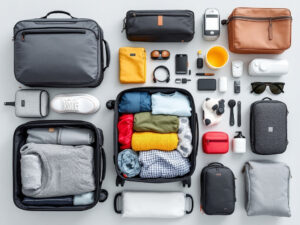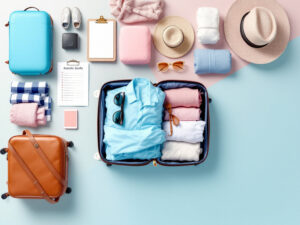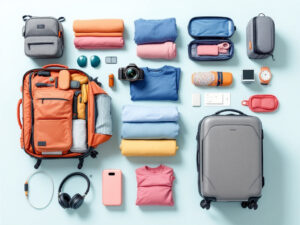
A suitcase full of packing cubes looks organized at first glance. The real magic happens when you use smart packing cubes organization ideas that match the way you actually travel. With a simple system, you move from chaos and crammed zippers to stress-free trips, faster security checks, and unpacking that takes minutes, not hours.
Below, you will find practical, tested ways to organize packing cubes for business travel, family trips, and minimalist one-bag adventures. Mix and match the ideas that fit your style, then build a repeatable packing system you can use for every trip.
Start with a simple packing cube system
Before you roll a single T-shirt, decide on a basic structure for how you will use your cubes. A clear plan keeps you from overpacking and makes it easier to find things later.
A good starting point is organizing by clothing type. Expert organizers such as Marie Kondo recommend assigning each packing cube to a category, for example, undergarments, tops, bottoms, shoes, toiletries, and accessories. This category-based approach keeps similar items together and speeds up both packing and unpacking.
If you have not already, it also helps to organize your packing list around these same categories. That way, your list and your suitcase mirror each other.
Choose cube sizes with a purpose
Different cube sizes are more than just aesthetic. They shape how you pack.
- Small cubes work best for underwear, socks, swimsuits, and small accessories.
- Medium cubes fit T-shirts, tops, sleepwear, and workout gear.
- Large cubes are ideal for jeans, sweaters, bulkier dresses, or family outfit bundles.
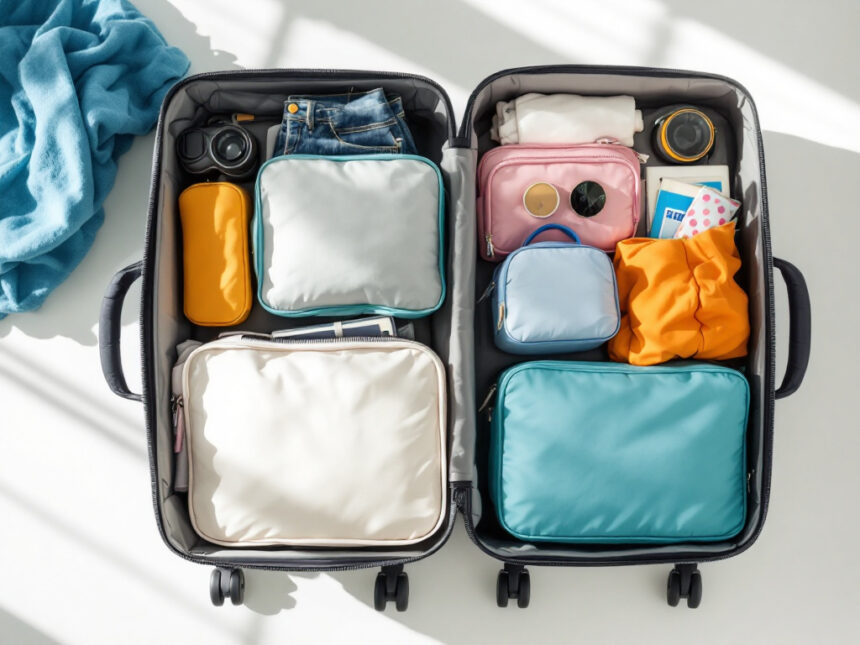
Travel expert Terilyn Adams recommends using a variety of packing cube sizes to optimize space. She suggests reserving smaller cubes for underwear and larger ones for bottoms. This lets you play a sort of packing Tetris inside your suitcase, filling gaps instead of wasting corners.
If you are new to cubes, start with a mixed set, then note what you actually use. On your second or third trip you will know whether you need more small cubes, fewer large ones, or a different shape.
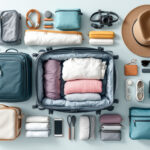
Sort clothes by category, not by day
It is tempting to build “Day 1,” “Day 2,” and “Day 3” cubes, especially for a busy itinerary. In practice, that system quickly becomes frustrating. You rarely wear everything in perfect order and you end up digging through half-used cubes.
Organizers like Adams recommend organizing your packing cubes by clothing type instead of by outfit or day. You might have one cube for tops, one for bottoms, one for pajamas and workout gear, and one for underwear. This keeps the number of cubes manageable and makes laundry and mid-trip outfit swaps easier.
If you want a deeper breakdown of how to group items inside your luggage, you can also browse packing category organization ideas.
A simple category layout for most trips
For a typical 5 to 7 day trip, you could try:
- Cube 1: Underwear, bras, socks
- Cube 2: Tops and T-shirts
- Cube 3: Bottoms and dresses
- Cube 4: Pajamas and workout clothes
- Cube 5: “Extras” such as scarves, hats, or swimwear
Adams often combines pajamas and workout gear into one cube, then lays bulkier or dressier pieces flat on top of the cubes once they are in the suitcase. This reduces wrinkles and uses vertical depth.
If you prefer to travel light, you can consolidate even more. A minimalist packing organization approach might limit you to three cubes total, then rely on sink laundry or hotel services to refresh clothes.
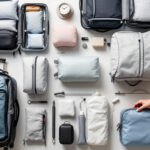
Lay everything out before you start packing
You will stay more organized if you plan outfits before you touch a packing cube. This step prevents last-minute stuffing and makes it obvious when you are overpacking.
Adams suggests laying out all planned clothes on the bed or floor. Group items into complete, versatile outfits and check that each piece can pair with multiple others. If a bulky item only goes with one look, reconsider it.
Once your outfits are laid out, transfer them into your category cubes. For example, move all tops into the tops cube, all bottoms into the bottoms cube, and so on. This keeps your original outfit planning, but your suitcase still stays category based.
If you want more structure at this stage, see the broader packing system for organized trips so you can repeat the same process every time you travel.
Use smart folding and rolling inside cubes
How you place items inside each cube affects space, wrinkles, and visibility. You want a method that is neat, consistent, and quick to maintain during the trip.
For soft items like T-shirts, leggings, and pajamas, rolling typically fits more into a cube and makes it easier to see everything at a glance. For stiffer items like button-down shirts or linen pants, a flat fold often reduces creases.
Do not feel pressured to overcompress. Research and traveler experience show that packing cubes do not need to be overfull to be helpful. Sometimes it is better to use one cube for delicate or awkward items, such as a pair of shoes or a hair straightener, so they stay protected and contained.
If you want to go deeper into maximizing space inside your luggage, explore more efficient packing techniques and how to pack efficiently for travel.
Give every cube a clear job
The easiest system to maintain is one where each cube has a specific role. That way, you always know where to put something and where to find it later.
Here is a simple example layout you can adjust for your own suitcase:
| Cube | Primary contents | Travel use |
|---|---|---|
| Cube A (small) | Underwear, socks | Lives in the hotel bathroom or dresser |
| Cube B (small) | Tech cords, chargers, small electronics | Stays in carry-on for security access |
| Cube C (medium) | Tops and T-shirts | Main clothing cube, opened daily |
| Cube D (medium) | Pajamas and workout gear | Only opened morning and night |
| Cube E (large) | Jeans, pants, dresses | Placed at suitcase base or middle |
| Cube F (slim) | Swimsuit, cover-up, flip-flops | Beach or pool “grab and go” cube |
This type of structure aligns with many organized carry-on packing tips. You will adjust cube letters and exact contents, but the core idea remains: one job per cube.
Stack cubes in your suitcase strategically
Even a well packed cube system falls apart if you toss everything randomly into the suitcase. A little thought about cube placement will keep your bag balanced and easy to navigate.
Travel writer Lydia Mansel suggests placing your largest cube first, usually opposite the shoe compartment in a suitcase. Then, place smaller cubes around it. Some can stand on their sides to fill narrow spaces. This approach maximizes space and keeps key items accessible.
If your suitcase has one side for clothes and one side for shoes or accessories, put the heavier, denser cubes near the wheels. Lighter cubes, such as those for tops or sleepwear, can sit closer to the handle.
You can find more suitcase layout ideas in guides like organized packing for vacation and packing bags organization ideas.
Use extra cubes for laundry and “in transit” items
Bringing a few extra empty cubes might feel indulgent at first. In practice, they become essential once the trip starts.
Research highlights several smart uses for these spare cubes:
- Separate worn clothes or dirty laundry from clean items.
- Create a dedicated cube for pajamas so your night routine is fast.
- Hold souvenirs or new purchases so they do not mix with your main wardrobe.
- Organize day trip items, such as a change of clothes and snacks.
Using extra cubes like this makes nightly tidying quick. It also means you never need to dig through your entire suitcase to find something simple like pajamas.
If you are planning a longer trip with multiple stops, a full packing checklist for organized travel can help you decide how many extra cubes to bring.
Keep toiletries and accessories contained
Packing cubes are perfect for clothes, but you also need a plan for toiletries, makeup, and small accessories. Otherwise, these bits and pieces easily scatter and slow you down at security.
For liquids and toiletries, use a clear, zippered bag or cube sized to match airport rules. Then, pack that bag at the very top of your carry-on so it is easy to remove. For detailed setups, check out ideas for organizing toiletries for travel.
For non-liquids, such as hair tools, belts, scarves, and jewelry, use a slim cube or flat pouch. Some travelers dedicate one small cube to accessories only. This cube then moves from suitcase to hotel dresser in one step.
You can see even more setups under travel packing organization tools and packing accessories for organization.
Adapt your cube system for families
Packing cubes are especially powerful when you travel with kids. Instead of rummaging through a shared suitcase, you can pull out exactly what each person needs.
You have a few main options for family trips:
- One color per person.
- One cube per child per category, such as tops, bottoms, and pajamas.
- One cube per day with full outfits for younger kids only.
Color coding is usually the easiest for families. For example, blue cubes for one child, green for another, and gray for the adults. Within each color set, you can still organize by category.
For toddlers or preschoolers, daily outfit cubes can make mornings smoother. Each cube holds a complete change of clothes, pajamas, and a spare item. This works especially well if you have a long travel day and want to avoid decisions later. For more ideas, see organizing kids’ travel bags.
You can also pack a special cube for snacks and toys. This cube lives in your carry-on or under the airplane seat so you are never hunting through overhead bins mid-flight.
Tailor your cubes for business trips
When you pack for work travel, you care about wrinkle control and quick access to professional outfits. The way you organize cubes should reflect that.
Use one large cube for dress shirts or blouses, folded flat rather than rolled. Place a lightweight tissue or packing paper between items to reduce creases, then set that cube close to the top of your suitcase. Keep trousers, skirts, or suit pieces together in another cube or packed flat on top of all cubes.
Dedicate a small cube to work essentials like a conference badge, lightweight notebook, pens, and spare chargers. This cube can move directly from suitcase to desk or meeting room bag.
You will find more business focused ideas under organized packing for business trips and comparisons such as packing cubes vs packing folders if you want sharper crease control.
Design a system for minimalist and one-bag travel
If you travel with one carry-on backpack or a small roller, your packing cubes need to do even more. The goal is to stay light and fast without feeling deprived.
Start with a strict packing list tied to your itinerary. Then, limit yourself to two or three cubes only. For instance:
- Cube 1: All clothing except the outfit you wear on the plane
- Cube 2: Underwear, socks, and swimwear
- Cube 3: Toiletries, tiny laundry kit, and accessories
Use compression style cubes sparingly. They can help, but they also make it easier to overpack and can create a dense block that does not flex inside your bag. Often, thoughtful planning and packing light and organized strategies do more than squeezing everything smaller.
If you carry a backpack, see how to pack a backpack efficiently. A vertical backpack layout often works best if you place the heaviest cube closest to your back, then stack lighter ones in front.
Make cubes work for special trips and festivals
Certain trips call for different packing cubes organization ideas. Festivals, road trips, or multi-city adventures add layers of complexity that cubes can simplify.
For festivals or events, dedicate a cube to each type of clothing you will repeat, such as daytime casual, performance or costume pieces, and warm layers for evenings. A separate cube for rain gear, ponchos, and quick-dry clothes can live near the top of your bag in case the weather turns suddenly. For more niche ideas, you can browse packing organization for festivals.
For couples, decide whether you want shared cubes or separate systems. Some pairs use one set of cubes per person within a single suitcase. Others mix shared items, such as sleepwear and workout gear, into joint cubes. You can explore more options in packing organization for couples.
Road trips are more flexible, so you can treat certain cubes as “overnight” or “car-only” containers. Keep pajamas, toiletries, and next-day outfits in one cube near the trunk opening. That way, if you arrive late at a hotel, you only need to grab that one cube instead of an entire suitcase.
Combine cubes with other organizers
Packing cubes do not have to do all the work. They play even better when you combine them with other small organizers inside your suitcase.
Consider adding:
- A flat shoe bag or dedicated shoe cube for each pair of shoes. This keeps dirt off your clothes and aligns with packing shoes organization tips.
- A slim document folder or pouch for passports, tickets, and reservations.
- A zippered tech pouch for chargers, adapters, and earbuds, which can live inside a larger cube.
For a bigger overview of all the options, check guides on packing containers for organization and travel packing organization tools. They show how cubes, folders, and pouches can share the space without duplicating jobs.
Maintain your system during the trip
Even the best packing cubes organization ideas will not help if everything falls apart by day two. A few tiny habits keep your system intact.
Each night, take two minutes to reset your suitcase. Move worn clothes into a laundry cube or bag, refill your “tomorrow” outfit cube if you use one, and return stray items to their proper cubes. This quick reset means you start each day calm and organized.
When you switch hotels or cities, treat repacking as a chance to tidy instead of a chore. Pull everything out, refold any messy pieces, and rebuild your cube structure. It will go faster than you expect since you already know where each item belongs.
If you want more ongoing strategies, check travel packing organization hacks and packing organization tips that focus on maintenance rather than only the initial pack.
Pick the right cubes for your style
Not all packing cubes are created equal. The best ones for you depend on how you travel, how you like to organize, and which items you bring most often.
When you look at the best packing cubes for organization, pay attention to:
- Shape and depth, which affect how they sit in your particular suitcase or backpack.
- Fabric weight, trade a bit of structure for lighter cubes if you are a strict carry-on traveler.
- Visibility, mesh tops make it easier to see what is inside without unzipping every cube.
If you pack formal wear often, you might also consider mixing in a packing folder for a few key pieces, while using cubes for everything else. A quick look at packing cubes vs packing folders can help you decide on a mix that suits you.
Turn your cube setup into a repeatable system
The biggest benefit of strong packing cubes organization ideas is not just one smooth trip. It is having a repeatable system that makes every future trip easier.
After your next journey, take five minutes to note what worked and what did not. Did one cube stay almost empty every time. Did another feel overstuffed. Adjust sizes and categories for your next itinerary.
If you want a complete roadmap, connect what you learned here with resources like pack smart and organized and packing cubes packing strategies. Over time, you will build a personalized system that lets you pack quickly, move confidently, and enjoy stress-free trips from the moment you zip your suitcase.
FAQs
Do packing cubes actually save space, or just organize?
Mostly they organize, which indirectly saves space by preventing “air gaps” and keeping stacks tidy. Compression cubes can reduce bulk, but they also make overpacking easier.
Should I pack by outfit/day or by category?
For most adults: category wins (tops with tops, bottoms with bottoms). Outfit-per-day works best for young kids or extremely fixed schedules.
How many packing cubes do I need for a 5–7 day trip?
A simple starting point: 4–6 cubes (undies, tops, bottoms, sleep/active, extras, plus laundry if needed).
Rolling vs folding inside packing cubes—what’s better?
Roll soft basics (tees, leggings, pajamas) for visibility; fold structured items (button-downs, linen, blazers) to reduce creasing.
Where should toiletries go for airport security?
Use a clear, resealable quart-size bag and keep it accessible. TSA’s guidance emphasizes the 3-1-1 liquids rule for carry-ons.
How do I keep my cube system from collapsing mid-trip?
Add a laundry cube, and do a 2-minute nightly reset: dirty clothes out, tomorrow essentials ready, stray items returned.
Are packing cubes worth it for one-bag travel?
Yes—if you limit cubes to 2–3 and keep them flexible. Over-compressing can create a rigid “brick” that’s awkward in backpacks.
How should I stack cubes in a suitcase?
Start with the largest/heaviest cube first, then fit smaller cubes around it. This is a commonly recommended approach for stability and access.