A suitcase full of perfectly planned outfits can make your entire trip feel smoother. When you start organizing packing by outfit instead of by random items, you reduce decisions, avoid overpacking, and get out the door faster each day of your vacation.
Below, you will learn how to plan, pack, and live out of an outfit-based system that actually works in real life, whether you are a frequent flyer, traveling with kids, or trying to master one-bag minimalist travel.
Why organizing packing by outfit works so well
Packing by outfit flips the usual approach. Instead of throwing in “a few shirts” and “some pants,” you decide exactly what you will wear for each day or activity, then pack only those pieces.
This approach simplifies your trip in a few key ways:
- You know what you will wear for every activity before you leave.
- You spot gaps and duplicates at home rather than at your hotel.
- You reduce decision fatigue because your outfits are already chosen.
- You use each item multiple ways, so your luggage is lighter.
If you already follow basic packing organization tips, shifting to outfit-based planning gives that system a clear purpose: every item earns its spot because it belongs to a complete look.
Start with your trip schedule, not your closet
Before you touch a single hanger, map out what you will actually do on your trip. Your activities should drive your outfits, not the other way around.
Write down:
- Travel days
- Work meetings or conferences
- City sightseeing or museum days
- Outdoor or athletic plans
- Dressy dinners, weddings, or events
- Pool, beach, or spa time
- “Wild card” time when plans are flexible
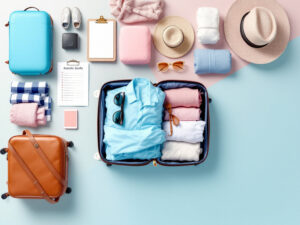
Once you see your days on paper, you can assign an outfit or two to each one. This is where a simple packing planner or notes app shines. As the research suggests, listing daily activities and corresponding outfits on a packing planner sheet makes it easy to pack in the order you will wear things and then tuck that sheet into your suitcase as a reference.
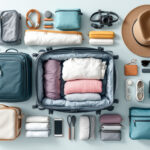
If you like more structure, use this basic table as a template:
| Day | Activity | Outfit Notes |
|---|---|---|
| Day 1 | Travel + casual dinner | Comfy jeans, tee, cardigan, sneakers |
| Day 2 | City walking tour | Breathable pants, tank, light jacket, crossbody bag |
| Day 3 | Pool morning, nice dinner | Swimsuit + coverup, later midi dress, sandals |
| Day 4 | Flight home | Same pants as Day 1, fresh top, layers for plane |
You can adapt this for work trips, family travel, or festivals where outfits are tied to specific events.
Build outfits using categories, then edit down
Once you know what you are doing each day, it is time to shop your closet.
Group clothes by category first
Lay items out by category, not outfit, to start. For example, put all pants in one area, all tops in another, and all layers or jackets together. Research shows that organizing clothing by category helps you see whether you have too many or too few pieces in a particular area and makes redundancy obvious.
This overview lets you:
- Compare similar items side by side
- Choose the most versatile versions
- Notice where you are missing something practical, like a rain jacket
Now, start pairing.
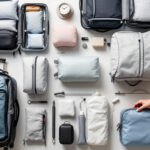
Create mix and match outfits
Your goal is not “one outfit per day that only works together.” Instead, you want a small set of mix and match pieces that can make multiple combinations. This is where organizing packing by outfit and minimalist packing organization overlap.
Focus on:
- Neutrals on the bottom that match several tops
- Tops that work with at least two bottoms
- Layers that can go over dresses, tees, or tanks
- Shoes that work across multiple outfits
Dresses, jumpsuits, and coordinated sets are your secret weapons. They act as all-in-one outfits that require very little thought and can often be dressed up or down with accessories.
Remove single-use items
As you lay out combinations, remove “one-off” items that only work for a single situation, unless you truly need them for a special event like a wedding or business presentation. The research is clear that editing out those outliers is one of the fastest ways to keep your suitcase cohesive and versatile.
If an item only makes sense with one pair of shoes or one specific top, ask yourself if you will really wear it. If the answer is “probably not,” let it stay home.
Use the 54321 method to prevent overpacking
If you tend to bring half your closet “just in case,” a simple formula can keep you in check. The 54321 packing method organizes your wardrobe into clear categories:
- 5 tops
- 4 bottoms
- 3 pairs of shoes
- 2 dresses or layers
- 1 of each accessory type
This structure is ideal for trips that run from one to four weeks, as long as you have access to laundry or are willing to repeat outfits. The key is that every piece must mix and match. You are building a tiny travel capsule wardrobe, not a series of unrelated looks.
For quick 2 or 3 night getaways, you can scale this down to a “3-2-1 Mini Edit,” like:
- 3 tops
- 2 bottoms
- 1 pair of versatile shoes
Then add a single dress, jumpsuit, or set plus a light layer. You still plan by outfit, but the formula keeps your bag surprisingly light. Pair this with tried and true efficient packing techniques and you will move through airports and train stations with ease.
Take photos of your outfits before you pack
Once you have your outfits figured out, capture them. Taking photos of planned outfits or creating simple collages in your phone gives you a visual reference while you travel.
This is especially helpful if you:
- Share a suitcase with a partner or child
- Rewear items in multiple outfits
- Need to remember which outfit goes with which event
You can snap mirror selfies or lay clothes on the bed and photograph each combination. Label the photos by day or activity in your phone. Later, when you are tired from a long day of sightseeing, you can open your album and pick “Tuesday, sightseeing” rather than starting from scratch in an unfamiliar hotel room.
For families, taking quick photos of each kid’s outfits is a sanity saver. Children can use the photos to get dressed themselves, which cuts down on questions and wardrobe battles in the morning. Pair this strategy with dedicated bags or cubes from your system for organizing kids’ travel bags.
Count outfits against days to avoid overpacking
Before anything goes into your suitcase, compare your planned outfits with the length of your trip.
- Count how many full outfits you have.
- Compare that to how many days and activities are on your schedule.
- Make sure you can create at least one extra outfit using the same pieces for unexpected needs.
The research suggests aiming for 1 or 2 extra outfits, but built from existing items, not fresh pieces. That might be as simple as “ jeans from Day 1 plus top from Day 3 plus scarf from Day 4.”
This check-in ensures that you have enough to feel comfortable without adding bulk. If you have three times as many outfits as days, it is a sign you can safely edit.
If you want a systematic version of this review, try a simple packing checklist for organized travel that includes both items and outfits. Seeing everything written down helps you spot where you can subtract.
File style folding for easy in-suitcase access
You have your outfits and your counts. Now you need a way to arrange them inside your luggage so you can actually find and use them.
Try file style packing for everyday clothes
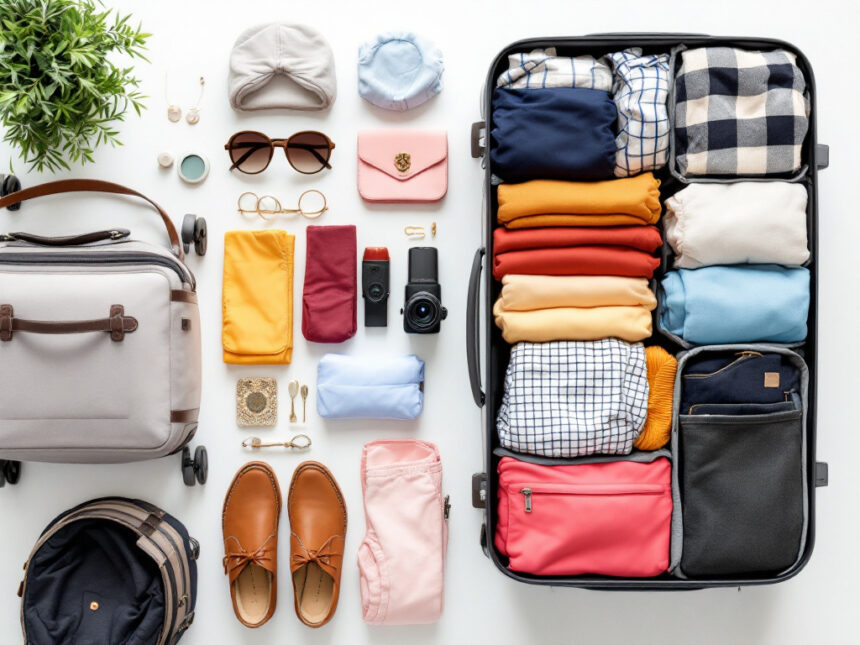
The “file style” packing method treats your suitcase like a drawer. Instead of stacking folded clothes in piles, you fold them and stand them upright so you can see everything at a glance. Tracy at Simply Squared Away recommends this technique for pajamas, shirts, workout wear, and casual clothes, filing them vertically on one side of the suitcase.
This method works especially well for outfit-based packing because you can:
- Group items you plan to wear together near each other
- See every top and bottom at once without digging
- Pull pieces out without collapsing your entire stack
If you already use file folding at home, this will feel very familiar.
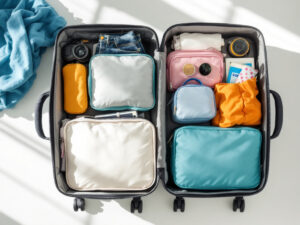
Use packing cubes for slippery items
Not everything files nicely. Swimsuits, coverups, undergarments, and very lightweight items can slide around in a vertical system. Research points out that this is where packing cubes or other packing containers for organization shine.
Use zipped cubes for these categories:
- Swimwear and beach accessories
- Underwear, bras, and socks
- Sleepwear and loungewear
You can still think in outfits inside each cube. For example, you might put swimsuit, coverup, and flip flops in one cube so your entire pool outfit is together.
If you want ideas, explore different packing cubes organization ideas and packing cubes packing strategies to find a layout that matches how you like to dress while traveling.
How to pack by outfit in your suitcase
With your folding method chosen, it is time to load the suitcase in a way that respects your outfit plan.
Pack in the order you will wear items
Start with the last day of your trip at the bottom of the suitcase and work your way up to your first day on top. This can look like:
- Bottom layer: last day and any backup outfits
- Middle layer: mid-trip outfits
- Top layer: travel day and first full day outfits
When you arrive, you simply pull from the top for day one, then move downward as the trip goes on. If you prefer not to layer days, you can instead group by type, such as tops at the front and bottoms at the back, and use your photo log and planner to assemble each day.
Keeping your planner sheet or outfit notes right on top of your clothes, as suggested in the research, gives you an instant visual guide every morning.
Give dress clothes special treatment
If you are packing a dress, suit, or other items that must hang, place them inside a plastic zipped cover and lay them across the top of your suitcase. According to Simply Squared Away, this helps keep them less wrinkled and easy to grab and hang immediately when you arrive.
This small step lets you treat those dressy outfits separately without disrupting the rest of your system.
Keep shoes and accessories aligned with outfits
Shoes and accessories can easily sprawl through a suitcase if you are not careful. Since the 54321 method limits you to three pairs of shoes and one of each accessory type, use those constraints to your advantage.
- Store shoes heel to toe in shoe bags and tuck them near the edges of the suitcase.
- Keep accessories like belts, scarves, and jewelry in small pouches near the outfits they belong to.
If you need inspiration for containing footwear and add-ons, you can draw from packing shoes organization tips and other packing accessories for organization on your site. The goal is not perfection, just to avoid scattering items so far apart that outfits fall apart.
Make outfit-based packing work for families
If you travel with kids, organizing packing by outfit can drastically cut down on stress, arguments, and lost socks.
One cube per day or per child
Two simple systems tend to work best:
- One cube per kid, outfits stacked inside in order, with underwear and socks folded into each outfit.
- One cube per day, labeled with the day of the week, holding a full outfit for each family member for that day.
In both cases, children or partners can grab the correct cube and get dressed without digging through the rest of the suitcase. Combine this with your usual system for organizing kids’ travel bags to keep their entertainment and snacks similarly self-contained.
Use photos as “instruction cards”
For younger kids or anyone who struggles with combinations, your pre-trip outfit photos become instruction cards. Show them “this is Tuesday’s outfit,” and let them match the picture to the clothes. It turns getting dressed into a simple matching game rather than a negotiation.
Adapt outfit-based packing for one-bag and minimalist travel
If you like to travel with only a backpack or carry-on, organizing packing by outfit is almost essential. You have to squeeze maximum variety out of a tiny wardrobe.
Choose fabrics and colors that work hard
Lean into:
- A tight color palette so everything matches
- Lightweight items that dry quickly
- Layers instead of heavy single-purpose pieces
A few well-chosen items, combined thoughtfully, can create many outfits. Use ideas from how to pack a backpack efficiently and packing light and organized to refine your choices even more.
Plan laundry into your outfit rotation
With minimalist travel, you will repeat outfits. Instead of fighting that, plan for it.
- Designate “laundry day” in your schedule.
- Pack a small laundry kit or choose accommodation with laundry facilities.
- Choose outfits that can be worn more than once between washes, like dark jeans and layering pieces.
If you count outfits against trip days, as discussed earlier, you might only need half as many distinct outfits as days if you are willing to do one load of laundry mid-trip.
Outfit-based packing for business and special trips
Some trips have more structure than others. Conferences, business meetings, destination weddings, and festivals all benefit from extra planning.
- For business travel, start with your meeting schedule, then work backwards. Decide on a “meeting uniform” and a small set of casual outfits that reuse the same shoes and layers. You can blend this with your existing approach to organized packing for business trips.
- For festivals or events, align each outfit to tickets and times. A guide to packing organization for festivals can complement your outfit planning by considering weather changes, walking, and long days.
In both cases, organizing packing by outfit reduces the risk of forgetting something important, like the right shoes for a dress code.
Connect outfits with the rest of your packing system
Outfits are one part of a bigger picture. When you link your clothing plan with how you pack toiletries, tech, and accessories, your whole trip runs more smoothly.
- Use a consistent packing system for organized trips so every category has a home.
- Coordinate your clothing plan with how you are organizing toiletries for travel, so you know which items support which activities.
- Explore broader travel packing organization tools and packing bags organization ideas so your carry-on, personal item, and checked bags all work together.
The more your outfit plan is integrated into an overall approach to organized packing for vacation, the easier it is to stay calm and comfortable on the road.
Final check before you zip your bag
Before you close your suitcase, run through a quick mental review:
- Do you have an outfit for each day and major activity?
- Can every bottom pair with at least two tops?
- Are you reusing shoes and layers to keep weight down?
- Have you removed single-use items that are not truly necessary?
- Do you have 1 or 2 backup outfits assembled from existing pieces?
- Are your outfits, shoes, and accessories easy to see and access?
If you can answer yes to most of these, you are in good shape.
Organizing packing by outfit does take a bit more planning up front, but it pays you back every morning of your trip. You spend less time digging through piles of clothes and more time enjoying where you are. Combine this approach with your favorite travel packing organization hacks and you will step into your next journey feeling prepared instead of overloaded.
FAQs
Is packing by outfit better than packing by category?
Yes for most trips. Outfit-based packing prevents duplicates and “orphan items” that don’t match anything. Category grouping still helps during the edit phase because you can compare similar pieces quickly.
How many extra outfits should I pack?
Aim for 1–2 backup outfits built from existing pieces (same bottoms + different tops/layers). That gives flexibility without adding bulk.
Does the 5-4-3-2-1 packing method really work for longer trips?
It can, as long as you plan laundry or repeat outfits. The method is designed to keep a compact capsule wardrobe that mixes and matches.
Should I pack one outfit per day or plan mix-and-match outfits?
Mix-and-match wins. Plan a few “anchor outfits” for key events, then ensure every top works with multiple bottoms and layers.
How do I keep outfits easy to find in the suitcase?
Use file-style folding for everyday clothes and packing cubes for slippery/small items (underwear, swimwear, socks).
What’s the easiest way to pack outfits for kids?
Use one cube per day (or one cube per child) and add outfit photos as “instruction cards.” It reduces morning stress and digging.
How do I pack dress clothes without wrinkles?
Use a garment folder/bag or the plastic dry-cleaning bag trick when folding suits or delicate items.