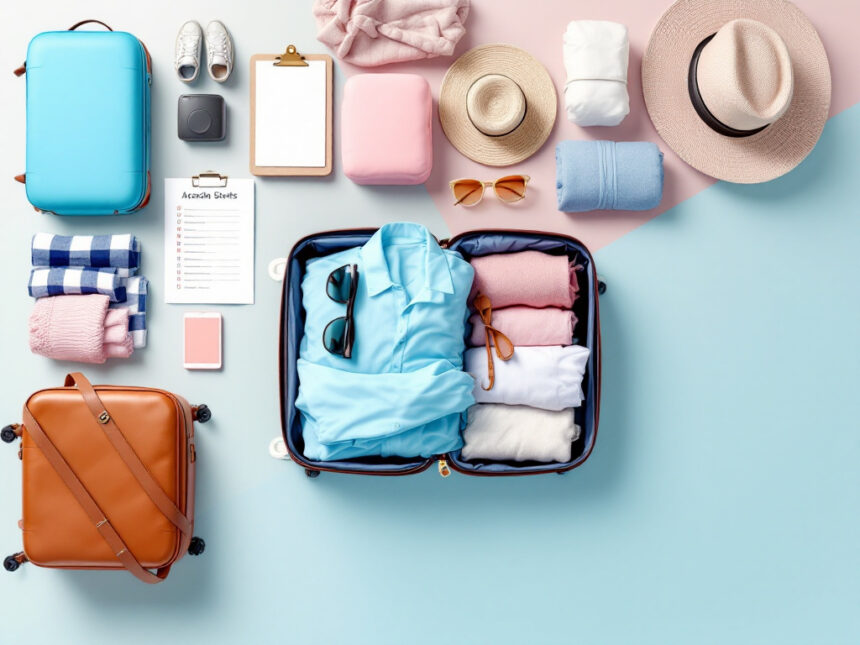
A little planning turns organized packing for vacation from a stressful scramble into a simple routine you can repeat for every trip. With a clear system, you get faster security lines, easier unpacking, and fewer “I forgot my…” moments.
Below, you will walk through simple, repeatable steps that work whether you are a frequent flyer, traveling with kids, or trying to live the one‑bag life.
Start with your travel plan, not your suitcase
Before you pull out a single packing cube, zoom out and look at the trip itself. Your route and itinerary quietly decide how much and what you should pack.
Decide: carry-on or checked bag
Your first choice shapes everything that follows.
Carry-on only is usually best if you:
- Have layovers or tight connections, since checked bags are more likely to get lost or delayed on multi‑leg trips
- Are heading straight from the airport onto a cruise or tour and need essentials with you immediately
- Prefer to move faster through airports and skip baggage claim
Check a bag if you:
- Are traveling with young kids and need extra diapers, gear, and “just in case” items
- Are attending a wedding, conference, or event with specialty clothes and shoes
- Need sports equipment or bulky items that cannot fit in a cabin‑size bag
Once you decide, you can tailor your packing list and your packing system for organized trips around that size limit.
Map your days before you pack
Instead of counting random tops and bottoms, plan by day and activity. This is especially helpful for families and one‑bag travelers.
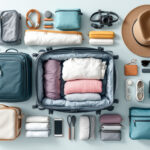
Take 5 minutes and write out:
- Flight days
- Work or conference days
- Beach or pool days
- City sightseeing days
- Dinners out or special events
Then assign an outfit type to each day, such as “Plane day: leggings, tee, light sweater, sneakers,” or “Beach day: swimsuit, cover‑up, sandals.” This approach, also recommended in 2024 packing strategies research, prevents overpacking and makes organizing packing by outfit much easier once you pull out the cubes.
Build a flexible packing list you can reuse
An organized suitcase always starts with an organized list. Creating a master template that you adjust per trip saves time and mental energy.
Use a master checklist plus trip-specific notes
Keep a running master list in Google Docs or your notes app. Researchers note that a digital checklist significantly reduces the stress of forgetting items on vacation. Your base list might include clothing, toiletries, electronics, documents, and safety items, similar to the comprehensive categories in Eagle Creek’s ultimate packing guide, published in March 2025 and updated in January 2026.
Then, before each trip:
- Copy the master list.
- Add destination-specific items, like outlet adapters or sun hats.
- Remove what you definitely do not need, such as heavy coats for a tropical trip.
If you want more structure, use or adapt a packing checklist for organized travel that is already broken into logical categories.
Right-size your clothing for trip length
The quantity of clothes should match your trip length and laundry options.
For a 3 to 5 day trip, research suggests:
- 1 pair of underwear and socks per day
- 1 pair of pajamas
- 1 to 2 dressier outfits
- 1 to 2 activewear outfits
- 1 to 2 casual outfits
- 1 to 2 pairs of shoes
For trips over a week, you can increase quantities or plan to do laundry halfway through and pack less. Quick-drying items and wrinkle-resistant fabrics make sink or hotel laundry days much easier, as highlighted in Eagle Creek’s guide on efficient, light packing.
If you prefer a minimalist approach, explore minimalist packing organization to see how few pieces you truly need when everything mixes and matches.
Choose versatile clothing and shoes
A small wardrobe that works in many combinations is the core of organized packing for vacation. You want flexible pieces that layer, wash easily, and look appropriate in more than one setting.
Build a mix-and-match travel capsule
Focus on:
- Neutral colors that coordinate well, such as black, navy, gray, white, and tan
- Lightweight layers that can adapt to air-conditioned interiors and changing weather
- Quick-dry activewear and wrinkle-resistant fabrics
Brands like Lululemon, prAna, and Athleta make comfortable, stylish pieces that travel well, dry quickly, and can shift from plane to city street to light hiking. These multi-use clothes are particularly valuable for one‑bag travelers who want to pack light and organized.
Pack the right number of shoes
Shoes eat space, so giving them structure pays off. As a baseline, aim for:
- 1 pair of comfortable walking shoes or sneakers
- 1 pair of dressier shoes or sandals if needed
- 1 pair of flip-flops or pool shoes if you are headed somewhere warm
Wear your bulkiest pair on the plane to free up room, a tip supported by 2024 guides that focus on avoiding extra baggage fees. For more direction on how to keep footwear contained and clean, check out targeted packing shoes organization tips.
Pick the right bags and organizers
Your luggage and organizers are the framework that keeps everything in order. When you start with the right containers, staying organized becomes much easier.
Select luggage that fits the way you travel
Look for bags that are:
- Lightweight and durable
- Backed by a solid warranty
- Appropriately sized for your usual trips
Research from 2026 emphasizes that versatile, lightweight bags with warranties are key for effective organized packing and stress-free travel. If you often travel by train or stay in walk-up apartments, a backpack or hybrid bag might be more convenient than a traditional suitcase. For detailed backpack strategies, you can dig into how to pack a backpack efficiently.
You may also want a small personal item, such as a daypack, crossbody bag, or waist pack, to keep essentials accessible, as recommended in a March 2025 Eagle Creek article about personal carry-on items.
Use packing cubes and organizers as your “drawers”
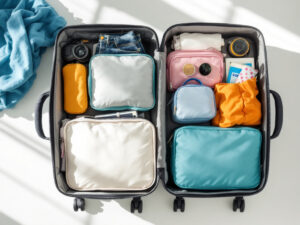
Packing cubes act like portable dresser drawers. They group similar items and allow you to pull out exactly what you need.
Research strongly supports:
- Packing cubes for categorizing or organizing by outfit
- Compression sacks for bulky items like sweaters or puffer jackets
- Dedicated laundry bags or lightweight cubes for dirty clothes
Eagle Creek’s Pack-It line, for example, is designed to help you fit more into your luggage and stay organized as you pack your way through any adventure. Pairing cubes with packing cubes packing strategies makes a noticeable difference in how much you can fit and how quickly you can find anything.
If you like to fine-tune your setup, review various packing accessories for organization and packing containers for organization so you can design a system that matches your travel style.
A good test: if your suitcase can be opened in a hotel lobby without anything spilling out, your organizers are doing their job.
Lay everything out before it goes in
Packing directly from closet to suitcase is how duplicates and “just in case” extras sneak in. A quick visual pass cuts clutter before you start playing luggage Tetris.
Use a bed, table, or rolling rack
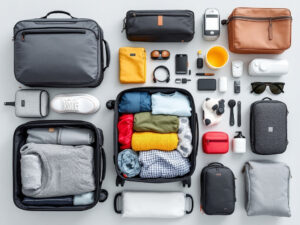
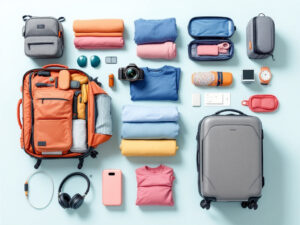
Set up a flat surface and lay out your clothes and gear by category: tops, bottoms, underwear, toiletries, electronics, documents, and extras. Some experts recommend using a rolling rack to hang outfits so you can see exactly what you plan to wear and remove redundant pieces.
Ask yourself:
- Does each top work with at least two bottoms?
- Have you packed multiple items that serve the same function?
- Are there any obvious gaps, such as a light layer for cool evenings?
This is a perfect moment to incorporate packing category organization. Grouping by type or outfit now makes filling cubes quick and logical.
Edit down with your list in hand
With your tailored checklist open, match each laid-out item to the list. If you cannot assign an item to a specific day or scenario, reconsider it. Travelers and bloggers often recommend starting this process a few days early so you can come back with fresh eyes and remove “just in case” items.
If you travel frequently, note what you overpacked or underpacked after each trip and adjust your master list. Over time, your packing organization tips become more customized and accurate.
Pack smart: how to fill your suitcase
Once you have the right items ready, it is time to pack in a way that uses space efficiently, keeps things wrinkle-free, and supports easy unpacking.
Roll, fold, and cube strategically
Research and traveler experience both point to a hybrid system:
- Roll sturdier items like jeans, t‑shirts, sweaters, and casual dresses
- Fold structured pieces like blazers or dress shirts
- Stack rolls side by side and use gaps for socks and underwear
Using packing cubes in combination with rolling helps maximize space, minimize wrinkles, and keep items organized by type or outfit. This also means you can unpack by simply transferring cubes into drawers or shelves.
If you are curious about alternatives, compare packing cubes vs packing folders to decide what is best for your clothes and luggage style.
Place heavy and bulky items wisely
Balance matters, especially with rolling suitcases.
- Place shoes and toiletries at the bottom near the wheels so the bag stands and rolls better
- Fill shoes with small items, such as socks or rolled belts, to save space and protect their shape
- Wrap fragile items in soft clothing and position them between rolled clothes for cushioning
This approach prevents your suitcase from tipping and keeps clothes from being overly compressed and wrinkled during travel.
For delicate or breakable pieces, some travelers wrap them in long-sleeve tees or sweaters and then tuck them between rows of rolled clothing, a technique highlighted in 2024 personal travel examples.
For more nuanced techniques, you can explore efficient packing techniques and travel packing organization hacks that build on these basics.
Make your carry-on a mini survival kit
Even if you check a bag, always pack your carry-on as though your suitcase might be delayed. That way, a hiccup in transit will not derail your first day.
Keep essentials close and organized
Research suggests always having the following in your carry-on:
- Identification and wallet
- House keys
- Medications and any essential health items
- Valuables and electronics
- Copies of itinerary and key documents
- One complete change of clothes and underwear
- Snacks and a refillable water bottle (emptied for security)
- Comfort items like a light blanket, scarf, or small pillow
A well-thought-out personal item such as a small daypack or crossbody bag keeps these high-use items within reach during flights and layovers, which aligns with Eagle Creek’s advice on personal carry-on items.
If you primarily travel with cabin luggage, specific organized carry-on packing tips can help you streamline even further.
Include a tiny “bad day” kit
A small pouch with backup items can save you during delays or lost luggage situations. Consider:
- Travel-size toiletries allowed by TSA
- Mini first aid supplies
- An extra phone charger or power bank
- Earplugs and an eye mask
This is especially useful for red‑eye flights or long layovers. It only takes a little space and makes being separated from your main bag far less stressful.
Keep toiletries tidy and leak-free
Toiletries are notorious for causing messes. A bit of structure keeps liquids contained and your routine simple once you arrive.
Pre-pack a travel-only toiletry kit
Create a dedicated, pre-packed toiletry bag that lives with your luggage. Fill it with travel-size versions of what you use daily:
- Toothbrush, toothpaste, and floss
- Face wash and moisturizer
- Deodorant
- Travel-size shampoo, conditioner, and body wash
- Hairbrush and basics like hair ties
- Minimal makeup or grooming tools
Having a ready-to-go kit saves time and reduces the chance that you will forget something important. It also makes it easy to follow TSA liquid rules.
For more detailed setups, including decanting products and avoiding leaks, see organizing toiletries for travel.
Apply special strategies for kids and families
Traveling with kids adds variables, but a little structure keeps everyone calmer and better prepared.
Pack by child and by activity
Use color-coded cubes or bags for each child. Within each child’s section, organize by outfit or activity:
- Travel day outfit bag
- Sleepwear and bedtime kit
- Pool or beach bag with swimsuits and sun gear
- “Emergency” bag with spare clothes and wipes
This makes it quicker to grab what you need mid‑flight, in the car, or during a rushed hotel check‑in. Dedicated guidance on organizing kids’ travel bags can give you more ideas like snack kits and toy rotations.
Prepare boredom busters and mess control
Set aside a small cube or pouch for fun and calm:
- Snacks that do not melt or crumble easily
- Compact entertainment like coloring pages, sticker books, or downloaded shows
- A pack of wipes and a small trash bag
Having these items gathered in one place reduces rummaging and keeps the rest of the carry-on tidy.
Stay organized during the trip
The best packing system continues to help once you arrive. A few habits keep your room from turning into a suitcase explosion.
Unpack by cube, not by item
When you reach your destination:
- Take cubes out and place them in drawers or on shelves.
- Use one cube or bag as a dedicated laundry container.
- Keep small daily-use items in the same pouch throughout the trip.
Research recommends packing a zippered laundry bag or lightweight cube for dirty clothes so they do not mix with clean ones. This also makes repacking effortless because all laundry goes straight to a hamper when you get home.
Keep a simple nightly reset routine
Each night, take two minutes to:
- Return used items to their cubes or storage spots
- Lay out tomorrow’s outfit, especially for kids or early flights
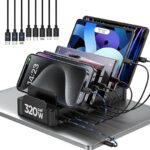
- Charge devices in the same corner or outlet station
Small resets keep surfaces clear and prevent items from getting lost under piles of clothes or shopping bags. If you are traveling as a couple, you might find some tailored ideas in packing organization for couples.
Add extra structure for frequent flyers and business trips
If you travel often, you can refine your system until packing feels almost automatic.
Maintain a standing “ready to go” kit
Keep these prepared at all times:
- Toiletry bag
- Tech pouch with chargers, adapters, and a power bank
- Small first-aid and medication kit
- Set of basic sleep items: earplugs, eye mask, travel pillow
After each trip, immediately restock and return these to your suitcase or travel drawer. Business travelers especially benefit from a repeatable routine, which you can expand on in organized packing for business trips.
Capture learning from every trip
Right after you unpack, jot down:
- What you did not use
- What you wish you had packed
- Any pain points, like wrinkled clothes or messy cables
Then update your digital list and your approach. Over time, your system will match your personal style better than any generic guide. You may also want to explore pack smart and organized and how to pack efficiently for travel for more advanced tweaks.
Turn your system into a repeatable routine
The real secret to organized packing for vacation is consistency. When you follow the same simple steps every time, you reduce decisions and stress:
- Decide on carry-on versus checked and map your days.
- Copy your master checklist and tailor it.
- Choose mix-and-match outfits and right-size your quantities.
- Lay everything out and edit before it touches the suitcase.
- Use cubes, pouches, and smart folding or rolling to pack.
- Treat your carry-on as your backup plan.
- Unpack by cube and keep a daily mini reset.
You can layer in more specialized ideas as you go, such as packing cubes organization ideas or new travel packing organization tools. Start with one or two changes for your next trip, like pre-packing your toiletry bag or grouping outfits in cubes, and notice how much smoother both packing and unpacking feel.
FAQs
What’s the easiest system for organized packing for vacation?
Use a repeatable flow: decide carry-on vs checked → map days → copy your master checklist → lay everything out → pack into cubes by outfit/category → create a carry-on survival kit → unpack by cube.
Are packing cubes really worth it?
Yes, because they work like portable drawers. They reduce rummaging, speed up unpacking, and keep categories separated (clean/dirty, tops/bottoms, kids by child).
How do I pack toiletries without leaks (and stay TSA-compliant)?
Use leakproof bottles, keep liquids in a sealed toiletry bag, and follow the TSA liquids rule (3.4 oz/100 ml max per container; pack larger liquids in checked baggage).
What must always go in my carry-on?
Documents/ID, medications, valuables, chargers, and a full change of clothes. For health items, CDC also advises keeping medicines in carry-on and clearly labeled/original containers.
Can I put a power bank in checked luggage?
No—spare lithium batteries and power banks should be in your carry-on, and watt-hour limits apply.
How do I prevent overpacking for a 3–5 day trip?
Plan outfits by day, pick a capsule wardrobe, and commit to re-wears (especially pants/outer layers). If laundry is possible, pack fewer pieces and wash once.
How should families organize packing for kids?
Use color-coded cubes per child and mini kits by activity (travel day, sleep kit, pool kit, emergency spare outfit). Keep wipes/snacks/entertainment in one “grab pouch.”
What’s the fastest way to stay organized during the trip?
Unpack by cube (not item), designate one laundry bag, and do a 2-minute nightly reset: charge devices, set tomorrow’s outfit, return everything to its “home.”