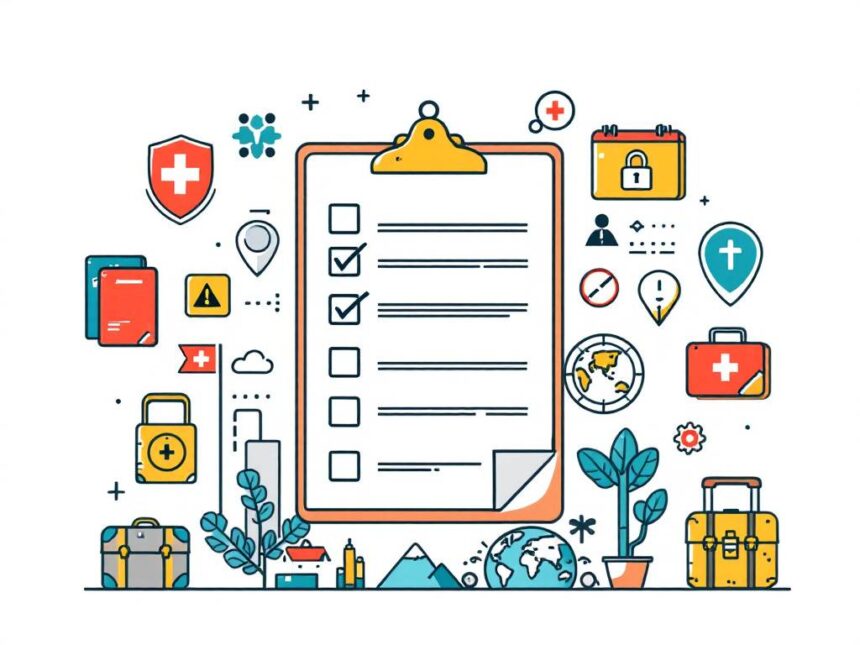
A good travel safety checklist does more than prevent problems. It gives you a clear plan so you can actually relax and enjoy your trip. Instead of worrying about what might go wrong, you know you have the basics covered, from documents and health to airport security and hotel safety.
Below you will find a practical travel safety checklist you can adapt for any trip. Whether you are a first‑time traveler, a frequent flyer, or heading out solo, you can use these steps to feel more confident and prepared.
Start with research and trip planning
Before you book the final details, spend a little time understanding where you are going and what you need to stay safe there. This background work shapes your entire travel safety checklist.
Check official travel advisories
Begin with reliable, up to date information about your destination.
The U.S. Department of State provides country specific pages that include:

- Current Travel Advisories
- Entry and exit rules
- Visa requirements
- Local laws and customs
- Health and vaccine information
- U.S. embassy and consulate contacts
You can review all of this before traveling abroad so you know what to expect and what to avoid. This is especially important if you are driving, using public transportation, or visiting rural areas, since there is also dedicated guidance on road safety and International Driving Permits.
If you want broader context and everyday tips, you can also read checklists such as the American Express guide to safe travel, which starts with destination research and preparation at home.
Enroll in STEP for extra support
If you are a U.S. citizen traveling internationally, add the Smart Traveler Enrollment Program (STEP) to your list. When you enroll your trip, nearby U.S. embassies and consulates can send you important alerts about security issues, demonstrations, health concerns, or natural disasters in the area.
STEP also makes it easier for consular staff to reach you in an emergency, which can be especially reassuring if you are traveling solo or with children.
Learn the basics of local laws and norms
Every destination has its own rules and social expectations. Your safety checklist should include a quick review of:
- What is considered illegal or offensive
- Dress norms, especially for religious sites
- Alcohol, drug, and prescription medicine regulations
- Requirements for carrying identification
The State Department highlights how important it is to understand laws abroad and travel with any required prescriptions or medications properly labeled. This prevents unnecessary problems at the border or with local authorities.
For deeper, destination specific guidance, you can pair this research with broader travel safety guidelines that explain common risks and how to handle them.
Organize your documents and backups
Once you understand entry requirements and local rules, turn to your travel documents. Having everything organized and backed up lowers stress during the trip and makes it much easier to recover if something gets lost or stolen.
Prepare passports, visas, and IDs
Check your passport expiry date long before your trip. Many countries require that it be valid for at least six months beyond your planned return date. If you need a visa, verify how long processing will take and whether you must apply in person.
A basic travel safety checklist for documents should include:
- Valid passport and any required visas
- Driver’s license or international driving permit if you plan to drive
- Printed and digital copies of your flight, hotel, and transport bookings
- Contact details for your country’s embassy or consulate
Travelers are advised to organize and carry all required travel documents such as passports, visas, and medications, plus copies in case the originals are lost or stolen. Keeping a slim folder or pouch just for documents can make security and border checks go faster.
Create digital and physical copies
Scan or photograph your key documents and store them in two secure places. This might be an encrypted cloud folder and a password‑protected drive. Also print a small set of copies to keep separate from the originals, for example in a locked suitcase or hidden pouch.
Do this for:
- Passport photo page
- Visa pages
- Front and back of bank cards
- Travel insurance policy details
- Prescription pages for medication
If you ever need to replace a passport or call your bank, having fast access to these copies saves time and helps prove your identity.
Plan your money and card safety
Managing finances safely abroad is a core part of any travel safety checklist. The American Express travel checklist suggests using a mix of local currency for small purchases and credit cards for larger expenses, which also helps with fraud protection.
You can adapt that advice by:
- Bringing at least two bank cards and keeping them separate
- Setting up travel alerts with your bank
- Using ATMs in secure, well‑lit locations such as inside banks or shopping centers
- Avoiding public Wi‑Fi for banking, or using a trusted VPN
To go deeper on common financial scams and how to sidestep them, you can read focused guides on how to avoid travel scams.
Build your health and first aid plan
Good travel safety is not just about theft and paperwork. It also covers your health, both everyday care and emergencies.
Review vaccines, health rules, and prescriptions
As part of your destination research, check whether vaccines or health certificates are required for entry. The State Department encourages travelers to review health requirements and special circumstances well in advance, especially if you have existing medical conditions.
Before you leave, make sure you:
- Refill all necessary prescriptions, with enough for the entire trip plus a few extra days
- Carry medications in original packaging with labels that match your ID
- Pack a written list of your medications and dosages
If you are traveling internationally, consider keeping this list translated into the local language. This helps doctors and pharmacists if you need care abroad.
You will find more ideas on combining health and security planning in specialized guides on travel safety and health.
Customize a travel first aid kit
A well stocked first aid kit means you can quickly handle minor issues instead of spending half a day finding a pharmacy. The American Red Cross recommends that you tailor your kit to your destination, trip length, and the number of people traveling.
They suggest considering:
- Trip duration
- Number of travelers
- Existing medical conditions
- How close medical care will be
Basic travel first aid essentials often include:
- Pain relievers and fever reducers
- Antihistamines for allergies
- Anti‑diarrheal medication
- Bandages, antiseptic wipes, and gauze
- Any personal prescription medications
Traveling with infants, young children, or older adults might mean adding age specific medications or supplies. For remote or extreme climate destinations, more advanced items such as emergency blankets, water purification tablets, sterile equipment, and a wilderness first aid guide are recommended.
The Red Cross also suggests taking a first aid training course and using their First Aid mobile app, which offers expert advice, CPR techniques, and hospital locations to support your preparedness.
Decide on travel medical insurance
U.S. government programs and many regular health insurance plans, including Medicare and Medicaid, often do not cover medical costs abroad. That is why the State Department advises U.S. citizens to consider travel medical insurance that includes emergency care and medical evacuation.
Think about:
- Whether your destination has high medical costs
- How remote your activities will be
- Whether adventure sports are involved
- Your existing health conditions
You can explore your options in detail with guides focused on travel safety insurance, which explain policy types, exclusions, and how to compare plans.
Prepare your bags and airport routine
A little structure in how you pack and move through the airport can make your entire trip feel calmer. It also minimizes security delays and reduces the risk of lost or confiscated items.
Pack with security in mind
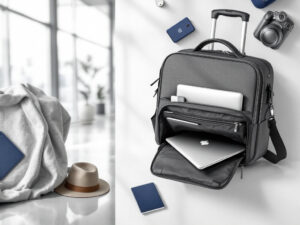
The Transportation Security Administration (TSA) recommends starting with an empty bag so you do not accidentally bring restricted items. Check every pocket and compartment before you begin packing.
For carry‑ons, follow the Liquids, Aerosols, and Gels Rule for containers and bag sizes. This helps you move quickly through the security line, and prevents items from being thrown away at the checkpoint.
Also keep in mind:
- Fireworks and similar explosives are banned from both carry‑on and checked bags
- Box cutters, utility knives, and certain tools are not allowed in carry‑on luggage
- Firearms are only permitted in checked baggage, must be unloaded, in a locked hard sided case, and declared to the airline
If you are unsure about a specific item, look it up on the TSA site before you leave home.
You can also optimize what you carry by picking a few smart items from broader lists of travel safety gear, instead of packing every gadget you see online.
Plan your airport timing and support
Before leaving for the airport, give yourself plenty of time. This is one of the simplest yet most powerful items on any travel safety checklist. When you have a buffer, you are less likely to make mistakes, leave items behind, or rush through important decisions.
TSA also recommends:
- Wearing shoes that are easy to remove and put back on
- Having your ID and boarding pass ready in the security line
- Placing your 3‑1‑1 liquids bag, electronics larger than a cell phone, and anything in your pockets into the screening bins
If you have a disability, medical device, or condition that might affect screening, you can call TSA Cares at (855) 787‑2227 before your trip. They can explain what to expect and help coordinate assistance at the airport.
For more detailed planning, including how to handle long security lines and connecting flights, you can review step by step airport security tips.
Use TSA PreCheck when eligible
If you qualify for TSA PreCheck, using it can greatly simplify your security experience. Eligible passengers can use dedicated lanes and often keep shoes, belts, and light jackets on, as well as leave laptops and small liquids in bags. According to TSA, this speeds up screening and can reduce your time in crowded areas, which is a safety benefit on its own.
Even if you do not have PreCheck, paying attention to your surroundings in the line, keeping bags closed, and not leaving phones or wallets in bins unattended should be part of your travel routine.
Secure your hotel and accommodation
Your travel safety checklist does not stop once you land. Where you stay and how you secure your room are just as important.
Choose safer locations and properties
The State Department suggests considering lodging safety when choosing accommodations abroad. When you compare options, look at:
- Neighborhood safety, including lighting and night activity
- Proximity to public transportation and main roads
- Security features such as staffed reception, keycard access, and CCTV in public areas
If you are arriving late at night, it is worth arranging transport in advance instead of negotiating with unknown drivers outside the airport.
You can find more practical ideas for evaluating and booking safe stays in dedicated hotel safety tips for travelers.
Add simple in‑room security steps
Once in your room, a few small habits significantly increase your sense of security.
You can:
- Lock all doors and windows as soon as you enter
- Use the room’s deadbolt and security latch
- Keep your key or keycard with you at all times
- Store passports, cards, and extra cash in a safe or hidden spot
A travel specific door stop alarm is also a popular option. It acts as both a physical barrier and a very loud alarm if someone tries to open the door from outside, which is especially reassuring in hotels or hostels if you are traveling alone.
Pair this with anti theft bags that have lockable zippers, cut resistant straps, and RFID blocking pockets for use in public spaces. Brands like Pacsafe and Travelon design bags that can be secured to fixed objects in places such as train stations or cafes.
You can round out your plan with more detailed travel security precautions that cover what to do if something in your room does not feel right.
Protect your devices and personal data
Your phone, laptop, and tablet carry as much sensitive information as your wallet. Treating digital security as part of your travel safety checklist prevents long term headaches.
Limit what you carry and store
Before you leave:
- Remove apps and data you do not need for the trip
- Turn on full device encryption and strong screen locks
- Enable “find my device” features and write down your account recovery steps
Avoid traveling with more devices than you truly need. Each extra item is another opportunity for loss or theft.
If you want a structured overview of digital habits, specialized guides on travel security technology can help you prioritize which tools and settings to use.
Be careful with networks and chargers
Public Wi‑Fi and shared chargers can expose your devices to extra risk. During your trip, consider:
- Using your mobile data or a reliable VPN instead of unsecured public Wi‑Fi
- Avoiding banking and sensitive logins on shared networks
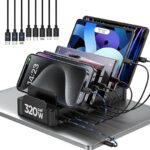
- Bringing your own charging cables and wall adaptor rather than using unknown public USB ports
Storing trip photos and important documents in the cloud is helpful, but make sure your accounts have multifactor authentication turned on so that a stolen password alone is not enough to get in.
Pack personal safety gear that fits your trip
Emergency supplies do not have to be bulky or complicated. The goal is to choose small, lightweight items that give you options if something unexpected happens.
Choose practical safety tools
A smart travel safety checklist for gear can include:
- A compact first aid kit tailored to your activities and climate
- Disposable face masks and a small thermometer to monitor illness
- Hand sanitizer and disinfecting wipes
- A portable power bank for your phone
Personal security items can offer peace of mind, especially in unfamiliar places. A door stop alarm is one example. Another is a personal safety device like the Birdie alarm, which emits a very loud sound and flashing lights to draw attention and deter an attacker. This can be a safer alternative to pepper spray, because it is legal in many more locations.
For everyday outings, anti theft bags with securable zippers and slash resistant straps help protect your belongings in crowded spaces.
You can compare different options in more comprehensive roundups of travel safety gear and pick only what fits your style and destination.
Prepare allergy and medical information
If you or someone you are traveling with has serious allergies, one small but powerful action is to carry a list of those allergies translated into the main language of your destination.
This note should clearly state what you must avoid and what happens if you are exposed. You can show it to restaurant staff or food vendors to reduce the risk of accidental exposure that might lead to a severe reaction.
Keep any emergency medications, such as an epinephrine auto‑injector, in your day bag where you can reach them quickly.
Plan for solo, family, and special situations
Different travelers have different priorities. Customizing your travel safety checklist to your situation makes it more effective and less overwhelming.
If you are traveling solo
Solo travelers often focus on both prevention and “what if” backup plans. In addition to the steps above, consider:
- Sharing your itinerary and accommodations with a trusted contact
- Setting regular check in times by message or email
- Choosing seating and walking routes that keep you in well lit, populated areas
Guides like safe solo travel tips and personal safety for travelers offer more ideas you can adapt to your comfort level.
If you are a woman traveling alone, you might have specific questions about transport, nightlife, and accommodation. In that case, focused resources on travel safety for women and travel safety tips for solo female travelers can be especially useful.
If you are with family or a group
For families, seniors, and students, your checklist should account for different abilities and experience levels.
For example:
- If you are traveling with children, practice what to do if someone gets separated
- If you are traveling with seniors, build in extra rest and make sure mobility needs are supported
- If you are a student abroad, learn campus safety resources and local emergency numbers
You can find more tailored advice in topic specific guides such as travel safety for seniors, travel safety for students, or travel safety for backpackers.
If your trip involves driving
Road rules, signage, and driving culture can be quite different from what you are used to. The State Department provides guidance on driving and transportation abroad, including information on International Driving Permits.
As part of your checklist:
- Verify whether your license is valid or if you need an International Driving Permit
- Learn basic local road rules, speed limits, and common hazards
- Check insurance coverage for rental cars or scooters
You can build on this foundation with more detailed travel safety driving tips.
Create your personal travel safety checklist
Bringing everything together in one place keeps your plan simple and repeatable. You can copy the list below and adjust it for each destination.
1. Before you book
- Check country Travel Advisories and entry rules
- Review local laws, customs, and health requirements
- Decide if you need STEP enrollment and travel insurance
2. Documents and money
- Confirm passport validity and any visas
- Make digital and physical copies of key documents
- Set up bank travel alerts and split cards and cash
3. Health and first aid
- Refill prescriptions and pack them in original containers
- Assemble a destination specific first aid kit
- Download the Red Cross First Aid app and note hospital locations
4. Packing and airport
- Start with an empty bag and follow TSA liquid rules
- Remove prohibited items from carry‑on and checked luggage
- Plan extra time for the airport and, if eligible, use TSA PreCheck
5. Accommodation and on the ground
- Choose lodging with strong safety features in a well located area
- Secure your room with locks and, if desired, a door stop alarm
- Use anti theft bags and stay aware in crowded spaces
6. Devices and data
- Secure your phone and laptop with strong locks and backups
- Use safe networks, a VPN, and your own chargers
- Turn on tracking and remote wipe features
If you want even more ideas and scenarios, you can explore broader traveling safety measures and travel safety tips that expand on each point with examples.
Final thoughts
A travel safety checklist is not meant to scare you. It is a simple structure that turns vague worry into clear, manageable actions. Once you have your research, documents, health plan, packing routine, and accommodation steps in place, you free up mental space to focus on the actual experience.
You can start small. For your next trip, choose one area to tighten, like organizing document copies or upgrading your airport routine with a few airport security tips. As you repeat the process, your checklist will become a natural part of how you travel, giving you confidence and security wherever you go.
FAQs
What should be on every travel safety checklist?
Research travel advisories, organize documents and backups, plan health needs, pack to TSA rules, secure accommodation, and protect devices/data.
Is STEP worth it if I’m traveling solo?
Yes—STEP sends official alerts and helps embassies/consulates contact you or your emergency contact if something goes wrong.
What TSA packing rule causes the most delays?
Liquids. Follow the 3-1-1 liquids rule and remove the liquids bag at screening when required.
Who should use TSA Cares?
Travelers with disabilities, medical conditions, or special circumstances who want help understanding screening and requesting support.
Do I really need travel medical insurance?
Often yes—U.S. State Department guidance notes Medicare/Medicaid generally don’t pay for medical care outside the U.S., and recommends considering medical evacuation coverage.
How do I lower digital risk while traveling?
Use strong passcodes, MFA, device tracking, avoid sensitive logins on public Wi-Fi, and skip public USB charging ports—use your own charger via an outlet.