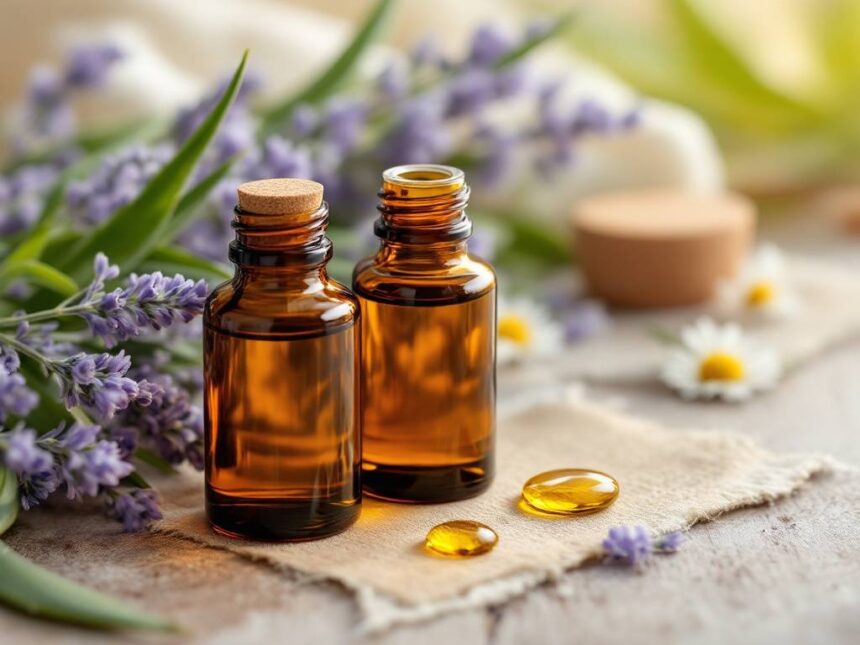
Psoriasis can make your skin feel hot, tight, and endlessly itchy. It is understandable if you are curious whether essential oils for psoriasis might offer some gentle, natural relief. While essential oils cannot cure psoriasis, some people find that the right oils, used safely, help soothe dry patches, calm stress, and support better sleep alongside their prescribed treatments.
This guide walks you through what research actually says, which essential oils might be worth trying, how to use them safely on sensitive skin, and when to skip them altogether. You will also find simple starter blends so you do not feel overwhelmed by complicated recipes.
Understanding psoriasis and where essential oils fit
Psoriasis is an autoimmune skin condition. Your immune system speeds up the life cycle of skin cells, which leads to thick, red, scaly patches that can itch, crack, and sometimes bleed. Because it starts in your immune system, no topical product, including essential oils, can fully treat the root cause.
What you can do, however, is support your skin and your nervous system. Essential oils may help you:
- Moisturize and soften flaky areas when diluted in carrier oils
- Ease itch, tightness, or minor inflammation on and around plaques
- Support relaxation, stress relief, and sleep, which are common psoriasis challenges
A 2024 overview from Healthline emphasizes that essential oils are not considered a primary treatment for psoriasis and should always be used as complementary care, ideally in consultation with your doctor. That is an important mindset to keep: they are supportive tools, not stand‑alone solutions.
If you are new to plant extracts, you may want to read more about general essential oils benefits and how to use essential oils as a foundation.
What research actually says about essential oils for psoriasis
Research on essential oils for psoriasis is still limited. Most of the evidence comes from:
- Lab and animal studies
- Small human trials using blends that contain essential oils plus other active ingredients
- Anecdotal reports from people with psoriasis
Here are some key findings from the research you have:
- A 2022 study in the journal Molecules found that perilla leaf essential oil improved psoriasis‑like lesions in mice and that bitter apricot essential oil slowed psoriasis‑like plaque growth in cell cultures, but this has not yet been confirmed in people.
- A 2020 study cited by Healthline suggests lavender essential oil may help reduce inflammation and relieve stress, which is a known trigger for psoriasis flares.
- Double‑blind and placebo‑controlled trials have shown promising results for some blends:
- Kānuka (Kunzea ericoides) oil formulations improved psoriasis signs and itching in a small study of 30 patients, with only mild itching as a side effect in about 15 percent of participants.
- A cream containing frankincense oil, licorice root extract, and pumpkin seed oil improved plaque psoriasis severity indices after 4 weeks, although a few people had rashes or severe itching.
- A chamomile oil and pumpkin seed oil oleogel also improved plaque psoriasis scores and patient satisfaction, with mild itching in a small number of participants.
In each of these studies, essential oils were only one part of a larger formula, so you cannot assume the same results from a single oil at home. Still, these trials point to potential anti‑inflammatory and barrier‑supporting benefits that might help your skin feel more comfortable.
The bottom line: essential oils for psoriasis may offer symptom relief for some people, but there is not enough clinical evidence yet to treat them as proven psoriasis therapies. Use them as gentle add‑ons, not replacements for your dermatologist’s plan.
Best essential oils that may help psoriasis symptoms
If you are just getting started, it helps to focus on a few essential oils that have some evidence or long‑standing traditional use for skin soothing, inflammation, or stress relief.
Tea tree essential oil
Tea tree oil is known for its antibacterial, antiviral, and antifungal properties. For psoriasis, this matters because broken skin around plaques can be more vulnerable to infection.
The National Psoriasis Foundation notes that some people use tea tree oil shampoos as a natural adjunct for scalp psoriasis and that its antimicrobial and anti‑inflammatory activity may help, but there is no scientific research specifically proving it treats psoriasis. So you should think of it as a possible helper for itch and secondary irritation, not a cure.
Use it cautiously on very sensitive or damaged areas and always dilute heavily in a carrier oil.
Lavender essential oil
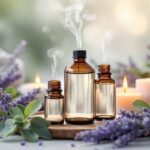
Lavender is one of the most researched essential oils for calming and relaxation. It is commonly used in essential oils for relaxation, essential oils for stress relief, and the best essential oils for sleep.
For psoriasis, lavender may support you in two ways:
- A 2020 study highlighted by Healthline suggests lavender oil has anti‑inflammatory properties that could help reduce skin inflammation related to psoriasis.
- Its aroma can ease stress and anxiety, both of which are known triggers for psoriasis flares.
Note that pregnant or nursing people and those with diabetes are often advised to avoid lavender essential oil due to potential side effects, so talk with your health provider first.
Geranium essential oil
Geranium oil is often used in skincare because it may:
- Improve circulation
- Reduce inflammation
- Support skin cell regeneration
Some studies and reports suggest it can help with certain inflammatory skin conditions, including psoriasis. However, geranium is also known for causing allergic skin reactions in some people, even at low concentrations. A careful patch test is very important before using it on larger areas of your body.
Chamomile essential oil
Chamomile, particularly Roman chamomile, is often recommended for sensitive or reactive skin. It shows:
- Anti‑inflammatory effects
- Mild analgesic or pain‑relieving properties
- Calming effects on the nervous system
A placebo‑controlled study using a chamomile oil and pumpkin seed oil oleogel for plaque psoriasis found significant improvement in severity and satisfaction scores, with only minor itching and irritation for a small number of patients.
Because chamomile is gentle, it is often considered for children and sensitive adults, but you should still dilute it and test it carefully first, especially if you have ragweed or related plant allergies.
Frankincense essential oil
Frankincense has a long history in traditional medicine and is often used for inflamed or damaged skin. In modern research, a cream containing frankincense essential oil plus licorice root extract and pumpkin seed oil improved plaque psoriasis severity after 4 weeks. Only a small percentage of users developed local reactions like rash and severe itching.
On its own, frankincense may help support skin comfort, but the study results apply to the full blend, not just frankincense. If you try it, make sure it is well diluted and avoid applying to cracked or bleeding areas.
Other essential oils sometimes used for psoriasis
Several other oils are often mentioned for psoriasis because they have anti‑inflammatory or calming properties:
- Bergamot
- Rose
- Sandalwood
- Roman chamomile
- Eucalyptus and mint (often in blends for cooling or scalp care)
These are also commonly found in blends for essential oils for inflammation, essential oils for skin care, and essential oils for aromatherapy. If you are new to essential oils, start with one oil at a time instead of a big mix, so you can easily spot any reaction.
Carrier oils that can support psoriasis‑prone skin
For psoriasis, the carrier oil you choose is just as important as the essential oil. Carrier oils dilute the essential oil to make it safer and can provide moisture and barrier support on their own.
Two noteworthy options in the research you have are argan and black seed oil.
Argan oil
Argan oil is rich in fatty acids and vitamin E. It is widely used to soften dry, rough skin and can be a good base for essential oils on areas with thick plaque or scale. While there is limited direct research on argan specifically for psoriasis, its moisturizing and barrier‑supporting effects are well recognized in dermatology.
Black seed oil (Nigella sativa)
Black seed oil stands out because:
- A 2014 human study and a 2018 rat study suggest it can moisturize skin and reduce inflammation, which are both relevant for psoriasis‑prone skin.
- It has anti‑inflammatory and possibly immunomodulating effects that may support comfort around plaques.
However, people with clotting disorders, diabetes, low blood pressure, or those who are pregnant are advised to consult a doctor before using black seed oil because it may affect blood pressure and clotting.
Other common carrier oils
You can also use gentle, more familiar carrier oils such as:
- Jojoba oil, which closely mimics your skin’s natural sebum
- Sweet almond oil, if you do not have a nut allergy
- Olive or coconut oil, for thick, very dry patches or as a pre‑bath oil
These carrier oils are widely used in essential oils for massage, essential oils recipes, and essential oils for bathing, so you may already have them at home.
Safe dilution and application for psoriasis‑sensitive skin
Psoriasis patches can be extra reactive, so dilution is not optional. It is your main safety tool.
For sensitive, inflamed, or compromised skin, stick to the low end of standard topical guidelines. More is not better.
A simple rule based on how to dilute essential oils:
- For body areas that are not cracked: 0.5 to 1 percent dilution
- For the face, skin folds, and very sensitive areas: 0.25 to 0.5 percent
- For short‑term use on small, intact patches: up to 2 percent, but only if you have already patch‑tested without issues
A 1 percent dilution means about 1 drop of essential oil per teaspoon of carrier oil. If you want a quick reference:
1 teaspoon carrier oil ≈ 5 ml ≈ 1 to 2 drops of essential oil for sensitive skin
Always mix your essential oil with the carrier thoroughly before applying.
Patch testing on psoriasis‑prone skin
Before you put any blend on psoriasis plaques, patch test it on an area of unaffected skin, such as your inner forearm.
- Dilute your essential oil blend at the strength you plan to use.
- Apply a small amount to a coin‑sized patch of skin.
- Wait 24 to 48 hours. Do not wash it off unless you feel burning or intense itch.
- If you notice redness, swelling, burning, or hives, wash the area and do not use that oil on your psoriasis.
Because psoriasis can flare unpredictably, repeat patch tests if you change your dilution, switch carrier oils, or start a new medication.
Simple ways to use essential oils for psoriasis
There are three main ways you might use essential oils around psoriasis: topical blends, bath routines, and diffused aromatherapy. Each approach has different benefits and safety considerations.
1. Topical blends for comfort
Topical use is the most direct way to target dry or itchy areas, as long as your skin is not cracked or bleeding.
You might try:
- A chamomile or lavender blend in jojoba oil for mild plaques
- A frankincense and geranium blend in argan or black seed oil for thicker, drier patches
- A tea tree blend in a gentle shampoo base if you have scalp psoriasis
Use a small amount and massage gently onto clean, dry skin once or twice a day. Avoid applying directly before strong sun exposure, especially with citrus oils like bergamot, because they can be photosensitizing.
2. Baths and soaks
Baths can soften scales and help you relax, but essential oils should never be dripped straight into the water. They need a dispersing medium, such as:
- A neutral liquid soap or bath gel
- Full‑fat milk
- Solubilizers made for cosmetics
Mix your essential oil with the dispersing base first, then add that mixture to the running water. This helps prevent concentrated oil from clinging to your skin in one spot.
Gentle options include:
- 2 to 4 drops of lavender or chamomile in a dispersing base for a full bath
- A small basin with chamomile and carrier oil for a hand or foot soak
If large hot baths trigger your psoriasis, try short, lukewarm soaks instead.
3. Aromatherapy for stress and sleep
Because stress is such a common psoriasis trigger, focusing on your nervous system can be just as important as what you put on your skin.
Diffusing essential oils is a skin‑free way to get benefits from:
- Lavender, chamomile, or sandalwood for unwinding
- Bergamot or geranium for mood support
- Pre‑made essential oils diffuser blends for evening relaxation
If you have asthma, chronic lung issues, or very young children in the home, use smaller amounts and shorter sessions, and ventilate the room well. You can explore more ideas in essential oils for anxiety and essential oils for aromatherapy.
Starter blends for beginners
To keep things simple, here are some gentle, beginner‑friendly ideas. Always check with your healthcare provider before changing your routine, especially if you are pregnant, nursing, or managing chronic conditions.
Calming body oil for mild plaques
This is a low‑dilution blend designed for mildly irritated, intact skin.
- 2 teaspoons jojoba or argan oil
- 1 drop Roman chamomile essential oil
- 1 drop lavender essential oil
Stir or shake in a small glass bottle. Apply a few drops to dry, unbroken skin once a day and monitor for any reaction.
Night‑time relaxation diffusion
For a simple sleep‑supporting diffusion that may indirectly help with psoriasis flares related to stress:
- 2 drops lavender essential oil
- 1 drop frankincense essential oil
Add to a diffuser filled with water according to the device instructions. Run for 20 to 30 minutes before bed. You can explore other ideas in best essential oils for sleep.
Safety tips you should not skip
Essential oils can be powerful, which is why safety matters even more when you already have a chronic skin condition.
According to Healthline and other psoriasis organizations, you should keep these points in mind:
- Essential oils are not regulated by the FDA for purity or quality. Look for brands that provide batch testing, such as GC‑MS reports, and learn what “pure” and therapeutic grade essential oils really mean for you.
- Never apply undiluted essential oils directly to psoriatic skin. This is more likely to cause irritation or allergic contact dermatitis.
- Always patch test on healthy skin first.
- Avoid applying essential oils to open cracks, bleeding areas, or infected plaques. These need medical attention and gentle, fragrance‑free care.
- Stop use immediately if you notice burning, stinging, worsening redness, or new rashes.
- Talk to your doctor before using essential oils if you are pregnant, nursing, have diabetes, blood pressure or clotting disorders, or are on multiple medications.
Because psoriasis and eczema can overlap in symptoms, it may also help to read about essential oils for eczema if you are navigating both.
When to skip essential oils and call your doctor
There are times when essential oils are not the right tool. Contact your healthcare provider instead if you notice:
- Sudden worsening of psoriasis or new widespread rashes
- Signs of infection, such as yellow crust, oozing, warmth, or fever
- Joint pain, stiffness, or swelling that may signal psoriatic arthritis
- Severe itching that keeps you from sleeping or daily activities
If you have already tried over‑the‑counter products and home care without relief, your skin may need prescription treatments. Adding essential oils on top of an uncontrolled flare can sometimes confuse the picture and make it harder to see what works.
Bringing it all together
Essential oils for psoriasis sit in the “supportive care” category. They cannot cure the underlying autoimmune condition, but they may:
- Soothe dry, tight, or mildly inflamed skin when carefully diluted in suitable carrier oils
- Help protect against minor secondary irritation on and around plaques
- Support stress relief and sleep, which can indirectly calm flare‑ups
The most important part is using them safely. Start low, use one oil at a time, patch test thoroughly, and keep your dermatologist in the loop about anything new you apply to your skin.
If you find essential oils helpful, you can gradually explore related topics, such as essential oils for skin care, essential oils for inflammation, or stress‑focused blends like essential oils for stress relief. With a slow, thoughtful approach, you can build a routine that respects both your skin’s sensitivity and your desire for more natural self‑care.