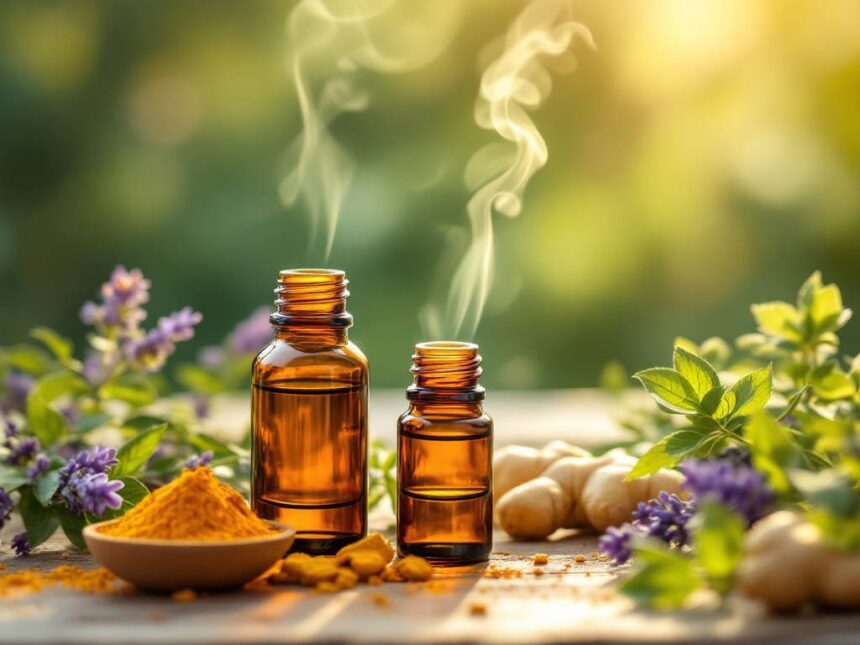
Inflammation can be a helpful “alarm system” when you sprain an ankle or catch a cold—but when it sticks around, it can feel like your body’s volume knob is stuck on loud. That’s why so many people look for essential oils for inflammation: not as a miracle cure, but as gentle support for soreness, tension, stress, sleep, and comfort.
In this guide, you’ll learn what science actually suggests (and what it doesn’t), the best anti-inflammatory essential oils to start with, and exactly how to use them safely—especially if you have sensitive skin, kids, or pets at home.
What inflammation is and how essential oils fit in
Before you reach for essential oils for inflammation, it helps to understand what is actually going on in your body.
Inflammation is your immune system’s natural response to injury, infection, or irritation. In the short term, it is helpful. You cut your finger, twist an ankle, or catch a virus, and your body sends blood and immune cells to the area to protect and repair. That is why you see redness, warmth, swelling, and feel soreness.
The trouble starts when inflammation lingers. Chronic, low grade inflammation is linked to joint problems, skin issues, digestive discomfort, and even cardiovascular disease. This is where lifestyle, medical care, and supportive tools, such as essential oils, can work together.

Essential oils will not cure an inflammatory disease, and they are not a replacement for your doctor’s treatment plan. What they may do is help you manage some symptoms, like soreness, tension, or stress that can make inflammation feel worse. Many plant oils contain compounds that have been shown in lab and animal studies to calm inflammatory pathways, so they can be one more gentle tool in your toolkit.
If you are brand new to oils, you may want to skim a broader overview of essential oils benefits first, then come back here to focus specifically on inflammation support.
Important: Always talk with your healthcare provider before using essential oils for inflammation, especially if you have asthma, COPD, are pregnant, breastfeeding, take daily medication, or have a chronic illness.
What science actually says about essential oils for inflammation
You might see big promises online about essential oils that “erase inflammation overnight.” That is not how they work. The research that does exist is encouraging, but it is still early and often done in animals or cell cultures rather than large human trials.

Here is what current studies suggest, in plain language.
How essential oils appear to calm inflammation
A 2020 systematic review of 15 recent studies on 16 herb derived essential oils found that many of these oils reduced inflammatory signals in the body by influencing pathways like NF kB, MAPK, and AKT, which are involved in turning inflammation on and off. In simpler terms, certain plant compounds seem to tell your immune system to “dial it down” when it is overreacting.
Research on essential oils used in traditional Chinese medicine has shown that they can reduce inflammatory messengers such as nitric oxide (NO), prostaglandin E2 (PGE2), and cytokines like IL 6, IL 1β, and TNF α, and can lower enzymes such as COX 2 and iNOS in immune cells grown in the lab. That means they may help reduce both pain related chemicals and swelling signals.
Animal studies add another layer. In mouse and rat models, essential oils from herbs like Gynura procumbens, Artemisia argyi, Citrus limetta, and Curcuma longa (turmeric) significantly reduced chemically induced inflammation and helped restore normal tissue structure in inflamed areas. These studies are very controlled, which is useful for understanding mechanisms, but they do not tell you exactly what will happen in your living room when you use a diffuser.
More recent work has focused on the actual molecules inside essential oils. A 2025 analysis characterized anti inflammatory phytochemicals like alkaloids, polyphenols, terpenoids, flavonoids, saponins, and tannins, and showed how they might modulate inflammatory pathways and even act as safer leads for new drugs, often with fewer side effects than some synthetic anti inflammatory medications. Early 2025 in silico modeling and docking studies also suggest that some of these molecules can “fit” into and influence specific receptors involved in inflammation.
All of this is promising, but not a guarantee. You can think of essential oils as gentle helpers that may support a broader plan, not as stand alone solutions.

A quick word on safety from the research
The same compounds that make essential oils powerful also mean you need to be cautious. A 2022 study found that exposure to essential oils through diffusing for more than one hour per day over the long term could contribute to heart and lung problems, especially in people with respiratory issues like asthma or COPD. So if you or someone in your home has breathing challenges, you will want to be extra careful with diffusers and consider very short sessions or avoiding airborne use.
The National Association of Holistic Aromatherapy also emphasizes that essential oils should only be used as adjuncts for inflammation, not primary treatment, and that proper dilution and patch testing are essential.
You will see these safety points come up again in the how to sections below.
Best essential oils for inflammation relief
Many plants have anti inflammatory compounds, but a few essential oils come up repeatedly in research and traditional use. If you want just a small starter set of essential oils for inflammation, focus on these.
Ginger essential oil
Ginger essential oil is rich in gingerols, which are active compounds credited with anti inflammatory effects. Animal studies have shown ginger oil can significantly reduce joint inflammation in models of rheumatoid arthritis and may relieve menstrual cramps at levels comparable to some NSAIDs.
In small human studies, massage with ginger essential oil improved pain, stiffness, and physical function in people with chronic knee problems over one month, compared with massage using unscented oil. Another trial using a ginger and orange essential oil blend for knee pain also found less pain and stiffness versus an unscented control.
You might consider ginger oil if you are dealing with:
- Sore, overused muscles
- Stiff or achy knees
- Menstrual cramping
Use it diluted in a carrier oil for massage around, not directly on, painful joints or cramps.
Lavender essential oil
Lavender is often associated with calm and sleep, but it also has documented anti inflammatory activity. Research shows lavender essential oil can block key pro inflammatory cytokines that trigger inflammation. Oils distilled at early bloom stages appear especially effective for soothing inflammation and supporting skin health.
A blend of bergamot and lavender essential oils reduced pain levels in people with chronic pain when inhaled regularly over four months. Another study found a fragrant blend including lavender, eucalyptus, and rosemary helped people with arthritis experience less pain and a better mood after inhalation.
Lavender is also one of the best studied oils for sleep. A trial published in Chronobiology International found that inhaling lavender improved sleep quality, including deeper, slow wave sleep, and helped participants wake feeling more refreshed. Better sleep is not just nice to have. It directly affects how your body manages inflammation.
Lavender oil is a good choice if you want to:
- Ease tension that makes pain feel worse
- Support skin that is mildly irritated
- Improve sleep while coping with chronic inflammation
If relaxation is a main goal, you may also like to read more about best essential oils for sleep and essential oils for relaxation.
Eucalyptus essential oil
Eucalyptus essential oil contains eucalyptol as its main active ingredient. Multiple studies have shown eucalyptol can reduce inflammation and relieve discomfort by calming your body’s response to irritation. This is one reason eucalyptus often appears in chest rubs and muscle creams.
Research on Eucalyptus camaldulensis essential oil suggests it may help with inflammation in conditions like muscular dystrophy and rheumatoid arthritis, though more human studies are still needed. In a small clinical context, inhalation of eucalyptus essential oil after total knee replacement surgery was associated with reduced pain and lower blood pressure, which points to both physical and calming effects.
Eucalyptus may be useful if you are looking to:
- Ease muscular aches after activity
- Support breathing comfort when you have mild congestion
- Complement joint care, under medical guidance
Because eucalyptus can be strong and stimulating, use lower dilutions and avoid it in children unless you have guidance from a qualified professional.
You can learn more general ideas in our guide to essential oils for muscle pain.
Frankincense essential oil
Frankincense has a long history in traditional medicine, and modern research is catching up. Studies show frankincense essential oil has anti inflammatory effects relevant to arthritis, asthma, psoriasis, and gingivitis, largely by calming overactive immune responses and reducing swelling signals.
In animal models, a combination of frankincense and myrrh essential oils reduced joint inflammation in rats with arthritis, partly by influencing the MAPK signaling pathway and changing certain metabolic markers. This suggests frankincense might be especially helpful for deep, joint related inflammation, although human data are still limited.
You might reach for frankincense if you are:
- Supporting stiff or mildly arthritic joints
- Caring for inflamed gums along with dental care
- Looking for a grounding oil that pairs well with meditation or breathwork
Turmeric essential oil
Turmeric is famous as a kitchen spice, but its essential oil is also rich in turmerone, a compound with strong anti inflammatory potential. Studies show turmerone can reduce inflammatory responses by targeting inflammatory chemicals and pathways, which has led researchers to suggest turmeric oil might help support conditions like inflammatory bowel disease, arthritis, psoriasis, atherosclerosis, and even some inflammation linked to viral infections such as COVID 19.
In animal models, Curcuma longa essential oil significantly reduced chemically induced skin inflammation and helped restore tissue structure. While that does not make it a stand alone treatment, it supports the traditional use of turmeric for skin and joint comfort.
Turmeric essential oil is very concentrated and can be more likely to irritate sensitive skin, so careful dilution is crucial. It is also naturally colorful and may stain fabric.
Black cumin (Nigella sativa) essential oil
Black cumin seed oil is often used as a nutritional supplement, but the essential oil has also been studied for inflammation. A small study found that older adults who rubbed black cumin essential oil on their achy knees three times daily for three weeks experienced more pain relief than a group who took acetaminophen only. That suggests it may provide some topical support for knee and joint inflammation.
This is not a replacement for medically needed pain medication, but it can be a helpful adjunct if you are cleared for topical use.
Other oils with anti inflammatory promise
Several other essential oils for inflammation have early research or traditional use behind them:
- Citrus oils and α terpineol: A 2023 study on essential oils from C. japonica and C. maxima found strong anti inflammatory properties, largely due to α terpineol, which may protect against inflammation.
- Cumin essential oil: A 2024 study suggested cumin essential oil may help treat inflammation, but emphasized that more research is needed.
- Lemongrass essential oil: A small group of people with rheumatoid arthritis who used lemongrass essential oil for 30 days reported a slight reduction in pain, possibly related to citral, an anti inflammatory plant chemical in lemongrass.
Because these oils can be potent irritants on the skin, think of them as blend accents rather than main ingredients, and always use proper dilution.
How to use essential oils for inflammation safely
Knowing which oils to choose is only half the story. How you use essential oils for inflammation will affect both your results and your safety.
If this is all brand new, you may want to bookmark our beginner guide on how to use essential oils and our detailed tips on how to dilute essential oils.
Topical application for localized discomfort
Topical use is usually the most direct way to support sore joints, muscles, or irritated skin. The idea is simple. You dilute a few drops of essential oil in a larger amount of carrier oil, then gently massage it into the surrounding area.
Basic steps:
- Choose a carrier oil such as jojoba, sweet almond, grapeseed, or fractionated coconut oil. These help spread the essential oil and protect your skin.
- Dilute properly. For adults, a common guideline is 1 to 2 percent for daily use. That equals 6 to 12 drops of essential oil in 1 ounce (30 ml) of carrier oil. For sensitive skin, older adults, or occasional spot use, stay closer to 0.5 to 1 percent.
- Patch test first. Apply a small amount of your blend to the inside of your forearm, then wait 24 hours. If you notice redness, itching, or irritation, wash the area with mild soap and water and do not use that blend.
- Massage gently around the inflamed area, not into open wounds or broken skin. For joints, work around the joint rather than pressing directly on the most painful spot.
If your inflammation is related to conditions like eczema or psoriasis, it can be worth exploring more targeted articles such as essential oils for eczema or essential oils for psoriasis, and always coordinate with a dermatologist.
Inhalation and aromatherapy for stress related inflammation
Your emotional state and pain levels are closely linked. Stress and poor sleep can amplify inflammation and make existing pain feel worse. This is where inhalation shines.
Aromatherapy works on your brain’s emotional center, the amygdala, and can quickly trigger the release of neurotransmitters such as dopamine that influence pain perception and anxiety. In studies with arthritis patients, inhaling fragrant blends that included lavender, eucalyptus, and rosemary reduced pain and improved mood compared to control groups.
Common inhalation methods include:
- Diffusers
- Inhaler sticks
- A few drops on a tissue held a short distance from your nose
If you are using a diffuser, keep these safety notes in mind:
- Limit diffusion sessions to about 15 to 30 minutes, and avoid running a diffuser continuously for more than an hour per day, especially in small or unventilated rooms.
- If you have asthma, COPD, or other breathing issues, talk with your doctor first and use very conservative amounts, or skip airborne use entirely. A 2022 study highlighted potential heart and lung risks with long term daily exposure beyond one hour.
- Never diffuse around caged birds or very small pets, which can be more sensitive to airborne substances.
For more ideas and gentle blends, our guide to essential oils for aromatherapy and essential oils diffuser blends can give you ready made combinations.
When you might use baths or massage
Warm water and gentle massage can both ease tense muscles and joints, so adding essential oils to a bath or massage oil is a natural pairing for inflammation support.
For a bath:
- Always mix your essential oil first with an emulsifier, such as a tablespoon of unscented liquid soap or bath base, before adding it to the tub. This prevents undiluted droplets from clinging to your skin.
- Keep the total essential oil amount low, typically 4 to 6 drops per full tub for adults, and avoid if you have broken skin, open wounds, or very sensitive skin.
If you want to pair essential oils with hands on massage, see our dedicated guide to essential oils for massage. Many of the same oils that help with inflammation, such as ginger, lavender, and eucalyptus, can be blended for a relaxing full body massage that also supports sore areas.
Safety first for kids, pets, and sensitive households
If you share your home with children, pets, or anyone with asthma or chemical sensitivities, you are right to be cautious. Essential oils are concentrated and need respect.
General safety principles
- Treat essential oils as active, potent substances, not as mild “scents.”
- Keep all bottles locked away like medicine, out of reach of children and pets. Accidental ingestion can be dangerous.
- Use the lowest dilution that gives you benefit. More is not better, and higher concentrations raise the risk of irritation or sensitization.
- Avoid direct skin contact with undiluted oils.
When you are checking quality, learning terms such as therapeutic grade essential oils can help you navigate labels, although there is no single regulated grading system.
Special cautions for children
Many essential oil experts recommend avoiding essential oils on babies under 3 months old, and being very cautious up to age 2. For older children, keep dilutions extremely low, around 0.25 to 0.5 percent, and stick to gentler oils like lavender and frankincense.
Avoid strong oils such as eucalyptus and peppermint on or near the faces of young children, which can cause breathing difficulty. Never add undiluted essential oils to a child’s bath.
If you are using a diffuser in a shared family room, keep it on for only short stretches, and always leave a door open so children can move into fresh air if they want to.
Special cautions for pets
Cats, dogs, and small animals metabolize essential oils differently than humans. Some oils that are fine for you may be toxic to them. General guidelines include:
- Do not apply essential oils directly to your pet’s skin or fur unless a veterinarian specifically tells you to.
- If you diffuse oils, ensure the room is well ventilated and that your pet can leave freely.
- Never use a diffuser in a small enclosed space where a pet is confined, such as a bathroom or crate.
Because pet safety is complex, it is best to consult with a veterinarian who understands essential oils before using them in a pet heavy home, especially around inflammation related conditions like arthritis in dogs or respiratory problems in cats.
Simple starter blends for inflammation support
Once you know the basics of safety and dilution, you can combine your favorite essential oils for inflammation into simple, practical blends. Use these as starting points and adjust slowly based on how your body responds.
Warming joint comfort oil
Use this for knees, hands, or other joints that feel stiff after a long day.
- 2 drops ginger
- 2 drops frankincense
- 1 drop lavender
- 1 tablespoon (15 ml) carrier oil
Mix in a clean glass bottle, shake gently, and label it. Apply a small amount around the joint and massage for a few minutes, up to twice daily. Patch test first, and avoid using it on very inflamed, hot, or visibly irritated skin.
Soothing muscle rest blend
Ideal after exercise or a long day on your feet.
- 2 drops eucalyptus
- 2 drops lavender
- 1 drop black cumin
- 1 tablespoon (15 ml) carrier oil
Massage into sore muscles, then rest or gently stretch. If you are sensitive to eucalyptus, you can replace it with more lavender or a small amount of turmeric oil at a lower dilution.
Calm and comfort diffuser blend
This focuses on emotional support and general comfort rather than directly on joints.
- 2 drops lavender
- 1 drop frankincense
- 1 drop sweet orange or bergamot
Add the drops to your diffuser with water according to the manufacturer’s instructions. Run for 15 to 20 minutes in a well ventilated room. This type of blend may help you unwind, which can, in turn, ease how you experience pain and inflammation.
If emotional stress is a big part of your inflammation picture, you may also find support in our guides to essential oils for stress relief, essential oils for anxiety, and essential oils for headaches.
When not to use essential oils for inflammation
Even natural tools have limits. There are times when essential oils are not the right choice and you should instead call your doctor, urgent care, or emergency services.
Avoid using essential oils on your own if:
- You have sudden, severe pain, swelling, redness, or heat that comes on quickly, especially in one joint
- You suspect an infection, such as a hot, red wound, fever, or chills
- You notice chest pain, shortness of breath, or palpitations
- You have open wounds, serious burns, or large areas of broken skin
- You are pregnant or breastfeeding and have not yet discussed specific oils with your provider
Essential oils can still be part of your life in these situations, for example as gentle inhalation for relaxation, if your doctor approves. They just should not be your first or only response.
If your inflammation is part of a long term condition, like arthritis, psoriasis, or inflammatory bowel disease, it can also be helpful to explore more targeted resources such as essential oils for arthritis, essential oils for pain relief, or essential oils for skin care alongside medical advice.
Putting it all together in your daily routine
Working essential oils for inflammation into your day does not need to be complicated. The key is consistency, moderation, and listening to your body.
You might start with one or two of these small changes:
- Add a diluted ginger and lavender blend to your evening knee massage after a walk.
- Run a short lavender and frankincense diffuser session before bed to unwind and support restorative sleep.
- Mix a very gentle, low dilution turmeric and frankincense oil and use it once or twice a week around persistently stiff joints, watching closely for any skin reaction.
Over time, you can build a simple collection of multipurpose oils that support not just inflammation, but also relaxation, sleep, mood, and skin. As you get more comfortable, you can explore other focused uses like essential oils for massage, essential oils for bathing, or even household applications such as essential oils for cleaning and essential oils for laundry.
The most important thing is that your routine feels sustainable and safe for you and your household. Start small, stay curious, and always keep your healthcare provider in the loop.