A safe trip starts before you book flights. When you follow simple travel security best practices from the beginning, you protect both your family and your vacation budget. This guide walks you through a clear, step by step plan so you feel prepared, not paranoid, whether you are a first time traveler, a frequent flyer, or a parent taking kids overseas for the first time.
Think of this as your practical checklist for safer trips, from planning and packing to walking around a new city and getting home again.
Start with smart trip planning
Good travel security begins long before you zip the suitcase.
Research your destination beyond the pretty photos. Look up local crime patterns, common scams, and any current travel advisories. The U.S. Department of State shares updated Travel Advisories, entry rules, and local laws for each country, along with tips from each U.S. embassy or consulate so you know what to expect before you land.
Enroll in the Smart Traveler Enrollment Program, known as STEP, if you are a U.S. citizen. This free service sends you important security updates and makes it easier for an embassy to contact you in an emergency.

You can go deeper into destination prep with guides like traveling abroad safety tips and travel safety guidelines so you are not starting from scratch each time you travel.
Build a simple family safety plan
You do not need a thick binder of instructions. A one page family plan is enough:
- Where to meet if you get separated
- Who is the main emergency contact back home
- What kids should do if they are lost (for example, go to a uniformed staff member or a store, not a random stranger)
- How you will communicate if phones die or get stolen
Write it down, share it with everyone, and keep a photo of the plan on each phone.
Protect your documents and identity
Your passport and ID are your lifeline when you travel. Guard them as carefully as your credit cards.
Before you leave, scan or photograph the information page of every passport in the family plus any visas, your travel insurance policy, and important reservations. Store copies in two places: a secure cloud folder and a printed copy locked in your suitcase or hotel safe.
Be careful with services that offer to “speed up” visas or entry documents. Some websites copy the look of official U.S. government pages and then charge high fees for services that are often free or low cost directly through the Department of State. When in doubt, type the official URL yourself instead of clicking an ad.
If you will be driving abroad, know that only AAA and the American Automobile Touring Alliance are authorized to issue legitimate International Driving Permits in the U.S. Fake permits can cause legal problems or delays when you pick up a rental car.
RFID blocking passport covers and slim money belts worn under your clothing can add another layer of protection against electronic skimming and pickpockets. You can explore options in guides like travel safety gear and travel security technology.
Use money and payments safely
Many travel headaches come from money issues, not lost luggage. A few simple habits lower your risk.
Follow these basics:
- Bring a mix of one main credit card, one backup card, and a small amount of local cash.
- Notify your bank about international travel so they do not freeze your card.
- Keep cards in separate places so one stolen wallet does not cut off all access to funds.
In Europe, travel expert guidance recommends that you always know the exact cost before paying and count your change carefully, especially with cabs and in busy tourist restaurants. Cab drivers and servers sometimes pad fares or “misremember” prices, so confirm the total out loud and check the bill line by line before you hand over money.
When possible, tap to pay with mobile wallets instead of handing your card to a stranger. Using phone based payments makes it harder for someone to copy your card or short change you, a tip highlighted in recent European travel security advice from Rick Steves.
Avoid “too good to be true” deals. Free vacation offers in emails, texts, or online ads often demand payment for “fees and taxes” before you get anything. Legitimate prizes do not ask you to pay up front, and robocalls offering cheap vacation packages without your written permission to call you are considered illegal and are a major red flag.
For more on spotting financial traps, save how to avoid travel scams for later.
Secure your devices and digital life
You probably carry more sensitive information in your phone than in your wallet. Treat your devices like passports with screens.
Before you travel, update all phones, tablets, and laptops. These updates often include important security patches that help block attacks. Limit the number of devices you bring so there are fewer items to lose or secure.
Turn on strong locks: use PINs, passcodes, or biometrics like Face ID or fingerprint unlock, and enable “Find My iPhone” or Google’s “Find My Device” so you can locate or erase a missing phone.
While traveling, turn off auto connect for Wi Fi and Bluetooth so your phone does not silently join unknown networks. Avoid checking bank accounts or confidential work files on public Wi Fi unless you are using a trusted VPN or your phone’s hotspot feature. These are key recommendations in modern digital safety guidance for travelers.
When you come home, uninstall apps you installed only for the trip, and quickly scan your financial accounts for any suspicious charges. Reviewing your privacy settings afterward keeps your data tidy and reduces long term risk.
You can explore more device focused guidance in travel security advice and travel security awareness.
Pack light but include safety basics
You do not need to turn into a walking security store. A handful of well chosen items can make a big difference.
A personal first aid kit, often called an IFAK, is invaluable for minor cuts, headaches, allergic reactions, or stomach problems. Long term travelers regularly recommend compact kits like the Surviveware model, which are small enough for a day bag but complete enough for most everyday issues.
Consider adding:
- A rubber doorstop wedge to reinforce inward opening doors in hotels or rentals at night
- TSA approved luggage locks and sturdy luggage straps to keep bags closed and deter casual theft during airport handling
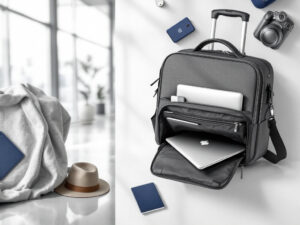
- An anti theft day bag with slash resistant straps and zipper clips that are hard to open without you noticing, especially helpful on subways and in crowded markets
- RFID blocking neck wallets, passport holders, or money belts for days when you are carrying more cash or documents, such as border crossings or long transit days
- Small anti theft zipper clips or mini carabiners for backpacks and purses, to keep zippers closed in crowds
- Apple AirTags or similar trackers in checked luggage and kids’ backpacks, which you can locate through the iPhone “Find My” app
Portable door lock and door stop alarm sets can also add another layer of room security and peace of mind. Many models trigger loud alarms around 120 dB if someone tries to open the door, which helps both with privacy and early warning in unfamiliar places.
For a focused packing rundown, you can check a dedicated travel safety checklist and broader traveling safety measures.
Navigate airports and flights confidently
Airports can feel chaotic, especially with kids in tow. A few patterns will keep you organized and safer.
At security:
- Keep passports, boarding passes, and one payment card together in a slim pouch or travel wallet.
- Put electronics in an easy access pocket so you are not digging at the last minute.
- Never leave your bags on the conveyor belt if you are held up in the scanner. Wait to send them through until you can walk through immediately after.
Programs such as TSA PreCheck and the Department of Homeland Security’s Trusted Traveler Program (TTP) can significantly speed up security lines and border checks, and they also reduce how often you must unpack and repack sensitive items. For frequent travelers, that convenience is a big part of your personal security routine.
While in the airport or on the plane, keep your most valuable items under the seat in front of you, not in the overhead bin. Overhead theft does happen, especially on long flights when people are asleep.
You can sharpen your routine further with focused airport security tips.
Stay safe in hotels and vacation rentals
Your room should feel like a retreat, not another worry on your list. Hotel room security starts when you book and continues through your stay.
Security experts recommend asking for a room between the third and sixth floors. These levels are usually high enough to reduce the risk of walk in break ins, but still reachable by ladders or fire truck equipment in an emergency.
When you arrive:
- Check that the room’s door lock, deadbolt, and latch work properly.
- Test the phone and confirm the front desk number.
- Look at windows and balcony doors to make sure they close securely.
Use in room safes but choose a non obvious code. Combine this with separating valuables, for example, keep some cash in the safe, some in a money belt, and a spare card hidden in your luggage, so one incident never wipes you out.
Door security tools like rubber wedges, portable locks, or door stop alarms give extra protection at night, especially in rentals or smaller guesthouses. As one seasoned traveler tip: slide the rubber wedge under the door from the inside to reinforce it while you sleep.
Vacation rental scams are another area to watch. Some scammers hijack real listings or create fake properties entirely, taking your payment and leaving you stranded. Before booking, search the property address along with the owner’s or company name, and if you find the place on a big platform, cross check by going directly to the official website rather than following email links.
For more lodging specific guidance, bookmark hotel safety tips for travelers.
Understand common scams and pickpocket tactics
Feeling safe while you explore does not mean trusting everyone. It means recognizing typical tricks so you can enjoy your surroundings without constant anxiety.
Travel safety experts report that in 2024, pickpocketing surged in popular European cities like Amsterdam, parts of Italy, France, and Spain, with Amsterdam nearly doubling pickpocket complaints compared to 2022. Busy squares, buses, and metro systems are prime targets.
Common tactics include:
- Distraction scams, such as someone offering you a friendship bracelet, shoving a clipboard in your hands for a “petition,” or creating a scene by spilling a drink or dropping items
- Crowding you at a metro entrance or on escalators so you do not feel hands in your bag
- “Helpers” at ATMs who offer to assist and then try to see or steal your PIN or cash
- Fake officials who flash a badge, ask for your wallet for an “inspection,” or claim you used counterfeit money
You can protect yourself by:
- Keeping valuables in front, never in your back pocket. Security expert Robert Siciliano calls back pockets an “invitation to a pickpocket,” and he is right.
- Using anti theft bags and keeping them zipped with clips or small carabiners in crowded spots.
- Refusing unsolicited help at ATMs or in the street, and covering the keypad with your hand while entering PINs.
- Politely insisting on verifying credentials if someone claims to be police or hotel staff. You can call the official number or walk with them to the nearest station or front desk, but never hand over your wallet on the spot.
The goal is not to suspect every person. It is to learn patterns so you recognize the handful of situations that deserve extra attention.
Move around cities like a local
Once you are on the ground, your daily habits shape most of your safety.
Choose transportation carefully. Use ride share apps with tracking features, official taxi stands, or rides arranged through your hotel, and be cautious about unmarked cars that appear out of nowhere. Inside cars, make sure doors are locked and bags are on the floor, not on the seat beside an open window.
Walking around:
- Avoid flaunting wealth. Skip flashy watches, giant branded shopping bags, or dangling expensive cameras. Travel security research shows that visible wealth draws attention and increases theft risk.
- Stick to well lit, busier streets at night, especially if you are alone.
- Notice your surroundings. Earbuds at full volume or eyes glued to your phone make you an easier target.
Separating valuables also matters when you are out and about. Carry a small amount of cash and a copy of your ID in your day bag, keep your main wallet in a secure inner pocket or money belt, and leave spare cards and passport locked at your accommodation. That way, one theft is an inconvenience, not a crisis.
You can find more day to day strategies in personal safety for travelers and practical overviews like how to stay safe while traveling.
Add extra layers for solo travelers, women, students, and seniors
Everyone deserves to feel confident traveling, but some groups face different risks and should adapt their routines slightly.
If you travel solo, especially as a woman, share your daily plans with a trusted person, check in at set times, and be extra selective about accommodation and late night transportation. Personal safety alarms that emit very loud sirens, sometimes with strobe lights, are an inexpensive tool you can clip to a bag or keychain for extra reassurance.
Women traveling alone can find more tailored strategies in resources such as travel safety for women and travel safety tips for solo female travelers. These cover topics like setting boundaries with strangers, trust signals for tours and drivers, and what to do if you feel followed.
Students and backpackers often prioritize budget over safety features. If that is you or your child, balance hostel prices with basics like 24 hour reception, secure lockers, and clear reviews from other guests. You will find more on that in travel safety for backpackers and travel safety for students.
Seniors might focus on avoiding falls, managing medications, and keeping documents extremely organized. A simple folder system, copies of prescriptions, and slightly slower itineraries can make a major difference, and travel safety for seniors offers more specifics.
Keep health and emergencies in mind
Health is a big part of travel security. A minor illness or injury can turn your plans upside down if you are not prepared.
Start with travel safety and health basics like checking required vaccinations, packing any daily medications in original labeled bottles, and carrying a summary of your medical conditions and allergies.
Invest in solid travel safety insurance that covers emergency medical care, evacuation, and trip interruption. Read the fine print before you buy and keep your policy number and contact phone number in your phone and on a printed card.
For business travelers, pre trip planning is especially important. Corporate security guidelines recommend checking local crime and political conditions, choosing hotels that have 24 hour security and controlled access, and using in room safes. Following company advice on what documents and devices to bring is part of your professional duty as well as your personal safety.
Whatever your situation, it helps to mentally rehearse what you would do if:
- Your passport is stolen
- You lose your phone
- A child gets separated in a crowded area
- Someone in your group needs medical care
Thinking through “If X happens, we will do Y” ahead of time means you are less likely to panic in the moment. For higher risk destinations or complex trips, it is worth reviewing emergency travel safety tips.
A simple rule of thumb: plan as if something small will go wrong, so you can still enjoy it when most things go right.
Practice secure habits on every trip
Travel security is not a one time project. It is a set of habits you repeat trip after trip until they feel natural.
Here is a quick habit checklist you can reuse:
1. Before booking
- Check official Travel Advisories and local laws.
- Enroll in STEP if you are a U.S. citizen.
- Compare accommodation options with safety in mind.
2. Before departure
- Scan passport and key documents.
- Set device locks, tracking, and updates.
- Pack essential safety gear, but keep bags light.
3. On the road
- Use reputable transport and secure payment methods.
- Carry valuables wisely and separate backup funds.
- Stay aware of common scams and avoid flashy displays of wealth.
4. On return
- Review bank and card statements.
- Remove unneeded apps and adjust privacy settings.
- Note what worked well and what you want to improve next time.
You can always dive deeper with resources like travel security risks, travel security precautions, travelers safety and security, and general travel safety tips.
Start with one or two travel security best practices from this guide on your next trip, such as separating valuables and setting up device tracking. As those become routine, layer in more. Over time you will build a safety toolkit that works quietly in the background, so you and your family can focus on what you came to do in the first place, enjoy the journey.
FAQs
What’s the #1 travel security step for families?
Start with official travel advisories and local law/entry checks, then build a one-page family meet-up and communication plan.
Should U.S. families enroll in STEP?
Yes—STEP is free and provides embassy alerts and emergency contact support for enrolled trips.
How should we store passport copies safely?
Use two locations: a secure cloud folder plus a printed copy kept separately from originals (e.g., hotel safe or locked luggage).
Is TSA PreCheck worth it with kids?
If you fly often, it can reduce checkpoint friction (shoes/belts stay on, fewer removals), which lowers stress and improves control.
What’s the safest way to use public Wi-Fi while traveling?
Avoid banking/logins on public Wi-Fi unless you’re using stronger protections; confirm hotspot details first and use safer connections when possible.
Who can issue a legitimate International Driving Permit in the U.S.?
Only AAA and AATA are authorized for U.S.-issued IDPs; lookalike “permits” can cause legal and rental issues.
How do we reduce pickpocket risk in crowded cities?
Keep valuables front-facing, use zipper clips, don’t accept “help” at ATMs, and treat distraction tactics as a cue to secure your bag.